Tiger Teachers

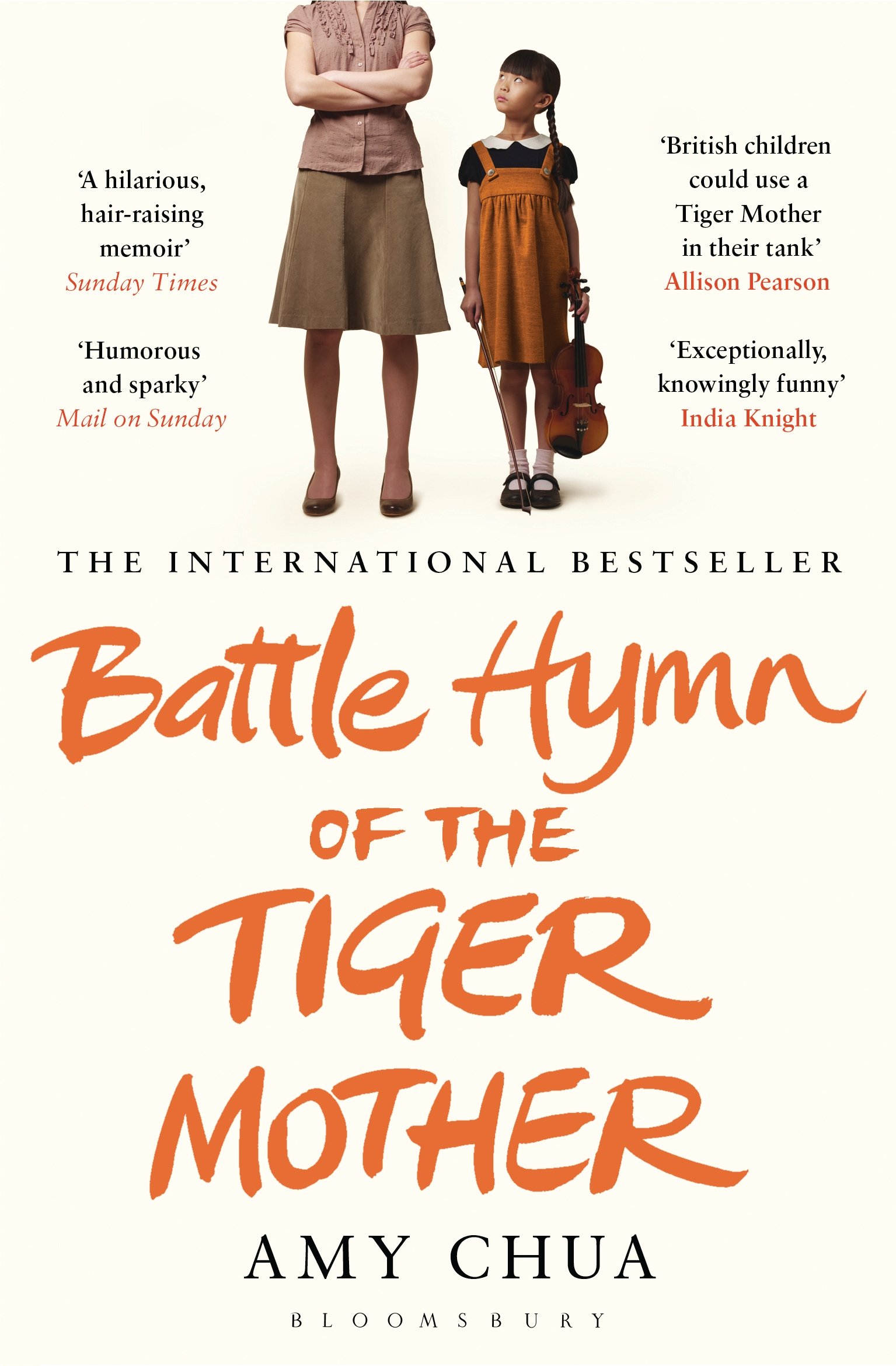
In Amy Chua’s Battle Hymn of the Tiger Mother, there are two key messages for parents and teachers. The first: hard work pays off. The second: strict discipline is the best way to ensure our kids succeed. Statistical evidence shows that Chinese kids are ‘stereotypically successful’: in 2014, Chinese children were the highest performing ethnic group, with 74.4% achieving 5 A*-C EM compared with the national average of 56.6%. What is the secret?

Chua notes: ‘In one study of 50 Western American mothers and 48 Chinese immigrant mothers, almost 70% of the Western mothers said either that ‘stressing academic success is not good for children’ or that ‘parents need to foster the idea that learning is fun.’ By contrast, roughly 0% of the Chinese mothers felt that way.’ The idea of learning as ‘fun,’ ‘discovery’ or ‘exploring’ does not seem to exist for Chinese parents. Throughout the book, Chua makes references to poor teaching methods holding Western children back: ‘While the other kids were learning to count from 1 to 10 the creative American way – with rods, beads and cones – I taught Sophia addition, subtraction, multiplication, division, fractions, and decimals the rote Chinese way.’ When Chua talks about skills, she explains: ‘I don’t mean inborn skills, just skills learned the diligent, disciplined, confidence-expanding Chinese way.’ Underpinning this comment is the highest of high expectations: children can learn anything, as long as they are taught it explicitly and drilled enough in it.

To those who may argue that not all children can be successful with hard work, Chua cites her sister Cindy, who was born with Down’s syndrome: Chua’s mother ‘[spent] hours patiently doing puzzles with Cindy and teaching her how to draw. When Cindy started grade school, my mother taught her to read and drilled multiplication tables with her. Today, Cindy holds two International Special Olympics gold medals in swimming.’ As the mother of young children, Chua notes: ‘As I watched American parents slathering praise on their kids for the lowest of tasks, I came to see that Chinese parents have two things over their Western counterparts: 1. Higher dreams for their children, and 2. Higher regard for their children in the sense of knowing how much they can take.’

And by ‘how much they can take,’ Chua is referring not only to how much children can learn, but how much discipline they can handle. Each of Chua’s daughters, Sophia and Lulu, play instruments; Chua, a professor of law at Yale university, attends every music lesson and every practice session at home, coaching, guiding and, in reality, shouting. The extraordinary results are achieved through this disciplined and strict practice. She explains: ‘What Chinese parents understand is that nothing is fun until you’re good at it. To get good at anything you have to work, and children on their own never want to work, which is why it is crucial to override their preferences.’ Furthermore, while Western parents worry about self-esteem, Chinese parents: ‘assume strength, not fragility.’

Chua’s harshness has been condemned in the media, notably when given a sub-standard birthday card, hand-made by her daughters. She quotes herself saying: ‘I work so hard to give you good birthdays! I deserve better than this. So I reject this.’ In a later letter, her daughter notes: ‘funny how some people are convinced that Lulu and I are scarred for life. Maybe if I had poured my heart into it, I would have been upset. But let’s face it: the card was feeble, and I was busted. That’s why, when you rejected it, I didn’t feel like you were rejecting me. If I actually tried my best at something, you’d never throw it back in my face.’

It is not easy to discipline children in this harsh way: ‘you have to be hated sometimes by someone you love and who hopefully loves you, and there’s just no letting up, no point at which it suddenly becomes easy.’ We believe exactly the same thing at Michaela. There are times when I really, really don’t want to give a pupil a demerit or a detention: I know how hard they are trying, even though they are still doing the wrong thing, and I love them so, so much. I’ve started saying in my head: ‘do I love them enough to give them a demerit right now?’ By turning our thinking from indulgence to discipline, I do think that in the long term our children will be more successful, not to mention more resilient.

For hard work is the gateway to future success: if a child achieves lower mark than wanted in a test ‘the Chinese mother would get dozens, maybe hundreds of practice tests and work through them with her child for as long as it takes to get the grade up to an A. Chinese parents demand perfect grades because they believe that their child can get them. If their child doesn’t get them, the Chinese parent assumes it’s because the child didn’t work hard enough.’ Even on holiday, Chua insisted on daily instrument practice, telling her children: ‘every day that you don’t practice is a day that you’re getting worse.’ She reflects: ‘Will Sophia recall with bitterness the time I laid in to her at a piano in Barcelona because her fingers were not kicking high enough? If so, I hope she also remembers Rocquebrune, where the manager of our hotel heard Sophia practising and invited her to perform for the entire restaurant that evening, overlooking the Mediterranean, [getting] bravos and hugs from all the guests.’

She rails against the indulgence of choice in Western parenting: ‘they just keep repeating things like “you have to give your children the freedom to pursue their passion” when it’s obvious that the “passion” is just going to turn out to be Facebook for ten hours which is a total waste of time.’ Children do not know enough to make the right choices, which is why indulgence will lead to lower academic success. Nearly half of young people are leaving school without even the minimum qualifications: this is a national tragedy, and something we need to take seriously. When Chua’s rebellious younger daughter gives up the violin in her most rebellious teens, her mother feels she has lost – but when she takes up tennis the coach comments to her: ‘she has an unbelievable work ethic – I’ve never seen anyone improve so fast. You and your husband have done an amazing job with her. She never settles for less than 110 percent.’ And today she, like her older sister before her, attends Harvard.

We want a happy ending for our children. But this means hard work, and discipline to ensure they do that hard work: ‘In Disney movies, the “good daughter” always has to have a breakdown and realize that life is not all about following rules and winning prizes, and then run into the ocean or something like that. But that’s just Disney’s way of appealing to all the people who never win any prizes. Winning prizes gives you opportunities, and that’s freedom – not running into the ocean.’

Winning prizes, passing exams: these give children choices. In the short term it is so very, very hard to be strict, to be demanding, and to not settle for less than 100%. At Michaela, we have very, very high standards, and are not afraid to tell our pupils: ‘that’s not good enough. Do it again.’ In the short term, it feels bad for them to have ‘failed,’ but the extra practice, and seeing the improvement in the second piece should stand them in good stead in the long term.

Chua writes: ‘All decent parents want to do what’s best for their children. The Chinese just have a totally different idea of how to do that.’ This resonates strongly with me: at Michaela, we do things totally differently. We all want our children to succeed, but we just have a very different approach.
Battle hymn

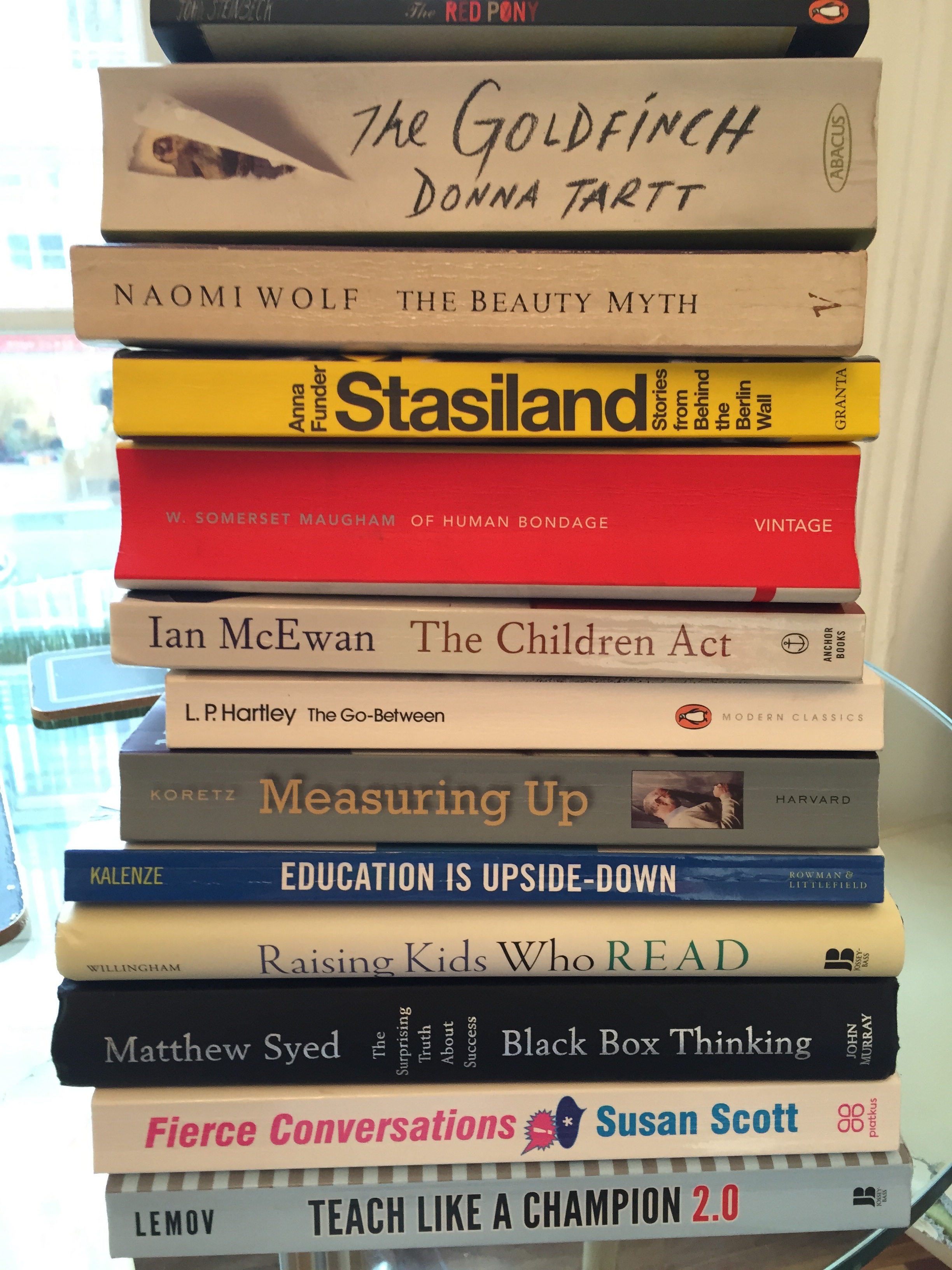
Top reads of 2015

Non-fiction

Naomi Wolf – The Beauty Myth

This book is a scathing attack on the messages the media sends to women about how they should look and act. It made me really angry, in a good way.

Matthew Syed – Black Box Thinking

Syed explains how we learn from failure, and if we don’t, we are idiots. This is great for getting a new perspective on the ‘gift’ of feedback.

Susan Scott – Fierce Conversations

Sarah Donachy, the smartest person I’ve met this year, told me to read this. It really challenged my tendency to be a bit too cuddly rather than having the difficult conversation that is needed, and I’ve revisited it lots.

Irvin Yalom – Love’s Executioner

Joe Kirby told me to read this when I was feeling a bit stewed up. It’s great for giving perspective, and making you realise your emotions are in your control.

Eric Kalenze – Education is Upside Down

Since Research Ed 2015, I haven’t stopped hearing about this book, and it lived up to the hype. A great exploration of why education is set up to make disadvantaged students fail, and what we can do about it.

Anna Funder – Stasiland

I read this in Berlin, and it really brought to life the reality of living in the German Democratic Republic. The injustices suffered in East Berlin and East Germany in general astonished me.

Daniel Willingham – Raising Kids Who Read

Having listened to Katie Ashford, the guru on reading, for 2 full years, this was the year I finally began to grasp the reality of how children read, and this book really helped.

Daniel Koretz – Measuring Up

Daisy Christodoulou recommended this book at Research Ed in 2014, and it explained excellently the flaws in our current assessment model, and a better way forward.

Doug Lemov – TLAC 2.0

The first ‘Teach Like a Champion’ changed my life, and yet Lemov has improved even on this. The only guide a teacher needs for improving their classroom practice.

Fiction

John Steinbeck – The Red Pony

I read this and wept. A wonderful exploration of growing up, told beautifully in Steinbeck’s ever-complex simplicity.

Somerset Maugham – Of Human Bondage

This novel has stayed with me more than any other I’ve read this year. The horribly flawed characters and their ghastly choices felt so real and so close as I read it.

Donna Tartt – The Goldfinch

Unbelievably, even better than ‘The Secret History.’ An astonishing tome of a novel, feeling epic in its scope.

Ian McEwan – The Children Act

This book has one idea, and it explores it in great depth. A searing look at love and relationships.

L.P. Hartley – The Go-Between

My last line-manager recommended this book to me. I adored the narrator’s innocence which was gradually eroded throughout, and the ideas of class and community.

image1

Just one book: ethos

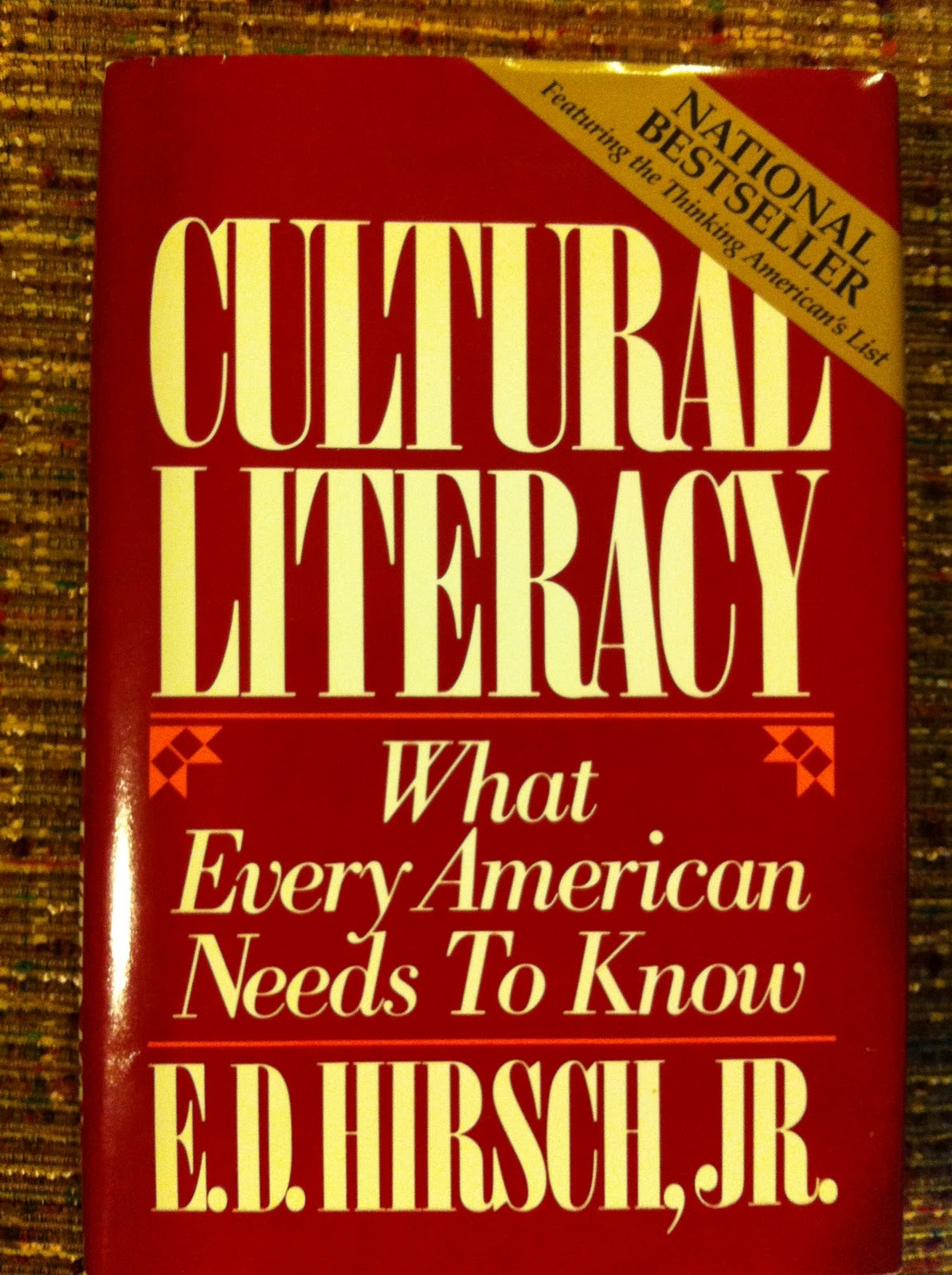
When I started this series, my aim was to distil my thoughts on education through the prism of a single book: which one book, for me, held the key to that particular aspect? For curriculum, it was Cultural Literacy; for assessment, Make it Stick; for teaching, Teach Like a Champion, and for school leadership, Leverage Leadership.

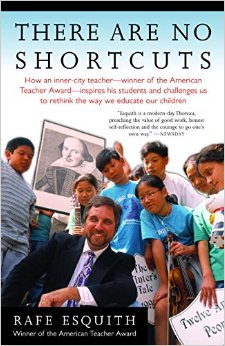
 For me, the book that most exemplifies my ethos of education is Rafe Esquith’s There are no shortcuts.

esquith

 Esquith’s ethos, embodied in the title, was adopted by Mike Feinberg and David Levin shortly before they launched their ground-breaking charter school, KIPP; now a chain boasting significant results for poor children in the USA. KIPP in turn went on to inspire other schools, including King Solomon Academy in West London. Esquith’s legacy is an extraordinary one.

I first read this book during the 2010 Teach First Summer Institute: bright eyed and completely clueless, all I knew was that the amorphous challenge ahead would be grueling. Esquith’s book is often about defying the officials and putting students first, like when he writes: “when my district assigns textbooks to the children that would cure the most seriously afflicted insomniac, I’ve used texts of my own choosing to inspire the children to dedicate themselves to their studies.”

The writer confronts the challenge ahead: “Yes, life isn’t fair. Other kids have more money. Their English is better. Their parents are better connected.” And there are no shortcuts. The students just have to work harder and learn more. I especially liked Esquith’s focus on high academic expectations, notably in text choice (like students studying unabridged Shakespeare, To Kill a Mockingbird, Malcolm X and so on). This is no better exemplified than here:

If fifth-grade students are reading at a first-grade level, placing first-grade books in front of them will never help them catch up with the students across town who not only are in higher-achieving classrooms but have parents and tutors helping them every step of the way. Someone has to tell children if they are behind, and lay out a plan of attack to help them catch up. If this means staying after school or taking extra hours sitting with the child and reading, so be it. There are no excuses.

I have been advised to withhold information like this from students in the name of motivation. But we must aim higher than this, as Esquith reminds us: “society is filled with forces of mediocrity that are going to battle you for the potential that is within your child.”

The second strapline of Esquith’s classroom, alongside “there are no shortcuts” is “be nice, work hard”; KIPP’s founders inverted this, and the founders of Michaela Community School in Wembley altered it to “work hard, be kind.” The message is simple, enduring and essential.

Much of this book is dedicated to examples of Esquith going above and beyond; extra classes, summer classes and the all-important field trips: “as a teacher of children from economically disadvantaged backgrounds, I came to understand that my students would work harder for a better life if they saw the life they were working for.” Esquith details raising funds for these trips which often include travel to a different state by plane and an overnight stay, underwritten by awe-inspiring fund-raising methods. Now, trips are often costly, both in terms of time, money and energy; they frequently, at secondary schools, lead to missed learning time. But I do think Esquith has something here, and I’ll be writing over the next few weeks about field trips and why I think they need to be prioritized despite all of these drawbacks. The learning is the thing, of course, and the ethos behind the learning is relentless progress, defying the odds. But ethos is also nurtured by those aspects of education which cause students to feel that emotional connection, that energy and excitement, and for some this is best achieved outside a classroom setting.

In summary, the key messages on ethos from this book are:

  • There are no shortcuts to success; only hard work
  • All children deserve a rich, challenging curriculum
  • All children deserve to be educated in pleasant, safe classroom environments
  • We as teachers must be honest but positive with our students, always believing they can achieve, and knowing how hard they will need to work to make it
  • Teachers must do right by their students; this needs to be their guiding aim

Of course, this book comes with a major caveat: Esquith is exceptional; exceptional in his ability and exceptional in his commitment. Some people go into teaching to be missionaries; most do not. Some people submerge their lives to the lives of their students; most do not. Early in my career, I sought to emulate Esquith in my priorities and in my dedication.

But I’m not him. I’m a better teacher when I take time out to read fun books, go on holiday, visit a gym, sneak out of work early once in a blue moon to meet friends or go to the theatre, take an entire weekend off to do nothing but watch an entire series of something rubbish on Netflix. I’d like it if this was not true, but it is. I’m flawed.

But Esquith, I’ve come to realize, isn’t the model; Esquith is the touchstone. He is the bar we all strive to reach. So few of us will make it. I know I won’t. But in my best moments, his is the ethos that flows through me; it my lowest moments, his are the words I turn to for the gold standard of caring and commitment.

This is not a book for the practicalities of teaching and ethos. This is a book for inspiration.

Just one book: leadership

In this post I’ll be exploring just one book on school leadership. I’ve previously written on curriculum, assessment and teaching, and my next post will be on ethos.

Leadership is a somewhat tricky subject, in that there are so many bad books on it. Many leadership books seem to spend an inordinate amount of time exploring semantics: what is a leader, and what is a manager? Indeed: what even is leadership?

At a school level, it is simply the people who make the decisions which run the school. On that basis, the book I have chosen seems to me to be the best one out there on the mechanics of how to run – or lead – a school.

51atAsiMjwL._SX258_BO1,204,203,200_

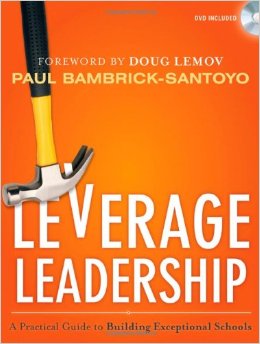
This book outlines how a great school should be led, with concrete examples of what works. To begin with, Bambrick-Santoyo states: “Exceptional school leaders succeed because of how they use their time: what they do, and how and when they do it.” Specifically, “instruction and culture are vital, and both must be led simultaneously.”

Data-driven instruction

Noting that: “standards are meaningless until you define how to assess them. Assessments, therefore, are the roadmap to rigour,” the author advises meeting after each assessment and “asking probing questions and deeply considering the results,” while great leaders guide this conversation “from the back pocket” – that is, keeping their “answers” in their pocket, and asking the right questions to guide people’s thinking.

Observations

The greatest lesson I learned from this book was the value of weekly developmental observations, coupled with “bite-sized action steps that allow a teacher to grow.” As the author notes: “you don’t get results by placing your best teachers strategically – you get them by coaching each and every teacher to do excellent work.” Finally, an alternative to pointless graded observations, where we are not judging where teachers are currently, but coaching them to improve student learning all the time.

Planning

Bambrick-Santoyo remarks that too often teachers receive “insufficient guidance” in planning, particularly at the start of their careers. Much more, it is suggested, ought to be centralised, and planned according to “assessment”, which is labelled the “roadmap to rigour.”

Training

Quite simply, with professional development: “increasing student achievement is the ultimate goal… if PD isn’t changing how our students learn, it’s useless.” Bambrick-Santoyo posits that “effective PD must start by answering a basic question: what will teachers be able to do at the end of this session?” The benefits of this are maximised by building in time to make the PD relevant to current practice: “giving teachers time to apply their learning is the difference between an engaging afternoon and sustained improvement in instruction.”

Pupil ethos

It is hard to argue with the assertion that “in schools with strong cultures, students receive a continual message that nothing is as important – or as engaging – as learning.” Bambrick-Santoyo advises that the top leaders “transform their vision into meticulously built systems.”

Staff culture

The culture of the school needs to be embodied by both staff and students, and care must be taken of teachers: “when teachers are out with friends or family, what do you want them to say about your school? How do you want them to feel?” The author advises being careful to pick up non-verbal signs from teachers, as not everything (anything?) is captured in formal surveys. Interestingly, Bambrick-Santoyo notes that: “it’s imperative that a leader confront warning signs as they come. Initially, if a teacher seems disengaged during professional development, a leader may be tempted to let it go; perhaps the teacher’s having a bad day… Yet unless it is addressed immediately, it is likely to weaken your culture.” We must always be vigilant to uphold our school culture; one small chink can undermine the entire organisation. The best way to reinforce culture is to continually reference the school’s mission: “by emphasising a common mission, the leader creates an internal motivation to work harder rather than imposing yet another external incentive to perform.”

Yet this is clearly not a blueprint we can pick up and apply to any school indiscriminately. Only those who are observant and have great listening skills will pick up on how to implement these ideas effectively for the context in which they find themselves.

Not only that, it is clear to me that leadership is about vision, and it is only when you harness the belief and motivation of the whole staff body to buy into that vision do these aspects work most effectively: as Bambrick-Santoyo states, “the core principle of a staff culture turnaround is that teachers need to know the school’s core mission… and must be unified in putting it into practice.” But I am not sure it is a book that will tell you how to have a vision, or how you can inspire others to believe in it: that can only come from your own beliefs, which are often informed by experience. And if you can’t imagine what is possible, you need to see a great school in action. And, of course, if you can’t work out why all kids deserve that then it’s not a book you’re in need of.

So far, this series has explored leadership, curriculum, assessment and teaching. The final post will be on school ethos.

Just one book: teaching

Perhaps I ought to have begun with teaching. Two years ago, I probably would have done. The primacy of teaching then for me was that it was the everything: in a school with no schemes of work and no curriculum plan, part of my teaching was choosing my curriculum and then assessing whether I had effectively taught it.

Now, I’ve moved schools, and seen the benefits of a more stratified approach. All students learning the same curriculum, with the proviso that it be high-quality, is surely more equitable and manageable. I wouldn’t want my children learning Skellig if the folks next door were tackling Oliver Twist. 

For some of the books in this series, I deliberated for weeks, going back and forth over which book to choose. The only topic I didn’t even have to think about was this one. Because, obviously:

TLAC 2.0

Doug Lemov: Teach Like a Champion

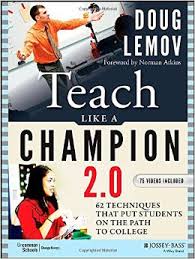
Why is this book so good? Because it tells you what other books won’t. This book tells you the nitty gritty practicality of how you should set your classroom up and then what you do in it in order for learning to occur. You don’t go to a book like this for vision and broad strokes, although those too are present; you go to Lemov for practical guidance. This book is the awesome mentor you might not be lucky enough to have in your early teaching years; the fantastic coach you almost certainly will not have in later years of teaching.

I first encountered this book in a lukewarm Guardian article, and decided to give it a miss. A few weeks later, a respected colleague from an ARK school called me up, telling me something had completely changed her practice, and it was this book. I’m so glad I listened to my friend and not the Guardian. Why does TLAC work so well?

Lemov has painstakingly observed hundreds of teachers at work, (“there is no gap that has not been closed already by some teacher somewhere”) and has drilled down into what they do to be effective in their classrooms. The results are distilled into manageable actions anyone can take, with examples you can watch on an accompanying DVD. They’re not quick-fixes; they’re not gimmicks. They are habits which, if embedded, will change the amount your students learn and want to learn from you.

Lemov notes that “perhaps the most salient characteristic of a great teacher is her ability to recognize the difference between ‘I taught it’ and ‘they learned it.’” Too often, I find myself despairing that students still cannot embed quotations and analyse language, given how many times I have taught it. Lemov reminds me that there is always a tweak; always a way I can improve my practice.

Just some of the key habits Lemov advises include avoiding the use of yes/no questions; instead, we must use pointed questioning to distil the students’ true understanding. Cold-calling is the widely preferred method of questioning, ensuring that all students are primed and listening and always ready to respond to your questions – by which he means no hands up. (Incidentally, one major benefit of the prevalence of TLAC parlance is the creation of a shared vocabulary of teaching.) Alongside cold-calling, which transformed my practice, he advises “No Opt Out” – students can never be excused trying. Wrong answers are ok, not even trying is not: “everybody learns in a high-performing classroom.”

Yet for methods such as these to be truly effective, we must create what Lemov terms a “Culture of Error” in our classrooms – less ironic than it sounds, this means students need to be willing to “share their struggles, mistakes, and errors” so teachers “spend less time and energy hunting for them and more time fixing and learning from them”. This might seem like overly broad brush advice, but Lemov follows this up with precise examples of how to do this, which include narrating growth, celebrating improvement, and praising struggle (“great question!”).

On structuring a lesson, I can’t think of a simpler or more easily applicable method than Lemov’s “I do, we do, you do”: therein lies lesson planning. Firstly, the teacher models. Then, the class practises together. Finally, students practise independently. Peppered in this structure you can have your cold-calling; your “Turn and Talk” (a much nicer way of saying “pair share” to my mind, rolling, as it does, so much more easily from the tongue: “turn and talk to your partner about…”).

One of the most helpful additions to the new edition of TLAC is the section on reading, which I have revisited more than any other this year – again, full of useful tips on how to encourage students when reading aloud in class, explained in lucid detail and with helpful examples.

As frequently thumbed in my own copy is the section on managing behaviour. Lemov’s overarching idea of making the “least invasive intervention” has changed the dynamic in my most challenging groups. Helpfully, he details examples of these interventions: positive group correction (“I need to see everybody writing”), anonymous individual correction (“I need two more sets of eyes”), private individual correction (quietly, one to one, with the student in question), lightning-quick public correction (always followed up by praise).

For those who fear that the outcome of these techniques is the creation of tiny obedient robots, Lemov reminds us all to “seek not only to be both warm and strict but often to be both at exactly the same time.” We must be strict, and never excuse poor behaviour; yet just as imperative is to be warm and kind, and love our charges, infusing our corrections with reminders of this love.

TLAC distills what the best teachers do:

  • Cultivate classroom culture, systems and routines
  • Enforce high behavioural expectations
  • Build trust
  • Set high academic expectations
  • Plan, pace and structure their lessons
  • Increase cognitive ratio (making students do the thinking) through questioning, writing and discussion
  • Check for understanding

To go on further would run the risk of plagiarism. In my view, to summarise, this is the book on teaching.

So far, I’ve explored curriculum and assessment, two aspects of education which are inextricably linked. The final two posts will be on leadership and ethos.

Just one book: assessment

In my last post, I outlined what I believed to be the foundational concepts that must underpin a school’s curriculum, using E.D. Hirsch’s Cultural Literacy as the one text I felt most clearly displayed what a great curriculum should be. Of course, it is almost impossible to create a curriculum without simultaneously thinking about assessment: it is all very well to teach students great stuff, but if they immediately forget it all, or show you that they’ve understood none of it by the end of your teaching, you might as well have taught marbles.

make it stick

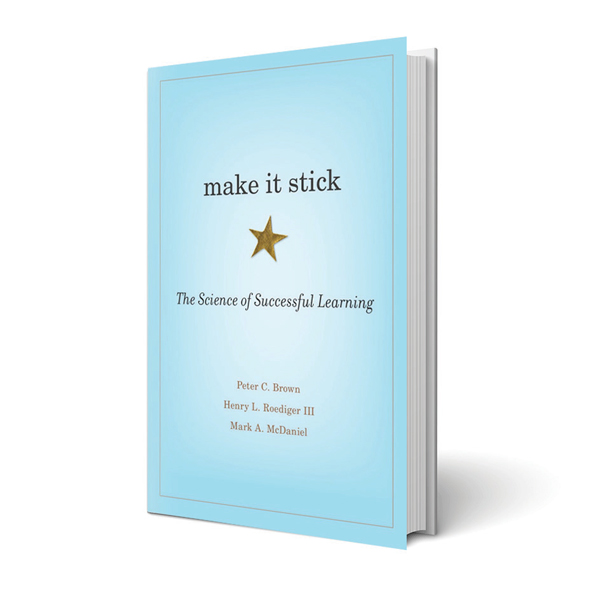
The one book that has truly changed my view on assessment is Make it Stick by Brown, Roediger and McDaniel. Prior to reading this book, I too believed in the value of re-reading, highlighting, and testing students’ knowledge and understanding using extended essay after extended essay, running the risk of breaking my own will to carry on teaching due to having to endlessly plough through immense paragraphs riddled with small misconceptions and tiny errors, all of which I would painstakingly correct, before trying to rationalise each error into a single “target for improvement.” Then, weeks, months, years after I’d taught students, what did they recall of what I had taught? Too, too little.

I want to make a clear distinction between feedback and assessment. I define feedback as qualitative commentary, and assessment as quantifiable, measurable snapshots showing a teacher what their students have and have not understood. Both have their place, but my feeling is we have over-emphasised the former to the detriment of both student learning and teacher well-being.

The key messages from Make it Stick seem to me to be:

  • “Learning is deeper and more durable when it’s effortful.”
  • “We are poor judges of when we are learning well and when we’re not.”
  • Retrieval practice – recalling facts or concepts or events from memory – is a more effective learning strategy than review by rereading.”

The authors note that: “One of the best habits a learner can instill in herself is regular self-quizzing to recalibrate her understanding of what she does and does not know.” Joe Kirby has brilliantly explained how this might work in practice over the long term for individual students here. In lessons, I would suggest, we need to not only assess what students have retained in order to know what to teach them, but also to model what this kind of self-quizzing looks like and enable them to practise prior to doing it alone.

And when should this quizzing occur? There frankly does not seem to be a bad time to quiz, according to this book. Students do better in the long-term if they have pre-quizzes (even if they get everything wrong, as “unsuccessful attempts to solve a problem encourage deep processing of the answer when it is later supplied, creating a fertile ground for its encoding”), immediate quizzes (“in 2010 the New York Times reported on a scientific study that showed that students who read a passage of text and then took a test asking them to recall what they had read retained an astonishing 50 percent more of the information a week later than students who had not been tested”) and quizzes after partial forgetting has occurred.

The latter is of particular importance: “When retrieval practice is spaced, allowing some forgetting to occur between tests, it leads to stronger long-term retention than when it is massed.” The most helpful quizzing, they suggest, takes place long enough after learning that the quiz isn’t “mindless repetition” but not so long that “retrieval essentially involves relearning the material”.

“Quiz” does not necessarily mean multiple choice, or even teacher-directed. Brown et al give examples such as students simply writing down ten facts they didn’t know before reading a passage. Another user-friendly option is a “free recall” homework where students: “spend ten minutes at the end of each day sitting with a blank piece of paper on which to write everything they can remember from class”. This enables students to know what they have not yet learned, and so pinpoint their future revision of key facts and ideas. Even cloze exercises can be of benefit, as “the act of filling in a missing word in a text results in better learning and memory of the text.”

In practice, quizzing works best when it is:

1. Purposeful

Students understand why quizzing is beneficial – they buy into the idea of frequent quizzes when they understand the benefits it will have for their long term retention of key ideas.

2. Targeted

Quiz questions are thoughtful and targeted to the specific ideas students need to know, isolating individual facts or key pieces of information.

3. Instantly Corrected

Wrong answers are corrected immediately to ensure students do not leave your lesson carrying misconceptions.

4. Low-Stakes

The stakes are low – there is no need for any of this to stress students out. This, along with emphasising the learning benefits also tends to preclude cheating.

Taking the advice of Make it Stick, schools would do well to build frequent, low-stakes quizzes into their day-to-day teaching. High-stakes, long-answer assessments should be less frequent, partly because the feedback teachers can give on these will not be as accurate, as students will be displaying a much larger breadth of skills and knowledge. Short, frequent quizzes allow teachers to break learning down into its core components, and isolate exactly where students are weakest, and then teach to that weakness. They should also reduce the need for overly extensive feedback on long-answer questions, thus reducing teachers’ workload significantly.

My next post will explore teaching, and one book that I will suggest provides the clearest guidance.

Just one book: curriculum

There are countless books on education. Some will entirely change your outlook and thinking, revolutionising what happens in your classroom and in our schools. Some will be a complete and utter waste of your time.

It is with this in mind that I propose to put forward just one book for some of what I see as the key aspects of education. Over the coming weeks and months, I will be exploring one book for each of the following aspects: curriculum, assessment, teaching, school leadership and school ethos.

It has been easy to pick just one book for some of these categories, and devilishly difficult for others. Of course, my choice will be a personal one, informed by my own personal view of education, and I accept that it may not be a view all share. Hopefully, those who disagree with my choices will put forward alternative single wondrous tomes. We are, I think, always honing, always refining our thinking.

I’m beginning with curriculum. I take curriculum to mean the stuff a school teaches its children. Taking the “what” before the “how” is incredibly important to me, and is one of the defining aspects of the writer I have chosen.

E.D. Hirsch: Cultural Literacy

hirsch

 I’ve always had a longing to teach children challenging texts in English, but I have often shied away from articulating a curriculum-wide position. I’ve come to believe, now, that we must unapologetically teach the best stuff to all our children; but especially to the children who are least likely to encounter it outside of school, as Hirsch explains:

“Middle class children acquire mainstream literate culture by daily encounters with other literate persons. But less privileged children are denied consistent interchanges with literate persons and fail to receive this information in school. The most straightforward antidote to their deprivation is to make the essential information more readily available inside the schools.”

To be culturally literate, according to Hirsch, is “to possess the basic information needed to thrive in the modern world.” In our everyday interchanges, even in reading a daily newspaper, our comprehension and therefore ability to interact with, question and enact change relies on our background knowledge. The broader our background knowledge, and the more honed to the important “stuff” of the world, the more effective we will be at understanding and communicating.

Contrary to some dissenters, Hirsch reminds us, this “literate” culture “is not the property of any group or class.” I saw this on a small scale when visiting the first school I worked in, in South East London. There, at a fabulous concert in aid of a school trip to Malawi, I saw the children I used to teach uproarious in their enjoyment of classical music, hip-hop and spiritual songs, among others. Just as these children could enjoy every type of music without seeming aware of its cultural baggage, so we can anticipate children will enjoy and be interested in all different strands of literature, history, art, politics.

The key to my agreement with Hirsch is in his drive for social justice: we have a moral imperative to teach the good stuff: “illiterate and semiliterate Americans are condemned not only to poverty, but also to the powerlessness of incomprehension.”

A strong curriculum builds up this crucial, important knowledge piece by piece. We may begin by knowing only a small amount about a wide range of individual topics or people, but that little allows us a place to hang our later acquired knowledge and understanding on. At one point, Hirsch lists off several names, some of which I’ve only heard of, but can at least locate in a time period, discipline or ideology due to this background knowledge I have somehow absorbed (names like James Fennimore Cooper, Emily Dickinson, Benjamin Franklin, Ulysses S. Grant) and notes: “most of us know rather little about these people, but that little is of crucial importance, because it enables writers and speakers to assume a starting point from which they can treat in detail what they wish to focus on.” Simply put, “The more you know, the more you can learn.”

Hirsch’s message in this book is a hopeful one: all students can be “highly literate” if they are “presented with the right sort of curriculum.” This curriculum should be organized, according to Hirsch, as a vivid system of shared associations.” He does not advocate arbitrary prescription of the stuff children should know, commenting almost flippantly: “almost any battle will do to gain a coherent idea of battles. Any Shakespeare play will do to gain a schematic conception of Shakespeare.”

But clearly, analysing Shakespeare play is always better than analysing an advert. His comment “in each classroom somebody always does decide what material our children will be storing in their minds in the name of skills acquisition. All too often it is content for which our children will have no use in the future” rang true to me. I have spent too many lessons analysing language in simple advertisements and leaflets with 16 year olds in the run up to an English Language exam that did not teach a thing. This is time wasted, and for the children I teach this is an atrocity. The new, strengthened curricula in English at KS4 at least provide an impetus to teach far, far beyond such trivialities.

Finally, Hirsch makes the point that: “it isn’t facts that deaden the minds of young children… It is incoherence – our failure to ensure that a pattern of shared, vividly taught, and socially enabling knowledge will emerge from our instruction.”

So, a strong curriculum for me has the following components:

  • Selection: of core knowledge: what are the ideas, concepts and facts students need to know in each subject in order to be able to access higher order ideas in that subject?
  • Sequence: your curriculum sequence must build on prior learning; knowledge builds on knowledge.
  • Revisiting: within this curriculum, there is space to revisit content and concepts, to strengthen them and aid learning.
  • Coherence: a strong curriculum dovetails with other subjects where suitable, so that the overarching schema over the course of a year coheres.
  • Challenge: the curriculum contains high quality, challenging stuff that is interesting and worth learning for all young people.

It is nearly impossible to write about curriculum alone; any construction of a curriculum requires simultaneous consideration of how we assess what has been learned, understood and retained. My next post will be exploring just one book on assessment.

Ten kids’ books you should read (if you want to be an English teacher)

This week, we welcomed a would-be PGCE student to our department for some experience of the wonderful world of English teaching. One of the things which struck me was how far removed recent graduates are from KS3, and the kind of books you want to be encouraging KS3 students to read. She mentioned the classics, but probably you want to teach these; a huge part of being an English teacher is encouraging students to read widely and for pleasure.

With this in mind, I recommend just ten wonderful books you can read and pass on to your future year 7, 8 and 9 students.

The Fault in Our Stars

Ok, if you haven’t heard of John Green you’re about to spend the next six weeks reading everything, and then wishing you’d gone slower (probably). The above is already a classic, and promoted Green to the stratosphere of great writers for young people. Green’s protagonists are often preternaturally wise, and alongside a brilliantly expressed story you can often glean interesting factual snippets. The characters are also both real and unreal at once; an unusual feat.

The Book Thief

I always despair when a popular book is turned into a film, because students start to tell me they have seen the film and therefore don’t want to bother to read the novel. Luckily, the adaptation of this was not as good as it could have been, and so I’ve found students largely receptive in reading this. An amazing creation in terms of perspective, this novel is narrated by death and takes students through the trials of surviving in Nazi Germany.

The Giver

This novel is a teaching staple in some classrooms (notably American ones, I’m reliably informed), but I’d not come across it until recently. A sci-fi look at a dystopian future where colour has been forgotten along with many aspects of freedom and experience we take for granted means this novel raises some thoughtful questions and issues for its young readers.

The Curious Incident of the Dog in the Night-time

You will undoubtedly be familiar with this, if not from the hugely acclaimed novel itself, at least from the stage adaptation. Seeing the world through the lens of an autistic boy is masterfully done by Haddon, and this is a brilliant book for year 9 (or even 8) students to read to help them to empathise with those different to them.

What is the What

Eggers is an epic story-teller, and each of his novels feels so distinctive I wouldn’t be shocked if you told me they were penned by different people. This one is definitely the most student-friendly, telling the true story of a young man’s plight in leaving war-torn Sudan.

The Knife of Never Letting Go

Though really, anything by Patrick Ness will be fabulous; he really is one of the foremost children’s writers today. I wrote about A Monster Calls here, but Knife was the first of his books I read, and it is the one I have most successfully managed to pass on to reluctant readers, chiefly due to the opening’s inclusion of a talking dog.

Looking for JJ

A sympathetic exploration of a child who has been re-assigned a new identity having committed a horrific crime. Written with bracing pace, and guaranteed to raise some moral dilemmas of interest.

Chains

Laurie Halse Anderson is another one of those authors who writes a wide variety of generally excellent novels for young people; Speak is similarly excellent though entirely different to the above. Chains explores aspects of American slavery and racism, so will often complement the kind of “civil rights” explorations in English many schools now offer at KS3.

We Were Liars

A year 10 student recommended this one to me, but I think most year 9s could handle it. This novel is engagingly written, with one of those shocking-twist endings that will stay in a student’s mind and have them coming to tell you they’ve reached it. Doesn’t everyone love a mystery after all? I really enjoyed this book too for its allowing me to live vicariously through rich, pampered young people with nothing much to do and their whole glorious lives ahead of them.

Wonder

I’m not sure there is a better children’s book out there, but I’d love to hear what others think. This book stayed with me long after I read it; I read the first gripping page to year 7 and year 8 during assemblies last year and I have lost count of the number of students who subsequently read it and let me know they had read it. The book tells the story of a boy with a disfigured face, exploring society’s expectations and making us question the extent to which we are hopelessly superficial. About halfway through this book I cried like a small child. Luckily, the ending is uplifting.

If you’d like more recommendations, I’ve blogged previously about reading lists:

And I would also definitely recommend looking at the Carnegie prize website for further inspiration:

Recommended reads of 2014

This is something of a self-indulgent post, wherein I round up the best books I’ve read this year. In the past, I’ve stuck rigidly to my triumvirate of reading: one education book, one book for children (fiction), one book for grown-ups (fiction or non-fiction). I’ve let this slide somewhat for 2014; there is a definite bias towards fun fiction, perhaps an upshot of going on not one but two beach holidays, each involving a stack of paperbacks. For that reason, I’ll stick with two categories: fiction and non-fiction.

Fiction

Margaret Atwood: Cat’s Eye

It seems unbelievable to me now that the only Atwood I had read prior to this year was The Handmaid’s Tale, which I hated. I saw this book on a list of “realistic representations of girls in school” and, eager to gain an insight into my students (having been both female and a school child, I am constantly concerned I have subsequently unlearned all aspects of each) I picked this book up. It is a gorgeously rendered exploration of childhood, change and femininity.

Robert Galbraith: The Cuckoo’s Calling

This is sheer entertainment, and very much ties into my new-found interest in crime drama in general. The kind of book which, as you read it, you feel as though you are, in fact, watching it – that is how little effort it requires.

Sapphire: Push

I’d seen the film Precious, but the book is a much richer and more uplifting portrayal of the life of the central character. I wept at the bleakness of everything at the close of the film; ending this book I felt the opposite. There’s so much hope here, and it is cleverly expressed.

 R.J. Palacio: Wonder

Another book crammed with hope and inspiration, though never cloying – the central character feels realistically drawn; imperfect, self-aware. This was the book I recommended all of key stage 3 to read over the summer, and the one most students have run up to me to tell me they have read and loved.

Dave Eggers: The Circle

I really feel this is the 1984 of our time: a novel of the internet age, taking on every facet of life in a digital world. The silicon valley world feels real here, and if the love interest falls flat it does so for good reason.

John Green and David Levithan: Will Grayson Will Grayson

The imagination in this book is inspiring, and it’s a nifty venture – two authors writing consecutive chapters from different perspectives. The message is one of acceptance and love, and is one children and adults can learn a lot from.

Carys Bray: A Song for Issy Bradley

The tale of a mother dealing with grief in the context of her husband’s Mormon beliefs taught me a great deal about both. This was one of those books which left me feeling empty when it had ended; as if I couldn’t believe those characters had gone from my life.

Laura Wade: Posh

I missed seeing Wade’s play, and I’m sure reading it cannot compare; yet this play was so stark and so heinous, it made me really actually angry. But angry in a really good way.

Non-fiction

Martin Robinson: Trivium 21C

Robinson’s was the first book I read in 2014, and I couldn’t have asked for a better start to the year. The book is both a vision of how education ought to be, and full enough of personal insight to feel like a friendly conversation. One for re-reading into 2015.

Sheryl Sandberg: Lean In

I’m confused that so many people have strong emotions about Lean In, because I couldn’t see the controversy. This book felt like some really honest reflections about what it takes to be a successful woman, and the choices and mindset necessary.

Heather Kirn Lanier: Teaching in the Terrordome

I’m a sucker for a teaching memoir, and I’m a sucker for anything American. (what is the American version of a Francophile, a propos of nothing? I am that.) Lanier’s depiction of her Baltimore experience of Teach for America made me reevaluate everything I thought possible in my classroom.

 Malala Yousafzai: I am Malala

Of course, Malala is a complete inspiration for us all, but I would argue especially so for young women. This poignant and beautifully written book has been shared with all of my classes across the age groups of the school.

 Graham Nuthall: The Hidden Lives of Learners

I found this way of looking at the way children learn extraordinary. It made me consider that we probably do need to be much more careful about the evidence surrounding the way we educate, and left me with a lot of lovely quotable nuggets I have not hesitated to roll out in too many conversations.

Daisy Hay: Young Romantics: the Shelleys, Byron and other tangled lives

I’m not sure how, but the Romantics are a big gap in my literary knowledge. Preparing to teach Frankenstein to year 13, I sought to remedy this, and found in this particular volume a veritable sit-com of real-life entertainment.

Daisy Christodoulou: Seven Myths About Education

I wasn’t at all sure I would enjoy this book, as I’m not altogether fond of controversy or conflict, and it had felt to me that this book incited (or invited?) both, but after hearing Christodoulou sounding ever so likeable on the radio I decided to give it a go. Thank goodness – there’s nothing controversial here, just sensible observations on education, written in sparse prose (NO superfluous words – not even one).

Educational underachievement and possible racism

Very recently, I was reading this book:

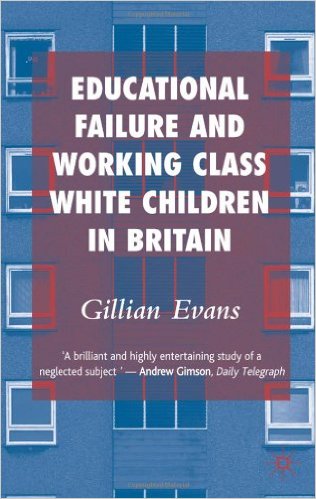
Evans

 On showing a friend, she commented to me: “isn’t that a bit…” Then followed the confused and screwed up face, because no-one wants to imply to your face that you are reading potentially politically unacceptable, racist literature.

And that reminded me of this excellent post from Bansi Kara on white working class underachievement. The sticking point in this scenario was one of names: “What do you call a group targeting white working class students?  How do you explain that this achievement group is for white students only?  If you have African or Turkish groups, it is called celebration, but if you add a white group, does it become segregation?”

Ofsted’s 2012-13 annual report includes a specific section on white children from poor families, who are falling behind: “Compared with other ethnic groups of pupils from low income families, White children have the lowest attainment.” This is of key interest to me, as my borough frequently laments a gap between achievement along these lines, and boosting the achievement of White British students has been a major priority for my school.

Here’s what Ofsted says: “It is poverty of expectation in these communities and in many of their schools, not poverty itself, that limits the achievement of these children. In the best schools, successful leaders and teachers challenge all children to achieve well. A relentless focus by school leaders on the quality of teaching creates a climate in which no child is left behind.”

I’m not sure how I feel about that. I mean, I agree with the second part: yes, focus on teaching and learning, every time. But the idea of a “poverty of expectation” just doesn’t ring true for me – unless these families and children are just really good at seeming to want to achieve.

Let me explain. I teach a large number of White British students, all of whom I would consider at risk of underachieving, but really only because I consider nearly all my students at risk of this. Humans are strange and unpredictable beings; teachers will tell you that their star pupil of one week can morph into their massive concern the next. Furthermore, you just don’t know who will fall to pieces before an exam (the panic attacks from my most unlikely Year 11 last year in the minutes before their English exams assured me of that). I’m worried, in short, about all my students.

But to peel off a group, because Ofsted says they are at risk, my school says they are a risk, and even the data suggests they are at risk, I’ll look at these individuals in isolation. These students all want to do well; they are in some ways C/D borderline students, but they want to achieve A grades in English, and they all actually could achieve this. What is holding them back?

Behaviour is an issue – and I mean the full range here; from pretty serious storming out of the classroom in anger to sitting idly and disengaging with the lesson. I speak with the parents of all my Year 11 (race non-specific) a lot. And you know, the White British parents are nothing but entirely supportive of everything I do. They become angry if their child has disappointed me; they talk to their children, they support their children, they come into school to talk with me. I saw all of that in evidence at last year’s year 11 parents’ evening, when 100% of the White British parents attended and spoke with me, and I know when I say I will ring a parent they will become either elated (if it’s good news) or desolate if it’s not. The relationship is working; parents are supporting their children and the school.

So what’s going on?

I turned to Gillian Evans’ Educational Failure and Working Class White Children in Britain in the hopes of gleaning an insight. Yes, the book is from 2006; however she speaks of children in primary school who I am teaching now in secondary school (hypothetically, I mean).

Evans’ book is made up of extensive field research: she lived on a council estate in Bermondsey anyway and integrated herself into the community, conducting interviews and observations over the course of a number of years. The difficulty with this is that the research is all qualitative – I’m not sure how relevant one particular woman’s outlook on life is to all of my students several years on.

Nonetheless, the first aspect which jumped out to me was rules. Early on in this study, Evans notes that while middle class children turn up to school very ready to learn, working class children do not: “the form of participation that is required of them at school doesn’t closely match the one that is required of them at home.” While middle class parents create and enforce strict boundaries, leading their children to recognize these in the school setting, apparently working class parents tend not to. So, in some ways, despite wishing and wanting the best for their children, and despite supporting the school, their offspring will always struggle with tough behaviour boundaries.

This is expanded upon in one case study in which a parent “believes that her daughters’ happiness depends on her giving them the freedom to ‘do as they please.’” This parent’s comment of: “if they want to learn they will, if they don’t they won’t and that’s that” did ring surprisingly familiar to me: I have actually heard almost these exact words from more than one parent.

Evans does not provide solutions in her book, only an overview of some working class values and lifestyle factors which can be inferred to lead of educational “failure”, or at the very least, underachievement.

And this is where I feel frustrated. To return to Kara’s initial comments, we know there is a problem, we almost know what the problem is, but we are powerless to do anything about it. I remember a colleague bringing up a meeting with just White British parents and dismissing it almost as soon as it was brought up – what would that look like?

I will go back to the drawing board on this one, but if anyone can provide any marvelous strategies that aren’t perceived as a little bit racist, I would so love to hear them.

Postscript: I wrote this post back in May, and have been squeamish about putting it onto the internet. Then, I didn’t know what would happen to my C/D borderline White British students, but now I do: they achieved B grades in English. Each and every one of them.

Update: A wise friend has just commented to me: “The fact that your white British parents attend parents evening is the main reason their kids got B’s”. I can’t agree more, and will be posting about the issue of non-attendance at parents’ evenings soon, as it has been especially on my mind this week.