Off-duty Reading

Now is the time that my quest for all-the-book-reading reaches its epic zenith. My educator readers might allow me this self-indulgence; I wanted to share my thoughts on what I have been reading while on holiday. This is partly to combat my previously noted tendency to race through books without pause, in using this public forum to school myself in reflection on what I have read. Partly, of course, this is written because, as much as I love school, students and teaching, my brain doesn’t want to do as much thinking on these subjects during the summer months as it does on novels, and other such “fun books.”

In an attempt to justify my words below, this blog is not overtly about education: it is, rather, about books. Only incidentally do I hope to offer any musings on the former.

So – to the vacation! Let me paint a picture: friends, sunshine, plenty to do and see, and me, in a corner, on my own, with my Kindle. This might give you an idea of why you should never, ever agree to go on holiday with me, and allow you to understand why my friends ostracise me at the poolside.  Here were my favourite reads, read in idyllic surroundings with the greatest of hosts and the greatest of friends.
Hearts and minds, Amanda Craig

I began with a paperback by one of my new favourite authors, recommended to me by one of the most impressively well-read, deeply intuitive and eminently qualified teachers I know, Mrs. Clayton. Anything Mrs. Clayton tells me to read, I know I will love. I am indebted to her for this authorial recommendation. I had previously read “A Vicious Circle”, which explores the sordid world of London publishing, with deep delight, and found “Hearts and Minds” similarly enjoyable for wholly different reasons.

Firstly, I love a book set in a place I have lived. The familiarity of London here brought the author’s reality to life all the more perfectly for me. Craig’s characters are a mix of very real, and very stock, yet this is a mix which works. Her interweaving storylines are always an enjoyable puzzle, and in this novel she takes on different ideas about immigration, by focusing her perspective on a variety of classes and cultures. For a more focused awareness of migrants and a storyline at times as outrageous as any BBC thriller, I would recommend this book.

Dark Lies the Island, Kevin Barry

As noted in an earlier post, here, I am trying to increase my reading of short stories. Barry’s stories had been recommended to me by scores of almost universally Irish friends, and I began with this tome purely as it was the most recent I had heard of. I was not to be disappointed.

These beautiful vignettes of Irish life span the island in its modernity, and veer from SoCo (South County Dublin; Londoners, think of purest West London) kitchen drama with a light tone reminiscent of Ross O’Carroll-Kelly to a Joyce-esque devastating portrait of a man trapped in a routine. Language is used in an enjoyably creative way; Barry describes a clean-cut type with an “orthodontic beam” early on; a man aware of the familiarity of his quest for originality notes that: “every last crooked rock of the place had at some point seated the bony arse of some hypochondrical epiphany-seeker.” A short read, but one I took my time over.
Transatlantic, Colum McCann

Have you read “Let the Great World Spin”? It ranks in my all time top ten books, possibly even top five. I trusted in McCann and took a gamble on his new novel.

While I didn’t feel “Transatlantic” reached the mountainous heights of “Great World…”, McCann’s construction of narrative and meticulous research cannot be faulted. His Irish roots have come to fruition at last, as he turns his attention to the “Irish Question”, as always, in an inventive manner. The way in which he interweaves his stories is not as clear as Craig’s, and yet his work seems all the more literary for that intentional blur.

The especially superb parts of this text are, in my view, McCann’s reimagining of Frederick Douglass’ voyage to Ireland, and George Mitchell’s chronologically later appearance as an unnamed senator detailing the intricate narrative of life and negotiations at that time.

McCann’s language is always succinct: in depicting life in Dublin’s slums of yore he writes: “women walked in rags, less than rags: as rags”, for example. His summary of the British feeling on the Northern Ireland issue, though perhaps coloured, is excellent: “embarrassed by what they have done for centuries in Ireland. Ready to leave. To hightail it out of there. They would wipe their hands clean in an instant, if only they didn’t have to do it in front of the world.”

Revolutionary Road, Richard Yates

In a moment of weakness, I watched this film on iPlayer about a year ago and thus consigned myself to never reading the novel – that’s how it works, right? Then, in a second hand book shop, I came across it for only £2 and couldn’t resist.

I am extremely glad I gave into temptation, for if the film is unremittingly depressing (don’t watch it if you’re even a little bit sad) the book is far, far less so. There is an abundance of humour, both in terms of irony and also in Yates’ playful use of language. One example I was so particularly fond of as to bore those around me in its recital is this: the central character, Frank, justifies his decision to take on an unexciting career by saying:

“Look at it this way. I need a job; okay. Is that any reason why the job I get has to louse me up? Look. All I want is to get enough dough coming in to keep us solvent for the next year or so, till I can figure things out; meanwhile I want to retain my own identity. Therefore the thing I’m most anxious to avoid is any kind of work that can be considered ‘interesting’ in its own right. I want something that can’t possibly touch me. I want some big, swollen old corporation that’s been bumbling along making money in its sleep for a hundred years, where they have to hire eight guys for every one job because none of them can be expected to care about whatever boring thing it is they’re supposed to be doing. I want to go into that kind of place and say, Look. You can have my body and my nice college-boy smile for so many hours a day, in exchange for so many dollars, and beyond that we’ll leave each other strictly alone.”

The crisp narrative appears to fly on apace, although ironically this is a book which turns on inaction.

The tragedy with which the novel ends is surprisingly muted. There is a lack of feeling or emotion in the text, which serves to emphasise the ideas Yates seems to be putting forward in the narrative.
David Copperfield, Charles Dickens

After my recent diet of extremely fun, and universally modern books, I felt like I’d committed the reading equivalent of eating one too many McDonalds. Indeed, I have for a long time felt the English graduate’s smugness of having read pretty much all of the Oxford Classics (when I say read, you might substitute “skimmed” or even “read a series of critical essays plus selected skimming”) at University. But it is time to face facts: there are innumerable “classics” I did not read, or did not read properly, and it is time to put this to rights.

Now, I’m cheating here because I haven’t actually finished this book. But I really wanted to write something about “David Copperfield” because I have rarely enjoyed Dickens. The promise of “Oliver Twist” was not fulfilled for me in “Bleak House” or “Little Dorrit” or “Dombey and Son”, possibly one of my least favourite tomes (shortly followed by “The Faerie Queene” – if you have read and enjoyed it, I bow in your literary honour).

Following university, it occurred to me that Dickens is not best read skimmed. His way with words is the essence of his work; the plot, surprisingly, is not enough. I went on to read “The Old Curiosity Shop” and “Great Expectations” about five years ago, but slowly, and with some surprised enjoyment. Yet “David Copperfield”, at least until page 724, supersedes all the previous Dickens of my acquaintance. It is really, really funny, for starters. The characters in this novel have multiple dimensions and conflicting passions and prejudices in a realistic and natural way unachieved in the texts named above. The use of first person is delightfully employed, and in my year 7 Scheme of Work for Autumn 1 on Dickens, we will certainly be revisiting parts of this novel.

My only wish with Dickens is that the latterday publishers would divide his novels into installments as they were initially published for his reading public. In fact, I feel there is an opportunity for a service which delivers weekly or monthly installments to your inbox, to prevent us slaving away unnaturally at a thousand pages a time.

So endeth the self-indulgent survey of my holiday reading. Lest you non-teachers think I slack, I will assure you I have also read more study guides, Cambridge Companions, literary essays, critical biographies and pedagogy guides than you can shake a large stick at in preparation for the new academic year – do not entirely begrudge me the rest.
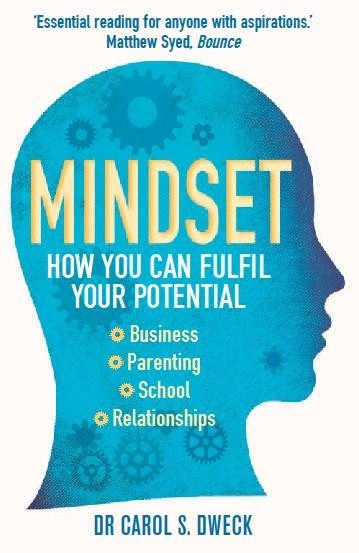
Mindset

Many months ago, I was taking part in a focus group on challenges students face in our current education system and I remember posing a question to the group.

What I want to know, I remember saying, is what makes this kid different. Plenty of my students face immense challenges, and they fail. How is this one, who has faced every challenge imaginable, thriving?

At that discussion, my question was swept away – perhaps it was too big, or too vague; certainly it seemed to the panel too little connected to our remit.

Let me be specific here in a way I wasn’t then. What I want to know is this: how has her unimaginably deprived upbringing and lack of parental involvement somehow led to the most impressive vocabulary in my year 11 class, and the most advanced understanding of literature? How are her difficulties translated into A*s, and other students’ difficulties aren’t?

The woman next to me wrote two words on my notepad as the discussion continued: Mindset. Dweck.

I had heard of this book; indeed I felt I had based my educational beliefs on its central premise without even reading it: all children can learn, all children can grow their intelligence. The ability to attain academically is created, not inherent.

When I finally got round to reading this book, then, I confess I was already willing it to be great. And, if you strip away two thirds of the anecdotes, it really really is.

Early on, these anecdotes are useful and illustrative; for example when exploring the approach of young children who seemed to enjoy tackling hard problems and failing, for the sole reason that, to their minds “they didn’t even think they were failing. They thought they were learning.” I would love my year 9 to approach English like this: we had an impromptu discussion about mindset after I had read the book and the students conceded that “we could learn more if we stayed focused… But it’s just too hard.”

This is just one example of the limits of mindset: yes, it is vital; but there are many other factors to consider when analysing the way children respond to education. My year 9 also felt their creative and sporting talents were fixed and unable to be improved. As one heart-breakingly put it: “I’m in bottom set for everything. I know I’m dumb.”

This statement clearly reveals the student’s mindset; what it does not reveal, however, is what has happened in the past to cause this student to be in set 5: not lack of intelligence, but lack of effort. What has happened in her education that she hasn’t put that effort in; hasn’t wanted to put that effort in? What challenges has she faced that students in the higher sets have not?

Dweck does acknowledge these and other limits, for example when discussing depression. Of course depression is caused by more than a fixed mindset, however she chooses to view the idea through this small prism, and in its own way it contributes to psychological discourse without seeking to define it.

One other caveat which is useful is her acknowledgement that people with resources, such as the safety net of money, will inevitably “take more risks and keep going longer until they succeed.” Moreover, “people with easy access to a good education, people with a network of influential friends, people who know how to be in the right place at the right time, all stand a better chance of having their effort pay off.”

This is a text all about work, and anyone who knows me will attest that work is my favourite thing. The central premise of this text was transformative for me: if more effort leads to more success, we’re just hours (perhaps ten thousand?) away from really amazing things.

More valuable than this, of course, are the implications for my students. I have long found that time spent convincing kids they can do something will always pay off. This book gives plenty of help on rephrasing your praise to be more growth orientated (although I draw the line at Dweck’s self-flagellation for accidentally saying her husband was “brilliant” – it’s fine; sometimes language needs to be more fluid than this).

So, back to the challenges facing students in education. Perhaps it would not be the worst thing in the world to spend some time investigating how best to grow a growth mindset in our most challenged students. If we cannot cure the social ills that plague our students, can we at least prevent the certainty that they will hold these kids back from achieving their full potential.

Finally, one of the surprising outcomes of reading this book was a personal one. When deciding whether to take on more responsibility as an educator, my initial response was: “no. I’m not ready. I will probably fail, so trying would be stupid.” Like my year 9, I sought approval: I wanted to be the best at what I was doing. Yet reading Dweck’s words had a profound impact on me: “people in a growth mindset don’t just seek challenge, they thrive on it. The bigger the challenge, the more they stretch.”

Yes, I might fail, but also yes – I would become a better educator for that experience. As one anecdote reads: “if you only go through life doing stuff that’s easy, shame on you.” Shame on me. Let’s see how I fail better next time.

mindset

In Praise of ‘Of Mice and Men’

I’m aware that this post’s title alone may have caused a not insignificant number of readers, in particular those teaching English, to pull at their hair shouting “doom! Never make me read this again!” Also, hands up if you studied this for your GCSEs? I am imagining lots of hands. AQA, I would love a statistic on just how many children have studied this novel and taken an exam in it.

More than ten years ago, I was taught this novel by the most knowledgeable and charismatic teacher you can imagine. At that time, this was undeniably the best book I had ever read, although I think I only know that in hindsight (my taste was all over the place – my 15 year old self would probably have said Orwell’s “Keep the Aspidistra Flying”, a book I have since discovered is one of his most derided works).

The themes in the novel are epic: life, death, hope, dreams, power, powerlessness – I could go on, but I am trusting that 90% of readers can fill in the blanks themselves.

What really struck me about this novel was that when I came to prepare to teach it 11 years later, it still got me in a big way. Sitting on my sofa one sad, exhausted Friday, I ploughed through the entire thing, only to find myself weeping uncontrollably by the final pages. Why did this happen?

There is a fabulous essay, which I made my year 11 read, by Thomas Scarseth called “A Teachable Good Book”, in which he discourses at length on the nature of tragedy and whether this book is one. Unarguably, catharsis is a key component of tragedy, and if my sniveling, hysterical reaction is anything to go by, this book is one.

It is a tragedy of another kind, however: of both the ordinary man, and the unlucky man. In our comparatively caring society, the modern reader pities Lennie and sees him as this force for general good, albeit one liable to make mistakes. Through Steinbeck’s narration, we come to empathise with him, even as he commits the most horrific acts. We are made to understand why, and made to feel intense pity. The narrative comes crashing towards its tragically inevitable climax and we find ourselves wondering “how could this happen? How could it have been changed?”, much like, I would argue, in the closing scenes of many a Shakespeare play.

Another reason I wanted to blog about this book was because I am an examiner for an GCSE Literature paper, and as part of my duties I read the alternative modern texts for this exam. Only a few struck me as enjoyable, the others I struggled through, and none bore the hallmark of great literature in the way that Steinbeck’s novel does.

If we want students to become readers of literature, they surely must study the greatest literature; not just books which are conduits for discussing a writer’s techniques. We wonder why this book is so omnipresent on the English curriculum, but have we really looked at the alternatives? I would rather teach a truly great novel, even if it means repetition for me.

Finally, this novel opens the most gifted students up to the greatness of Steinbeck. Many of my year 11s also read The Grapes of Wrath; one even read East of Eden. It also primes them for a wider and more advanced study of American Literature at A-level, containing, as it does, the most crucial themes and some of the most pertinent contextual facts of that nation.

All in all: yes, we teach it to death; no, there are no better alternatives currently; but yes, this is undeniably a towering work of fiction.

There are no shortcuts

Teaching is really, really hard. Anyone who is a teacher already knows this, but I need to preface this post with that key piece of information lest any non-teachers be reading. Yes, it is the greatest job in the world, but it is also, at times, unremittingly tough.

I wanted to write about Rafe Esquith, because I am coming to the end of my third year, and teaching is still really hard. Esquith was one of my first-year crutches: when I wanted to give up, or thought “actually, I’m making no difference at all, and I don’t really know how to”, I would pick up one of his books and I would find the tenacity to carry on.

Thank you, Rafe Esquith, because those hard times became fewer and further between, and I stuck it out. But there are still times where you wonder “is it worth it?” – those are the times you need this book. Maybe leaving school after an arduous parents evening which has made your in-school working day 13 hours long, and that’s before you mark year 9 at home. Maybe in those long winter months, when you leave home and it is pitch black and you return home and it is pitch black. Maybe after marking 28 essays and 28 books and organizing revision clubs and breakfast boosters and lunch boosters and a student still says: “I don’t understand. I need more help”; or more time, which you don’t have, because the exam is this Monday, and you have 27 other students, and this child has only just started to care about their exam, and if they had cared two years ago they might not be saying this now.

Whatever the scenario, when in doubt, read “There are No Shortcuts.”

Rafe Esquith works in a system that sounds tougher than anything I have ever heard of in the UK. Early on in the book, Esquith writes to new teachers: “outstanding teaching will require you not only to do everything in your power to reach your students but to battle the forces that are supposed to be on your side.” His is an administration doggedly opposed to any kind of innovation or creativity in the classroom, portraying low expectations of children at every turn. One example of this is that he can’t teach a full text; he needs to teach snippets of great literature to drill kids in multiple choice exams which say nothing about their aptitude for essay writing. As an English teacher, my heart hurt when I realized that an act of rebellion was teaching a full text, something I took utterly for granted. Indeed, Esquith advises to “read your favourite books with your students”, something I can already do, thanks to an incredibly trusting Head of English.

Esquith teaches fifth grade in a primary school in an extremely deprived part of Los Angeles. The rallying cry of this book is in the title: there is no magic way to help students catch up who are far behind their peers. You just need to work at it; and Esquith does: terrifying commitment is shown in every utterance. At times, you do wonder whether he is not actually an exception, and whether all folk could find this level of hard work sustainable.

What is great about this particular book is that you realize that Esquith did not always get it right. He made mistakes, and yet persevered, and altered countless lives. This is comforting to any teacher beginning to doubt their “calling.”

So, if ever you need your fire for teaching re-lit (and “Lighting their Fires” is another Esquith I would recommend), turn to dear Rafe, marvel at his efforts, and remember he is a human just like you, and what you do is amazing.

Born to Rise

​Deborah Kenny is the founder of Harlem Village Academies, a chain of charter schools based in one of Manhattan’s poorest neighbourhoods.

Kenny’s book does not spare the reader some shocking statistics; in 2008 in the area of Harlem where she proposed opening her first school, 78% of 8th graders were failing reading and 87% were failing Maths; students in their catchment area had only an 8% chance of attending university; and in 2002 only 16% of 8th grade Harlem students could read at grade level.

HVA was founded on a simple principal, and one that many educators would endorse: what would I want for my own children? Kenny observed teachers in countless charter schools, and although she saw some flashy lessons, for example fun ways to remember Mathematics formulae, she felt that she wouldn’t want her own students to be taught like that: she wanted her kids to love Maths. Similarly, HVA was set up with no system of rewards – instead, Kenny wanted students to behave because they wanted to learn. Succeeding academically was the reward.

What also marks HVA out is its emphasis on teaching and cultivating brilliant teachers. As a teacher myself, I find this hard to argue with. Teachers need to be granted freedom and trust to carry out their duties to the best of their capabilities. Kenny even recognises this in herself, noting that while she had fully trusted her “rock-star teachers” one of the initial failings of the schools was that she had found it harder to grant those same freedoms to struggling teachers.

Yet Kenny redeems herself even in this, describing teachers who struggled in her schools and how she challenged herself to not give up on them, instead working collaboratively to help them to improve. This is surely the dream in education: we have all become teachers for similar, value-laden reasons, yet often other factors (both within ourselves and outreaching contexts) contribute to the success or lack of success of our classes. Rather than writing teachers off, Kenny’s programme of formative assessment of observed lessons and team planning to improve delivery ensures that no teacher is left behind.

I love this idea, for it helps teachers everywhere on the spectrum. The most “outstanding” teachers I have the privilege of working with impress me everyday with the simple fact that they focus not on what they have done, but how they can improve it in the future; including improving outstanding lessons.

Rather than a summative grade, which could arguably encourage coasting, surely a more effective way of keeping teachers engaged is surely working together to improve on a curriculum or lesson plan, acknowledging greatness but also building on it.

(HVA’s website, which is worth a visit, states that: “The freedom we enjoy at HVA is guided by purposeful collaboration with the rest of the team, so that we become better teachers and leaders every day. HVA is a lively laboratory of co-planning, co-grading, and co-observations followed up with genuine conversations. There’s no formula or magic bullet; just old-fashioned, hard questions like, “How could that section of the lesson have been more engaging?” As educators, we love the feeling of continually improving our craft.”)

What I enjoyed also about this book was the personal touch. To begin with, I was confused by Kenny’s inclusion of her very personal family and faith inclusions, however as the book went on I understood their importance to her charter school vision.

Moreover, these personal elements mirrored the personal dream of the schools as a place where professionals are also friends. Kenny’s warm love for her teachers shines through the book, as much as her frankly expressed love of her students.

The bottom line of this book is that we need to be ambitious when it comes to our children’s futures, and we need to face up to the fact that what works in the short term doesn’t always mean the education we would want for our own children. Children from low-income homes are all of our responsibility; they are all our children, and we need to build a school system that reflects that.

BornToRise

The Fault in Our Stars

A really special thing started happening about two years ago which has enriched my life to no end. Having drowned my students in reading lists and excited rushes around the library thrusting books at them with maniacal enthusiasm, they began recommending books for me to read.

I really need to big up the year 9 student in my tutor group who told me to read this particular one – I don’t think it would be fair to use her real name, so we can just call her Mrs Bieber (it’s the name she would want – trust me).

Mrs Bieber told me to read this book by John Green, and then told me it was about a cancer patient. With all due respect to sufferers, I have to admit I was not especially pumped for this book. Many of my students have a deep love for what we might cruelly term “misery lit”, and I assumed this book would fall into that category.

Mrs B assured me otherwise. I took the book, and can’t thank her enough for persisting. This is a story about a cancer victim, but it has a major twist. This girl is about so much more than just her disease. She comes alive on the page effortlessly; we are invested within five pages; we really care about her as a person. We want to be her friend.

Hazel has terminal cancer, and this never once stops the reader rooting for her in life. Her death is casually assumed in her narrative voice and never dwelled upon. Through Hazel, we are continually reminded of the need to stay in the present. This story is essentially centred on her first romantic experience.

Her story is both realistic and magical all at once, and told with care and humour. The humour is vital. There are also some interestingly post-modern intertextual references to  made-up books, which I am certain will posit interesting literary thoughts in more erudite minds than mine.

I will be recommending this for my students. Thanks Mrs B!

the fault in our stars