Professional distance and politics

In this week’s “Tough Young Teachers”, one of the trainees talks about professional distance, mentioning he’s not a father/brother/uncle, but a teacher. Sure, the lesson of his week seemed to be that letting his guard down a bit led to big gains with a hard-to-reach student; but most teachers will agree with the dictum of professional distance.

It’s not that I’ve ever fiercely guarded my private life, but if it doesn’t come up at a time when learning is not happening (and without a tutor group, it doesn’t tend to) I won’t mention it. This week, one student asked me during break if I was a nun, which interested me, but was possibly more to do with my below-the-knee skirt than anything else.

Also, there is the legalese on political balance to be aware of – you can’t fly a particular political flag in your classroom; you must introduce balance. These are impressionable young minds, after all. 

Over the years, I’ve shied away from politics and political statements more and more. I think this is mostly down to my personal preference to be inoffensive to others, as well as my general ennui with the political game.

Increasingly, I’m starting to wonder if this is an acceptable approach.

A couple of years ago, one of my oldest and dearest friends asked me to go to see a film with wadjdaher that she had free tickets for called “Wadjda.” I agreed, mostly because time with her is golddust (she spins many plates) and I wanted to catch up. It came as a genuine surprise to me that this film was scheduled on Internetional Women’s Day, mostly because I didn’t have an awareness of when that day was. Before the film, we chatted, among other things, about “feminism” and both agreed that 1. We weren’t feminists and 2. We thought feminism was a bit outdated.

After the film, we were both put firmly in our privileged places by the media before us. Luckily for us, we live in the UK, where a woman’s freedom is equal to a man’s; a woman’s legal rights are equal, access to education is equal, and the right to work and generally live unfettered lives of choice are equal. My ignorance of the experience of the rest of the world was poorly showcased as I watched open-mouthed at a little girl who was not allowed to ride a bike in public, in a film set not in the dim and distant past, but today, right now, in a different part of the world.

And then I sort of got on with my life.

Somewhere along the way, I found myself reading Caitlin Moran’s “How to Be a Woman”, which is hilarious and brilliantly written. I nodded along to everything she said, while simultaneously recognising that, actually, I conform to many of the expectations society unfairly has of women (example: I do things men do not, such as wear make-up: Moran tells us we need to ask one central question to see if something is fair or not, and that is “are the men doing it?”).

And then, again, I got on with my life.

But misrepresentations of women are all around us, and accepting this and buying into this is undeniably damaging for the future generation – this future generation, part of whom I happen to teach, working, as I do, in a girls’ school.

Working in my second girls’ school was definitely unplanned. Although I loved my first, I sought to broaden my experience by joining a mixed school. And although I was offered a great job in just such a school, I happened to fall in love with my current one on interview day, and here I am.

I have always maintained, however, that segregation of schooling for any reason (money, faith, gender) is wrong. I’ve maintained this very, very quietly, because I really hate disagreeing with people. I’m also a terrible debater, so I’d rather write my views here and run away. I can’t hold my own in an argument. I start smiling and nodding too soon.

My belief that gender segregation of schooling is unfair stemmed from research I encountered early on in my career that, while girls do just as well in single sex schools as in mixed schools, boys don’t. By this, of course, I mean exam results. So there are a whole lot of boys out there who aren’t getting as good of a deal as the girls I am lucky enough to teach.
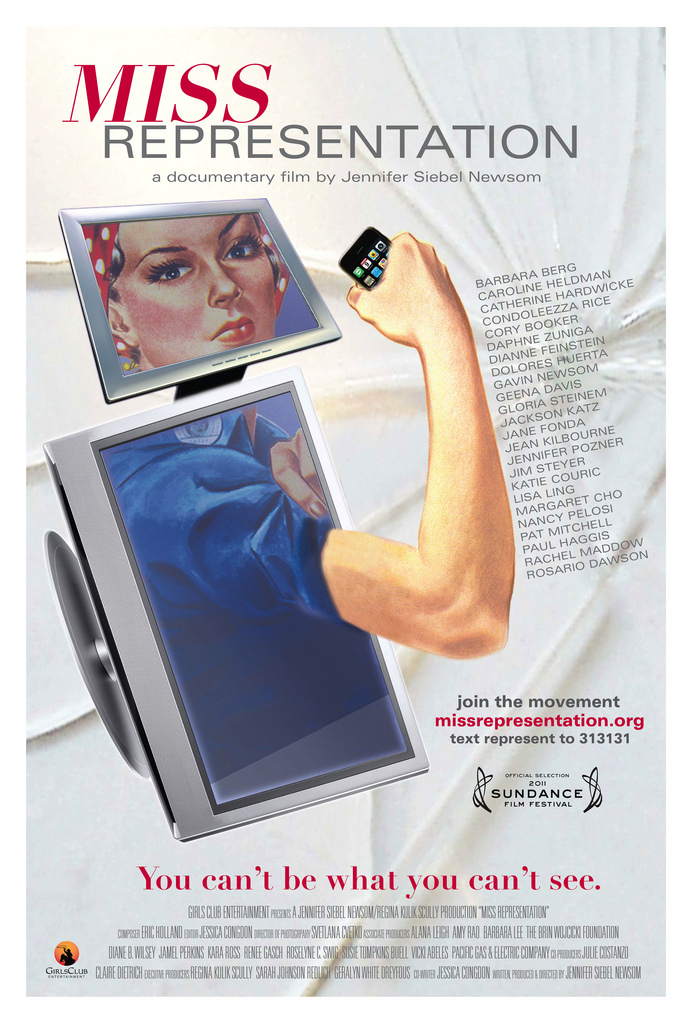
Miss_Representation_(2011)The film “Miss Representation” has put me firmly in my place on that. Because actually education is not just about exam results. So the boys don’t do as well in their GCSEs? They go on to dominate the media and society as a whole in every conceivable way.

I visited a school in my first year of teaching with a heavy boy bias, due to being flanked by several girls’ schools in the surrounding area. While there, a colleague informed me that the girls had a big problem with “self respect”: they would let boys talk to them inappropriately, and even touch them inappropriately, many of them falling in line with the expectations of women the media had of them. I sat in on a wonderful assembly, where the girls were gathered and shown this Dove ad. They were spoken to about their potential, and the role they should be looking to play in society.

In “Miss Representation”, the media’s bias is laid bare, with advertising, tabloid journalism, music videos, news broadcasting and politics all explored to mine the cultural implications for women. Watching this, I found myself thinking about the students I teach, and the amount who can become very passionate and articulate about why they should be allowed to wear make-up to school, but don’t seem to have an awareness of why they, as females, are expected to wear this make-up while men are not.

I’m wary that banging a feminist drum will alienate people, but perhaps I need to be a better role model for the students I teach. It’s really hard to get some students to buy into education, but what if they knew the world they would enter into would be one where their voices would be always judged in accordance with their looks? Might they better see the link to be made between an education and redressing the balance?

These are impressionable young minds. I’m in a privileged position to be leading them. I think it needs to get political.

Beyond the curriculum: my lovely week

I’m not going to lie; I’ve had a lovely week.

It’s cathartic to moan, and I do a lot of that, and I’m also aware that the mega-enthusiasm I bring to many a table can be unbearable, particularly when my conversees have not had such a happy time.

Still, it has been a lovely week.

Aside from meeting up with my favourite teacher friends, teaching my regularly amazing and gorgeous classes and having a super invigorating department meeting with some of the other amazing teachers I am privileged to work with, a couple of lovely things happened in the English department.

First was that we began the peer mentoring programme with a trial group of 22 year 11 students. I’m going to write about this later in the process, but suffice it to say we had some lower achieving students paired with some higher achieving students, and the enthusiasm, earnestness and synergy happening in the room gave me goose-bumps. It was probably the most rewarding moment of my teaching career to date, but I’d rather not jinx its success by writing too soon.

My second treat was to teach an A-level “taster” lesson. We’ve got an incredible year 11 cohort, and would very much like them to take up English next year, preferably with ourselves. I won’t claim credit for the lesson content – that was down to my (oft-mentioned and amazing) line manager. I did stand up and deliver the thing, which is perhaps less important but means I got a lot of the credit.

The concept was a journey through literature. We began with some knowledge-mining – how much do students know about when things were written? The spectrum is astonishing; some students knew the exact year of publication of their favourite books, others thought Shakespeare wrote in the nineteenth century. We cleared up some misconceptions and started to introduce students to various periods, beginning with Old English, skipping through Chaucer, onto Spenser, Dryden, Wordsworth, Browning, T.S. Eliot and finishing with Bukowski. All short poems, or short excerpts of poems.

The students had to assign each text to a period, having first explored the key features of texts in those periods. They then did some grid work, analyzing the poems and beginning to interpret them.

I was frankly amazed at how enthusiastically the students powered through, and how focused they remained. There was a lot to take in; my trusted mentor warned me beforehand: “be careful – you want to excite them about English, not drown them.” It truly could have gone either way, and was perhaps a risky tactic to recruit students. Particularly as during their A-level course, they won’t be traversing every time period in literature, or reading every play or every seminal poem ever written, however much we would like them to.

Still, it was such fun. Without a set of Assessment Objectives, or mark schemes; without writing quotas or behaviour management (I took a “softly softly” approach, because they’d chosen to do an extra two lessons at the end of a long week, and let’s face it: they’d chosen to be there, so didn’t particularly need that much “managing”) I felt uplifted, in the way that sometimes happens when I go off on a tangent but they happen to learn something from that tangent.

It was empowering for the students, who have more of an outline of context than they had before. It was empowering for me, to look at difficult texts and posit interpretations; stretching and shrinking activities as their interest and mine dictated.

All in all, it was truly lovely, and I very much wish that all teaching of all lessons of all days of all children could be like this.

Endnote: I over-use the word lovely. My first year 8 class never let me forget it. I stand by my word choice.

Reading Ofsted reports

The big ‘O’ has proven to be a popular blog-post topic since probably the beginning of the organisation’s inception, so I’m not sure what my two pence will add to the conversation. Nevertheless, I found myself in a Buzzfeed-esque Ofsted loop recently, going through more and more reports (guidance as well as school reports) and a number of things struck me:

1. What does it mean to be an “outstanding” school?

My plunge into the Ofsted website began when my interest was piqued by a number of education bloggers I follow. Knowing them by reputation alone, I assumed the schools they led were outstanding. After all, they lead the community in thought, they consistently push themselves to do better, they inspire their staff, who also blog, to work hard, and they set challenging goals for all their staff and students.

I was wrong. I found many of these schools led by visionaries were “good,” in particular among those schools recently Ofsted-ed.

I then decided to look up schools local to me, as well as those local to the last borough I taught in.

I knew what I was looking for – schools which were Ofsted “Outstanding”. What made the difference? I’m not entirely sure. The wording of the “Outstanding” reports seemed strangely similar to that of the “Good” reports, even down to the recommendations for improvement.

Finally, I looked up the “Outstanding” reports of schools I personally believe not to be outstanding, from conversations with colleagues and visits. This was a waste of time, as with every high praise I remembered another teacher anecdote and scoffed a little.

2. What does it mean to be a “good” school?

I decided to look at a school I feel is as close to outstanding a school can be under the new criteria. I read the “Good” report, which was similar to many “Outstanding” reports I had recently digested. I read the report from the previous inspection. And the one before that. And the one before that. All good. Each time, the recommendations for improvement were seemingly minor, and each time subtly different. Wow, I think I’d feel a bit cheated if I was the headteacher of that school.

I also looked up schools in that school’s borough, and they were almost all “good” as well, despite being reputed to be significantly worse than this school.

Is “Good” the new 2.1 degree? As in, it can be achieved with both limited and excessive effort?

3. What’s the actual difference between good and outstanding?

I’m looking at the subject specific guidance and feeling like I’m marking controlled assessment again. What really, really is the difference between good and outstanding? It feels very elusive if I’m honest. What I would love are some concrete examples.

For example, in the subject specific guidance for English I’m not sure what the difference between the below statements is. Actually, I’m not even sure I don’t prefer the “Good” to the “Outstanding” explanation. Am I missing something?

Pupils, and particular groups of pupils are well-equipped for the next stage in their education, training or employment as a result of excellent educational experiences. (Outstanding)

Pupils and particular groups of pupils have highly positive educational experiences in English that ensure that they are well prepared for the next stage in their education, training or employment. (Good)

Then there is the giant caveat that Ofsted don’t provide a checklist – it needs to be “best fit” in the opinion of the inspector. I’d like more information on the training of Ofsted inspectors, to be reassured about their training and expectations, as I’ve definitely met some dubious ones moonlighting as consultants (as have many teachers, if Twitter is anything to go by!).

4. Does it even matter?

Reading this blog, which I found extremely shocking, I wonder more and more whether an inspection team doesn’t begin with the end in mind. Do they arrive knowing the result, having explored the data already?

I was told once that it was all about the “feel” of the school: if the kids seem happy and the staff seem motivated, that is the most sure way to the Outstanding lane. But I would say that staff are motivated and children are happy in a huge percentage of “good” schools I know of.

Increasingly I wonder: is there any need for a four point system? It’s basically a two point or fail system at the moment. Why not: good/not good? Why not, instead of awarding a seemingly random “Outstanding” accolade to a select bunch of schools who may or may not have “gamed” the system, make those schools work for it – if they genuinely are a cut above the rest, they can demonstrate this in a myriad of other ways more sensible than painting “Outstanding” on their signage, such as by supporting other schools or opening their doors to teachers from “Good” schools seeking to improve to stratospheric heights.

Because that’s the thing – I have worked in an “Outstanding” school, and definitely believe that there are many schools which are genuinely incredible schools which have much to teach. But there are enough which seem to have achieved this without the support and belief of the local, teaching or pupil community to make me question it.

Furthermore, although my last school was undoubtedly an incredible place to train and work (I adored it), we also lived under the fear of “demotion” as a result of the next impending Ofsted, and that is no way to motivate staff to do a great job day in, day out.

For extended reading, I point you to the Master of Ofsted blogs, Andrew Old, who has done more report analysis than you can shake a stick at.

ofsted outstanding

What I want from an education in English

I write to think. It has always been this way.

It’s coming to the end of what most teachers would say is the longest term; certainly any NQTs and Teach Firsters out there will find this term longer than any other. Students are tired. Staff are tired. Things that would leave you unruffled in September, and even November, now cause undue stress and anxiety. You can’t smooth over disagreements with cheeriness. There is no cheer left.

These are the dark days of teaching, both literally and metaphorically. We wake up in the dark, get into school in the dark, leave school when it is dark, walk down dark roads to dark homes. I have a tendency toward very painful headaches at this point in term, normally on Monday and Friday evenings, so there are several times when I sit in the dark. It’s a gloomy old time.

I’ve found myself this week feeling like I don’t have a vision. I don’t know where I’m going, or why. I am a product of Teach First and Teach for All’s sessions, which have shaped me, and I truly feel that without a vision I am purposeless; anchorless.

You can’t go into school every day just to pick up a paycheck. Teaching is too hard for that, too demanding, too exhausting. I’m finding I seem to know more and more people who are leaving the exhausting and frustrating world of state education for what seem to be Elysian fields of private schools: a curriculum they have control over, a trust concerning their professionalism, shorter school years and higher pay.

I’m writing to think today, and I’m trying to think out this “vision” business.

I can start with my students, because when all else fails they are my bright shiny beacon of hope. I’ll start with the students who miss a lesson and track me down to pick up the work. They brighten my day endlessly.

Because I want my students to be independent. I’ve loved Lucy Crehan’s post on Canadian schools here: our students should be encouraged and led towards this level of independence and motivation. At the moment, there are 35 students in Year 11 who are on a D or below in English. All of them could be on a C. What is missing is not intelligence, but motivation.

And then there are the students, and I usually find this out when I call home or meet parents at parents evening, who “are always talking about English.” They love it. They enjoy it.

I want my students to have joy in reading, and joy in exploring texts. Of course I want them to achieve high levels and high grades, but I definitely don’t want to drag them across the level 4 threshhold or D/C borderline kicking and screaming. I want them to drift there naturally, as the cumulative result of reading and enjoying their learning; wanting to do more and go further.

The students who bring a book to detention, and it is one I have recommended. The students I see reading while queuing outside their next lesson. Even the students who I catch reading when they should be doing their task.

If my students don’t love reading when they leave me, I will have failed. And I’ll admit that every year I fail many, many, all too many, students in this respect. It is something I need to work harder and smarter at, because too many students leave secondary school and never pick up a novel again.

What does that mean?

  • Students who are self-motivated and want to succeed.
  • A love of learning.
  • Education not as a means to an end, but a joyous end in itself.

There is another aspect of this vision business, which I alluded to earlier. It is contentious among my friends and colleagues. All children, they contend, deserve an amazing education. I have to agree.

But I also have to work with students who might not have the advantages that others grow up with. Because it is a cruel and unusual thing that students will go further the better off their parents are. It is undeniably wrong that the achievement gap between the haves and the have-nots is refusing to close. I adored Stuart Lock’s post about why he wants to be a head; I would echo all his sentiments, which are too eloquently put to summarise here.

Education needs to become the equalizer. For all the talk about what a teacher is not, and the reasonable expectations of a human doing a job and having some kind of life, I accept that there are times when teachers have to play the social worker, the state, the parent even. We have to pick up the responsibility, even if it is not our responsibility, because it is the right thing to do.

There are children who will leave school without qualifications, who have despised their education, who will never fulfill their potential. And I will work every day to make sure that that doesn’t happen for one less child.

It’s definitely not a vision yet, what I have written above. I write to think, and I am grateful you have read.

Women in literature (or: this one’s for the girls)

I didn’t choose to work in a girls’ school. It just sort of happened. Twice. I wasn’t even aware, the first time, that girls’ schools existed outside of the independent sector. And this is in no way me weighing in on the argument about mixed or single sex education: I am too utterly torn between the unfairness of working in phenomenal schools that effectively exclude 50% of the population, and the fact that girls are really, really lovely to teach on their own. (I know it’s more complicated than that, so here ends my weighing.)

One thing that I love about working in an all-girls’ school is the way I can shape my lessons and my curriculum to reflect what are also my concerns. I can obviously understand and empathise with the women in literature and the feminist concerns more readily and with more interest than those of the other sex. I know what girls like. And I’m sure my colleagues in mixed schools know what both boys and girls like, but with me there was no learning involved.

It’s self-indulgent to have the capacity to only consider what would interest people I was once like. My reading lists are undeniably lacking in machismo, action or horror, or any of those texts that traditionally don’t appeal to women; don’t appeal to me.

But what is much more important than all this literary laziness is the opportunity to be proactive about women’s issues. That’s right, I said it. Because for all our assumed equality, there is a massive bone to pick with literary history, and I intend on my girls knowing about it and reading about it, then using those glasses to look more closely at the way things are now, and to draw some new conclusions.

Year 10 have just finished studying a beautiful course my department has called “Women in nineteenth century literature.” The first half term, we skipped through “The Lady of Shalott” and waded more slowly through “Jane Eyre,” before considering the female mindset under patriarchy (or, hysteria) in “The Yellow Wallpaper.” We then segued into an exploration of women who once earned us the right to vote, looking at the pamphlets they wrote and the speeches they gave.

The young women I teach are full of confidence, and full of brains. They brim with these. There is an overriding concern in some areas of some English departments with what boys are reading, and what boys are learning, and how to engage boys in reading and literature; in particular ethnic groups particularly. But when you dig down in the data, with the luxury of looking only at the girls, the same under-achievements are there. Yes, girls do better overall; but crucially, not as well as they could.

Of course, gender is only one slim strand of a person’s many-textured personality; it is simplistic to argue that if I like it, they like it. But I will be forever grateful for the many opportunities this single orientation has allowed me.

The hierarchy of literature

I’m at the start of a dawning realisation: that what I thought was my subject is not my subject; and where I thought my subject, which is not my subject, sat in the hierarchy of subjects is also incorrect.

This may sound garbled, but that’s because this realisation is only beginning to take shape in my misinformed mind.

As a teacher of English at GCSE, I have been complacently used to being at the top of the pecking order when it comes to subjects at GCSE: no, English boosters are that night – sorry other subjects, bow down to the mighty English. That enrichment activity supports English? Here are plentiful funds to ensure it takes place. Let’s give year 11 a massive weekend of revision, and let it be only English (and some Maths).

All of this assured me that children reading books was at the very heart of what our schools are all about (tied only with Maths).

But that’s not it at all.

Reading books, studying great literature, isn’t in fact anywhere on the pecking order. It’s a sideshow; an optional extra. We pretend English is at the core of the curriculum, but what we really mean is being able to read and write. These are the necessary gateway tools to accessing all written material ever – with the exception of troublesome novels, plays and poetry – and this basic literacy is of the utmost importance until students are 16.

It’s not that I disagree with the above at all. I just feel that the reading of fiction is the crucial way in which we make sense of the world, and that the above can in fact be taught most effectively with books, and not Guardian articles.

Speaking of which, my world came crushing down with this Orwellian vision of a literature-less future from Polly Toynbee here. With the new KS4 curriculum, about which I had been so optimistic, Toynbee points out that, as literature has been removed from the language component, while not being made a compulsory second GCSE, children all over the country will be deprived of reading great books.

In my own North London bubble, I know my children will always do literature. Our lucky year 10 and 11 students have 6 lessons of English a week, and are split into tiny classes (7 sets where there could easily be 5) specifically to enable them to study both GCSEs.

But what of those thousands of other children in other schools?

Similarly, having all my life assumed English Literature A-level is top dog in the A-level pecking order, in a natural inheritance from GCSE, my assumptions were cruelly crushed by an esteemed colleague (of Science background) who assured students that, in fact, the number one Arts subject they could study was History.

Where’s History coming from? Why all of a sudden does History get a look in? And if it is the most impressive Arts A-level and most respected by universities, why don’t all students have to take History GCSE with the same fervour we ascribe to English and Maths?

So I’m getting used to my new position in the world of education. Not as imparter of great literature, but as teacher of grammar and spelling, as well as decoding words to make sense of those words.

This new Literature GCSE, wide-spanning and demanding as it is, can and should be taught to all students. Yes, some will need more time and more resources to succeed. But would you send your child to a school that didn’t teach it?

Rigorous reading

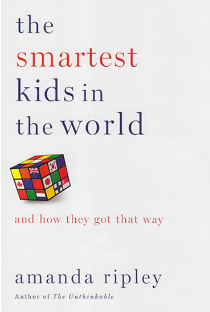
ripley smallI’ve just finished reading this amazing book, and I’d like to talk about it.

Now, I will say that the title of this book is misleading. Ripley’s front cover picture of a consortium of flags suggests a more omni-country approach than we actually find. I for one would be happier with a title which is explicit in noting that this book explores the education systems of only three countries.

But what countries they are: Finland, South Korea and Poland. With heavy emphasis on the first two. In fact, having finished this book 5 days ago I’m struggling to remember what Ripley says about Poland, though what she says about the other two is emblazoned on my brain. Perhaps this is understanding bias, however; I’ve heard a lot about Finland and South Korea, and naturally my non-rigorous reading will more easily process this.

I believe my response is the one Ripley was hoping to draw out: the sections on Finland make me want to tear up the UK’s education system and just do what they do, and the sections on South Korea make me want to tear my own eyes out.

Most teacher readers will be au fait with Finland, and if you’re interested Lucy Crehan’s blog (here) explores more key ideas than I had found compiled in one area before. The most salient points about their system include: starting school age 7, mixed ability classes, incredibly highly trained teachers brought in by a very selective system, almost no homework, almost no state exams; some of the highest achieving students in the world, according to PISA, which lots of people nit-pick, but which Ripley assures us is okay.

South Korea is a system highly praised by many, and rightly so – for its results. In this book, however, a different story is told. School begins early (8am) and continues late – study at school can go on until 7 or 8 in the evening. Students have special pillows they attach to their arms so they can nap during classes. A 12 hour day may seem familiar to most teachers, but I’d hazard none of us would want to deal with students subjected to this. But wait – there’s more! The hagwons, which are intense tutorials, take students all the way up until 10pm (legally) and beyond that time (illegally) – every day, after school.

Now, I am a fan of KIPP’s “Work hard, be nice” motto, with firm emphasis on hard work. I truly believe that anyone can accomplish anything with hard work. But this narrative of South Korea pushed me to the limit of my belief. I categorically do not want kids that have to work that hard to achieve exam results and success in life.

The main learning point I gleaned from this engagingly written book was about rigour. The essential ingredient in all these successful systems was rigour. Students couldn’t pass easily, they couldn’t achieve high grades easily. The same went for the would-be teachers.

This made me reflect on the rigour in my own classroom. I’m lucky that my predecessor instituted an incredibly rigorous KS3 curriculum, about which I have written (here), using only weighty tomes to shape our little minds. Yet there are times when I feel like the weight of this KS3 curriculum is let down by the exam-board–instituted, undeniably less rigorous, KS4 curriculum. This KS4 curriculum churns out children who, when faced with KS5 English, often take more than a year to get to grips with this new rigour.

The bottom line is: we should not apologise for asking more of our students, and pushing them harder. After all, we only have them for a (relatively) short period of time during the day. The stakes at KS3 aren’t so high that we should pressure students, but we definitely shouldn’t apologise for teaching them hard stuff and making them learn it.

As for the KS4 curriculum… I have no answers, and as yet no positive contribution to make to the conversation. I can only hope the new curriculum will push students to achieve more, because they can – albeit with hard work.

The power of the theatre

An amazing thing happened a few weeks ago for one of my year 12 English Literature students. She visited the theatre for the first time.

Let’s take a moment to really think about this: a student goes nearly 17 years of her life loving English and excelling in it, acing her GCSE English exams and opting to take English A-level. And all without ever having sat in a plush red seat, experienced the lights dimming and watched real humans saying words written by playwrights to each other.

Clearly, something is going wrong here.

This student wasn’t the only one to benefit from this theatre experience, however. I had been frustrated at how difficult my year 12s were finding Much Ado About Nothing, a product I think of the GCSE Literature course: only one Shakespeare play, and if you opt to do this for the Controlled Assessment instead of the exam, well then you may not have studied any Shakespeare since year 10.

In hindsight, it was a mistake to begin with Shakespeare. But we plough on.

The production, at the Old Vic Theatre, was certainly not a “straight” production. Liberties had been taken with setting, costume and, most obviously, casting. Even better, in a way, for displaying how versatile Shakespeare’s works are, and how open to reinterpretation by successive generations of directors and actors.

Seeing the entire play all the way through is nowhere near as soporific as showing the (brilliantly uncut Globe version) DVD all the way through. There’s something different about seeing it in a theatre, without a desk and your notepad in front of you, and without the hard plastic chairs. (Adorably, almost all of my year 12s insisted on bringing their copies of the text to the theatre, and valiantly attempted to follow it through while watching.) Also, I’m not sure how Ofsted or any other inspector would feel about me showing a film for 2 hours.

Watching the play the whole way through has led to increased confidence, increased awareness and increased understanding of the text. It will undoubtedly improve the resulting coursework, and I am forever grateful that my school actually paid for every child’s ticket in full.

Yet the theatre is about more than coursework and understanding. It is a rich cultural experience that should not be withheld from any member of society. I would argue that it is our responsibility as English teachers to ensure that every child has seen a play the whole way through by the time they leave us. This is regardless of it fitting in with their course: any experience of theatre enriches a student’s understanding of the vast body of literature, and, moreover, the different realms of literature: for some students, we must concede, literature means novels and poetry. It means words on a page. We need to change this.

I was told by a colleague of a headteacher of an outstanding primary school who used their entire pupil premium for the year to take every child to a West End show. I know some critics might deride this as a casual waste of money. But I applaud the bravery of that headteacher. He recognized that there was something so worthwhile in the enterprise of theatre, something so empowering for students, that it was worth that money.

And when it comes down to money, which it does, it seems unfortunate. As a head of department, I consider the most vital resource to be books: there always should be money in the budget for books. Yet after that, we need to consider these ephemeral “books in action,” which give so much to our students.

As a result of our year 12 theatre trip, the English department will be taking selected students to a theatre show once a term. The numbers, for money and staffing, will have to be small; no more than 20 at a time. The students will need to be chosen carefully: we want to take students who deserve a treat, and students who will benefit from this cultural experience. Perhaps we can build this momentum to bring an entire year group every year. The play, of course, will also need to be chosen carefully: I don’t think I want to take year 7 to Chekhov. Rafe Esquith also notably emphasizes the importance of educating students about the play before the visit, so they can squeeze the most out of the experience.

The theatre should not be an optional extra. It should not be cast aside as too expensive, or a waste of valuable resources. And we should not have 17-year-old budding literary critics who have never been there.

Diary of an English Teacher

The below is a very out of character post for me, comprising what are essentially diary entries surrounding the only thing I have been able to think about all week: GCSE results.

7pm, Benugo, Wednesday 21st August

It’s the day before GCSE results and I am terrified. I have been afraid for this day for what feels like an age, and if I don’t write I will scream. Aloud. In this coffee shop. I come here a lot, so I’m going to write instead.

This culture of results defining kids – for themselves, for the school, for their teachers – is beginning to get me down. I found a picture of my year 11s today, and I found myself looking at each face wondering what their news will be tomorrow. How different their lives will look tomorrow.

And what I remember is their ample success, the success they have banked already. They have studied for 3 years with me, 2 of those years on two GCSEs. We have come through their anger at being in my class –set 2, not set 1, a tough blow for many. We have got through their boundary testing – those year 9 kids were very different to the young women who left in May.

They weren’t a reading class, and at the start I didn’t do a lot to change that. But the class I left had studied some wonderful works of literature: Romeo and Juliet, Macbeth, Dorian Gray, The Crucible, Robert Browning and individual reading projects of classic texts.

They have written some truly amazing essays: one particularly notable one was at least of A-level quality, but was pegged down three marks in our moderation  because it hadn’t fulfilled all the AOs to the same impressive degree.

When kids write beyond the syllabus, I find it cruel to teach them how to jump through hoops. When they can grasp incredibly complex concepts, what a waste of their time to teach them what an examiner is looking for, rather than the very best way to do something.

I was very inspired by the masterful Mary Myatt’s review here of Martin Robinson’s book, “Trivium”, in particular this:

He took his drama students through deep processes to achieve outstanding results. Consistently among the top in the country. This book and the man need to be taken seriously. He saw what was wrong with the course he was expected to teach. So he got rid of unnecessary homework, ‘writing about misery and colouring in pictures of misery’ and replaced it with a notebook in which students would be expected to collect fragments of writing, experiences, dreams, stories, poetry, lyrics, history, theory.  The material transformed from fragments to connections and became the ‘clothesline on which the lessons were hung’.  ‘I refused to take things students to see things they would normally see, so we never went to Blood Brothers; instead we went to see Beckett, Berkoff, Bausch and Brecht. We would take an unashamedly Socratic approach: questioning, arguing and prompting.’ The exam was a celebration of their exploration – not a jumping through the hoop to get the grades.

This is clearly a teacher who stuck to his guns and taught kids what they needed to be taught. Ofcourse that is how you do it, of course that is the best way. Yet I don’t. Not in year 11, the most important year for growing students, before we cast them to the wide world. I don’t because I know I can teach them to pass an exam, and the other way is a gamble.

Incidentally, my own English teacher told me a story of yore about a genius child he taught, who achieved an A-star in every GCSE except English. He related that he had looked over the student’s shoulder as he was writing his exam responses and described his work as “degree level English”. My teacher believed the examiner might simply not have understood what the student was writing.

Does this sound made-up? It’s a story from so long ago, hearsay, that I don’t want to name my teacher for fear I have mixed details. But I myself taught a sixth former this year. Her ideas and oral expression were phenomenal. Her style was inimitable. I had to unpick her beautifully and effortlessly constructed sentences to work out what she was saying, but I suspected she was just a bit too smart for me. I cautioned her to writing clearly, while also maintaining she needed her own style to mark her out at university. I had her pegged for Oxbridge. She received a D in her AS level. What happened?

I fear for my amazing and intelligent 11s. I know how hard they worked and how amazing they are. I know they know more than enough to achieve double A-star.

But will they have remembered to jump through those hoops?

8.25am, 21 bus, Thursday 22nd August

It feels like I fell asleep about twenty minutes before my alarm went off. Hitting refresh on e-AQA for the 6 minutes before results were officially available paid off, as only three minutes in I had my answers.

It’s a strange one. Over the two GCSEs, over 28 students, only one achieved a C – the rest were A* to B. Sounds good right?

I’m not sure how my students will feel. My 6 or 7 best deserved an A star, and the fact that not all were even cripplingly close is disappointing. There are also so many more B grades for Literature than I expected; I had heard it was more easily marked, and certainly we spent class time revising Literature (not Language) to the extent that I wasn’t entirely sure my class would all pass the latter.

I can’t wait to see the students and find out what they think, but overall I feel deflated. Last year the majority of my class exceeded expectations. Not this year. Perhaps that is the curse of having a higher achieving group of students to begin with: you know they will be fine, and there is numerically less room for them to fly above expectations.

5pm, Southbank Centre, Thursday 22nd August

Coming to the end of a long and emotional day. So many students were delighted with their A grades, and due to almost no one getting above a B for the poetry paper we are having lots remarked from my class, which could swing some students towards the grade they deserve. School is happy – we have smashed all previous A* to C (including English and Maths) records.

Going in meant seeing students who hadn’t known I was leaving, which was horrible. When they mentioned it, they tended to ask: “how long have you known for?” I am chronically unable to lie (this has been and continues to be a massive hurdle in my teaching practice) and I couldn’t face the awful truth of how long I had been duplicitous, so I mostly shifted uncomfortably.

Following results, I enrolled students onto our sixth form. I had the pleasure of seeing some of my own students, for whom the world was mostly their oyster, as well as some heart wrenching moments with other students, watching their closely held dreams, usually of medicine, coming to an end.

The whole thing has been so emotionally stressful for all involved. And these students will do it again next year. And the next year.

Perhaps there is a better way. I think I need a few paracetamol, a good night’s sleep and then a long think.

12.30pm, dining table, Friday 23rd August

Nope, still got nothing.

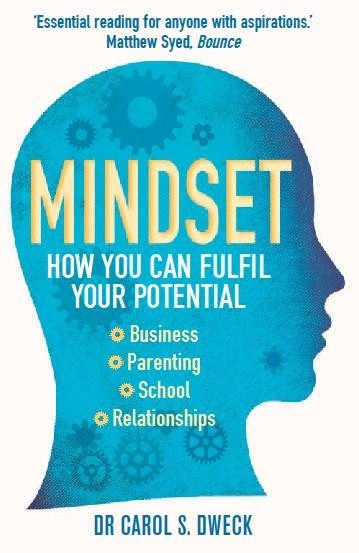
Mindset

Many months ago, I was taking part in a focus group on challenges students face in our current education system and I remember posing a question to the group.

What I want to know, I remember saying, is what makes this kid different. Plenty of my students face immense challenges, and they fail. How is this one, who has faced every challenge imaginable, thriving?

At that discussion, my question was swept away – perhaps it was too big, or too vague; certainly it seemed to the panel too little connected to our remit.

Let me be specific here in a way I wasn’t then. What I want to know is this: how has her unimaginably deprived upbringing and lack of parental involvement somehow led to the most impressive vocabulary in my year 11 class, and the most advanced understanding of literature? How are her difficulties translated into A*s, and other students’ difficulties aren’t?

The woman next to me wrote two words on my notepad as the discussion continued: Mindset. Dweck.

I had heard of this book; indeed I felt I had based my educational beliefs on its central premise without even reading it: all children can learn, all children can grow their intelligence. The ability to attain academically is created, not inherent.

When I finally got round to reading this book, then, I confess I was already willing it to be great. And, if you strip away two thirds of the anecdotes, it really really is.

Early on, these anecdotes are useful and illustrative; for example when exploring the approach of young children who seemed to enjoy tackling hard problems and failing, for the sole reason that, to their minds “they didn’t even think they were failing. They thought they were learning.” I would love my year 9 to approach English like this: we had an impromptu discussion about mindset after I had read the book and the students conceded that “we could learn more if we stayed focused… But it’s just too hard.”

This is just one example of the limits of mindset: yes, it is vital; but there are many other factors to consider when analysing the way children respond to education. My year 9 also felt their creative and sporting talents were fixed and unable to be improved. As one heart-breakingly put it: “I’m in bottom set for everything. I know I’m dumb.”

This statement clearly reveals the student’s mindset; what it does not reveal, however, is what has happened in the past to cause this student to be in set 5: not lack of intelligence, but lack of effort. What has happened in her education that she hasn’t put that effort in; hasn’t wanted to put that effort in? What challenges has she faced that students in the higher sets have not?

Dweck does acknowledge these and other limits, for example when discussing depression. Of course depression is caused by more than a fixed mindset, however she chooses to view the idea through this small prism, and in its own way it contributes to psychological discourse without seeking to define it.

One other caveat which is useful is her acknowledgement that people with resources, such as the safety net of money, will inevitably “take more risks and keep going longer until they succeed.” Moreover, “people with easy access to a good education, people with a network of influential friends, people who know how to be in the right place at the right time, all stand a better chance of having their effort pay off.”

This is a text all about work, and anyone who knows me will attest that work is my favourite thing. The central premise of this text was transformative for me: if more effort leads to more success, we’re just hours (perhaps ten thousand?) away from really amazing things.

More valuable than this, of course, are the implications for my students. I have long found that time spent convincing kids they can do something will always pay off. This book gives plenty of help on rephrasing your praise to be more growth orientated (although I draw the line at Dweck’s self-flagellation for accidentally saying her husband was “brilliant” – it’s fine; sometimes language needs to be more fluid than this).

So, back to the challenges facing students in education. Perhaps it would not be the worst thing in the world to spend some time investigating how best to grow a growth mindset in our most challenged students. If we cannot cure the social ills that plague our students, can we at least prevent the certainty that they will hold these kids back from achieving their full potential.

Finally, one of the surprising outcomes of reading this book was a personal one. When deciding whether to take on more responsibility as an educator, my initial response was: “no. I’m not ready. I will probably fail, so trying would be stupid.” Like my year 9, I sought approval: I wanted to be the best at what I was doing. Yet reading Dweck’s words had a profound impact on me: “people in a growth mindset don’t just seek challenge, they thrive on it. The bigger the challenge, the more they stretch.”

Yes, I might fail, but also yes – I would become a better educator for that experience. As one anecdote reads: “if you only go through life doing stuff that’s easy, shame on you.” Shame on me. Let’s see how I fail better next time.

mindset