Top Reads of 2023

Non-fiction

Viviane Robinson Reduce Change to Increase Improvement: My brilliant colleague at the National Institute of Teaching, Paula, recommended this. It has been hugely influential in developing leadership approaches that are clear and simple, and is full of helpful and realistic examples.

Peps McCrea Developing Expert Teaching: I’ve lost count of how many times I’ve quoted this book. A great synthesis of the evidence and theory of teacher development, told in McCrea’s trademark no-fluff style. A great one to read alongside lengthier tomes that illustrate the “how”, but the quickest and easiest to revisit for the core, good stuff.

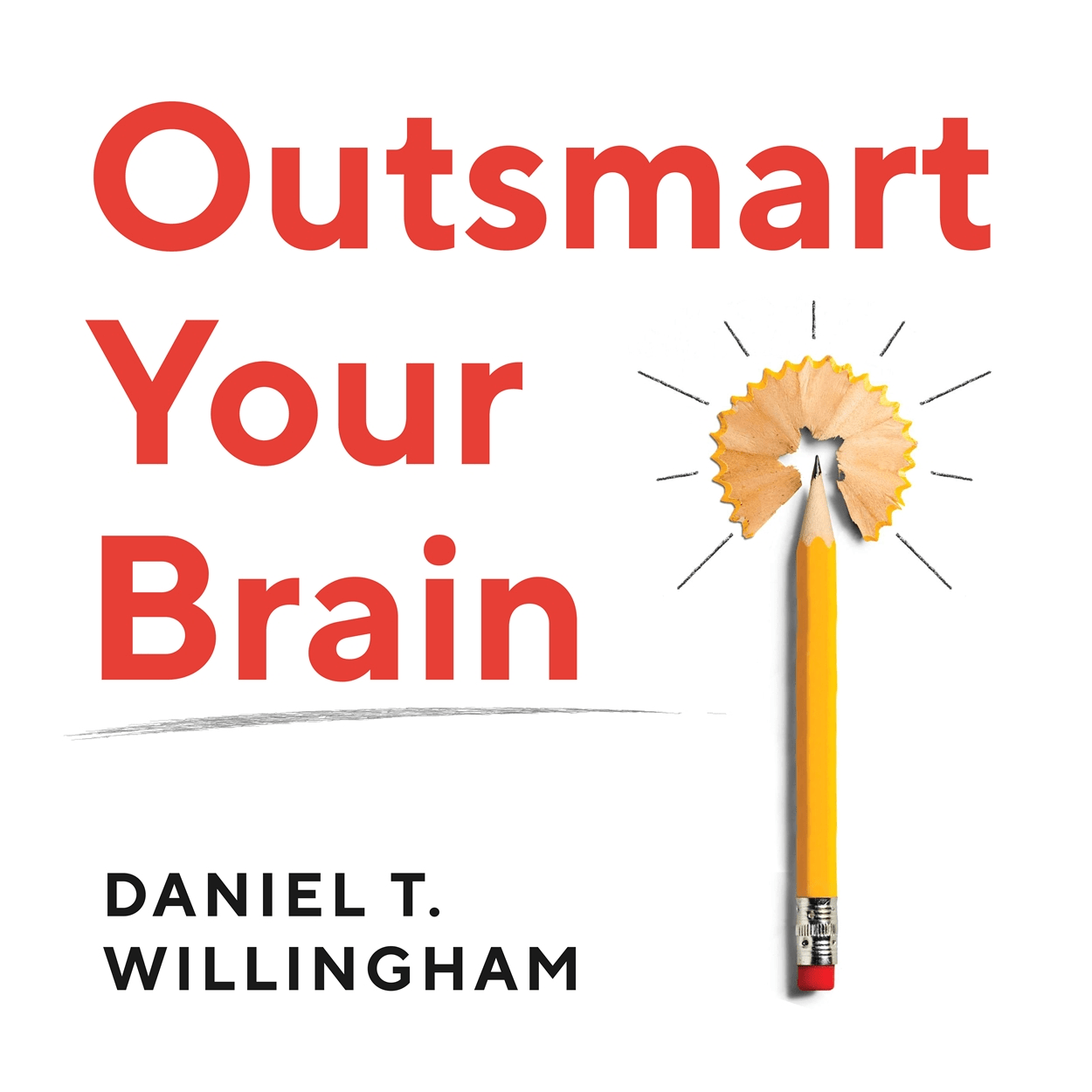
Daniel Willingham Outsmart your Brain: Loved the latest from this education guru. Great tips for self-study from cognitive science, which could – with minor adaptations – support secondary pupils to do better in this.

Matt Lloyd-Rose Into the Night: I really enjoyed this account of Lloyd Rose’s year with the policy: a funny, sad, smart account of how the force works with our most vulnerable communities, and some incisive thoughts about how we might do this work better.

Jeffrey Boakye I Heard What you Said: Boakye can’t write a bad book, and this probably my favourite yet. A searing account of some troubling racism in our education system, this challenged some of my curriculum beliefs and gave me a lot to lose sleep over. We have to do better.

Daniel Finkelstein Hitler Stalin Mum and Dad: Quite possibly the most astonishing memoir I have ever read. A deeply personal account of the Holocaust atrocities juxtaposed with, perhaps lesser known, Soviet war crimes and their echoes through a family history.

Greg Ashman The Truth about teaching: Ashman brings research to the practical realities of the classroom, and I found this particularly insightful on the importance of early career training as well as how teachers can check which methods have more impact within their departments.

Cal Newport Deep Work: Another NIoT colleague, Reuben, recommended this (I love working with colleagues who read). A compelling thesis, and helpful lens to see how to split your workday. More of a way of life than tricks and tips.

Fiction

Brandon Taylor Real Life: this manages to be both readable and richly layered with perspectives and meanings and metaphors. Just brilliant and moving and gorgeous to read.

Maggie O’Farrell The Marriage Portrait: one of my favourite writers fictionalises one of my favourite poems. Lived up to every expectation.

Bonnie Garmus Lessons in Chemistry: feminism, motherhood, friendship, a dramatic twist – this book has it all.

Donal Ryan The Queen of Dirt Island: hero headteacher Carly Moran told me to read this and it resulted in a particularly humiliating tube journey as I sobbed through the final chapter. A slow burn that is well worth the payoff. Ordinary life transfigured by prose.

Reading resolutions

I’m surprised at how few fiction reads I loved enough to recommend, considering I read about five fiction for every non-fiction book. On reflection, what I’ve done is read a massive amount of stupid thrillers and romances which were fun at the time but didn’t really stick. Next year, I resolve to read more “proper good” fiction. Please share any and all recommendations!
Call for contributions

The to do list of the school leader is daunting to say the least. Just glancing at standard job descriptions for those in leadership positions can prompt the question: how does one human being do all of that? It seems monumental.

And yet, school leaders do it. For those aspiring or new to school leadership, the more we can see inside the role and understand what happens day to day, the better we can be in leadership roles ourselves.

There is no shortage of books on the theory of leadership. But what is harder to find is work on the action: what to do as a school leader. I’m working on a new book that focuses on just that.

This book will look at four aspects of running a school: curriculum, behaviour, teaching and operations. It is intended to be a helpful, practical guide to school leadership. I know there are thousands of inspirational school leaders across the country doing great work, and so I’m asking for volunteers to share their experiences and expertise to form part of this book.

If you have a particular aspect of your role you know you do well, or if you’ve had impact in improving a particular area of school life, I’d love to include your voice and what you’ve done.

It’s a practical book, so I’m looking for what you did, step by step. You might have rolled out a teacher coaching programme. Rather than the evidence behind coaching, I’m looking for what you actually did: how did you get buy-in? How did you organise coaches? How did you clear time for training? How did you organise timetables for coaching to be able to happen? You might be the school’s Designated Safeguarding Lead: what is your checklist? How do you approach new concerns raised? How do you check in with key pupils and how often? You might have re-worked your school’s duty points. How did you choose where to have these? How did you manage timetabling teacher duties? How did you train teachers in doing these well? How do you follow up if they miss a duty?

If you’re interested in contributing your expertise, either as a short, 500-word narrative or as a checklist or other helpful artefact you’ve used in your role, please click on the form.

A list of current proposed areas the book will explore is below, so I’m especially interested in hearing about any of these aspects – however, if you have something related that you don’t see listed here, please do get in touch!

  • Supporting middle leaders to create or review subject curriculums
  • Assessment
  • Line management
  • Working with Heads of Department
  • PSHE or Character curriculums
  • Literacy and the curriculum
  • Early Years
  • Sixth form
  • Extra-curricular
  • Careers education
  • Professional development
  • Instructional coaching
  • Monitoring and evaluation
  • Safeguarding
  • Working with pupils with Special Educational Needs
  • Working with pupils who have English as an Additional Language
  • Whole school routines
  • Rewards and sanctions
  • Classroom routines
  • Uniform
  • Suspensions
  • Uniform
  • Safeguarding
  • The shape and structure of the school day
  • Timetables
  • Break time and lunch time
  • Canteens
  • Exams and external assessments
  • In school exams
  • Duties
  • Reporting to parents
  • School governance
  • Office administration
  • Non-teaching colleagues
  • Meetings

Click here to contribute!

Update: as of 21 October 2023, this form was disabled due to the deadline for submissions passing. If you are still interested in contributing your expertise, please get in touch via the comments on this post.

Outsmart your Brain

Like any fan of cognitive science in the classroom, Daniel Willingham’s Why Don’t Students Like School? is one of the “must reads” I recommend to anyone interested in how children learn. These days, I come across fewer and fewer people who have not read it. Willingham’s latest offering, Outsmart your Brain, covers many of the same principles, but this time these are addressed directly to the learner.

Although this book is aimed at university students there is a lot that educators can take from it for the secondary classroom. I’ve also found parts highly applicable when thinking, as I currently am, a lot about adult education – how we train teachers, and support them to develop through their teaching career.

While parts of the book will feel familiar to fans of cognitive science everywhere, there are so many gems here. The entire section on how to take notes, for example, should be excerpted and taught to every sixth former in the land. Core aspects of learning like retrieval practice and the difference between performance and learning are explored in ways secondary students will really understand, and so could provide a useful prompt for educators seeking to help their charges understand how learning works. I’ve read about overlearning elsewhere, but Willingham’s explanation is typically no-nonsense and succinct:

First, overlearning works, just as you would expect it to. It protects against forgetting. Second, while you’re doing it, it feels as though it’s not working. It feels pointless, even foolish, to keep studying after you know something. You’re going through your flash card deck and getting every answer right, so you can’t help but wonder, “What good is this doing?” What it’s doing is strengthening the memories to shield them from forgetting.” Again, more gold dust to use when pupils claim to “already know this.

As well as the science of learning, Outsmart your Brain shades into aspects of how we work with young people, and it is in these sections we get a glimpse of Willingham the educator (can you imagine being a university student learning from him?): “If your students consistently do not ask questions, you should wonder about your relationship with them. They are not quiet because your explanations are so brilliant and clear. They’re quiet because they see asking a question as taking a risk. Ask yourself why that is.”

The final aspect of this book that I loved was Willingham’s exploration of what I’d term the problem of being human. How we learn is not quite the same as how to learn, and his understanding of the vagaries of human disposition comes into sharp focus here. Straplines such as “do not rely on willpower if you can change the environment instead” will be valuable to teachers everywhere. His explanation of the motivation to learn is clearly drawn, including here:

We are more likely to procrastinate if we think we can’t succeed at the task we ought to do. If your instructor assigns Bleak House, you not only have all of the usual reasons to procrastinate; you also notice that the book is more than nine hundred pages long. Feeling as though you can never finish such a long book makes starting it feel like buying a lottery ticket. ‘The prize—finishing the book—sounds appealing, but I don’t think I’ll get the prize. So why start the book?’… Ambitious goals are so intimidating that we won’t attempt them. The trick is to set a much smaller goal.

Finally, one for the edu-tweeters out there whose time is drained by social media, Willingham provides advice about procrastinating in this way that is aimed at students but really meant for all of us: “For one work session, give yourself permission to check your phone as often as you want, but commit to recording three things. When you pick up your phone, rate from 1 to 7 how much you want to check it. When you’re ready to return to work, record how long you were on your phone, and rate from 1 to 7 how much you enjoyed.” There are two further steps to this, but actually this was plenty for me.

Lastly, I’d advise UK readers to go ahead and buy the Kindle version. I spent a tense week patiently awaiting my paperback arrival, before realising the estimated dispatch date was in February 2024. It will of course be well worth the wait, but I wouldn’t if you can read it now.

Reasons to love Engelmann

Superb headteacher and sensible Tweeter Nat Nabarro tweeted this over the Christmas holidays:

So, obviously, I went and bought my own copy.

Clear Teaching is great. It’s a pithy synopsis of Direct Instruction: the main ideas, the controversies, and why Engelmann himself is a master teacher. Reading it made me want to revisit the ideas in more depth, so I went back to my copy of Engelmann’s Teaching Needy Kids in our Backward System and found myself all fired up again. There are so many reasons to love the late Engelmann; here are mine.

1. He believes every child can learn

For Engelmann, there is no such thing as a child who cannot be taught. This sounds obvious, but how many times are children written off or excluded from the system? I remember being told when given a bottom set exam class in my early years of teaching: “just make sure they behave – they’re not expected to get a C.” I’ve had teachers and sometimes SENCOs tell me of certain children that “they need to be in a special school.” It is wonderfully refreshing to hear someone who affirms the belief that all children can learn, and it is awe-inspiring to hear this from someone who actually wrote the programmes which proved in study after study that all those supposedly “needy” children could learn and catch up with their peers. Engelmann himself wrote in Theory of Instruction: “We begin with the obvious fact that the children we work with are perfectly capable of learning anything that we have to teach… We know that the intellectual crippling of children is caused overwhelmingly by faulty instruction—not by faulty children.” In Clear Teaching Engelmann is quoted as saying: “the problem was not that the children had dyslexia, but that the teacher had some form of dysteachia. Most of the schools we worked in were concerned with the children’s ‘readiness’ but not with providing instruction that would make them ready.”

2. He believes that the children furthest behind can learn the same curriculum

…They just need to go faster. This is refreshing, as even in the very best schools I’ve worked in which did great things for children despite low starting points, there was an acceptance that those children needed to only study part of the curriculum to be able to succeed, be that narrowing their subject options or reducing the content of the curriculum studied. The Engelmann way is to intensively use his programmes early on to ensure those children catch up, and again he put his money where his mouth was and created and tested these programmes to show what was possible for those furthest behind. Clear Teaching tells the story of one preschool he ran: “The Bereiter-Engelmann preschool, as it came to be called, was the first to show that the academic achievement gap between rich and poor could be closed, and that early intervention with an hour or two of well-designed instruction per day was the key to closing it… Open half-days and serving poor families, the preschool resembled others in that children were encouraged to play, sing songs, listen to stories and get along with each other. What made it unique was that for twenty to thirty minutes two or three times a day, they were taught skills in language, reading and math whose mastery Engelmann understood to be critical to their future academic success.”

3. He believes in teachers

But says they need a curriculum – you wouldn’t expect a pilot to construct the engine of his plane. Unlike many of his critics who allege he thinks teachers are too stupid to be trusted to work out how to teach, Engelmann repeatedly speaks warmly of all the teachers he trains in his methods, praises the gains their classes make, and asserts that absolutely anyone – with the right materials and the right training – can make all children learn. In Clear Teaching Barbash writes: “He found that, contrary to popular belief, kids enjoyed learning hard things from adults, and gained confidence as they gained skills. Most important, he found that the results did not depend on him or a few gifted colleagues: he could write programs that allowed most people to use his methods after some training.” This is important: particularly in a time of challenge in teacher recruitment, we certainly cannot rely on a magic pipeline of genius teachers to change the futures of all the children in this country. We need something at scale which works to support all teachers to have impact – Engelmann believes all teachers can do it, with the right programme.

4. He gets kids

It is rare to find an academic who so understands the human and emotional side of the classroom, but books on and by Engelmann clearly demonstrate his skills with children. One tried and tested adage is that we must catch children being good – easier said than done for the new teacher – and Engelmann provides a solid way to do this: “DI programs make it easier because they generate such high rates of correct responses. Off-task behaviour diminishes because children are kept busy with tasks they can succeed at, and because in the end, what kids really cling to is not the behaviour itself—good or bad—but the teacher’s attention and affection.” In Teaching Needy Kids Engelmann writes: “When we trained new teachers, we stressed the importance of their responses. If they treat something as if it’s very important, that’s the way children will respond to it.” Finally, his emphasis on the choral response reveals both his understanding of how young people learn and the way to a controlled but joyful classroom: Barbash writes: “The most visible efficiency features of DI programs are concise teacher scripts and choral student responses. The scripts eliminate extraneous teacher talk, which often unintentionally confuses students. The choral response maximizes the number of times individual children respond, per minute, per period.”

5. He made programmes which work, and which have been measured a thousand times and proved to work

Not only do children taught by Direct Instruction do well, they enjoy learning. Why? Because success motivates. Direct Instruction programmes are meticulously designed to “identify key skills and teach them first… [They] build mastery through practice and intervene early to prevent bad habits.” The longest chapter in Clear Teaching consists of the references to all the multiplicity of studies which show just how effective Direct Instruction is. The challenge remains for UK curriculum makers to adopt the lessons learned in all these many trials and meta-analyses and forge curriculums which have the same impact for the children who need them most.

Clear Teaching sums up the Engelmann legacy: “He showed that poor and disabled children can learn at reasonable rates using standard levels of funding, and that it is therefore fair that we hold ourselves accountable for their learning. He showed that student behaviour is inseparable from instruction: the better the instruction, the better students behave. He showed that teacher quality is inseparable from curriculum: the better the program, the better teachers teach.”

Top Reads of 2021

2021, like the year preceding it, was very much a year of reading and doing very little else. Shamefully for me, it was not a year of writing blog posts – this is my first post since last year’s round up of top reads. I did, however, edit my book, Culture Rules, during those several locked down holidays and weekends. Have a read!

Non-fiction

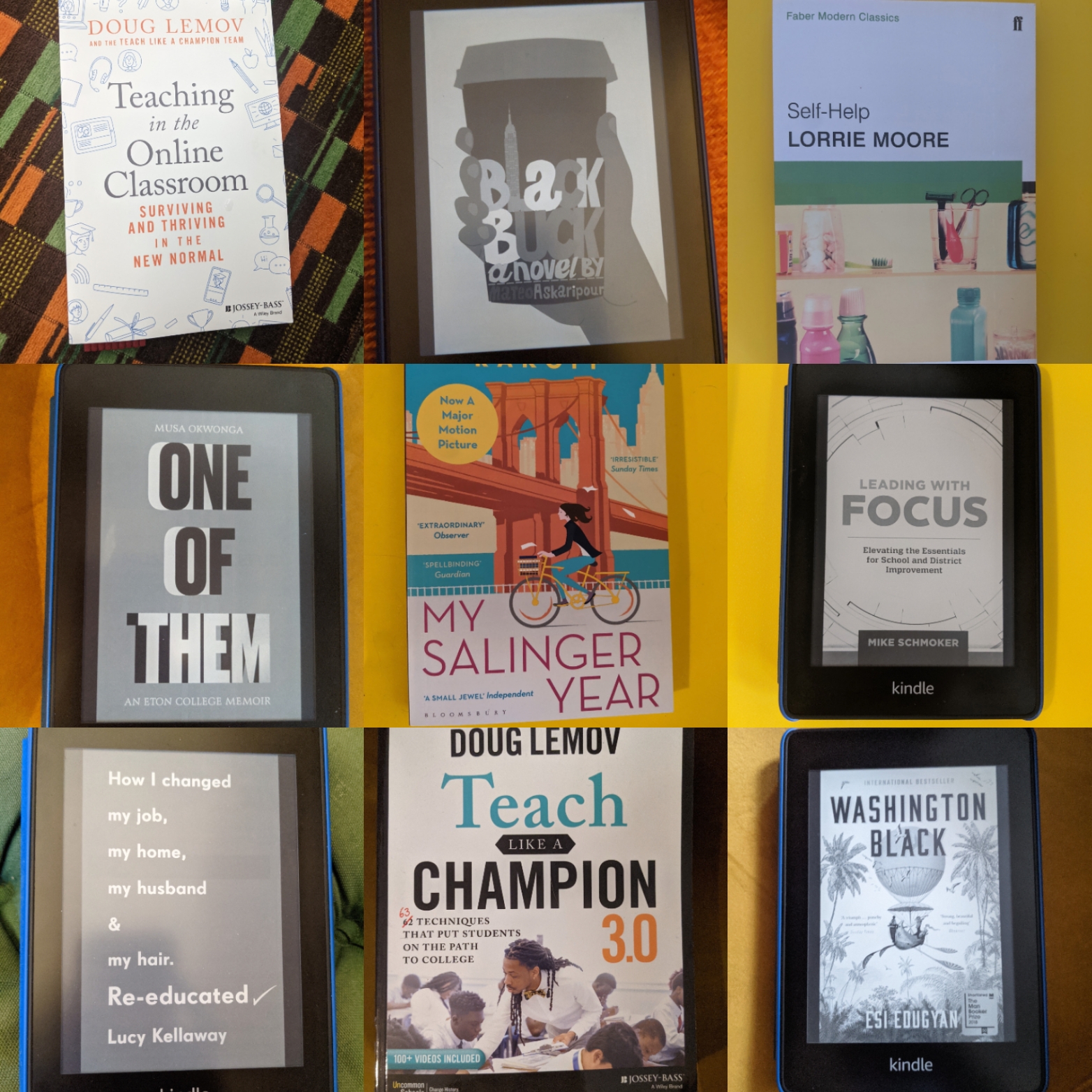
Doug Lemov Teach Like a Champion 3.0

A new edition of Teach Like a Champion is always an excellent excuse to revisit what I have come to feel are the markers of truly great classroom practice. I read this just as I reentered the classroom, having not taught for two full years – first when setting up a start-up school with no children, and then taking on a school through the second pandemic year (I was advised to not teach, and with good reason as almost every planned day last year was torpedoed by Covid in one way or another). Reading this, I found myself reflecting on how hard it is to automate the strategies that make a wonderful classroom, and how useful it is to revisit them time and time again. Lemov has provided such useful reflections and clarifications here, I challenge anyone to not find worth and expertise in this glorious tome.

Doug Lemov Teaching in the Online Classroom

I was so in denial of what was likely to happen at the start of the last academic year it took me far too long to read this. By the time I did, the incredible teaching and learning team at Ark John Keats were well into the swing of delivering CPD on remote teaching. My ardent hope for the new year is that there only needs to be one book on remote learning, and this is surely it.

Mike Schmoker Leading with Focus

This was recommended to me by not one but two of the Vice Principals at Ark John Keats. I found it particularly useful to read last year, when the sheer struggle to remain open as a school threatened to dominate. This book contains incredible clarity on curriculum and instruction, and if nothing else is a call to arms to stop focusing on anything else.

Musa Okwonga One of them: an Eton college memoir

I was fascinated by this account of attending the most prestigious school in the country – both the reality experienced on the ground, and the weight of expectation Okwonga details feeling throughout the rest of his adult life.

Lucy Kellaway Re-educated

Having followed Kellaway’s column detailing her move from successful Financial Times journalist to the classroom, I bought this for the writing style alone. The fuller picture – that of setting up a teaching charity from scratch, changing home and ending a marriage – was equally extraordinary. A compelling and inspiring account.

Joanna Rakoff My Salinger Year

A wonderful memoir of Rakoff’s work in the 1990s with a literary agency which happened to represent J.D. Salinger.

Fiction

Amor Towles Rules of Civility

This was my top fiction read of 2021, with characters I genuinely missed when I finished reading. Towles evokes an atmospheric 1930s New York as well as making the central relationship of the book – a female friendship – feel real and relevant.

Gemma Reeves Victoria Park

I spent many lockdown days in Victoria Park, Hackney, and bought this book because there is always something wonderful in reading about a familiar place. Though this book is made up of short narratives, the characters are loosely connected in what feels like a very current, almost anonymous London way; not through startling revelations but instead through minor coincidences.

Mateo Askaripour Black Buck

This satire made me laugh and cringe in equal measure. Despite its clear fable-like unreality, you really root for the main character throughout. Race is central to the book, and it also felt like a sharp critique of the empty hollow at the heart of modern start-ups.

Emily St John Mandel The Glass Hotel

This book swirls around a key line which echoes through its pages, its meaning becoming clearer and clearer as the story goes on. The parallel stories, which at first seem utterly disconnected, collide in a fascinating conclusion.

Lorrie Moore Self-Help

I cannot believe these short stories were published in 1985 – they felt utterly modern. Mainly around relationships and their messiness, the stark poetry of some phrases made stayed with me for days after reading them.

Esi Edugyan Washington Black

Though set in a time of slavery, this book resists being solely a slave narrative. A rich and complex novel, especially around the uneasy exploration of race relations at an individual level.

Teaching at Ark Soane Academy

As part of the Ark network, Ark Soane Academy will benefit from a wealth of expertise on teaching and learning. Ark provides central professional development that is second to none, as well as facilitating teachers to study for professional qualifications like the NPQML or NPQSL. 

But we all know that professional development of teaching is about so much more than professional qualifications.  

Teaching and learning at Soane will centre on a spirit of continuous improvement. Teachers at Soane will always seek to get better at the most important thing they do: teaching. 

We’ll work in the context of cognitive science: we believe that something is only learned when it is committed to long-term memory. We believe in frequent, low-stakes testing to support learning. We believe in clear teacher-instruction, and teacher-led questioning and discussion. We believe in extended practice focused on the core aspects of the subject. We believe in frequent, subject-specific, feedback; not onerous marking. 

 Excellent teaching will be ensured by two central concepts: impeccable behaviour and coaching.  

Impeccable behaviour will be ensured from day one at Soane, with children inducted into the school’s behaviour policy for one whole week at the start of year 7. A centralised detention system will support teachers to enforce high standards. Plenty of whole-staff training will ensure that teachers are as consistent as possible when applying sanctions, to ensure we can be completely fair to those in our care. Impeccable behaviour means teachers can focus on the most important thing: teaching their subject to children.  

Our coaching model will support and stretch teachers at all stages of their career. We know that one-size-fits-all professional development alone will not deliver world-class teaching. At Soane, all teachers will teach with their doors open; a signal to their fellow professionals to come and look at what’s going on. Teachers will provide feedback on teaching to all members of staff, regardless of the supposed school hierarchies. Every teacher will observe another teacher weekly – a short observation, just 10-15 minutes – and give feedback and an action step to improve teaching.   

We can all always get better at what we’re doing. If the idea of continuously improving, while supported by strong school systems, appeals to you, we’re hiring now. 

Leading at Ark Soane Academy

Starting a school from scratch is the opportunity of a lifetime. You have a blank slate on which to project your every hope of what a child’s education might be. While those limitless choices might seem daunting, we are lucky to be surrounded by a group of highly successful schools with Ark, including a number of successful new-start schools. There are no shortage of smart, experienced educators to guide Soane’s way.

What would you do if you could start a school with only year 7? What would the ideal behaviour policy, curriculum, lesson look like? What systems would need to be in place to make that happen? Which parts of all the best schools you know of would you take with you?

We already have a clear idea of the kind of school Soane will be: a rigorous curriculum delivered by subject experts who plan lessons with the lessons of cognitive science in mind, high expectations of behaviour, and opportunities to build cultural capital through enrichment. The large-scale values are in place.

What is not yet in place is the fine detail.

We are looking for exceptional teachers and leaders to lead at Soane. Every teacher we hire for September 2020 will be a leader: unlike a long-established school, the founding teachers always have a special place in a new start school. Whether they choose to pursue promotion or to stay in the classroom, no other teachers who join us later will have created the founding systems of the school. No one else will have as strong a sense of the school. No one after will have made the school from its foundations up.

If you believe strongly that every child is capable of academic success, that every child has the innate potential to be an upstanding citizen, and that the highest expectations of behaviour allow children the freedom to learn, leading at Soane may be the right place for you.

Over the coming weeks, we are welcoming applications from motivated teachers at all stages in their careers to join the founding team to begin our school. It will be a rigorous process, because there will never be a more important team than those who found our school. You will need to be an excellent classroom practitioner, have a strong understanding of the science of how children learn, have a mind for detail and a wish to create and perfect new systems at all levels of school life. Most importantly, we are looking for people who love their subject and who love children.

Please see the ‘vacancies’ tab on our webpage to explore current opportunities with Soane.

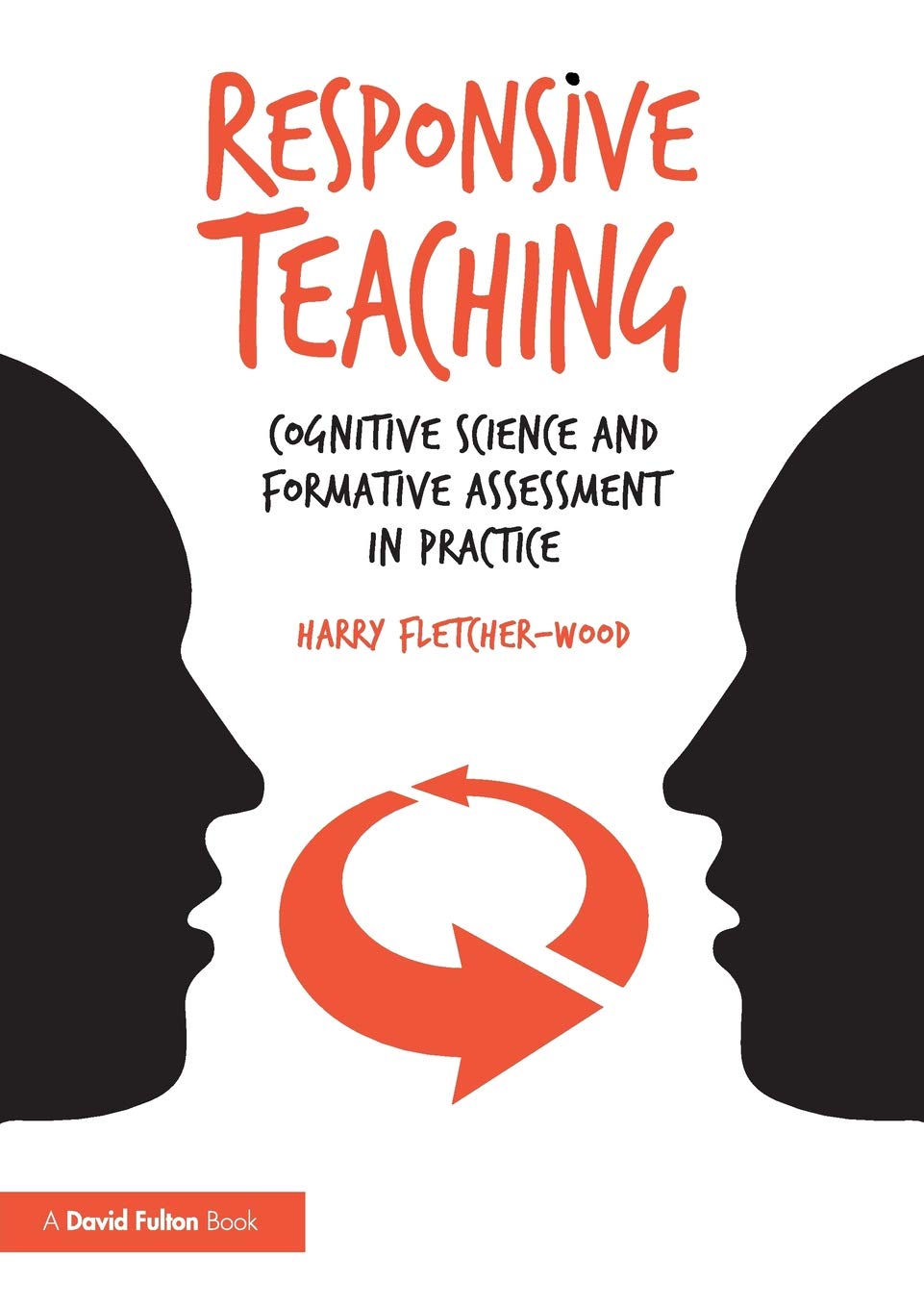
Responsive Teaching

It’s probably not going too far to say that an observation from Harry Fletcher-Wood altered my teaching in the most dramatic way possible. In 2012, he visited my classroom and offered feedback in the gentlest manner possible – with a series of questions: ‘do you think they were focused on the work? Do you think they can handle doing everything in groups? How did you make sure everyone was working? Was anyone opting out from learning? Do you think your weakest readers were also reading in their groups?’ It was through his eyes I saw that teaching everything through group work (as I had been trained and advised to) was not working, and was not going to work.

So it is no surprise to me that Harry can see what is happening in a classroom, see how to make it better, and then kindly suggest how teachers might make that leap. I can imagine no human better placed than he to be an Associate Dean at the Ambition Institute, a body that is working to improve classrooms across the country. I am ever in awe of his humility and constant drive to learn, despite his eminent authority in education, and his most recent book, Responsive Teaching, offers much to the development of our profession. 

The book opens with a typically humble introduction that identifies three main problems in the author’s past teaching practice: ‘assessment seemed to hinder learning, skills seemed more important than knowledge and Assessment for Learning seemed to be just a collection of techniques.’ He moves through addressing these problems, to considering how we can genuinely work out what children have learned and what they are struggling with, and how we can rebalance to ensure children learn both skill and knowledge in their subjects.

Each chapter follows a clear pattern: it outlines the problem, the evidence, the key principle, the practical tools to improve classroom practice, and then the words of individual teachers reflecting on their own practice in each area.

One of the key take-aways from me were the warnings against ‘extraneous cognitive load.’ I definitely need to think harder about paring my lessons down to ensure children are focusing on the crucial aspect, rather than being overloaded by material that is not yet essential for them. I also need to script model examples more frequently – students always need to see lots more of these than I ever think they do. As Fletcher-Wood writes: ‘Overcoming ambiguity by showing what success looks like seems to particularly benefit lower-attaining students.’

One further aspect of practice outlined in Responsive Teaching that I’d like to think more carefully about is student misconceptions. At Ark Elvin Academy where I’m doing my NPQH placement, a subject expert has listed key misconceptions for every lesson the teacher delivers. It’s an incredible resource for novice teachers, or those teaching out of specialism. I think this is a hugely worthwhile task. Perhaps a group of subject experts could club together to write ‘the book of English misconceptions’, for example?

As always, I could go on, and add more detail on what I learned from this book, but to avoid plagiarism I will simply recommend this book whole-heartedly.

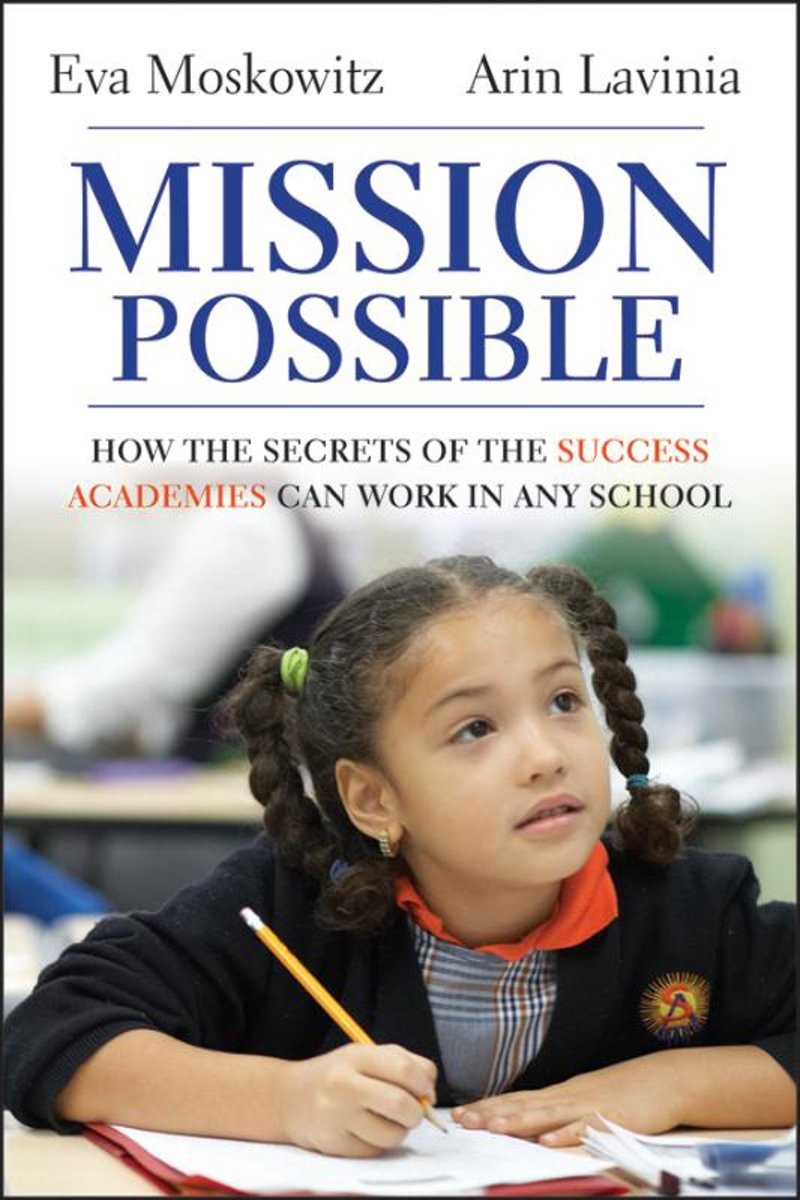
Mission Possible

I started teaching in 2010, the same year the documentary Waiting for Superman came out. If you haven’t seen it, you should: it’s a polemic on the American school system, starring the Charter school superstars. You hear from Geoffrey Canada, of the Harlem Children’s Zone, along with Michelle Rhee (ex Chancellor of Washington DC’s schools; proponent of performance pay) and the founders of the influential KIPP Charter Schools. The message of the documentary is that the school system is broken, but there are ways we can fix it.

When I first watched this documentary, I remember feeling that our school system was ‘at least not as bad as America’s.’ But I’ve come to see that working in London schools for eight years blinded me to the challenges of rural communities who cannot choose their school; schools who are dependent on one bus a day to transport children to it (making any kind of detention system extremely challenging to implement); the impact of grammar schools on student self-belief; and the funding of small-town secondaries.

But mostly, I’ve come to think that we probably are failing children, on a system-wide level, in a similar way. We don’t have the annual benchmarks of success, but in the schools where we have run the NGRT (a nationally standardised reading age test), the results have been damning. The amount of children not achieving a basic pass in English and Maths GCSEs at 16 is damning. And the number of children leaving school at 16 is damning. I remember being horrified about the ‘drop-out rate’ of American schools, thinking ‘at least we get everyone to the end.’ But 16 is not the end, so we don’t. In fact, allowing children to leave the school system at 16 (and I know colleges and apprenticeships exist and I know these have their benefits) is deeply troubling to me.

In this post, I’m not going to tackle these monumental system problems. I used to worry a lot about the education system, and what we could do to improve it. Now, I look at what we can do in schools to improve the lot of the children we work with, in spite of those poor systems (something The Teacher Gap has really convinced me of). And what Mission Possible does is to examine what goes on in a successful school, in this case the Success Academies in Harlem, New York.

The defining principle of the authors, shared by many in the charter movement, is that the quality of the school and the quality of the teachers are what make the difference to children’s results. The book opens with the impetus to make schools a ‘magical place’ to be, which I found an interesting word to use. While I wouldn’t prioritise some of what the authors consider important (notably, expensive trips and impressive classroom displays), I would totally agree with their other aim of encoding success for students so they want to come to school every day and succeed (and what is continual success in academics if not ‘magical’?).

The writers make much of the rigour of the curriculum, and the urgency required to ensure children catch up with their wealthier peers. Furthermore, the pages on letting children ‘do the thinking’ I ultimately agree with – not in terms of guessing answers or discovery learning, but certainly ensuring they do the bulk of the work in the lesson. In general we are moving, in so many schools, towards teacher-led lessons (something I wholeheartedly endorse); yet it is crucial this does not result in children sitting passively. It is too easy for children to tune their teachers out. Rather, our teaching must be continually asking students questions to ensure they work hard.

This book has helped to shift my thinking on parents. Of the two extremes on this view – shut parents out at the gates versus give parents autonomy to influence the day-to-day of school – I leaned in the past towards wanting parents to let teachers teach, smiling on from a distance. Yet this book is persuasive in the possibility of parents really transforming their child’s academic success. I’m always amazed by how much parents are willing to do to support their child’s learning if you only ask them.

The book also ranges over rigour, reading and pace, but the chief takeaway for me was on the professional development of teachers. Again, the authors implore us to focus on the adults, and begin by asking school leaders: how often do we fix the children when we should fix the adults? I’m certainly guilty of this: walking into a lesson and using non-verbals to remind the students of their teacher’s expectations, or even just standing there (when you’re senior enough), waiting for the class to behave perfectly and then leaving… Only for the class to immediately start to murmur again.

Instead, at Harlem Success, leaders practise live coaching. Instead of ‘fixing’ the children, the observers whisper to the teacher, or hand them a note (‘Ali is doodling; Tommy is looking out the window’) and then watch how the teacher ‘fixes’ their own classroom. They don’t intervene at all – or, with training teachers, they model the first two ‘fixes’ and then watch how the teacher does it. After the lesson, they feed back on how effective the teacher’s actions were and where they might improve. Doing this would require huge teacher buy-in, but I do think it would be far better for the overall quality of teaching.

The book goes into significantly more detail on teacher development, and I’d recommend reading it for those chapters alone. Although not everything in Mission Possible chimes with my beliefs, there is much to admire here.

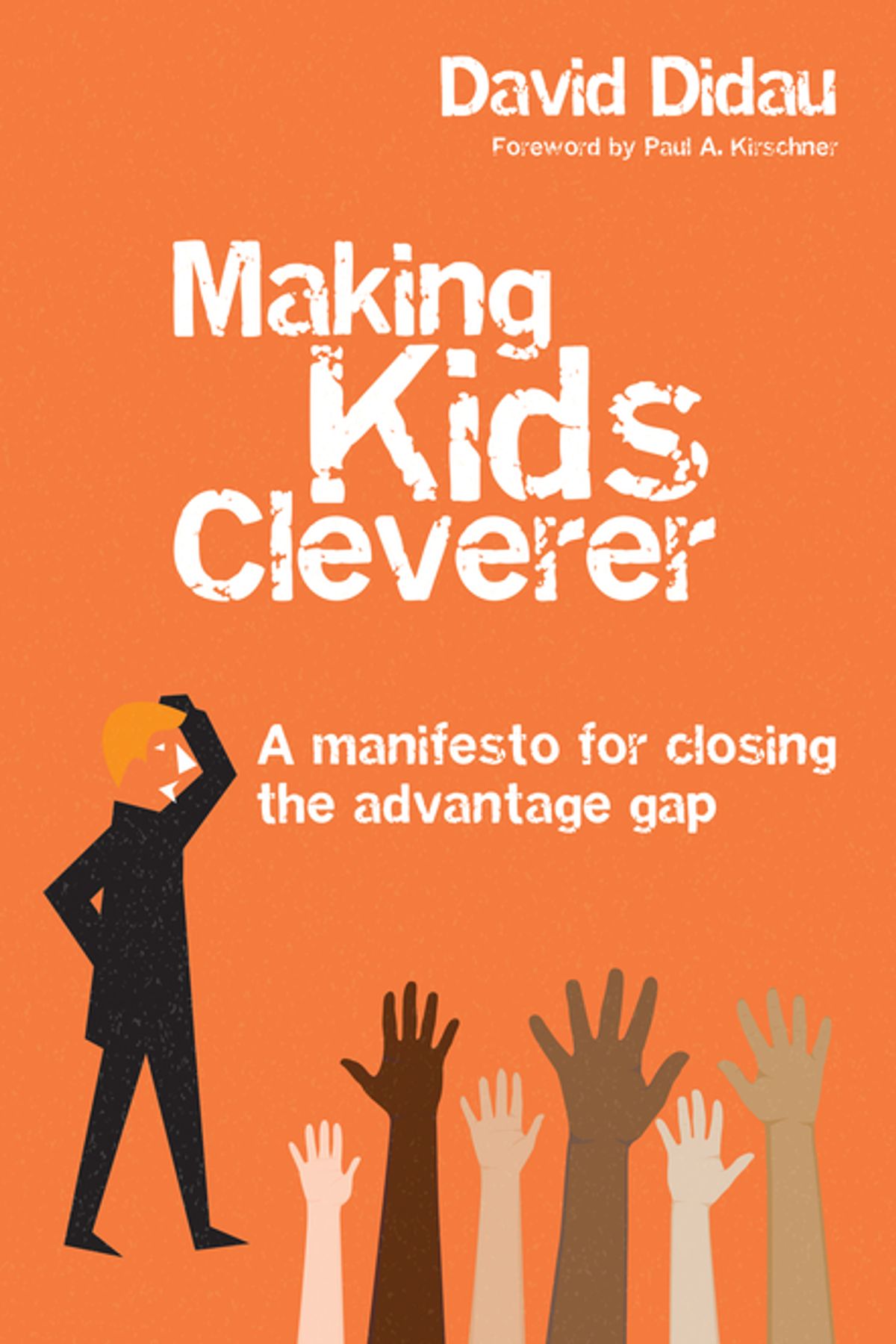
Making Kids Cleverer

David Didau’s most recent offering is his most compelling manifesto for closing the advantage gap yet. Making Kids Cleverer eloquently and persuasively asserts the worth of an academic education, and adds much to the current discourse. Brilliantly, Didau has not lost his connection with the classroom: so frequently in books written by non (-practising) teachers I find myself dubiously asking – ‘yes, but what about year 9 period 6 on a windy Friday?’ Not so with Didau.

The book’s power comes from the meticulous logic of its argument, developing from the initial question: ‘given the choice, who wouldn’t want to be cleverer?’ It is the coherence of this argument that propels this to being my favourite education read so far this year.

Although the central thesis of the book might be ‘more knowledge equals more intelligence,’ Didau adds crucial caveats: not all knowledge is equal; not all practice is equally effective.

One of the highlights of the book is the chapter on the purpose of education: schools, of course, can’t do everything. I found the idea that academic education is character education a revelation: we can (can we?) teach generic skills of hard work, perseverance and resilience… Or we can double up and make children learn really hard stuff, and lots of it, from which they will (hopefully) develop those character attributes along the way.

Although I loved the unpicking of what intelligence is along with the relationship between genetic inheritance and our environment, for me the most directly useful chapters were those on school culture. In particular, this book gave me a lot to think about in terms of motivation. Didau writes: ‘if students simply struggle they will learn to hate school.’ While struggle might be the optimal way for children to learn most, the reality of human psychology is that they simply will not choose to learn anything if they feel constantly defeated. Didau’s caution to ‘encode success’ prior to introducing those ‘desirable difficulties’ is something I’m taking into my practice explicitly from now on.

There is so much that is great in this book – from an exploration of the theories of ability grouping (Didau leans toward mixed ability and I find his argument challenges much of what I believe, in a good way) to how to move children beyond ‘just knowing stuff’. I would absolutely recommend this as a must-read for teachers.