If you recommend one book

I am in the habit of giving vastly long reading lists, which I do believe are extremely helpful to students who already tend to read. Where this process falls sharply down is when students are not tending to read. I gave a reading list to a new group I was teaching in September, and their groans killed me. These aren’t low ability kids, although they were definitely under-achieving. I was delighted that despite the groans I saw a solitary child with one of the books from the list weeks later, but I’ve been thinking that my plan of attack for creating little readers needs to be more multi-pronged.

Then, my mentor and inspiration (Ms Moran), told me about an amazing thing she had been doing with her classes to foster a reading culture. She would stop the lesson five minutes before the end, and talk about the book she was reading. What genius. She’d put the front cover up on a slide, or read aloud to the students from the first page. The effect was unbelievable – students were clambering to read the books she was talking about.

I’m not saying I’ve never talked about what I’m reading with students. But it has usually tended to be spurred by them asking, or me carelessly leaving a reading book on my desk. I haven’t pre-planned these chats, and with sixth form, I have often had to castigate myself for “wasting their learning time” with the lengthy chats about books. The conversations are definitely worthwhile, but I do think a planned approach is safer.

With this in mind, I’m going to outline three great books I have read in the past year, which are my number one recommends for the three secondary key stages right now.


KS3 (year 7 or 8): A Monster Calls
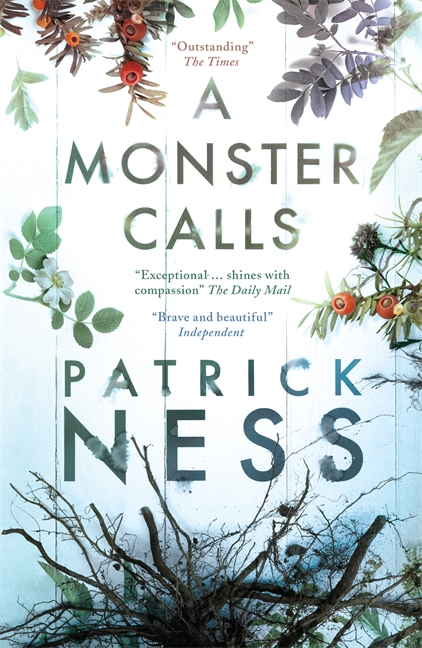
a monster callsI’m beginning with the book which began Ms Moran’s new policy. As she says, “no-one writes an opening like Ness.” I’ve recommended The Knife of Never Letting Go to high ability students in year 8, but even truly reluctant readers in year 9 are drawn in by the style and content of the opening.

A Monster Calls is a little over 200 pages, and looks manageable for, I would say, all but beginning readers. Ness’s characters in this book have the slightly other-worldly feel of David Almond’s; they speak to each other and it sounds plausible, but not familiar. That aside, the content and style are what sell this book.

The basic plot-line is that a tree-monster wakes a child up and scares him lots, but also teaches him lots, especially about the very difficult trials he is going through with an extremely ill mother. This isn’t a book about death though, or really even suffering. It’s a book about resilience and faith against the odds.

KS4: A Tree Grows in Brooklyn

At open evening in my new school, I got chatting with a parent about books and she recommended that I read this one. (Parent, please send your child to my school!) This booka tree grows in brooklyn has already rocketed into my all-time top ten.
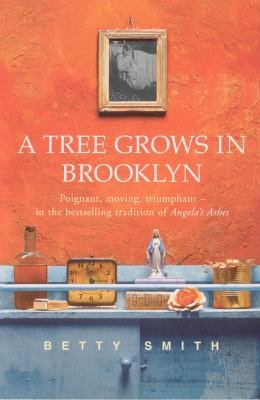
The story follows Francie, who grows up in the 1900s in a Brooklyn slum. But the nuances are miraculous – so much is withheld; we see through Francie’s eyes, and if the blurb hadn’t given the setting away, we might have little idea she is living in poverty until some time into the book.

The novel is full of anecdotes; rivers of stories which make up the sea of human experience. It feels timeless and massive. I’m not too sure about reading the opening of this to hook students, but I would recommend a paragraph 14 pages in, where the main character observes an old man. Smith writes:

“He is old. He must be past seventy. He was born about the time Abraham Lincoln was living and getting himself ready to be president. Williamsburg must have been a little country place then and maybe Indians were still living in Flatbush. That was so long ago.” She kept staring at his feet. “He was a baby once. He must have been sweet and clean and his mother kissed his little pink toes. Maybe when it thundered at night she came to his crib and fixed his blanket better and whispered that he mustn’t be afraid, that mother was there. Then she picked him up and put her cheek on his head and said that he was her own sweet baby. He might have been a boy like my brother, running in and out of the house and slamming the door. And while his mother scolded him she was thinking that maybe he’ll be president some day. Then he was a young man, strong and happy. When he walked down the street, the girls smiled and turned to watch him. He smiled back and maybe he winked at the prettiest one. I guess he must have married and had children and they thought he was the most wonderful papa in the world the way he worked hard and bought them toys for Christmas. Now his children are getting old too, like him, and they have children and nobody wants the old man any more and they are waiting for him to die. But he doesn’t want to die. He wants to keep on living even though he’s so old and there’s nothing to be happy about anymore.”


KS5: Bright Shiny Morning

bright-shiny-morning “Welcome to LA. City of contradictions” reads the blurb of James Frey’s masterpiece. This book is a gem for the sixth form: modern and realistic in its scope, but also creatively told with modernist sensibilities – dialogue without punctuation, and the stories interwoven with paragraph-long excerpts of the history of the city.

There are elements of comedy and tragedy in this epic tome, but there is also truth and hope. The characters are sketched but somehow they live more truly for that sketch-quality. Their stories are built up slowly, and this draws you in the more fully. They don’t all interlink, because that isn’t true to life. We have the homeless man, the child inter-state migrants, the rich and famous. We have all of human life at its extremes and in its non-extreme normality made beautiful.
The Book Whisperer

Before I took on the post of Head of English at my school, I knew that the main thing I needed to do was get children reading for pleasure. Six weeks in, when mock Ofsted came into our department, that was one of very few recommendations made for our improvement: get children reading for pleasure.

So, why haven’t I?

Partly it is because starting at a new school, in particular in a new role, is so exhaustingly difficult it’s hard to move beyond fire-fighting. And partly because every mistake I have made so far (and believe me, there have been many) has been linked to my tendency to make decisions too quickly. This is something I want to get right. I am taking my time.

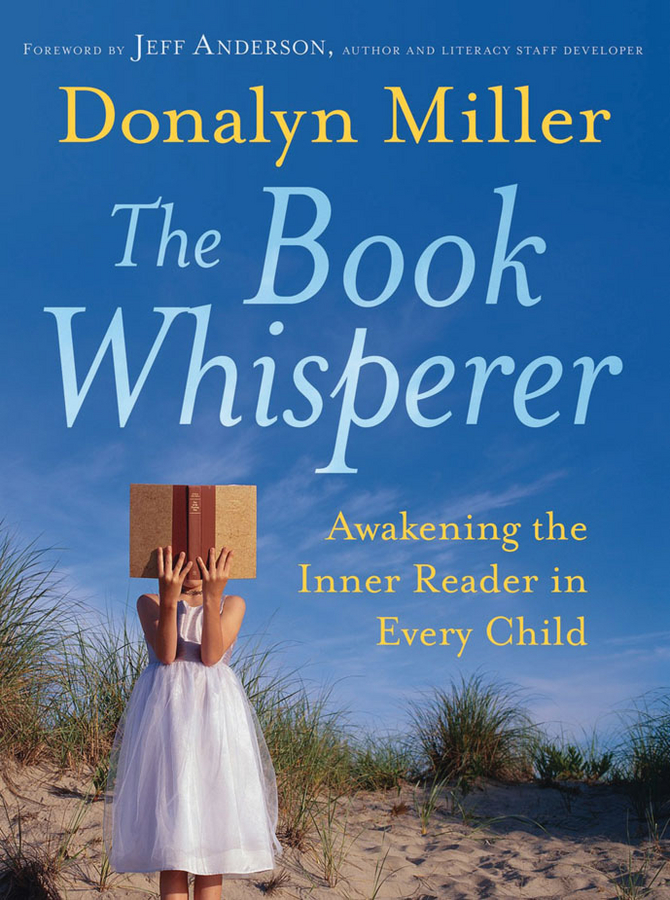
Actually, I felt as if I’d almost cracked it when I read Donalyn Miller’s The Book Whisperer about a week ago, and then I had to do some more thinking. The subtitle is “Awakening the inner reader in every child”, so I knew before I opened it that I would love it.

It is, without a doubt, inspiring, in the vein of Rafe Esquith and KIPP stories from the US. Teachers going above and beyond, but also around and in a peculiar swirly motion we’re not sure will work – but, yes, it does.

Miller’s initial prompting to decide her students should read forty books in an academic year is not grounded in evidence based research, but rather a moral certitude that this stuff if good for them. She glosses over some radically improved test results, but doesn’t make a song and dance about the improvement in the data – that’s not what this is about. Miller wants her children to be readers. And I would guess around 100% of English teachers want the same for their students; not to mention parents.

The problem is: how do we get there? It’s fair to say that the curriculum in the UK, while far from perfect, is a very far cry from the mish-mash of methods going on in American classrooms, where many teachers (if you go by the popular education literature) seem to be able to not only set what they are teaching but also decide how it is assessed. There are few schools I have visited that would allow teachers to go ahead and do what they like in the sanctuary of their classrooms.

Miller lets her students start from where they are, reading what they like. Through careful use of feedback, including surveys, she nudges them towards ever harder and more challenging tomes which will suit their interests. She doesn’t seem to ask them to write analytical essays on these texts, however, it is all about the mighty book review.

This is fine, perhaps, at KS2; I am finding it hard to see how such an approach would work, or is in fact right, at KS3 and beyond. Yes, I want my children to be readers, but more than that they need to be literary critics. Engaging with literature critically is a great joy, and no amount of reading can shake my belief in that.

That said, Miller has given me so much food for thought I cannot but recommend this book for English teachers.

Among ideas she has prompted are:

  • How much class time should I set aside for personal reading?
  • How should this change between years?
  • How far should I try to influence or control student choice of reading material?
  • Should I see reading a class text as something different from private reading?

I’ve written before about teaching Dickens to Year 7 (here). That first term was blissful, but we didn’t study full texts. This term, “A Christmas Carol” is markedly harder. The students are enjoying it, but if I’m honest mine aren’t really getting it. I mean, they understand the words, but there isn’t the time for that understanding and that critical evaluation, unless I want us to use the entire academic year to read the thing properly. Year 7 read slowly. Therein lies the rub.

A fabulous colleague of mine has come up with a lovely compromise, and I’d appreciate any thoughts English teachers have: give them the text, give them two or three weeks. During those lessons they read. During their homework for those weeks, they read. They read the entire text. We perhaps do some kind of writing or literacy activity one in every four lessons, to catch those who really do need to spend time on writing skills. But then, after they have read, we go back and select passages, and teach the critical and analytical skills then.

I feel like in not allowing students to just read, I’m pretty much wasting their time in a novel-teaching unit. But I’d be delighted to hear what other schools do.

To conclude, The Book Whisperer is inspiring and thought provoking, and not completely right. Well worth a read.

book whisperer

Women in literature (or: this one’s for the girls)

I didn’t choose to work in a girls’ school. It just sort of happened. Twice. I wasn’t even aware, the first time, that girls’ schools existed outside of the independent sector. And this is in no way me weighing in on the argument about mixed or single sex education: I am too utterly torn between the unfairness of working in phenomenal schools that effectively exclude 50% of the population, and the fact that girls are really, really lovely to teach on their own. (I know it’s more complicated than that, so here ends my weighing.)

One thing that I love about working in an all-girls’ school is the way I can shape my lessons and my curriculum to reflect what are also my concerns. I can obviously understand and empathise with the women in literature and the feminist concerns more readily and with more interest than those of the other sex. I know what girls like. And I’m sure my colleagues in mixed schools know what both boys and girls like, but with me there was no learning involved.

It’s self-indulgent to have the capacity to only consider what would interest people I was once like. My reading lists are undeniably lacking in machismo, action or horror, or any of those texts that traditionally don’t appeal to women; don’t appeal to me.

But what is much more important than all this literary laziness is the opportunity to be proactive about women’s issues. That’s right, I said it. Because for all our assumed equality, there is a massive bone to pick with literary history, and I intend on my girls knowing about it and reading about it, then using those glasses to look more closely at the way things are now, and to draw some new conclusions.

Year 10 have just finished studying a beautiful course my department has called “Women in nineteenth century literature.” The first half term, we skipped through “The Lady of Shalott” and waded more slowly through “Jane Eyre,” before considering the female mindset under patriarchy (or, hysteria) in “The Yellow Wallpaper.” We then segued into an exploration of women who once earned us the right to vote, looking at the pamphlets they wrote and the speeches they gave.

The young women I teach are full of confidence, and full of brains. They brim with these. There is an overriding concern in some areas of some English departments with what boys are reading, and what boys are learning, and how to engage boys in reading and literature; in particular ethnic groups particularly. But when you dig down in the data, with the luxury of looking only at the girls, the same under-achievements are there. Yes, girls do better overall; but crucially, not as well as they could.

Of course, gender is only one slim strand of a person’s many-textured personality; it is simplistic to argue that if I like it, they like it. But I will be forever grateful for the many opportunities this single orientation has allowed me.

The hierarchy of literature

I’m at the start of a dawning realisation: that what I thought was my subject is not my subject; and where I thought my subject, which is not my subject, sat in the hierarchy of subjects is also incorrect.

This may sound garbled, but that’s because this realisation is only beginning to take shape in my misinformed mind.

As a teacher of English at GCSE, I have been complacently used to being at the top of the pecking order when it comes to subjects at GCSE: no, English boosters are that night – sorry other subjects, bow down to the mighty English. That enrichment activity supports English? Here are plentiful funds to ensure it takes place. Let’s give year 11 a massive weekend of revision, and let it be only English (and some Maths).

All of this assured me that children reading books was at the very heart of what our schools are all about (tied only with Maths).

But that’s not it at all.

Reading books, studying great literature, isn’t in fact anywhere on the pecking order. It’s a sideshow; an optional extra. We pretend English is at the core of the curriculum, but what we really mean is being able to read and write. These are the necessary gateway tools to accessing all written material ever – with the exception of troublesome novels, plays and poetry – and this basic literacy is of the utmost importance until students are 16.

It’s not that I disagree with the above at all. I just feel that the reading of fiction is the crucial way in which we make sense of the world, and that the above can in fact be taught most effectively with books, and not Guardian articles.

Speaking of which, my world came crushing down with this Orwellian vision of a literature-less future from Polly Toynbee here. With the new KS4 curriculum, about which I had been so optimistic, Toynbee points out that, as literature has been removed from the language component, while not being made a compulsory second GCSE, children all over the country will be deprived of reading great books.

In my own North London bubble, I know my children will always do literature. Our lucky year 10 and 11 students have 6 lessons of English a week, and are split into tiny classes (7 sets where there could easily be 5) specifically to enable them to study both GCSEs.

But what of those thousands of other children in other schools?

Similarly, having all my life assumed English Literature A-level is top dog in the A-level pecking order, in a natural inheritance from GCSE, my assumptions were cruelly crushed by an esteemed colleague (of Science background) who assured students that, in fact, the number one Arts subject they could study was History.

Where’s History coming from? Why all of a sudden does History get a look in? And if it is the most impressive Arts A-level and most respected by universities, why don’t all students have to take History GCSE with the same fervour we ascribe to English and Maths?

So I’m getting used to my new position in the world of education. Not as imparter of great literature, but as teacher of grammar and spelling, as well as decoding words to make sense of those words.

This new Literature GCSE, wide-spanning and demanding as it is, can and should be taught to all students. Yes, some will need more time and more resources to succeed. But would you send your child to a school that didn’t teach it?

Rigorous reading

ripley smallI’ve just finished reading this amazing book, and I’d like to talk about it.

Now, I will say that the title of this book is misleading. Ripley’s front cover picture of a consortium of flags suggests a more omni-country approach than we actually find. I for one would be happier with a title which is explicit in noting that this book explores the education systems of only three countries.

But what countries they are: Finland, South Korea and Poland. With heavy emphasis on the first two. In fact, having finished this book 5 days ago I’m struggling to remember what Ripley says about Poland, though what she says about the other two is emblazoned on my brain. Perhaps this is understanding bias, however; I’ve heard a lot about Finland and South Korea, and naturally my non-rigorous reading will more easily process this.

I believe my response is the one Ripley was hoping to draw out: the sections on Finland make me want to tear up the UK’s education system and just do what they do, and the sections on South Korea make me want to tear my own eyes out.

Most teacher readers will be au fait with Finland, and if you’re interested Lucy Crehan’s blog (here) explores more key ideas than I had found compiled in one area before. The most salient points about their system include: starting school age 7, mixed ability classes, incredibly highly trained teachers brought in by a very selective system, almost no homework, almost no state exams; some of the highest achieving students in the world, according to PISA, which lots of people nit-pick, but which Ripley assures us is okay.

South Korea is a system highly praised by many, and rightly so – for its results. In this book, however, a different story is told. School begins early (8am) and continues late – study at school can go on until 7 or 8 in the evening. Students have special pillows they attach to their arms so they can nap during classes. A 12 hour day may seem familiar to most teachers, but I’d hazard none of us would want to deal with students subjected to this. But wait – there’s more! The hagwons, which are intense tutorials, take students all the way up until 10pm (legally) and beyond that time (illegally) – every day, after school.

Now, I am a fan of KIPP’s “Work hard, be nice” motto, with firm emphasis on hard work. I truly believe that anyone can accomplish anything with hard work. But this narrative of South Korea pushed me to the limit of my belief. I categorically do not want kids that have to work that hard to achieve exam results and success in life.

The main learning point I gleaned from this engagingly written book was about rigour. The essential ingredient in all these successful systems was rigour. Students couldn’t pass easily, they couldn’t achieve high grades easily. The same went for the would-be teachers.

This made me reflect on the rigour in my own classroom. I’m lucky that my predecessor instituted an incredibly rigorous KS3 curriculum, about which I have written (here), using only weighty tomes to shape our little minds. Yet there are times when I feel like the weight of this KS3 curriculum is let down by the exam-board–instituted, undeniably less rigorous, KS4 curriculum. This KS4 curriculum churns out children who, when faced with KS5 English, often take more than a year to get to grips with this new rigour.

The bottom line is: we should not apologise for asking more of our students, and pushing them harder. After all, we only have them for a (relatively) short period of time during the day. The stakes at KS3 aren’t so high that we should pressure students, but we definitely shouldn’t apologise for teaching them hard stuff and making them learn it.

As for the KS4 curriculum… I have no answers, and as yet no positive contribution to make to the conversation. I can only hope the new curriculum will push students to achieve more, because they can – albeit with hard work.

Autumn 1: Literature Central

I’m writing a retrospective on Autumn 1, and I’ll open by saying it has been a surprisingly good term. I’ll resist the temptation to elaborate, lest the ones who have held me up for 7 weeks and listened to my many woes read such a reflection and have to have words with me. Starting a new school, especially in a new role, was always going to be a challenge. Luckily, I am in the enviable position of my predecessor not only supporting me as line manager, with all the inside knowledge that can be offered from such a vantage, but also having set up an incredible curriculum – which is the subject of this blog.

I will admit, the prospect of Dickens for an entire term was enough to make me run flailing the other way in June. However, I found my own personal joy in Dickens (explored here and here) over the summer, which helped a little.

The other thing that has helped is my year 7 class. One of the “make-or-break” aspects of accepting a Head of Department role, for me, was teaching every key stage – at least in my first year. I wanted to have first-hand experience of the curriculum offer, and also to see what mixed ability teaching looks like in the department (we, like the vast majority, set at KS4) and to be assured it was working well for the students.

Year 7 has always been a mixed experience for me. They are undeniably adorable little humans, so full of excitement and energy. They can also be exhausting, with all the unformed emotional intelligence and neediness that comes of the giant leap from primary to secondary. I have found much more of the former and much less of the latter (in fact, almost none) in my current year 7 class. I do believe a strong head of year has helped them to settle quickly into the school. But I also believe they are tiny geniuses in the making, at least in English.

The scheme for this term has taken students on a Dickens journey, exploring excerpts from his poetry as well as novels such as: Hard Times, A Tale of Two Cities, Bleak House, Oliver Twist and Great Expectations. I had my reservations about beginning the year by not teaching full texts, however I can’t deny the positive impact this scheme has had on my little ones. (And rest assured: we are doing full texts for the rest of the year.) What this scheme is, in effect, is a run through the key reading and writing skills students need, but using Dickens as a prompt. So, students explored writing a compelling opening using antithesis inspired by “it was the best of times; it was the worst of times” (and the rest).

There have been too many highlights of teaching this particular year 7 class to explore them all, but seeing students of a very wide range of ability access Dickens, empathise with his characters, and enjoy his writing has really changed my mind on the idea of a “depth” curriculum. I will also add that three students have professed to be reading Great Expectations; one even showed me the sweetest page of notes she had taken on the book. Absolutely no-one has said “we’re still doing Dickens?” at any point this term. When I told them we were studying “A Christmas Carol” after half term, the only emotion shown was elation. When students read the description of Miss Havisham and were instructed to highlight anything they found effective, one student piped up: “can’t I just highlight it all?”

The year 10 curriculum has been similarly literary. In fact, in ample time for the new KS3/4 curriculums, my line manager put in place some extremely inspiring schemes of work to prepare students for the rigours of a literature-heavy GCSE, and of couse A-level – our end-goal.

The iGCSE has its drawbacks, however for the scope of the coursework it is a winner for me. This term has been focused on iGCSE coursework tasks, which are in turn descriptive, argumentative and reading-based; however, in contrast to AQA’s “write about something which makes you angry” and other such generia, we have been teaching students about women in nineteenth century literature, and using this as a springboard for their creative and critical writing.

The scheme began with Tennyson’s “The Lady of Shalott”, which my students were undeniably fazed by. It is a tough text, worthy of longer study. Yet their understanding of the implicit ideas in the poem has rendered some powerful pieces of description, as they wrote about the journey she took.

We moved onto Jane Eyre, worthy of a term itself. Students have the book and are, I hope against hope, ploughing through it still as I write. We explored key chapters together and wrote a number of pieces inspired by Bronte’s characters and settings.

Then onto Gilman’s “The Yellow Wallpaper,” which was a true joy to teach. I will never forget the faces of the students when they reached the end of the story – not quite wanting to believe what they were reading, and knowing something had happened which challenged their ideas of what the nineteenth century female writer might be exploring. Another descriptive piece followed.

Finally, we explored the idea of women’s suffrage, linking up with their study of it in year 9 History, and wrote speeches arguing against articles and letters from the time.

What students have gained, I feel, is a healthy overview of some great writing and some central concerns of the nineteenth century. The coursework did not take over, and we did not teach to the task. The coursework was almost incidental. As you can redraft it as many times as needed, there wasn’t the pressure to drill it in and get it perfect. I just wanted my students to be creative and to understand the wider concepts of the time period.

All of which sets them up nicely for their Literature Controlled Assessment next term – although I’m not sure how they or I are going to cope with a more task-driven term.

I can’t by any stretch of the imagination take any modicum of credit for what these children are studying; I can only advocate this approach. Our visiting “mock-Ofsted” inspector described the curriculum throughout KS3 and KS4 as “inspiring.” I have certainly found it to be so as a teacher.

More than ever, I feel like I am certain of what I want my students to have when they leave me, and the only way I am sure they can attain this is through study of challenging and literary texts. I am delighted to be in an environment which has fostered this.

The power of the theatre

An amazing thing happened a few weeks ago for one of my year 12 English Literature students. She visited the theatre for the first time.

Let’s take a moment to really think about this: a student goes nearly 17 years of her life loving English and excelling in it, acing her GCSE English exams and opting to take English A-level. And all without ever having sat in a plush red seat, experienced the lights dimming and watched real humans saying words written by playwrights to each other.

Clearly, something is going wrong here.

This student wasn’t the only one to benefit from this theatre experience, however. I had been frustrated at how difficult my year 12s were finding Much Ado About Nothing, a product I think of the GCSE Literature course: only one Shakespeare play, and if you opt to do this for the Controlled Assessment instead of the exam, well then you may not have studied any Shakespeare since year 10.

In hindsight, it was a mistake to begin with Shakespeare. But we plough on.

The production, at the Old Vic Theatre, was certainly not a “straight” production. Liberties had been taken with setting, costume and, most obviously, casting. Even better, in a way, for displaying how versatile Shakespeare’s works are, and how open to reinterpretation by successive generations of directors and actors.

Seeing the entire play all the way through is nowhere near as soporific as showing the (brilliantly uncut Globe version) DVD all the way through. There’s something different about seeing it in a theatre, without a desk and your notepad in front of you, and without the hard plastic chairs. (Adorably, almost all of my year 12s insisted on bringing their copies of the text to the theatre, and valiantly attempted to follow it through while watching.) Also, I’m not sure how Ofsted or any other inspector would feel about me showing a film for 2 hours.

Watching the play the whole way through has led to increased confidence, increased awareness and increased understanding of the text. It will undoubtedly improve the resulting coursework, and I am forever grateful that my school actually paid for every child’s ticket in full.

Yet the theatre is about more than coursework and understanding. It is a rich cultural experience that should not be withheld from any member of society. I would argue that it is our responsibility as English teachers to ensure that every child has seen a play the whole way through by the time they leave us. This is regardless of it fitting in with their course: any experience of theatre enriches a student’s understanding of the vast body of literature, and, moreover, the different realms of literature: for some students, we must concede, literature means novels and poetry. It means words on a page. We need to change this.

I was told by a colleague of a headteacher of an outstanding primary school who used their entire pupil premium for the year to take every child to a West End show. I know some critics might deride this as a casual waste of money. But I applaud the bravery of that headteacher. He recognized that there was something so worthwhile in the enterprise of theatre, something so empowering for students, that it was worth that money.

And when it comes down to money, which it does, it seems unfortunate. As a head of department, I consider the most vital resource to be books: there always should be money in the budget for books. Yet after that, we need to consider these ephemeral “books in action,” which give so much to our students.

As a result of our year 12 theatre trip, the English department will be taking selected students to a theatre show once a term. The numbers, for money and staffing, will have to be small; no more than 20 at a time. The students will need to be chosen carefully: we want to take students who deserve a treat, and students who will benefit from this cultural experience. Perhaps we can build this momentum to bring an entire year group every year. The play, of course, will also need to be chosen carefully: I don’t think I want to take year 7 to Chekhov. Rafe Esquith also notably emphasizes the importance of educating students about the play before the visit, so they can squeeze the most out of the experience.

The theatre should not be an optional extra. It should not be cast aside as too expensive, or a waste of valuable resources. And we should not have 17-year-old budding literary critics who have never been there.

Dr Byrne and what makes great English teachers

Last July I came to the end of my time in my first school, working as a full-time English teacher. The school was, in a word, amazing; my contribution to that amazing-ness was undeniably minimal. Yet I was blown away by the beautiful cards my kids and colleagues wrote. This highly emotional transition made me think about teaching English, and why we do it, and who we remember, and I wrote this post in the immediate aftermath of that high emotion.

In my own education, I had a few great English teachers. I was blessed to work in a school with exceptionally minimal staff turnover, meaning I had three English teachers in my time.

First, Mr. Hopper. He was my form tutor as well as teaching me History and English for two years. I had never had a teacher as brilliant: he seemed to know everything, and commanded his class with the discipline of a seasoned professional. I remember in my first week going home to my Mum and telling her: “I want to be an English and History teacher.” To this day I remember individual lessons he taught – he defied expectations of the “experienced teacher” by being incredibly energetic and having fantastically engaging and student-led lessons. He definitely made learning fun, but also set incredibly high standards: I moved to that school from a less “high expectations” environment and remember Mr. Hopper killing me with my first graded piece of work – a C. He made me work harder than I had believed possible.

When I moved on to upper school, I had Mrs. Grinham. The main things we loved about Mrs. Grinham, in no particular order, were: her amazing dress sense, her perfectly cut bob, her stories about her children and grandchildren, her stories about knitting, her stories about baking, her stories about the Jane Austen society, her stories about university. Myself and my female peer group all aspired to be Mrs. Grinham. She sat behind her desk and talked to us about great literature, like the authors and characters were her friends. She also seemed to know everything about everything, and I’m delighted that she taught me at A-level as well as in year 9.

In year 10 to year 13, I was taught by a master teacher. His name, as pretty much all of my current students (and friends) could tell you, is Dr. Byrne. Dr. Byrne, not only seemed to know everything about everything, but actually did. His vocabulary was astonishing. He conducted all his lessons socratically, and never had I been challenged to think and work as hard as I did in those lessons. His questioning was simply incredible. I returned to my old school about five years ago, when I first thought about being a full-time teacher, and when I “observed” Dr. Byrne again I forgot to write any notes about classroom management or pedagogy – I simply took notes on Chaucer, which is what he happened to be teaching at that time.

Dr. Byrne not only taught me in lessons, he also opened up the wide world of literature for me. I am embarrassed to say that I wasn’t a big reader before he taught me. Dr. Byrne told me to keep a log of every book I read, perhaps sensing my competitive edge; I wanted badly for that log-book to be full quickly. (I still keep that list to this day, now fully digitised via googledocs.) That was only the beginning, however. Dr. Byrne used to physically give books to me – the best way of engaging a reluctant reader. I simply hadn’t heard of these authors before, and became transformed into a “reader” almost immediately. When it came to me applying to University, Dr. Byrne gave up a lunch break every week (maybe even more) to tutor me one-to-one in literature, pushing me when looking at poetry to come to conclusions and interpretations under pressure.

I know I’m not the only one deeply affected by Dr. Byrne. All of my school friends still talk about him and what he taught them.

I remember one of my fellow students, however, mentioning that: “for set one, we didn’t get very many A*s”, which was interesting – I hadn’t really explored beyond my own GCSE grade at the time. Perhaps she was right. But even if she was…

This conversation prompted me to think about what teaching English really means. Are we desperately looking for data? School league tables and Ofsted are certainly pushing departments in that direction. One of my colleagues summarized this data-drive nicely: “if they can’t measure it, they don’t see it.” This rings depressingly true.

What Dr. Byrne taught me was definitively not how to achieve an A* in English. Nor did Mrs. Grinham, nor did Mr. Hopper. I was taught how to think, how to analyse, how to interpret, how to challenge, and most of all how to read and love reading. English was always the high-point of my day, and I am grateful now that all I do all day is English, just on the other side.

When I spend lesson time talking to students about books I am reading, or they are reading, that are not on the syllabus, should I feel guilty? Have I wasted a precious moment of their time when they could have perfected their sentence boundaries? I will admit, I frequently bang on about grades with my students – I do talk to them about As and A*s (though I try to not talk about C grades, even with lower sets, as experience has taught me they are almost always capable of more). I sort of wish I did that less. What I am aiming for is for my students to love English, not to love success.

In my last ever lesson in July with my beloved year 9 set 5, I indulged in some non-teaching. We chatted a lot. Some students didn’t choose to chat, but I adored that they took out their personal reading books and read. I love that they enjoyed reading for the sake of reading. I really hope that in the future the bright stars I have left will remember me for more than just getting them high levels, or convincing them they could achieve high grades.

So where is this rambling post going? I’m thinking about the teachers who have formed me, both past and present. My mentor of three years, Ms Moran, now an insanely amazing director of English in a new school too, has definitely made me the teacher I am today. Dr. Byrne has probably done more than anyone to make me the person I am today.

One of those (many) amazing leaving moments came when one of my year 12s told me “you know you always talk about Dr. Byrne? You’re our Dr. Byrne.” I know I’m a long way from that, but it killed me (in a Salinger-positive way) to be told that. Dr. Byrne, I am still inspired by you and I hope one day I can make the above statement a more profound truth.

In praise of Dickens

I recently wrote about my surprisingly wondrous experience with “David Copperfield” (book, not person) here, and this prompted me to write a longer post about Dickens.

I alluded to my chequered history with Dickens in the above post. We didn’t get on at all. My expectations were overly high, I think, after watching the movie musical “Oliver!” a hundred and twenty four times, and on reading “Oliver Twist” I was scared by its complexity, desparately searching for characters who were the spit of the film. I was also, clearly, missing the singing and dancing.

The Artful Dodger of the musical is unrecognisable in the book. In the musical, he is affable, exciting and cute – but most of all he is not at all threatening. In the book, he is like a grotesque of a street child – terrifyingly wise beyond his years, an adult in an adult world, despite his childish appearance. In my younger years, I was unable to reconcile this difference. Similarly, the underworld of Victorian London, when not singing and dancing in unison, seemed remarkably unattractive.

Shortly after “Oliver Twist” came “A Christmas Carol.” This was a book I could get along with. A lovely clear moral, nothing overly nasty to deal with, and much simpler language. This was until the story was forever ruined by a subversive lecturer in university, who described the story as an advertisement for capitalist Britain (“Scrooge atones for his wrongs by buying his way into the favour of others”).

I trekked my way without joy through “Bleak House,” only to discover the BBC series (one of the best things I have ever, ever seen) and wish I had spent more effort in the reading. This lack of joy was topped by “Dombey and Son”, which I believed at the time of reading was one of the very worst books ever written.

Yet my recent breakthrough with “David Copperfield” has convinced me that my original beliefs were entirely misguided. Having previously warmed to “Great Expectations” and “The Old Curiosity Shop” (which went to convince me that the problem was not the text, but me – Dickens is Dickens, but in the midst of a crowded University or school term I race through and miss the point), it made me think again about the value of teaching Dickens.

I am beginning year 7 this year with an in-depth unit on Dickens, created before my arrival in my new school. Until this point, my teaching of Dickens was confined to a mere one lesson; one of writing descriptions for year 7, using the opening of “Bleak House” and focusing on the fog. My year 7 found the passage tough, but that only enhanced their enjoyment of it. The major outcome of this lesson related to vocabulary – there were many tricky words in the passage that I glossed for students. I might have even suggested they aim to include some of these words in their own description. Whatever I did, the thing I remember is that they went on using these words, even a week and a month later. For the children I was teaching, vocabulary was power. They loved it.

Every year, we teach a Shakespeare play, and we never think about arguing against this. Shakespeare is, after all, the greatest creator and user of language in the history of the world – undisputed. But why do we – or rather, to make it personal, why did I – think it was acceptable to say “I hate Dickens” for so long? Dickens is clearly the master of the novel; his work endures; its humour endures, its message endures. This reminded me of the David Lodge book where the characters, all university professors, play a game of saying books they haven’t read (it’s like a “never have I ever” for nerds). (There is shock a horror when one admits to having never read “Hamlet”, I recall.) I wonder how many of us are walking around, having never read a Dickens novel, without shame?

My year 7 are not tackling a lengthy Dickens novel. They are reading extensive passages from a variety of works, before moving onto a new scheme of work purely focused on “A Christmas Carol” after half term. I’m not sure what I make of this, but I wonder if it might be worth revisiting Dickens in year 8 or 9. In fact, I wonder about the value of studying only very short excerpts of a novel, and this is something I will quiz my students on.

Enjoying Dickens is so easy. Read it aloud, then read it slowly. Look up the words which are unfamiliar (this goes for me as well as my students). Every student should be taught to enjoy Dickens, lest they end up like me circa eight weeks ago.

What do I do with the scary smart ones?

A member of SLT I greatly admire told me recently “I don’t like labels.” I think I had forgotten you were allowed to say that in a school. We have so very many labels for our sausages (another member of SLT described the kiddies thus – another thing I had forgotten we were allowed to say): SEN, EAL, FSM… At what level are there just “kids in my classroom who are all a bit different”?

In our age of advanced data awareness, we are encouraged to not only differentiate, but to do so for the target groups du jour, and in many schools G&T, AG&T, or GTP (gifted and talented, able gifted and talented, gifted and talented pupils – love a good acronym, do teachers) are a box to tick. I know of one school where these students are given gold badges to wear, undeniably a source of pride for them (and a key visual clue for their teachers).

Yet I’m not convinced this helps us. I worked in one school where G&T students were a massive deal; there were countless G&T coordinators, and the provision for these chosen ones was immense. Other students, not knowing the label, would frequently complain that this cohort got to go on all the trips, for example, and that they felt excluded. I’ve used the term “chosen ones” as that is exactly what they were: teachers would identify about 10% of their class, the official guideline for the proportion of a school’s G&T population, and put them on the list, as early as year 7.

Ever after, that student was on the list. You could be added to the list, but you couldn’t be taken off the list. This kind of assumes that G&T is purely an achievement thing: if a kid is achieving at a higher level, we need to sustain that progress.

Though there are arguments that being gifted is much more than being a high achiever. I put students forward for the list who were gifted creative writers; who wrote stories in their own time which were, frankly, works of brilliance. Clearly a gift. But often their achievement in term of APP box-ticking was not of the highest order.

That brings up another problem, of course; kids change. As a child, I was obsessed with dogs. Imagine, if you will, a school which taught “animals” as a subject. I’d be identified in year 5 as gifted. But by year 9, I actively hated animals. If teachers had been intervening, trying to get me to take up once more my love of furry creatures, I would not have been happy.

Of course, we don’t teach animals; we do identify kids as gifted in academic subjects that we hope they will flourish with throughout their school days. But it is worth considering that a child’s interest may well move, just as some children “struggle” in their primary school and go on to flourish in another school, and can in time be taken off the SEN register.

Once upon a time, I like to imagine (though it is probably untrue), teachers were lone rangers, seeing a smart and motivated student, and giving them a little bit extra to do or think about. In English, that meant extra books to read. I wonder if we don’t already do this without the label.

Word of mouth reaches me faster than the data is made available. Last year, I knew who I had to “look out for”: students who were very, very able indeed. I taught one of them in year 12, but she basically taught me. In the most incredibly polite way, I would make a statement, she would frown a tiny bit, put her hand up and say “but miss…” and destroy my argument. It was an incredible blessing to have such a child in my classroom, but how do you teach such a child?

Luckily, I remembered that I had an English degree. I went back to the days of the Friday 9am “Critical and Cultural Theory” lecture of first year, and found the anthology of critical theory I had done battle with for my four year English degree. I lent it to the student, and she devoured it, quoting essays from it in her coursework. I felt cruel asking for it back when I left.

I have written before on making book lists for students, and in a mixed ability classroom I do think it is worth spending time, perhaps on a cohort-level, talking to high-achieving, highly motivated students about reading particular books. I have made separate reading lists for these students, because I want to make sure they are being challenged when they read, and engaged and interested. (I’ve pasted these below, and before anyone tells me I have duplicated books across year groups, I will say I have duplicated books – I’ve included the whole list for each year group lest anyone be about to reinvent the wheel and find the below useful.) I also think you can never underestimate the importance of “having a chat” in schools, whatever the group of students you choose to focus on.

Sure, some of these students will go on to choose Maths, or become doctors. But while they are interested, we can give them something to chew on. And that is something you can do with the scary smart ones.

Year 7 Extension Reading List

  • John Green: The Fault in Our Stars
  • A girl suffering from cancer meets a boy… Very romantic.
  • Helen Grant: The Vanishing of Katharina Linden
  • An adventure story and one of friendship – it will intrigue you.
  • Anne Cassidy: Looking for JJ
  • An interesting look at psychology and forgiveness.
  • Marcus Sedgewick: Revolver
  • Step into a different world and time for a book about a revolver.
  • Jostein Gaarder: Sophie’s World
  • Kids are smarter than adults – this is the way this book opens! Like to think deeply? This is the book for you!
  • Charles Dickens: Oliver Twist
  • Dickens’ orphan story is epic and full of twists and turns.
  • George Eliot: Silas Marner
  • Explore a small village and a man who loves his pot of gold.
  • Dodie Smith: I Capture the Castle
  • Romantic; a book which is also about sisters.
  • Mark Haddon: The Curious Incident of the Dog in the Nighttime
  • Told by an autistic boy, extremely funny too!
  • Marcus Zusak: The Book Thief
  • An imaginative and moving account exploring life in World War 2.
  • Dave Eggers: What is the What
  • One man’s struggle to escape the civil war in Sudan.
  • Harper Lee: To Kill a Mockingbird
  • Racism, civil rights and a very likeable narrator.
  • Philip Pullman: Northern Lights
  • Fantasy; Pullman creates a completely new world.
  • Frederik Douglass: Narrative of the life of Frederick Douglass, an American Slave
  • Douglass escaped slavery, taught himself to read and write and told the world about what happened.
  • Lewis Carroll: Alice’s Adventures in Wonderland
  • A girl falls down a rabbit hole and discovers a whole new world.
  • Louisa May Alcott: Little Women
  • One family and many sisters.
  • John Steinbeck: The Pearl
  • Boy dives for pearl… But this book is about so much more.

Year 8 Extension Reading List

  • Jostein Gaarder: Sophie’s World
  • Kids are smarter than adults – this is the way this book opens! Like to think deeply? This is the book for you!
  • Charles Dickens: Oliver Twist
  • Dickens’ orphan story is epic and full of twists and turns.
  • George Eliot: Silas Marner
  • Explore a small village and a man who loves his pot of gold.
  • Dodie Smith: I Capture the Castle
  • Romantic; a book which is also about sisters.
  • Mark Haddon: The Curious Incident of the Dog in the Nighttime
  • Told by an autistic boy, extremely funny too!
  • Marcus Zusak: The Book Thief
  • An imaginative and moving account exploring life in World War 2.
  • Dave Eggers: What is the What
  • One man’s struggle to escape the civil war in Sudan.
  • Harper Lee: To Kill a Mockingbird
  • Racism, civil rights and a very likeable narrator.
  • Philip Pullman: Northern Lights
  • Fantasy; Pullman creates a completely new world.
  • Frederik Douglass: Narrative of the life of Frederick Douglass, an American Slave
  • Douglass escaped slavery, taught himself to read and write and told the world about what happened.
  • Lewis Carroll: Alice’s Adventures in Wonderland
  • A girl falls down a rabbit hole and discovers a whole new world.
  • Louisa May Alcott: Little Women
  • One family and many sisters.
  • John Steinbeck: The Pearl
  • Boy dives for pearl… But this book is about so much more.
  • Angela Carter: The Magic Toyshop
  • First love, and a toyshop that is magical.
  • Kathryn Stockett: The Help
  • Detailed exploration of American “help” in a time of intense racism and segregation.
  • Bram Stoker: Dracula
  • The original vampire book.

Year 9 Extension Reading List

  • Aldous Huxley: Brave New World
  • There are no families and your life is governed by state-given drugs.
  • Jane Austen: Emma
  • Emma has the best of intentions, but her plans often go horribly awry…
  • Carson McCullers: The Heart is a Lonely Hunter
  • The inner struggles of four central characters.
  • Henri Alain-Fournier: Le Grand Meulnes
  • The seeking of a lost world and the gap between childhood and being an adult.
  • Henry James: Daisy Miller
  • Love or hate her, Daisy is a complex character who knows her own mind.
  • D.H. Lawrence: Sons and Lovers
  • Northern mining town; strange family relationships.
  • Thomas Hardy: Jude the Obscure
  • Heartbreaking story of a man trying against the odds to rise in the world.
  • Thomas Hardy: Tess of the D’Urbervilles
  • A tragedy of a beautiful woman defied by fate.
  • Jostein Gaarder: Sophie’s World
  • Kids are smarter than adults – this is the way this book opens! Like to think deeply? This is the book for you!
  • Charles Dickens: Oliver Twist
  • Dickens’ orphan story is epic and full of twists and turns.
  • George Eliot: Silas Marner
  • Explore a small village and a man who loves his pot of gold.
  • Dodie Smith: I Capture the Castle
  • Romantic; a book which is also about sisters.
  • Mark Haddon: The Curious Incident of the Dog in the Nighttime
  • Told by an autistic boy, extremely funny too!
  • Marcus Zusak: The Book Thief
  • An imaginative and moving account exploring life in World War 2.
  • Harper Lee: To Kill a Mockingbird
  • Racism, civil rights and a very likeable narrator.
  • Frederik Douglass: Narrative of the life of Frederick Douglass, an American Slave
  • Douglass escaped slavery, taught himself to read and write and told the world about what happened.
  • Lewis Carroll: Alice’s Adventures in Wonderland
  • A girl falls down a rabbit hole and discovers a whole new world.
  • Louisa May Alcott: Little Women
  • One family and many sisters.
  • John Steinbeck: The Pearl
  • Boy dives for pearl… But this book is about so much more.
  • Angela Carter: The Magic Toyshop
  • First love, and a toyshop that is magical.
  • Kathryn Stockett: The Help
  • Detailed exploration of American “help” in a time of intense racism and segregation.
  • Bram Stoker: Dracula
  • The original vampire book.

Year 10 and 11 Extension Reading List

  • Aldous Huxley: Brave New World
  • There are no families and your life is governed by state-given drugs.
  • Jane Austen: Emma
  • Emma has the best of intentions, but her plans often go horribly awry…
  • Carson McCullers: The Heart is a Lonely Hunter
  • The inner struggles of four central characters.
  • Henri Alain-Fournier: Le Grand Meulnes
  • The seeking of a lost world and the gap between childhood and being an adult.
  • Henry James: Daisy Miller
  • Love or hate her, Daisy is a complex character who knows her own mind.
  • D.H. Lawrence: Sons and Lovers
  • Northern mining town; strange family relationships.
  • Thomas Hardy: Jude the Obscure
  • Heartbreaking story of a man trying against the odds to rise in the world.
  • Thomas Hardy: Tess of the D’Urbervilles
  • A tragedy of a beautiful woman defied by fate.
  • Jostein Gaarder: Sophie’s World
  • Kids are smarter than adults – this is the way this book opens! Like to think deeply? This is the book for you!
  • Charles Dickens: Oliver Twist
  • Dickens’ orphan story is epic and full of twists and turns.
  • George Eliot: Silas Marner
  • Explore a small village and a man who loves his pot of gold.
  • Harper Lee: To Kill a Mockingbird
  • Racism, civil rights and a very likeable narrator.
  • Frederik Douglass: Narrative of the life of Frederick Douglass, an American Slave
  • Douglass escaped slavery, taught himself to read and write and told the world about what happened.
  • John Steinbeck: Grapes of Wrath
  • Like Of Mice and Men, but epic and enormous. Very helpful to read for your Literature GCSE.
  • Angela Carter: The Magic Toyshop
  • First love, and a toyshop that is magical.
  • Bram Stoker: Dracula
  • The original vampire book.
  • Ken Kesey: One Flew Over the Cuckoo’s Nest
  • A man trying to escape a jail sentence pleads insanity and winds up in an insane asylum   
  • E.M. Forster: A Room With a View
  • A young girl’s heart is awakened on a holiday in Florence
  • Sylvia Plath:  The Bell Jar
  •  Plath explores depression using the story of a young, intelligent girl
  • Fyodor Dostoyevsky: Crime and Punishment
  • A man brutally commits murder and comes to terms with it       
  • Nathaniel Hawthorne: The Scarlet Letter
  • A young woman is ostracised for having a child out of wedlock
  • F. Scott Fitzgerald: The Great Gatsby
  • A man pines after his lost love and accrues great riches in an attempt to attract her back
  • George Eliot: Middlemarch
  • An in-depth exploration of a small society which focuses on different characters, their flaws and redeeming qualities
  • Jack Kerouac: On the Road
  • Tells the story of life on the road, where the only aim is to enjoy life
  • William Faulkner: As I Lay Dying
  • A ground-breaking novel which takes place around a mother’s coffin
  • Virginia Woolf: Orlando
  • A man becomes a woman and grows older through the centuries   
  • Mary Shelley: Frankenstein
  • A scientist creates a monster – or is it less simple?
  • Charlotte Bronte: Jane Eyre
  • Life story of a young Victorian lady. Some romance, some tragedy
  • Leo Tolstoy: War and Peace
  • A novel containing everything that is in life and more
  • Truman Capote: Breakfast At Tiffany’s
  • A woman searches for an emotional home   
  • J.D.    Salinger: The Catcher in the Rye
  • A young man battles for realism in a “phoney” world
  • Oscar Wilde: The Picture of Dorian Gray
  • A vain young man has a sinister portrait painted which has surprising consequences
  • Emily Bronte: Wuthering Heights
  • An examination of the pain that comes with great love
  • Chinua Achebe: Things Fall Apart
  • A gripping study of European colonialism in Africa
  • Samuel Beckett: Waiting for Godot
  • The most philosophical comedy you will ever read
  • Arthur Miller: Death of a Salesman
  • A tragic examination of a man
  • William Shakespeare:  Othello
  • A tragedy concerning a marriage and a deceitful friend   
  • John Milton: Paradise Lost
  • Satan betrays God and is cast out of heaven
  • Walt Whitman: Song of Myself
  • What does it mean to be American? Human? Walt Whitman?