Teaching Chaucer to Year 7

There are many things I did not think possible when I began teaching. The above didn’t even cross my mind. I studied The General Prologue of The Canterbury Tales when I was in year 12, and the wonderful Mrs Grinham made us love it (it was hard to dislike anything she taught; she sat at her desk, book in hand, and seemed to simply chat to us in the lightest, richest voice I ever have heard, interspersing literary gems with nuggets about knitting, baking and her grandchildren. I think it was looking at Mrs Grinham in her perfectly tailored clothes and perfectly shaped bob that made me think “I’d like to be like that one day”).

But teaching Chaucer to year 7? How we had struggled with the language and spent the first three weeks entirely blank-faced, as Mrs Grinham patiently explained the intricate meanings of each Middle English word.

So when my colleague, Ms Moran, told us last year she was teaching Chaucer to year 7, I personally thought she was having a laugh.

A word about Ms Moran: you know how people say watching a great teacher is like watching an artist? Ms Moran is probably the Monet of teachers. I have literally never seen a better teacher in my life. Oh, and you know people say: “but no-one is outstanding in every lesson.” Well, she is. I’ve sat next to her in the English office for nearly three years and 100% of her lessons are pure pedagogical genius.

She’s rolled out her scheme of work to the rest of the department for this year and we’re all giving it a go. As I’ve said previously, our department rarely works in tandem with each other. We’re encouraged to teach what we love, so our classes are usually experiencing very different topics at different times in different ways. Yet every year the whole of year 7 have a trip to Canterbury Cathedral, from our school in Southwark. Sound familiar? Almost irresistible for us English teachers. The RS department was keen to enlist English in making year 7 feel like modern-day pilgrims, and give the trip that cross-curricular dimension.

Obviously, the language is hard for them. The first lesson begins with a fifteenth century text of “The Prodigal Son”, a text our Church of England girls (the very vast majority) are familiar with. This eases them into Middle English, of which they explored only odd lines. The first lesson was a run-through of the pilgrims, with some lines from the opening, which they were scared of. Yet the challenge of those words really excited the students; with enough group work, one child suddenly “getting it” rippled through the class.

By the third lesson (after, I will mention, some extremely thoughtful chunking by Ms Moran of the lesson content), my students were quoting from the original text of the Portrait of the Miller to support their points about him. They were even able to explain the ideas behind some of the words. It was a complete joy to hear one student saying “this one’s my favourite line!” and explaining why.

Our pilgrimage to Canterbury was sadly less Chaucerian than we might have hoped. There were three modern coaches, for example; no horses; and a number of electronic pacifiers to ensure we teachers weren’t unduly subjected to mass-singing (though some did break out on the way back).

Of course, many did talk to each other. I wonder if any told stories? When our all-girls school coach was passed by a coach containing members of a male cricket team, there was immense excitement of some would-be wives of Bath.

At the Cathedral, our tour guide (a volunteer, and allegedly nearing 80, though looking and sounding far younger) took a small group of us around the Cathedral, using stories to engage his group. The students were especially excited by the “ghost of Thomas Becket” seen from a certain angle. In the afternoon, they settled onto the grass around the Cathedral to begin to plan their own pilgrimage story, complete with moral aspect.

So far, so good. This experience has taught me that there isn’t really a limit on difficulty of text. Properly supported, students will enjoy and learn with any text. Why not make it a great one?

Although my aim of teaching Beowulf in its original Old English may be a step to far…
Why students should read Homer

Recently, David Didau’s post here on a new curriculum for KS3 has got me thinking. I’m lucky to work in a school which gives me pretty much free reign on what I choose to teach, yet I have always artificially constrained myself: what texts are readily available in the cupboard? What texts have I studied before, and therefore know really well?

The more pressing question, which I’ve woken up to deplorably late, is what should students read in the course of their study of English?

At a wonderful weekend watching two plays at the Globe theatre, it occurred to me that although I felt my students were getting a lot out of studying Shakespeare, there were references in there that they didn’t get. Not only did they not get them, I wasn’t even planning on providing the core literary knowledge for them to ever get them.

With that in mind, I got to work writing, with my exceptional colleague, very many schemes of work of texts we think students should be know something about, particularly at KS3. One of the ones I’m especially excited about is The Odyssey, which I’m planning to teach year 9 next year.

The thing about classical literature is that students in some schools in the country are exposed to it from a young age as a matter of course. I don’t want to sound like a throwback, but while I do acknowledge that there are certainly more relevant courses for students’ development into outstanding citizens for our modern society, there is certainly a merit to studying ancient literature.

I was privileged enough to study Latin in school, and loved almost all of it (not grammar. I could never get my head around grammar. To this day I can’t decline nouns – sorry Miss Coote). The broad knowledge of both Greek and Latin literature explored in my seven years of Latin have left me fairly capable of understanding many references, particularly in Renaissance literature. Why not let students access this?

The first big barrier for me was deciding what text to focus on. We are creating an “ancient stories” scheme for year 7, to give students a broad grounding of different myths, but I wanted a deep exploration of a single ancient text at KS3. My initial choice was The Aeneid, which I studied for A2 very many years ago. Yet there is something about Homer which feels more original, I suppose because he was. Although The Aeneid combines the best parts of both “arms and the man”, the character exploration of The Odyssey mixed with the battles of The Iliad, I wasn’t sure whether this was the most important text for my students to read.

I opted for The Odyssey, therefore, as there’s too much listing in The Iliad. (I realise this sounds quite flippant, but I’d had a free period, and there’s only so much thinking you can do before the teaching and reacting to everyday crises needs to be done).

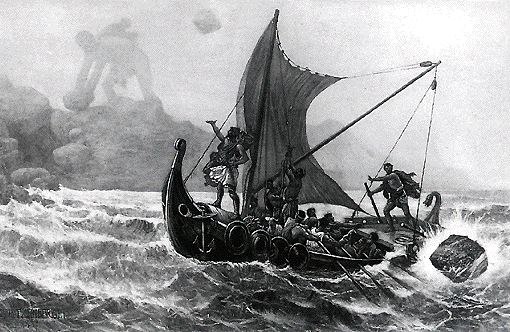
I’m pleased I did, actually, because The Odyssey touches on what are, for me, the key ideas in Greek literature that I wanted my students to explore: the Gods, the Trojan War, the myths. Pretty much every Greek myth is either found in or alluded to in The Odyssey. Scylla and Charibdis, the Sirens, Hades, the Cyclops; even Prometheus finds a fleeting mention.

Our students deserve an enriched and varied curriculum, and one which allows their depth of understanding to increase. Most books of substance, when critically explored, are inherently intertextual: The Odyssey is one small step to allowing students to access this.

odyssey

Reading Lists

I thought I would share some of my favourite reading lists with any teacher readers before the onset of the summer holidays.

I wish I could say I had a firm system for these lists. I always try to do one before a long holiday, or even a short one, and definitely one at the start of the year. My students are amazing, though; a small number will start asking me for recommendations and that is how I know it is time to wheel out another one.

I liked the “20 books you should read” format because I thought it seemed manageable. The first was originally made for a very high-achieving year 10/11 class who needed to be stretched and prepared for the rigours of A-level. I also included any books I loved at their age, or that I remember my friends loving. The sixth form list goes further, and has non-fiction texts which are critical but I think accessible.

KS4: 20 books you should definitely read:

  1. Erin Morgenstern: The Night Circus
  2. Truman Capote: Breakfast at Tiffany’s
  3. Tracy Chevalier: The Girl with a Pearl Earring
  4. Stephen Kelman: Pigeon English
  5. George Grossmith: Diary of a Nobody
  6. Vladimir Nabakov: Laughter in the Dark
  7. Emma Donaghue, Room
  8. David Nicholls, One Day
  9. Malcolm X, The Autobiography of Malcolm X
  10. Khaled Hosseini, A Thousand Splendid Suns
  11. John Irving, The World According to Garp
  12. Harper Lee, To Kill a Mockingbird
  13. Bill Bryson, Shakespeare
  14. Daphne du Maurier, My Cousin Rachel
  15. Margaret Mitchell, Gone with the Wind
  16. Charles Dickens, Great Expectations
  17. Vikram Seth, An Equal Music
  18. Richard Llewellyn, How Green was my Valley
  19. Steve Tolz, A Fraction of the Whole
  20. Richard Russo, Empire Falls

Sixth form:

20 books you should definitely read:

  1. Sebastian Faulks: Faulks on Fiction: The History of the Novel in 28 Characters
  2. Ernest Hemingway, The Sun Also Rises
  3. F. Scott Fitzgerald, Tender is the Night
  4. Colum McCann, Let the Great World Spin
  5. Oscar Wilde, The Picture of Dorian Gray
  6. Truman Capote, In Cold Blood
  7. Victor Hugo, Les Miserables
  8. Bill Bryson, Shakespeare
  9. Charles Dickens, Great Expectations
  10. Jay McInernay, Bright Lights, Big City
  11. Andrew Marr, A History of Modern Britain
  12. Haruki Murakami, Norwegian Wood
  13. Strunk and White, The Elements of Style
  14. Jane Austen, Emma
  15. Barbara Kingsolver, The Poisonwood Bible
  16. Sebastian Faulks, Human Traces
  17. Sophocles, Antigone
  18. Theodore Dreiser, Sister Carrie
  19. Virginia Woolf, Orlando
  20. George Eliot, Middlemarch

Recommended by students

It has been a long time since I delved into my favourite type of book: books that kids love. It has been a complete treat to be able to read some extremely entertaining books, on the premise that as a teacher I should probably 1) be aware of what my students enjoy reading, and 2) be able to share this knowledge with my more reluctant readers.

Second only to results day (some of us are in it for the glory, to our eternal discredit) my favourite thing about teaching is when a student comes up to me, thrusts a book into my hands and says “Miss, you need to read this!” and then I go home and absolutely love every minute of reading it.

Seriously, it doesn’t get any better than this.

I’m going to write about texts I believe students must read later; the below aren’t must-reads; rather they are vital gateways to enjoying reading in students’ spare time.

I’m going to put a caveat on this that I work in an all-girls’ school, so these books might seem a little more appropriate for your ladies than gentlemen.

So, below are some of my favourite books, in no particular order, which students have recommended, along with some ideas about who I would go on to recommend these for.

Looking for JJ

I noticed an extremely gifted year 8 student reading this in a library session, and worried it wasn’t challenging enough for her. In fact, it probably wasn’t; but the fact that it was her eighth time reading it, and that I have led a lot of more reluctant readers to it since, allows me to forgive her just this once.

Cassidy’s novel has a variety of rubber stamps from the book industry: it was shortlisted for the Carnegie Medal and the Whitbread Book Award and won the Booktrust Teenage Prize.

It’s a great story involving murder, creatively told. Your year 7 and 8 students will love it; your reluctant year 9s will definitely get something out of it.

The Time Traveler’s Wife

Possibly one of my favourite books ever, and one of my most successful re-recommends. This is one of those books I staggered into school on four hours sleep for because I just did not know when to stop.

This was first recommended to me by one of my most widely read year 10 students, and now serendipity has made someone lose their library copy of it in my room. I could give it back, but I have some repeat-offenders who have taken to it in detention. I’m a greater-good kind of person.

The structure of this novel is its main selling point: incredibly creative narrative jumping all through time, as the title would suggest. At its heart, though, this is a romantic tale full of slush, not to mention some great vocabulary. I’d probably recommend for year 9 and above.

Major warning: there is a film version. I tend to find this makes some of my students immediately discount reading the book as they can just see the film. I’d hold off telling students it even exists.

Life on the Refrigerator Door

This book was recommended to me last year by an amazing year 7 student, who brought me dozens of books to read on an almost weekly basis. This was definitely my favourite. An undeniably easy read, it is certainly one for our non-readers to whet their appetite for reading. Extremely short and told in the form of notes on a fridge between a mother and daughter, this explores relationships and family tragedies convincingly. Students love the note aspect, especially how they are presented (often pictorially).

I’d recommend to Key Stage 3 reluctant readers; or any Key Stage 3 student before the holidays – they can read something easier if they also take out a Dickens. Them’s the rules.

The Sky is Everywhere

My year 9 tutees are my best book recommenders. I’ve taught them since year 7 so it has been a long time in the making, but when I’m stuck for something to read I sneak a bit of tutor time to pick their brains. One of the Beliebers (who has so far recommended about 7 excellent books for me) told me to read this, and I really did love it. Another one of those mushy romantic stories – they do love them so – this one also explores ideas of bereavement. Gorgeously written, and again some nice presentation for students needing the safety of images. Not to down-grade it – there’s a lot of words here too. I think year 7 and 8 could read it safely, although some of its themes might be a little boundary-pushing; this one comes into its own for year 9 reluctants.

I’ll definitely be revisiting this topic, not least because I’m always reading something a child has thrust onto my desk in the English office. Sometimes I truly don’t know what I’d read without my students.

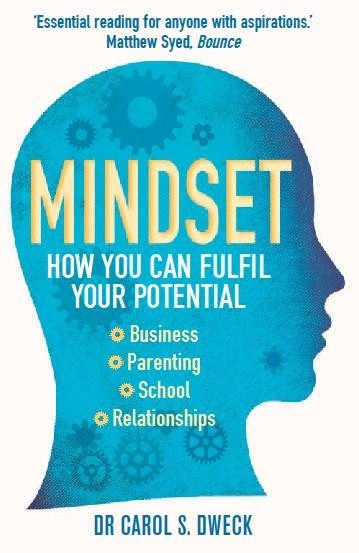
Mindset

Many months ago, I was taking part in a focus group on challenges students face in our current education system and I remember posing a question to the group.

What I want to know, I remember saying, is what makes this kid different. Plenty of my students face immense challenges, and they fail. How is this one, who has faced every challenge imaginable, thriving?

At that discussion, my question was swept away – perhaps it was too big, or too vague; certainly it seemed to the panel too little connected to our remit.

Let me be specific here in a way I wasn’t then. What I want to know is this: how has her unimaginably deprived upbringing and lack of parental involvement somehow led to the most impressive vocabulary in my year 11 class, and the most advanced understanding of literature? How are her difficulties translated into A*s, and other students’ difficulties aren’t?

The woman next to me wrote two words on my notepad as the discussion continued: Mindset. Dweck.

I had heard of this book; indeed I felt I had based my educational beliefs on its central premise without even reading it: all children can learn, all children can grow their intelligence. The ability to attain academically is created, not inherent.

When I finally got round to reading this book, then, I confess I was already willing it to be great. And, if you strip away two thirds of the anecdotes, it really really is.

Early on, these anecdotes are useful and illustrative; for example when exploring the approach of young children who seemed to enjoy tackling hard problems and failing, for the sole reason that, to their minds “they didn’t even think they were failing. They thought they were learning.” I would love my year 9 to approach English like this: we had an impromptu discussion about mindset after I had read the book and the students conceded that “we could learn more if we stayed focused… But it’s just too hard.”

This is just one example of the limits of mindset: yes, it is vital; but there are many other factors to consider when analysing the way children respond to education. My year 9 also felt their creative and sporting talents were fixed and unable to be improved. As one heart-breakingly put it: “I’m in bottom set for everything. I know I’m dumb.”

This statement clearly reveals the student’s mindset; what it does not reveal, however, is what has happened in the past to cause this student to be in set 5: not lack of intelligence, but lack of effort. What has happened in her education that she hasn’t put that effort in; hasn’t wanted to put that effort in? What challenges has she faced that students in the higher sets have not?

Dweck does acknowledge these and other limits, for example when discussing depression. Of course depression is caused by more than a fixed mindset, however she chooses to view the idea through this small prism, and in its own way it contributes to psychological discourse without seeking to define it.

One other caveat which is useful is her acknowledgement that people with resources, such as the safety net of money, will inevitably “take more risks and keep going longer until they succeed.” Moreover, “people with easy access to a good education, people with a network of influential friends, people who know how to be in the right place at the right time, all stand a better chance of having their effort pay off.”

This is a text all about work, and anyone who knows me will attest that work is my favourite thing. The central premise of this text was transformative for me: if more effort leads to more success, we’re just hours (perhaps ten thousand?) away from really amazing things.

More valuable than this, of course, are the implications for my students. I have long found that time spent convincing kids they can do something will always pay off. This book gives plenty of help on rephrasing your praise to be more growth orientated (although I draw the line at Dweck’s self-flagellation for accidentally saying her husband was “brilliant” – it’s fine; sometimes language needs to be more fluid than this).

So, back to the challenges facing students in education. Perhaps it would not be the worst thing in the world to spend some time investigating how best to grow a growth mindset in our most challenged students. If we cannot cure the social ills that plague our students, can we at least prevent the certainty that they will hold these kids back from achieving their full potential.

Finally, one of the surprising outcomes of reading this book was a personal one. When deciding whether to take on more responsibility as an educator, my initial response was: “no. I’m not ready. I will probably fail, so trying would be stupid.” Like my year 9, I sought approval: I wanted to be the best at what I was doing. Yet reading Dweck’s words had a profound impact on me: “people in a growth mindset don’t just seek challenge, they thrive on it. The bigger the challenge, the more they stretch.”

Yes, I might fail, but also yes – I would become a better educator for that experience. As one anecdote reads: “if you only go through life doing stuff that’s easy, shame on you.” Shame on me. Let’s see how I fail better next time.

mindset

In Praise of ‘Of Mice and Men’

I’m aware that this post’s title alone may have caused a not insignificant number of readers, in particular those teaching English, to pull at their hair shouting “doom! Never make me read this again!” Also, hands up if you studied this for your GCSEs? I am imagining lots of hands. AQA, I would love a statistic on just how many children have studied this novel and taken an exam in it.

More than ten years ago, I was taught this novel by the most knowledgeable and charismatic teacher you can imagine. At that time, this was undeniably the best book I had ever read, although I think I only know that in hindsight (my taste was all over the place – my 15 year old self would probably have said Orwell’s “Keep the Aspidistra Flying”, a book I have since discovered is one of his most derided works).

The themes in the novel are epic: life, death, hope, dreams, power, powerlessness – I could go on, but I am trusting that 90% of readers can fill in the blanks themselves.

What really struck me about this novel was that when I came to prepare to teach it 11 years later, it still got me in a big way. Sitting on my sofa one sad, exhausted Friday, I ploughed through the entire thing, only to find myself weeping uncontrollably by the final pages. Why did this happen?

There is a fabulous essay, which I made my year 11 read, by Thomas Scarseth called “A Teachable Good Book”, in which he discourses at length on the nature of tragedy and whether this book is one. Unarguably, catharsis is a key component of tragedy, and if my sniveling, hysterical reaction is anything to go by, this book is one.

It is a tragedy of another kind, however: of both the ordinary man, and the unlucky man. In our comparatively caring society, the modern reader pities Lennie and sees him as this force for general good, albeit one liable to make mistakes. Through Steinbeck’s narration, we come to empathise with him, even as he commits the most horrific acts. We are made to understand why, and made to feel intense pity. The narrative comes crashing towards its tragically inevitable climax and we find ourselves wondering “how could this happen? How could it have been changed?”, much like, I would argue, in the closing scenes of many a Shakespeare play.

Another reason I wanted to blog about this book was because I am an examiner for an GCSE Literature paper, and as part of my duties I read the alternative modern texts for this exam. Only a few struck me as enjoyable, the others I struggled through, and none bore the hallmark of great literature in the way that Steinbeck’s novel does.

If we want students to become readers of literature, they surely must study the greatest literature; not just books which are conduits for discussing a writer’s techniques. We wonder why this book is so omnipresent on the English curriculum, but have we really looked at the alternatives? I would rather teach a truly great novel, even if it means repetition for me.

Finally, this novel opens the most gifted students up to the greatness of Steinbeck. Many of my year 11s also read The Grapes of Wrath; one even read East of Eden. It also primes them for a wider and more advanced study of American Literature at A-level, containing, as it does, the most crucial themes and some of the most pertinent contextual facts of that nation.

All in all: yes, we teach it to death; no, there are no better alternatives currently; but yes, this is undeniably a towering work of fiction.

Fostering a love of reading

As an English teacher, the goals I have for my students tend to be simple: I want them to achieve a great grade at the end of their English experience, and I want them to love reading – now, and forever.

Year 10 and 11 are mostly about the former aim: we work as hard as we can to ensure students “do well” in an academic sense. We need, due to time pressures, to prioritise this aim. For me, this makes year 9 all the more precious. I am blessed to work in a school which trusts me to do what I feel is right for my classes, and what I have decided to do with my year 9 is to invest time in my second aim.

To begin with, reading lists (of which more, later). How can we expect students to know what to read on their own? I didn’t enforce reading from the list, but most students did. I had a wonderful, warm, fuzzy moment a few weeks ago when I realised almost every student was reading a recommended book.

Then, silent reading. Controversial, perhaps (although part of me feels very sad that some people feel that children reading silently might be a bad thing). I started year 9 off with 10 minutes of silent reading every lesson, and one 50 minute reading lesson a week. In my experience, I felt that the main factor holding my students back was their literacy. They were amazingly creative thinkers, but they did not have the deep and fast comprehension skills they needed to succeed academically. I wasn’t going to back down from this: these kids needed to read. (Incidentally, although I experienced major guilt for these extended reading sessions, this was assuaged hugely by one conversation with a fellow teacher at a Prince’s Teaching Institute session, who was also a mother. She told me that her son had once been an avid reader, but now all he did was play computer games. I believe her exact words were: “if I could know he is reading for a solid 50 minutes a week, I would be thrilled.”)

This policy has had its ups and downs. To begin with, it simply didn’t happen. The students didn’t have the will or the ability to concentrate for so long. But over the weeks, something changed. I can’t remember when the shift occurred, but it seemed that, all of a sudden, they were actually reading, and really enjoying their reading. In fact, during the lesson I would catch some reading instead of doing the work – obviously not ideal, but surely a great thing to catch a student doing nonetheless. (Thinking of the alternatives, I would say this is actually pretty amazing. “You! Yes you! Stop reading immediately!” I really never thought I would say those words. Perhaps a sad side-effect.)

Then the students started reading books not on the lists, and enjoying them. And then recommending that I read them – more on this later too.

When I asked my year 9 one jittery session (yes, it still happens; they still find the reading hard at times, particularly towards the end of the day or the end of the term) why they thought we read at the start of every lesson, I received some valuable responses. One student, however, noted that they believed it was “to calm us down so we start the lesson ready to learn.” I hadn’t even considered this, but given the fact that I was essentially curtailing a 50 minute lesson and making it 40 minutes, I realised then that I’ve always managed to get a lot done with this class. The student was right – we begin the lessons in a focused and calm mindset. This only strengthened my belief in the silent reading starter.

But more than that, I really hope that my year 9 students can continue to love reading. These students deserve more than just a cookie-cutter course designed to allow them to have a grade on a piece of paper. English is about so much more than that. If these students can learn to love to read, I will have done my job.

There are no shortcuts

Teaching is really, really hard. Anyone who is a teacher already knows this, but I need to preface this post with that key piece of information lest any non-teachers be reading. Yes, it is the greatest job in the world, but it is also, at times, unremittingly tough.

I wanted to write about Rafe Esquith, because I am coming to the end of my third year, and teaching is still really hard. Esquith was one of my first-year crutches: when I wanted to give up, or thought “actually, I’m making no difference at all, and I don’t really know how to”, I would pick up one of his books and I would find the tenacity to carry on.

Thank you, Rafe Esquith, because those hard times became fewer and further between, and I stuck it out. But there are still times where you wonder “is it worth it?” – those are the times you need this book. Maybe leaving school after an arduous parents evening which has made your in-school working day 13 hours long, and that’s before you mark year 9 at home. Maybe in those long winter months, when you leave home and it is pitch black and you return home and it is pitch black. Maybe after marking 28 essays and 28 books and organizing revision clubs and breakfast boosters and lunch boosters and a student still says: “I don’t understand. I need more help”; or more time, which you don’t have, because the exam is this Monday, and you have 27 other students, and this child has only just started to care about their exam, and if they had cared two years ago they might not be saying this now.

Whatever the scenario, when in doubt, read “There are No Shortcuts.”

Rafe Esquith works in a system that sounds tougher than anything I have ever heard of in the UK. Early on in the book, Esquith writes to new teachers: “outstanding teaching will require you not only to do everything in your power to reach your students but to battle the forces that are supposed to be on your side.” His is an administration doggedly opposed to any kind of innovation or creativity in the classroom, portraying low expectations of children at every turn. One example of this is that he can’t teach a full text; he needs to teach snippets of great literature to drill kids in multiple choice exams which say nothing about their aptitude for essay writing. As an English teacher, my heart hurt when I realized that an act of rebellion was teaching a full text, something I took utterly for granted. Indeed, Esquith advises to “read your favourite books with your students”, something I can already do, thanks to an incredibly trusting Head of English.

Esquith teaches fifth grade in a primary school in an extremely deprived part of Los Angeles. The rallying cry of this book is in the title: there is no magic way to help students catch up who are far behind their peers. You just need to work at it; and Esquith does: terrifying commitment is shown in every utterance. At times, you do wonder whether he is not actually an exception, and whether all folk could find this level of hard work sustainable.

What is great about this particular book is that you realize that Esquith did not always get it right. He made mistakes, and yet persevered, and altered countless lives. This is comforting to any teacher beginning to doubt their “calling.”

So, if ever you need your fire for teaching re-lit (and “Lighting their Fires” is another Esquith I would recommend), turn to dear Rafe, marvel at his efforts, and remember he is a human just like you, and what you do is amazing.

Born to Rise

​Deborah Kenny is the founder of Harlem Village Academies, a chain of charter schools based in one of Manhattan’s poorest neighbourhoods.

Kenny’s book does not spare the reader some shocking statistics; in 2008 in the area of Harlem where she proposed opening her first school, 78% of 8th graders were failing reading and 87% were failing Maths; students in their catchment area had only an 8% chance of attending university; and in 2002 only 16% of 8th grade Harlem students could read at grade level.

HVA was founded on a simple principal, and one that many educators would endorse: what would I want for my own children? Kenny observed teachers in countless charter schools, and although she saw some flashy lessons, for example fun ways to remember Mathematics formulae, she felt that she wouldn’t want her own students to be taught like that: she wanted her kids to love Maths. Similarly, HVA was set up with no system of rewards – instead, Kenny wanted students to behave because they wanted to learn. Succeeding academically was the reward.

What also marks HVA out is its emphasis on teaching and cultivating brilliant teachers. As a teacher myself, I find this hard to argue with. Teachers need to be granted freedom and trust to carry out their duties to the best of their capabilities. Kenny even recognises this in herself, noting that while she had fully trusted her “rock-star teachers” one of the initial failings of the schools was that she had found it harder to grant those same freedoms to struggling teachers.

Yet Kenny redeems herself even in this, describing teachers who struggled in her schools and how she challenged herself to not give up on them, instead working collaboratively to help them to improve. This is surely the dream in education: we have all become teachers for similar, value-laden reasons, yet often other factors (both within ourselves and outreaching contexts) contribute to the success or lack of success of our classes. Rather than writing teachers off, Kenny’s programme of formative assessment of observed lessons and team planning to improve delivery ensures that no teacher is left behind.

I love this idea, for it helps teachers everywhere on the spectrum. The most “outstanding” teachers I have the privilege of working with impress me everyday with the simple fact that they focus not on what they have done, but how they can improve it in the future; including improving outstanding lessons.

Rather than a summative grade, which could arguably encourage coasting, surely a more effective way of keeping teachers engaged is surely working together to improve on a curriculum or lesson plan, acknowledging greatness but also building on it.

(HVA’s website, which is worth a visit, states that: “The freedom we enjoy at HVA is guided by purposeful collaboration with the rest of the team, so that we become better teachers and leaders every day. HVA is a lively laboratory of co-planning, co-grading, and co-observations followed up with genuine conversations. There’s no formula or magic bullet; just old-fashioned, hard questions like, “How could that section of the lesson have been more engaging?” As educators, we love the feeling of continually improving our craft.”)

What I enjoyed also about this book was the personal touch. To begin with, I was confused by Kenny’s inclusion of her very personal family and faith inclusions, however as the book went on I understood their importance to her charter school vision.

Moreover, these personal elements mirrored the personal dream of the schools as a place where professionals are also friends. Kenny’s warm love for her teachers shines through the book, as much as her frankly expressed love of her students.

The bottom line of this book is that we need to be ambitious when it comes to our children’s futures, and we need to face up to the fact that what works in the short term doesn’t always mean the education we would want for our own children. Children from low-income homes are all of our responsibility; they are all our children, and we need to build a school system that reflects that.

BornToRise

The Fault in Our Stars

A really special thing started happening about two years ago which has enriched my life to no end. Having drowned my students in reading lists and excited rushes around the library thrusting books at them with maniacal enthusiasm, they began recommending books for me to read.

I really need to big up the year 9 student in my tutor group who told me to read this particular one – I don’t think it would be fair to use her real name, so we can just call her Mrs Bieber (it’s the name she would want – trust me).

Mrs Bieber told me to read this book by John Green, and then told me it was about a cancer patient. With all due respect to sufferers, I have to admit I was not especially pumped for this book. Many of my students have a deep love for what we might cruelly term “misery lit”, and I assumed this book would fall into that category.

Mrs B assured me otherwise. I took the book, and can’t thank her enough for persisting. This is a story about a cancer victim, but it has a major twist. This girl is about so much more than just her disease. She comes alive on the page effortlessly; we are invested within five pages; we really care about her as a person. We want to be her friend.

Hazel has terminal cancer, and this never once stops the reader rooting for her in life. Her death is casually assumed in her narrative voice and never dwelled upon. Through Hazel, we are continually reminded of the need to stay in the present. This story is essentially centred on her first romantic experience.

Her story is both realistic and magical all at once, and told with care and humour. The humour is vital. There are also some interestingly post-modern intertextual references to  made-up books, which I am certain will posit interesting literary thoughts in more erudite minds than mine.

I will be recommending this for my students. Thanks Mrs B!

the fault in our stars