Leadership

Having trained with Teach First, I felt like I had heard enough about “leadership” to last me a lifetime. Prior to moving into a role as Head of Department last September, I thought I knew much on the subject – I could parrot, for example, the line about the difference between leadership and management; I could recite the vignette about the boss seeing where his people were heading so he could lead them.

But there’s a world of difference between knowing the shorthand and actually being an effective leader. Having heard the depressing line: “if you’re telling me to do it, I’ll do it,” I knew I needed help. I resolved to attack the problem the only way I know how: by reading all the books.

Of course, this is not the only way, and a lot of what I learned did not come from books. I’ll write soon about what I feel leadership is, at this uncertain moment of new enlightenment, but for now, here are some of the best leadership reads.

Leverege Leadership

The first book on leadership I read, this was perhaps pitched too far from my world of middle-dom; but nonetheless I gleaned some useful insights here, not least the resounding message that the key is focusing on great teaching. Bambrick-Santoyo lays out the ideal of principal as “instructional leader” and some examples of how this might work in practice. There’s a helpful distillation of data-driven leadership, as well as plenty on culture and vision.

Switch

Here’s the essence of Switch: people know a lot, but are still mostly driven by their emotions. To make people change (or, in my case, specifically change to wanting to follow you) you have to engage their emotions and activate their trust. The book sets out strategies for making people want to follow you, and steps for pushing positive change through.


Leadership Plain and Simple

The amazing Jill Berry recommended this book, and it could easily be the only leadership book you have to read. Amazingly straightforward, the book turns on the assumption that leadership means: engaging others in your vision of the future, and the plan you have to get there, and then delivering that plan. It is fuzzy on delivery, but that’s probably because delivery will be massively varied in different scenarios.

Leading in a Culture of Change

Although this book does contain some grating “management newspeak” (such as “simplexity” – definitely not a word), it is written clearly (useful for the midnight reading sessions of a first-year wannabe leader) and is full of awareness of the wrong turnings a potential manager/leader might take, as well as balancing concepts of confidence and humility.

How to be an Amazing Middle Leader

This is one of those “does what it says on the tin” books, and is a great primer for someone new to middle leadership. Occasionally over-specific, it enumerates tasks and activities you might do to hone your vision and create your action plan. Probably one to read the holiday before taking up a post.

Mindset

I am aware this is not a book on leadership, but if there is one thing I know for sure about leadership it is that it is all about your core values. You have to know what drives you as a human, and how that translates to what you are doing in your job. I’ve written before on Mindset but suffice it to repeat: I believe in the uncapped potential of every single child without any exception to succeed, and believe it is my job to create the conditions for success.

Finally, leadership in a school context is perhaps best served by the many wonderful bloggers out there. Stuart Lock is one of the most generous, encouraging and humble senior leaders I have met, and writes plenty that is both heartfelt and sensible on schools. Keven Bartle, a new headteacher, has written copious amounts of genius words on leadership at all levels. We are all waiting for Jill Berry, an ex-head and fantastic speaker, to begin her blog – in the meantime, she says many wise words on Twitter. Finally, Mary Myatt is a school inspector and writes with clarity on all issues Ofsted – always helpful.
More Reading Lists

Meeting my classes for this year for the first time, I was reminded more than ever of the great and pressing need for children to read.

I’m becoming more convinced of the power of sheer enthusiasm to move children to action. On giving the reading list below to my year 11, one student said: “Miss, can you read it out and talk about the books? It makes us want to read them more.” It was partly unfortunate, and partly brilliant, that their head of year walked in just as I was explaining Holly Golightly’s real job. A book containing taboos and crossed boundaries will be readily sought.

Year 10 needed little less convincing. They are a designated “extra English” group (they have more lessons of both Maths and English a week, having been chosen from their end of year 9 levels), and so are very small. They don’t feel “extra”; but they do feel urgent – yet they have started year 10 with the right mindset and I truly hope this continues. The very lesson after my book list talk, a third had not only taken their list books from the library, they were proudly putting them on their desks for the duration of the lesson lest the opportunity to read arose (they have not yet realised it rarely does).

Year 9 may prove more challenging. Again, an “extra English” group, there are far more of them; they are a “normal sized” class (if such a thing can be said to exist). At times, they felt like a mounting wave of apathy towards reading. Not particularly boisterous, they simply haven’t yet grasped the urgency of their need to read. Paragraphs are littered with “nice”, “ok,” and “gotta.” I’ve taken to packing them up five minutes before the end to read to them from a book I have loved, but so far they seem unmoved. I will wear them down.

A few people have mentioned that the lists are helpful, and in this continued hope to help I reproduce a couple here, in the wording exactly as has been given to the students.

*   *   *

Year 11: books you absolutely must read to take your mind off the impending doom of the hardest year of your academic lives


Truman Capote: Breakfast at Tiffany’s

In under 100 pages, this book explores the life of a New York woman who lives in an unpredictable way, and who expresses her dreams beautifully.

J.D. Salinger: Catcher in the Rye

Have you ever felt angry? Unhappy? Well, your suffering is nothing in comparison to Holden Caulfield, the angriest, unhappiest human in literature (probably).

William Golding: Lord of the Flies

A plane crash leaves a group of boys stranded on a desert island. In making their own “rules”, disastrous consequences ensue.

Henrik Ibsen: A Doll’s House

This is a play (so very, very short) about a woman trapped in an unfulfilling marriage, remembering she still has a mind.

Arthur Miller: The Crucible

Another play: this one explores a group of girls living in a stifling, controlling society. Once they realise how they can achieve power, all hell breaks loose… Literally.

Nick Hornby: About a Boy

A man invents a son, which brings him into a new circle of friends. Key themes include: falling in love, battling hardship, and a Christmas song that won’t die.

John Steinbeck: The Grapes of Wrath

If you enjoyed “Of Mice and Men” you will love this novel – longer, more painful, more tragic even than George and Lennie.

Jane Austen: Pride and Prejudice

Whatever your preconceptions of Austen, this book is simply hilarious. A (romantic) comedy of manners, including the worst proposal of marriage you will ever read.

Leo Tolstoy: Anna Karenina

I think you’re ready for the powerful and life-changing emotional charge of Tolstoy, and where better to start than a beautiful but troubled young lady?

Christopher Marlowe: Dr Faustus

Faustus wants to be more intelligent (don’t we all?) so he conjures the devil (as you do) and sells his soul for a few years of high-jinks. What could possibly go wrong?

Philip Roth: The Human Stain

Despite being completely hilarious, this book deals with (and challenges) the notion of “race” and our ideas about it.

F. Scott Fitzgerald: Tender is the Night

No book will ever match Fitzgerald’s masterpiece, The Great Gatsby, but this novel follows a failing marriage and fascination with a young girl… And is scarily similar to Fitzgerald’s own life. (Read Gatsby first though. You won’t regret it.)

Raymond Carver: Will you please be quiet please?

Carver’s short stories, some fewer than ten pages long, paint interesting and troubling images, and show insight into our souls.

Erich Maria Remarque: All Quiet on the Western Front

A depiction of World War I told from the German perspective. Powerful and extraordinary.

Walt Whitman: Song of Myself

Why not, if you’re a great poet, write a poem all about YOU? Whitman did, and it is brilliant.

Alex Garland: The Beach

A group of tourists create the perfect world on a beach in Thailand. What could possibly go wrong? (Spoiler: everything. This book is horrifying.)

Graham Greene: The Quiet American

A journalist living overseas becomes entangled in a knot of love and politics.

Ian Fleming: Casino Royale

Like the Bond films? Read a Bond book.

Sebastian Faulks: Engleby

Welcome to the mind of an increasingly concerning individual. Enter, marvel, leave in horror.

Ian McEwan: Atonement

A well-told story, full of misunderstandings caused by children knowing too little.

Truman Capote: In Cold Blood

A book following murderers through their lives, and their experiences facing the death penalty. Based on a true story.

*   *   *

Year 13 reading list:


Useful for your exam:

Bram Stoker: Dracula

The original vampire novel. Think about how women are represented though, and what them becoming a vampire might be a metaphor for…


Samuel Taylor Coleridge: “The Rime of the Ancient Mariner”

A poem, but one which will darken your soul. Truly terrifying. And what does it mean? (Please tell me.)

Matthew Lewis: The Monk

This has been called an exaggeration of every Gothic trope imaginable. It is, but it is also very entertaining, and a little disgusting.


Edgar Allen Poe: “The Tell-Tale Heart”

A very, very, very short story but well worth reading. Dark and psychological gothic text.

Robert Lewis Stevenson: “Strange Case of Dr. Jekyll and Mr. Hyde”

Most useful companion to Frankenstein, and less than 100 pages. Can you see the links?

Useful for your soul:

Oscar Wilde: The Picture of Dorian Gray

A man wishes to never be old and to always be beautiful. This wish is granted. What could possibly go wrong? (Hint: lots.)


Colum McCann: Let the Great World Spin

The intertwined stories of various New Yorkers, under the shadow of a man walking a tight-rope between two sky-scrapers.


David Lodge: The Art of Fiction

Great ideas on literature. When you finish, you can read one of Lodge’s (hilarious) novels to learn more about university life.


Donna Tartt: The Secret History

Don’t get your ideas about university life from this book, but this one will stay with you a long time.


Dave Eggers: The Circle

An oddly familiar internet company and its quest for making information freely available starts to feel a little like Orwell’s 1984.


Margaret Atwood: The Edible Woman

One woman’s quest to find herself. Amusing but important also.


Chinua Achebe: Things Fall Apart

Exploration of the impact on native inhabitants of Western “do-gooders.”

Teaching memoirs

I love a good teaching memoir. During my first year in the classroom, I relied on the Teach for America memoirs (which are legion) to provide hope that I would prevail, despite current adversity. I’ve also included some organisational biographies and books of leaders which I’ve found especially inspiring.

1. Taught by America, Sarah Sentilles

This is the first Teach for America memoir I read. Sentilles joined TFA as a member of the 1995 corps and was sent to Compton, a city south of Los Angeles. Her beginning days as a teacher will sound comfortingly familiar I think:

I woke up before 5am each school day, made myself breakfast and packed a lunch, drove to the nearest copy shop to make copies for that day’s lesson, and then hightailed it to Compton. I taught thirty-six students all day, and then I cleaned my classroom, graded papers, planned the following day’s lessons, drove home, opened a can of something to eat for dinner, and practically fell into bed. I often cried myself to sleep. The next morning it started all over again.

If nothing else will, these American teachers will make you grateful for your school copier (even if there’s a huge queue after 7:30am and it jams five times a day). The issues of unsettled homes are writ large in this book: Sentilles contends with an ever-changing register of names as children leave and move into the area. Despite these struggles, there are some truly heart-warming moments in this book – although the ending can be hard to swallow if you’re a hardened teacher (I won’t give it away here).

2. Hands up! Oenone Crossley-Holland

This is the sole Teach First memoir of a participant I have been able to find (if you know of another please do let me know). Crossley-Holland’s placement school was alleged to be the one near my own placement, and a girls’ school as well; I thought I’d find plenty to learn from here. I wasn’t disappointed. The writer takes you through several “typical” days, and some of the challenges (both external and emotional) of working in a “Teach First” school. I found the style of the book warm and the writer extremely likeable. Her dialogue is convincing and the students warmly depicted, with a real sense of them as humans, often flawed by factors not of their own making, and eminently lovable.

3. Whatever it takes, Paul Tough 

This isn’t a memoir, but rather a biography – yet it is also informative of the challenges facing our students, and inspiring in one man’s quest for educational equality, crusading outside a classroom. Geoffrey Canada, a teacher by trade, took it upon himself to transform the life chances of children growing up in Harlem, creating the “Harlem Children’s Zone”, and Tough chronicles his movement in this book. This book is a must-read for any would-be education-reformers, as well as anyone with an interest in the backgrounds of the students they find in their classrooms. Depressingly, it also shows us how vast the issue of educational inequality is; at the same time, one might also conclude that more people with Canada’s dedication can do much to turn the tide.

4. The Best Job in the World, Vic Goddard

I’ve never tried to hide it: I am a massive, massive fan of Educating Essex (any international readers: this is a Channel 4 series which documents the year in the life of an exceptional school in Essex, England). Goddard, in the series, is seen in headteacher-guise; a very human headteacher, but still one with all the confidence such a role illuminates. His autobiography shows us that such certainty is created, not inborn, and Goddard takes us through the highs and lows of his career, whilst simultaneously repeating his rallying cry to those new to the profession: become a headteacher; it is the best job in the world. There is much to learn here, both about teaching, learning, behaviour management and, especially, leadership.

5. Teaching in the Terrordome, Heather Kirn Lanier 

This is another TFA memoir, one about an English teacher. It is suffused with genuine humility, such as Lanier’s retelling of her first lesson with her students, where she wants them to see reading as a door to new and undiscovered worlds:

‘See! It looks like a door!’ I close the cover to illustrate, then open it again. I nod. “A book is a door! Reading is a doorway into a new world!’ I raise my eyebrows, I smile. They stare back blankly. They show no signs that they are enthralled by the prospects of visiting new lands via literature. No music plays in the background, and I win no one over.

The sheer belief you have in your students is often met with complete and utter apathy at first; in Lanier’s disfunctional school in Baltimore, she overcomes challenges I could only imagine, and reveals more about the disfunctional American system than perhaps any other memoir I have read.

6. Work hard. Be nice. Jay Matthews

This is another biography of an organisation, this time KIPP: a chain of hugely successful charter schools which have gone on to inspire many of their UK counterparts. This is the story of Mike Feinberg and Dave Levin, two of my heroes (and it is well worth following both on Twitter); of their initial experiences in the classroom (both were not born teaching prodigies, comfortingly) and their unstoppable drive to change education for the better for as many children as they could. The story is peppered with anecdotes which show the human and reflective side of the educators; my favourite is the one of the student who can’t finish her homework because she is addicted to television (something I sympathise with). Feinberg visits her home and asks the mother for the television set. She protests that it is their only one, and he responds:

That’s fine, but you tell me you are powerless to stop your daughter from watching it, so it seems to me the only way to make sure she doesn’t watch TV is to take the TV out of the house.

After the incident, Feinberg humbly admits he has overstepped the mark, yet there is something heroic in the anecdote I think we can all gain from.

7. Radical, Michelle Rhee

If ever there was a truly “Marmite” educational reformer, it has to be Michelle Rhee. She is known to many through her appearance in the documentary “Waiting for Superman”, wherein she becomes chancellor of schools in Washington D.C, said by some to be the most malfunctioning system in the states. Her central aim is to put students first; unlike my educational inspiration, Dr Irene Bishop (CBE; Superhead) who contends that to put students first you must look after your staff, Rhee often accomplishes this aim by firing “inadequate” heads and incentivising the best teachers financially. Although this sits uncomfortably with me, her invective against mediocrity is compelling. We must always be familiar with what we disagree with. And I don’t disagree with her aims, her intentions; only at times her method. Rhee’s style is powerful and she really takes you on her journey through education, as well as leaving you will an irrefutable call to arms.

This post is un-finishable; I have not explored There are No Children Here or In the Deep Heart’s Core, two of my very favourite books, as they mainly reiterate concerns above – but I would urge interested readers to read both; the first set in Chicago, the second Mississippi.

Finally: readers, please direct me to more teacher memoirs; share your favourites and, most importantly, go and write your own so I have more to read.

Easter reading

About one year ago, I attempted to go on holiday. After a day of biking around Central Park feeling smug, I contracted some hideous vomiting bug which had me laid up in bed for the full duration of the “holiday”, thus making that week the longest and most expensive lie-in ever. On the upside, I used my bed rest to write my first two blog posts (here and here), so beginning my foray into writing about books. Although I have strayed far from the tangent, I return today, partly for the sake of nostalgia, to some book thoughts.

I’ve gone about holidaying in a different way this time round. After six solid days of planning, marking, strategising and the obligatory running of many intervention sessions, I went on a holiday. One of those you might normally expect to occur in the midst of July or August, of the beach variety. On a beach holiday, I have two aims: one, spend as long as possible in the sun; two, read as many books as possible.

The Cuckoo’s Calling

I began in the airport, where all good holiday reading begins, with J.K. Rowling’s latest, written under a pseudonym (explained in more detail here). A colleague, who is also our department’s lead Harry Potter champion, recommended this and I’m delighted she did. I’m not normally a fan of crime fiction, but this is crime fiction sexed-up; with a massive dash of celebrity intrigue. It’s like crime meets the Daily Mail Showbiz website. Like The Casual Vacancy and Harry Potter I enjoyed this tremendously, perhaps in an intellectually uncommitted and vacuous way. That said, I do wonder if in a century’s time we might look back on this writer and concede her genius in the way of an Austen or Eliot, in holding up a mirror to our society and making it a rollicking good read.

I am Malala

This is a book for all of my year 11 to read (perhaps not yet – revise first ladies). Malala, also in year 11, has accomplished more than most of us will accomplish in a lifetime, and she is driven by a burning desire to promote education for all. Through this biography, I also learned lots about Pakistan and the Swat Valley, through nuggets of personal anecdote and news-worthy fact which made me hanker back to my pre-teaching days of reading The Economist and generally knowing what is going on in the world. A life-affirming, mission-confirming book.

Primary Colours

Believe it or not, before finding my “calling” in education, I previously worked in politics and sought to make that my life’s work. This novel reminded me of all the dirt and glory that comes with political intrigue. A thinly-veiled portrait of a couple closely resembling the Clintons (I wonder why it is anonymous?), this novel also prompted me to question the “real right” – not political, but moral. The central candidate has catastrophic personal flaws and human failings bordering on the obscene; yet his is absolutely driven by a central aim to make America a better place for its human inhabitants, and an absolute genius in his understanding of policy, strategy and governance. Do we need to care what our leaders get up to behind closed doors? I’m definitely undecided on this one.

The Wasp Factory

 I’m not sure why I read this, other than a feeling that the zeitgeist is normally right about “great” modern writers. For me, this novel felt like Faulks’ Engleby without the humanity. I wasn’t invested in the characters, and the whole climax of the novel fell flat for me. Undeniably, however, this book is beautifully written, and I do believe I have missed something in my underwhelmed response.

Divergent

This novel is known as the poor cousin to The Hunger Games, and with good reason. It rattles on, pure plot, for nearly 500 pages, including almost no characterization. Despite this, I enjoyed it hugely, partly because I’m a sucker for a kids’ trilogy and partly because I enjoy books which are pure plot, especially on holiday. The book is bizarrely almost all scene-setting, with the last 50 pages clamoring to an unexpected conclusion. Will I bother with the second book? It depends how “lite” I want my holiday reading to be.

Next term is short and vital. All term I have found it nearly impossible to read anything that is not about education, be that a piece of non-fiction, blog or child’s exercise book. It has been truly lovely to vegetate my brain with some froth.

 I felt painfully guilty about leaving during the “crucial holiday” for an entire week, but was greatly comforted (as happens so often) by my line manager’s wisdom: “next term is short. But we can do a lot in a very short time. Rest.”

Books for the more little ones

I remember during teacher training I was told that one of the greatest challenges most English teachers face is knowing which books to recommend to years 7 and 8. As grown-ups, the vast majority of us don’t read kids’ books (I have a few friends who consciously do, despite not being teachers, but I’d put down mostly to personal peculiarities).

I pursued this angle fairly half-heartedly at first, surveying the oft-taught Skellig and Holes, and finding neither riveting enough to teach. I read mainly to look for teaching books that summer.

And then I met my year 7 and 8 students. I was struck by how eager they were to read, and by how clueless I was to guide them. We would stand for ages in the library, a student asking plaintively for a “good book” and I would find myself flailing – the only books I could recommend were trapped on the forbidden “senior fiction” shelves.

Fairly quickly, I tried to remedy this, and I still make a “children’s” book part of my trio of reading: I read in turn a book on education (or for my teaching practice – I cheat lots here), a piece of fiction for grown-ups (I never cheat here), a piece of fiction for children.

Here are a few books I have recommended that students read with fair levels of success.

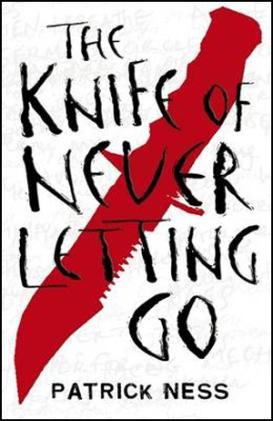
Patrick Ness: The Knife of Never Letting Go

knife of never letting goAn esteemed colleague of mine believes that this man’s openings are among the best in fiction: she read the opening of another of his books to her class and reluctant readers physically fought over the library’s copies.

One major drawback with this novel is its length: I have had very many students begin it, and very few finish it. Those that did seemed to greatly enjoy it, and many read the next in the series.

Ness has a phenomenal imagination and a great sense of the absurd: this book begins with the killer line: “the first thing you find out when yer dog learns to talk is that dogs don’t go nothing much to say. About anything.” Any language purists will find the informal style grating, but this is a super read for any advanced year 7 or 8 readers.

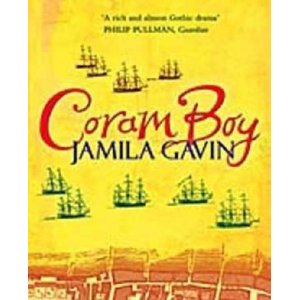
Jamila Gavin: Coram Boycoram boy

I am a huge fan of Jamila Gavin, whose books are engaging and entertaining, as well as beautifully written in a style stretching for most year 7 and 8 readers. The historical aspects of the story are dealt with clearly, meaning students can grasp the full nature of the story without needing any elucidation. Making use of the trope of intertwining stories of characters from dissimilar walks of life allows for a satisfying ending.

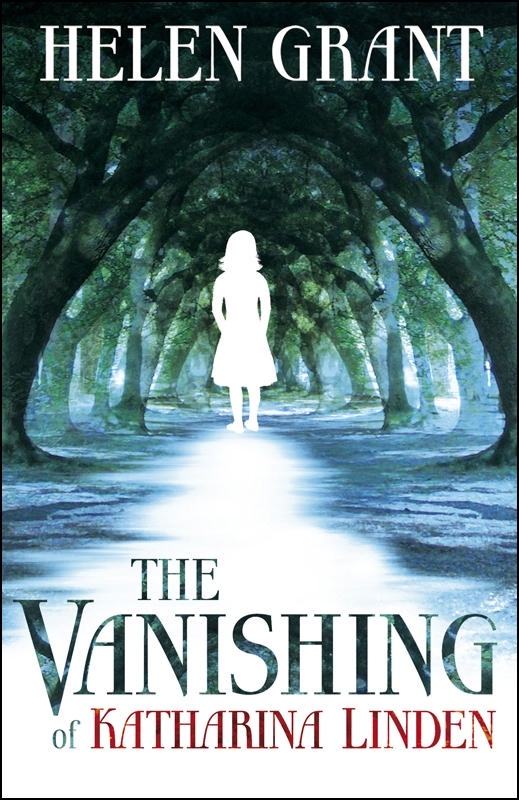
Helen Grant: The Vanishing of Katharina Linden

vanishing of k lThis is one of the many books I have bought on Kindle and regretted – my students are always looking for copies of it. As the title implies, this story has an other-worldly element, yet its tone is entirely realistic. There are plenty of suspenseful moments as you journey with the central character to find answers as the book goes on. 

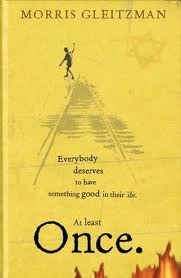
Morris Gleitzman: Once

A year 7 student recommended this book to me early on in my teaching career, and I made oncethe mistake of reading it on a Friday evening after a long week. I cried lots, and went on to make several other children cry through this novel’s recommendation. It is a much simpler and shorter account of the horrors of the holocaust that several I have encountered, but this makes this text all the more perfect for reluctant young readers.

I’m still improving my knowledge of books suitable for little ones, so I’d be very grateful for any recommendations from lovely readers!

Shakespeare Biographies

I didn’t fully appreciate a good biography until after my History masters. During my undergraduate degree studying English Literature, I had leaned towards a “Practical Criticism” approach. All that other stuff was frankly a distraction for 18-22 year old me.

Indeed, the issue of “did-Shakespeare-write-those-plays-or-was-it-some-richer-bloke?” still galls me. I wrote an essay in my second year essentially screaming “DOES IT MATTER?”

And to a certain extent, I stand by that exclamation. After all, we have no uncorrupted copies of any of Shakespeare’s plays, and the extent to which they were even penned by one person is arguable.

The real benefit of biographies is really about context: a biography showing us Shakespeare’s life and the theatre scenes in the London of the 1600s is invaluable for adding that something extra, something contextual, to our reading of the plays. Also, if you’re a teacher, you probably have to teach something about who Shakespeare was. Here are some biographies of Shakespeare I have read and found useful.

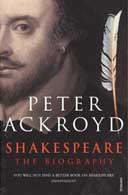
Shakespeare: the biography by Peter Ackroyd

ackroydAckroyd’s is my favourite biography, so I’d like to start here. His style is clear and his ideas concise. This biography is especially strong at linking the plays to the life; bringing us to see the precise links between an Elizabethan man and the drama he was likely to produce.

Early on, for example, Ackroyd brings to us the somewhat surprising truth of the decline of the “old values” and the feudal system of patronage, and the rise of a new, specifically secular, economy: this is by no means a world devoid of the Church, but we need to recognise how in flux the institution was; Ackroyd remarks: “what happens when old concepts of faith and authority are usurped, when old ties of patronage and obligation are sundered? It is the transition from Lear to Goneril and Regan, from Duncan to Macbeth.”

While acknowledging prior theatrical history, Ackroyd argues that Shakespeare also “transcended” it: he speaks of “the Vice” character, a stock medieval “anybody” being newly realised in Richard III; and indeed we can see this figure evolve to the Edgar and Iago of later brilliance. Though Ackroyd also contends that: “in the most sublime reaches of Shakespeare’s art there is no morality at all. There is only the soaring human will in consort with the imagination.”

The chapters in this tome are pleasingly brief, which, like all uses of short chapters, aids understanding and can allow this book to be read over a longer period of time.

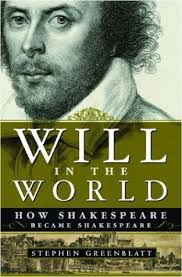
Will in the World by Stephen Greenblatt

Greenblatt is famous among critics as being foundational in the idea of New Historicism: the greenblattnotion that the text is not only affected by its historical context, but that the text also creates and has an impact on that historical context. It has been noted that the theatre was seen as secondary, unimportant, when Shakespeare began writing; only with his career was it seen as something worthy of being printed and esteemed: a clear example of a writer’s impact on his time.

Greenblatt writes in a warm and welcoming style; he is far from the idea many of us have of an esteemed critic. His book takes a thematic, rather than strictly chronological, look at the life and work of his subject. Greenblatt is also rather more willing to include hearsay and unsubstantiated truths, all with massive caveats, which makes for fun reading. In these nuggets there is always a coral of truth: these legends tell us something about what people wanted to believe of their bard. In addition, this biography is the stronger for its assumptions: we know so very little we can be sure of about Shakespeare, there is some necessity to look at the evidence and make a very good guess: for example, taking a truth from an absence, Greenblatt muses: “from this supremely eloquent man, there have been found no love letters to Anne [Hathaway, his wife], no signs of shared joy or grief, no words of advice, not even any financial transactions.”

This freedom allows Greenblatt to imagine many tenuous considerations: how much did Shakespeare revise his work? Did he in fact hate his wife? Did he have a physical affair with the man to whom the sonnets are addressed? Greenblatt’s long affiliation with the Renaissance allows this freedom; he almost inhabits the world himself, and the result is convincing.

The Genius of Shakespeare by Jonathan Bate

bateI believe that this is the most widely read biography of Shakespeare, so perhaps it goes without exploration. Bate opens his text with an assurance that we can know nothing certainly, as well as reassuring us that, even if we did, “an Elizabethan play was a collaborative work that belonged to the theatrical company which performed it every bit as much as to the dramatist who wrote it.”

This text is especially strong in referencing other Shakespearean critics, from his contemporaries up to today, giving a marvelous overview of what “the book people” have thought about him through the ages. This is particularly strong in the chapter regarding the authorship of “Shakespeare”, where we receive a concise survey of that which scholars have posited.

Bate’s major approach is as a pragmatist: he refuses to romaticise Shakespeare, and instead explores the economic and situational prerogatives which drove him to create.

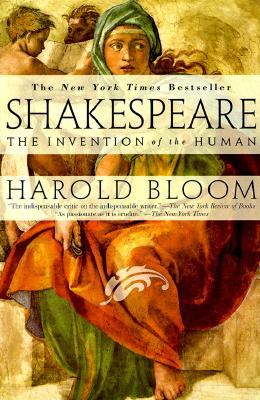
Shakespeare: the invention of the human by Harold Bloom

Is this, or is this not, the best title of a book ever? Ok – I’m cheating, it’s not a biography. I’m bloomsitting here with three remaining Shakespeare biographies thinking… Hm. I’m not sure how great these are. This, on the other hand, I am willing to recommend.

Harold Bloom, if you aren’t in the know, is a monumentally prolific literary critic. He write books on vast swathes of literature, seemingly refusing to specialise, if you go by his printed output. He writes about almost everything. You’ve probably heard of “the anxiety of influence” – that was Bloom’s baby.

This text is superlative among Shakespeare criticism for its ease of reading and its enormous scope. Bloom takes every single play and writes about it, linking each to Shakespeare’s presumed life and known context. Teachers: this is one book which will serve you all your days.

This is very much, though, Bloom’s book; he doesn’t like to reference other critics. Part of its charm comes from the bombast with which he writes, although I can see how readers might love or hate it.

And so I round up my little trip around some Shakespeare biographies, having enjoyed feeling like a student again, if only for a brief moment.

If you recommend one book

I am in the habit of giving vastly long reading lists, which I do believe are extremely helpful to students who already tend to read. Where this process falls sharply down is when students are not tending to read. I gave a reading list to a new group I was teaching in September, and their groans killed me. These aren’t low ability kids, although they were definitely under-achieving. I was delighted that despite the groans I saw a solitary child with one of the books from the list weeks later, but I’ve been thinking that my plan of attack for creating little readers needs to be more multi-pronged.

Then, my mentor and inspiration (Ms Moran), told me about an amazing thing she had been doing with her classes to foster a reading culture. She would stop the lesson five minutes before the end, and talk about the book she was reading. What genius. She’d put the front cover up on a slide, or read aloud to the students from the first page. The effect was unbelievable – students were clambering to read the books she was talking about.

I’m not saying I’ve never talked about what I’m reading with students. But it has usually tended to be spurred by them asking, or me carelessly leaving a reading book on my desk. I haven’t pre-planned these chats, and with sixth form, I have often had to castigate myself for “wasting their learning time” with the lengthy chats about books. The conversations are definitely worthwhile, but I do think a planned approach is safer.

With this in mind, I’m going to outline three great books I have read in the past year, which are my number one recommends for the three secondary key stages right now.


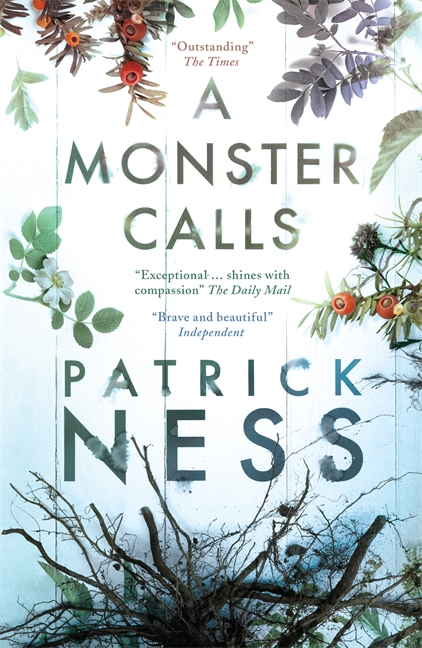
KS3 (year 7 or 8): A Monster Calls

a monster callsI’m beginning with the book which began Ms Moran’s new policy. As she says, “no-one writes an opening like Ness.” I’ve recommended The Knife of Never Letting Go to high ability students in year 8, but even truly reluctant readers in year 9 are drawn in by the style and content of the opening.

A Monster Calls is a little over 200 pages, and looks manageable for, I would say, all but beginning readers. Ness’s characters in this book have the slightly other-worldly feel of David Almond’s; they speak to each other and it sounds plausible, but not familiar. That aside, the content and style are what sell this book.

The basic plot-line is that a tree-monster wakes a child up and scares him lots, but also teaches him lots, especially about the very difficult trials he is going through with an extremely ill mother. This isn’t a book about death though, or really even suffering. It’s a book about resilience and faith against the odds.

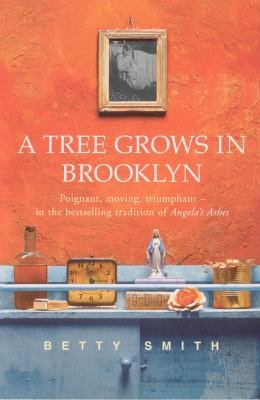
KS4: A Tree Grows in Brooklyn

At open evening in my new school, I got chatting with a parent about books and she recommended that I read this one. (Parent, please send your child to my school!) This booka tree grows in brooklyn has already rocketed into my all-time top ten.

The story follows Francie, who grows up in the 1900s in a Brooklyn slum. But the nuances are miraculous – so much is withheld; we see through Francie’s eyes, and if the blurb hadn’t given the setting away, we might have little idea she is living in poverty until some time into the book.

The novel is full of anecdotes; rivers of stories which make up the sea of human experience. It feels timeless and massive. I’m not too sure about reading the opening of this to hook students, but I would recommend a paragraph 14 pages in, where the main character observes an old man. Smith writes:

“He is old. He must be past seventy. He was born about the time Abraham Lincoln was living and getting himself ready to be president. Williamsburg must have been a little country place then and maybe Indians were still living in Flatbush. That was so long ago.” She kept staring at his feet. “He was a baby once. He must have been sweet and clean and his mother kissed his little pink toes. Maybe when it thundered at night she came to his crib and fixed his blanket better and whispered that he mustn’t be afraid, that mother was there. Then she picked him up and put her cheek on his head and said that he was her own sweet baby. He might have been a boy like my brother, running in and out of the house and slamming the door. And while his mother scolded him she was thinking that maybe he’ll be president some day. Then he was a young man, strong and happy. When he walked down the street, the girls smiled and turned to watch him. He smiled back and maybe he winked at the prettiest one. I guess he must have married and had children and they thought he was the most wonderful papa in the world the way he worked hard and bought them toys for Christmas. Now his children are getting old too, like him, and they have children and nobody wants the old man any more and they are waiting for him to die. But he doesn’t want to die. He wants to keep on living even though he’s so old and there’s nothing to be happy about anymore.”


KS5: Bright Shiny Morning

bright-shiny-morning “Welcome to LA. City of contradictions” reads the blurb of James Frey’s masterpiece. This book is a gem for the sixth form: modern and realistic in its scope, but also creatively told with modernist sensibilities – dialogue without punctuation, and the stories interwoven with paragraph-long excerpts of the history of the city.

There are elements of comedy and tragedy in this epic tome, but there is also truth and hope. The characters are sketched but somehow they live more truly for that sketch-quality. Their stories are built up slowly, and this draws you in the more fully. They don’t all interlink, because that isn’t true to life. We have the homeless man, the child inter-state migrants, the rich and famous. We have all of human life at its extremes and in its non-extreme normality made beautiful.

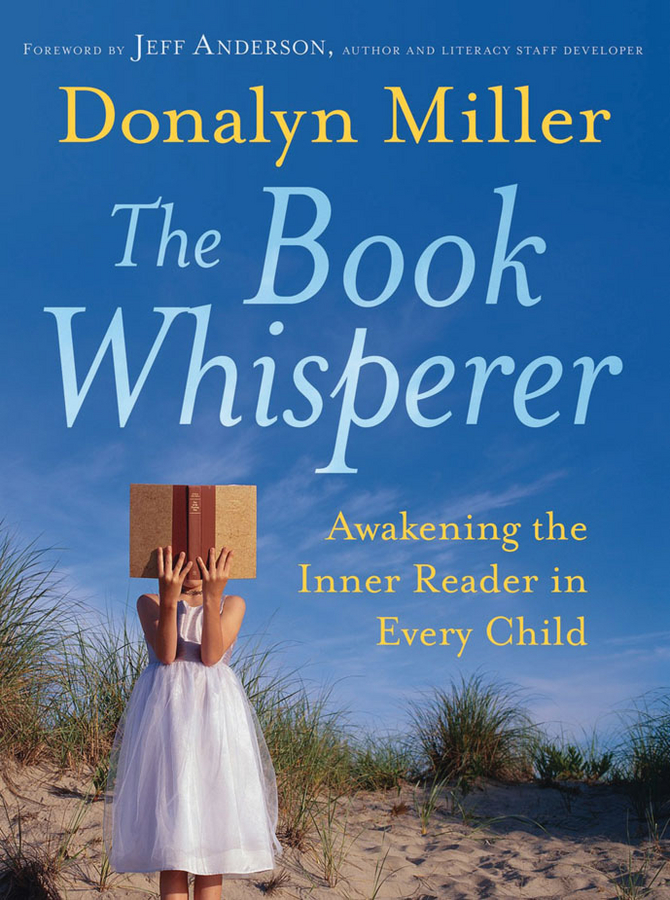
The Book Whisperer

Before I took on the post of Head of English at my school, I knew that the main thing I needed to do was get children reading for pleasure. Six weeks in, when mock Ofsted came into our department, that was one of very few recommendations made for our improvement: get children reading for pleasure.

So, why haven’t I?

Partly it is because starting at a new school, in particular in a new role, is so exhaustingly difficult it’s hard to move beyond fire-fighting. And partly because every mistake I have made so far (and believe me, there have been many) has been linked to my tendency to make decisions too quickly. This is something I want to get right. I am taking my time.

Actually, I felt as if I’d almost cracked it when I read Donalyn Miller’s The Book Whisperer about a week ago, and then I had to do some more thinking. The subtitle is “Awakening the inner reader in every child”, so I knew before I opened it that I would love it.

It is, without a doubt, inspiring, in the vein of Rafe Esquith and KIPP stories from the US. Teachers going above and beyond, but also around and in a peculiar swirly motion we’re not sure will work – but, yes, it does.

Miller’s initial prompting to decide her students should read forty books in an academic year is not grounded in evidence based research, but rather a moral certitude that this stuff if good for them. She glosses over some radically improved test results, but doesn’t make a song and dance about the improvement in the data – that’s not what this is about. Miller wants her children to be readers. And I would guess around 100% of English teachers want the same for their students; not to mention parents.

The problem is: how do we get there? It’s fair to say that the curriculum in the UK, while far from perfect, is a very far cry from the mish-mash of methods going on in American classrooms, where many teachers (if you go by the popular education literature) seem to be able to not only set what they are teaching but also decide how it is assessed. There are few schools I have visited that would allow teachers to go ahead and do what they like in the sanctuary of their classrooms.

Miller lets her students start from where they are, reading what they like. Through careful use of feedback, including surveys, she nudges them towards ever harder and more challenging tomes which will suit their interests. She doesn’t seem to ask them to write analytical essays on these texts, however, it is all about the mighty book review.

This is fine, perhaps, at KS2; I am finding it hard to see how such an approach would work, or is in fact right, at KS3 and beyond. Yes, I want my children to be readers, but more than that they need to be literary critics. Engaging with literature critically is a great joy, and no amount of reading can shake my belief in that.

That said, Miller has given me so much food for thought I cannot but recommend this book for English teachers.

Among ideas she has prompted are:

  • How much class time should I set aside for personal reading?
  • How should this change between years?
  • How far should I try to influence or control student choice of reading material?
  • Should I see reading a class text as something different from private reading?

I’ve written before about teaching Dickens to Year 7 (here). That first term was blissful, but we didn’t study full texts. This term, “A Christmas Carol” is markedly harder. The students are enjoying it, but if I’m honest mine aren’t really getting it. I mean, they understand the words, but there isn’t the time for that understanding and that critical evaluation, unless I want us to use the entire academic year to read the thing properly. Year 7 read slowly. Therein lies the rub.

A fabulous colleague of mine has come up with a lovely compromise, and I’d appreciate any thoughts English teachers have: give them the text, give them two or three weeks. During those lessons they read. During their homework for those weeks, they read. They read the entire text. We perhaps do some kind of writing or literacy activity one in every four lessons, to catch those who really do need to spend time on writing skills. But then, after they have read, we go back and select passages, and teach the critical and analytical skills then.

I feel like in not allowing students to just read, I’m pretty much wasting their time in a novel-teaching unit. But I’d be delighted to hear what other schools do.

To conclude, The Book Whisperer is inspiring and thought provoking, and not completely right. Well worth a read.

book whisperer

Rigorous reading

ripley smallI’ve just finished reading this amazing book, and I’d like to talk about it.

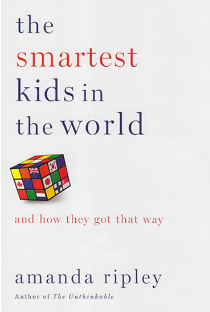
Now, I will say that the title of this book is misleading. Ripley’s front cover picture of a consortium of flags suggests a more omni-country approach than we actually find. I for one would be happier with a title which is explicit in noting that this book explores the education systems of only three countries.

But what countries they are: Finland, South Korea and Poland. With heavy emphasis on the first two. In fact, having finished this book 5 days ago I’m struggling to remember what Ripley says about Poland, though what she says about the other two is emblazoned on my brain. Perhaps this is understanding bias, however; I’ve heard a lot about Finland and South Korea, and naturally my non-rigorous reading will more easily process this.

I believe my response is the one Ripley was hoping to draw out: the sections on Finland make me want to tear up the UK’s education system and just do what they do, and the sections on South Korea make me want to tear my own eyes out.

Most teacher readers will be au fait with Finland, and if you’re interested Lucy Crehan’s blog (here) explores more key ideas than I had found compiled in one area before. The most salient points about their system include: starting school age 7, mixed ability classes, incredibly highly trained teachers brought in by a very selective system, almost no homework, almost no state exams; some of the highest achieving students in the world, according to PISA, which lots of people nit-pick, but which Ripley assures us is okay.

South Korea is a system highly praised by many, and rightly so – for its results. In this book, however, a different story is told. School begins early (8am) and continues late – study at school can go on until 7 or 8 in the evening. Students have special pillows they attach to their arms so they can nap during classes. A 12 hour day may seem familiar to most teachers, but I’d hazard none of us would want to deal with students subjected to this. But wait – there’s more! The hagwons, which are intense tutorials, take students all the way up until 10pm (legally) and beyond that time (illegally) – every day, after school.

Now, I am a fan of KIPP’s “Work hard, be nice” motto, with firm emphasis on hard work. I truly believe that anyone can accomplish anything with hard work. But this narrative of South Korea pushed me to the limit of my belief. I categorically do not want kids that have to work that hard to achieve exam results and success in life.

The main learning point I gleaned from this engagingly written book was about rigour. The essential ingredient in all these successful systems was rigour. Students couldn’t pass easily, they couldn’t achieve high grades easily. The same went for the would-be teachers.

This made me reflect on the rigour in my own classroom. I’m lucky that my predecessor instituted an incredibly rigorous KS3 curriculum, about which I have written (here), using only weighty tomes to shape our little minds. Yet there are times when I feel like the weight of this KS3 curriculum is let down by the exam-board–instituted, undeniably less rigorous, KS4 curriculum. This KS4 curriculum churns out children who, when faced with KS5 English, often take more than a year to get to grips with this new rigour.

The bottom line is: we should not apologise for asking more of our students, and pushing them harder. After all, we only have them for a (relatively) short period of time during the day. The stakes at KS3 aren’t so high that we should pressure students, but we definitely shouldn’t apologise for teaching them hard stuff and making them learn it.

As for the KS4 curriculum… I have no answers, and as yet no positive contribution to make to the conversation. I can only hope the new curriculum will push students to achieve more, because they can – albeit with hard work.

Behaviour

I was in a workshop during my teacher training where we were role playing behaviour management with our peers. (Doesn’t that sound horrific? Since my first year of university when I unexpectedly contracted “the fear” and walked out of a read-through I’ve had a problem with anything acting-related. This workshop was therefore more nightmarish that you can even imagine.) Yet having observed a thousand teachers and read a million books, you would think I could handle this. Hardly. I clammed up; I was speechless. I had no comeback at all for my partner.

I remember that evening, in despair, calling my “leadership development officer” (basically our mum for 6 weeks), in tears, telling her I didn’t think I could do it. Amy was amazing. After giving me the phone equivalent of a massive hug, she told me something along the lines of “you will. When there is a child in front of you, you just will.” “What if I cry?” I asked. “You just won’t.”

I was, and still am, a crier, so I’m not sure I believed her, but I stuck with Teach First. And she was right. I have never ever cried from managing a tricky child, or a tricky class. Not even nearly. More than this triumph, I never clammed up. I always had something to say.

Obviously, it wasn’t always the right thing to say, but you live and learn.

Now, no book on behaviour management will fully prepare you to teach. Even after several years of teaching students will do and say things you can’t even imagine. Some of my personal favourites are so inappropriate I simply can’t write them here. I think reading these books during your first placement, or first term of teaching, is actually more helpful than reading them pre-term time.

So, onto some of my favourite books on behaviour management.

Classroom Behaviour by Bill Rogers

This was definitely the most useful book for me prior to teaching. It is replete with phrases you can practise saying, and above all in the early days you need some stock phrases to fall back on. Rogers espouses a gently gently approach, always aiming to avoid confrontation and focus on the positive. There are some real gems here; rather than “take off that fluorescent orange balaclava” saying “what’s the school rule about scarves?”; adding a “thanks” to the end of an instruction rather than a “please” (I have never done this, because I am a stubbornly traditional user of English sentence structure, but I hear it works well) and advice on when, who and how to tactically ignore.

Assertive Discipline by Lee Canter

This is an example of a book I read and all but dismissed during training and only came to appreciate when I entered the classroom.

“Assertive Discipline” is an ideal solution for the problem of praise: feel like a bit of an idiot praising the one person with their book and pen out? Canter instead advocates “behaviour narration” rather than judgement. Rather than a “well done for doing the absolute minimum I expect of you” you narrate it: “Chanelle has her pen out and is ready to start learning”. This then draws attention to the positive behaviour and nudges others towards following it. To non-teachers this might sound crazy, but it works supremely well, at least in my experience. (There are other tips, but this one is my favourite.)

Why are you shouting at us? by Phil Beadle and John Murray

I began teaching in the halcyon days of Teachers’ TV, and was a bit of a fan girl for Phil Beadle, one of their vanguards. His charisma and creativity was everything I wasn’t, and I loved reading his book “How to Teach” (though his insistence on the efficacy of marking as a sure-fire way to change achievement even when your classroom is a bit chaotic led to me neglecting planning in favour of an unimaginable amount of written feedback, with disastrous consequences. By my second year I marked less and planned more and found it worked. This is almost certainly my error of interpretation, not his writing.)

I know not all teachers are Beadle fans, but I think he is great. Driven by a strong moral purpose and with all the skills you would expect of an AST, this co-written book is a superb round up of effective behaviour management. At 130 small pages the text is lighthearted enough to be read speedily and joyously. It is also fairly honest about what kids can do and how you can combat it.

Less useful are the charisma based methods – I’m not sure I have ever managed to calm a truly angry child with a joke, though I wholly endorse the anti-shouting pages (quiet seething is far better for your health, if less immediately effective).

Reluctant Disciplinarian by Gary Rubinstein

Rubinstein was trained by Teach for America, and this book is the better for the honesty with which he reveals his classroom mistakes; an honesty which comes partly from his subsequent successes in the classroom. I related to this book as Rubinstein, like me, is a self-confessed “softy”.

Acknowledging that behaviour management can never be adequately taught (not least, I would argue, through role play), this book takes you to the possible pitfalls of your initial months in the classroom and shows you the light at the end of that tunnel.

There are some traditional methods explored here in a clear way, for example meaning what you say – something I found surprisingly hard in my initial term of teaching. This is possibly because I wasn’t sure what I wanted, or if what I was doing was right; therefore I really didn’t mean what I said all that often. I will always remember a fellow teacher telling me that it was during her bout of laryngitis that she had become a better teacher; she had so little voice that she needed to mean everything she said.
Of course, the best “behaviour management” comes from familiarity: you with the kids, and the kids with you. It can’t happen straight away or overnight; merely sticking it out, turning up and following through with every consequence you say (at first even if you immediately regret it; only later with a conversation and apology if you were wrong) will work. It will work. It will.

Eventually.