“Do now”

I recently finished Glass Ceilings, which is my favourite education book of 2018 – so far, that is. Amongst the many, many take-aways from this book was a reminder to me of a simple but effective practice I had all but stopped. The ‘do now.’

In Glass Ceilings, Hall describes the powerful simplicity of a small number of repetitive teaching activities observed in US Charter Schools that had a dramatic impact on learning, and one was the omnipresence of a ‘do now’ so children entered a classroom and were immediately working. Hall called this ‘bell to bell working,’ which I loved.

I raved about ‘do nows’ in my early years of teaching, adopting the name after devouring Doug Lemov’s seminal Teach Like a Champion. You wouldn’t walk into my classroom without finding a slide on the board of some kind of ‘starter’ or ‘warm-up’. The idea is that they ensure all students have something to do from the moment they enter the classroom.

At some point, I seem to have forgotten this. During my first few terms at Ebbsfleet, I’ve wasted at least 3 minutes of every lesson getting my class in and doing the register, tending to ask the students to revise using their knowledge organisers while I do this. But for the past two weeks, I’ve asked them instead of answer the questions on the board silently in their books.

At first, they rebelled. The first two lessons they went from being placid, calm and silent on entry to chatting and asking unneeded questions as I valiantly struggled to behaviour manage, answer questions, and take the register. Any change in routine is hard for children. After about three days, they got into the swing of it, and the focus and learning right from the moment they enter the room has now hugely improved.

The other benefit of a ‘do now’ is it forces me to reflect on each lesson as I teach it: what are the key concepts they struggled with that I want to revisit straight away at the start of the next lesson? Here are some recent ‘do nows’ for our study of Jekyll and Hyde:

  1. Write down every date you can remember that links to ‘Jekyll and Hyde.’
  2. What happened on those dates?
  3. Use your knowledge organiser and add anything you have forgotten in a green pen.

Extension: What has happened so far in the novella?

Super extension: What do you predict will happen next?

  1. Who wrote ‘On the Origin of Species’ and when?
  2. How does ‘On the Origin of Species’ link to ‘Jekyll and Hyde’?
  3. Who developed the theory of psychoanalysis?
  4. How does this theory link to ‘Jekyll and Hyde’?

Extension: what specific quotations or examples from the novella link to these two texts?


These examples are quite ‘knowledge-heavy’ – they look like overly basic recall perhaps. But over time, after finding the students were beginning to automate this, I started adding some more ‘application of knowledge’ questions to these – such as ‘why did Stevenson write this novella?’ or ‘how do specific aspects of Victorian society impact on the novella?’ or ‘why did Stevenson choose to write a novella and not a novel?’

All in all, the do now takes me about four minutes to plan and type into a Word document, and four minutes for the students to complete. Simple but effective.

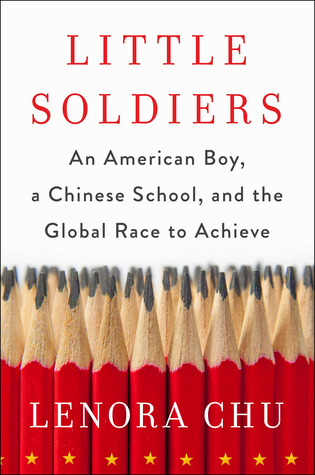
Reading ‘Little Soldiers’

I recently read Little Soldiers by Lenora Chu. It is part personal anecdote, supplemented by research, and tells of an American couple (one half of whom is Chinese-American) who moved to Shanghai for work and made the decision to enter their son in the Chinese school system. Chu’s insights on the system, particularly those from her personal perspective, are fascinating.

The book opens with note on Shanghai and its status as dominating the world’s academic league tables. Chu at no point questions the strength of Shanghai’s academics, but she does debate the values of the system. Throughout the book we continually see Chu finding herself at odds with the top-performing Shanghai school, and in parts of the book I couldn’t work out whether I sympathized less with Chu or the school.

Chu cites ‘troubling signs’ in her four-year-old son, including a ‘habit of obeisance,’ giving the example of her son, Rainey, saying ‘I don’t like singing, but if you want me to do it, I’ll do it.’ More troubling to Chu is that Rainey doesn’t like eggs, and she discovers that the teacher has put egg in his mouth, which leaves her feeling affronted at this invasion of her son’s choices. Although the episode did make me feel very uncomfortable, the mother’s interactions with the school also contains an uneasy kernel of truth that the Western way is far from perfect: “‘We motivate them to choose to eat eggs,’” she tells the school. “‘Does it work?’ ‘Well… not always,’ I admitted.” What is clear in this, and all episodes, is the Chinese clarity on values, with a black/white sense of right and wrong. The teacher follows up this conversation saying: ‘Rainey needs to eat eggs. We think eggs are good nutrition, and all young children must eat them.’ Conversation over.

At a number of points, the Chinese teacher advises that narrator ‘refrain from questioning my methods in front of Rainey… it is better that the children think we are in agreement about everything.’ I could not agree more. Although parents questioning a school’s practices can provide vital feedback to school leaders, if this is done in front of the children it can be undermining and give children an ‘out.’ I’m always grateful when parents ask to speak with me one to one after their child has left a parent meeting to share their concerns about how an issue is being dealt with.

Indeed, at times I did feel the narrator came across as slightly disrespectful to the teachers – not only in questioning their choices in front of her son, but also when she narrates her husband complaining as they tear and staple their son’s many worksheets of an evening: ‘Shouldn’t this be the school’s responsibility? Or a teacher’s aide?’ I am grateful that the narrator has been so honest, but I found this a shocking insight that parents would be so unwilling to do this kind of admin for their child, especially so given the massive class sizes in China. This factor would mean this kind of task, if done by a teacher, would take vital hours they could be spending more productively, in terms of planning the children’s learning.

At another point in the book, Chu is concerned that Rainey doesn’t want to stand out, for example on the school’s ‘grandparents day’ when he does not have a grandparent available to fly across the ocean and is advised to stay at home for the day (which does, I think, seem a little insensitive). Chu comes in and stands in the place of the grandparent. Chu’s worries this is due to ‘the Chinese cultural focus on the collective rather than the individual,’ but I think this issue transcends culture: in my experience, all children are sensitive to difference, and those who do not conform are often picked on, in nursery and primary schools often cruelly so.

In places the Chinese methods come across as simply shocking. On the first day of primary school, for example, physically placing children in their seats and shouting at them for breaking rules they have not yet been taught comes across as outrageously inhuman. But it is also easy to understand the Chinese argument that ‘with more than fifty children in a classroom, it’s simply impossible to let children step out of line.’

Again, though, it is shocking from both sides. When Chu and her husband visit the school to air their concerns about their methods, they are told during the meeting that their child is mounting other children like they are a donkey and hitting them. If I’m honest, their response is nowhere near as shocked on hearing this as I expected – surely this is a cause of huge embarrassment to them? (“‘Oh,’ I responded, as flatly as I could. [The teacher] looked at me with surprise, as if she’d expected me to recoil with horror. I was concerned, but frankly, I also wanted to laugh.’) Though I admit my experience of teaching reception children is precisely zero, so perhaps this is normal.

The book is underscored with the parents’ Western prioritisation of individualism and exceptions – yet their child actually adjusts quickly. As Chu says: ‘unlike me, I could see that Rainey had adjusted. He was finding his own way to get things done. He wanted more water, and he’d discovered that faking a cough was the most effective way to accomplish his goal without triggering the teachers’ ire.’ She finds that when they return to the USA for a vacation, everyone who meets them is amazed at how well behaved their son is and how advanced he is. The son’s pride in these interactions gleams off the page.

As with so many of these cross-cultural studies, it all ultimately comes down to what you value in education. The author cites country after country rejecting their low PISA results claiming that the ‘results don’t measure what we value.’ Chu cites the evidence that American children score far lower in Maths than their Shanghai peers, but follows up with the evidence that the American children who do score highly love it. This raises an important question: what is better, doing well, or loving the subject? And aren’t both outcomes possible?

At one point the father worries ‘we’re losing control of his mind,’ and some of the examples of Communist propaganda are shocking to read about, and a chilling reminder of just how easily influenced young children are. (I’m sure many Western readers will remember stories from Communist Russia where children would shop in their own parents to the authorities.)

It is also unequivocally disturbing for this Western reader to hear children being called by numbers and not names.

Indeed, it is clear that the Chinese system is far from perfect, most notably in the chasm of educational achievement between rural and urban areas. There are deep inequalities, with frightening numbers of children falling out of the system altogether.

At the same time, there is lots to learn. Chu quotes the values of Chinese educator Xiaodong Lin: ‘Americans emphasise achievement without hard work. They believe in the concept of genius. This is a problem. The Chinese – they know hard work.’ This includes training children to endure discomfort and persevere anyway: Chinese schools usually lack even the basics like heating, where, in contrast, an American educator is quoted saying his class can’t even sit still for an hour.

As the book goes on, Chu becomes increasingly positive about benefits of the Shanghai system, at least for her son in his high-performing urban school: over halfway through she writes: ‘the Chinese way is to hire good administrators and trust them to do their jobs; parents were to support the system, take responsibility for as much as possible, and keep petty distractions out of the equation. I didn’t disagree.’ In fact, Chu becomes increasingly concerned that her parenting methods conflict with the school and are potentially negating any advantages of the Chinese methods. All in all, this is a compelling read.

I Wish I Taught Maths

I was terrible at Maths. I had never learned the basics – times tables, long multiplication – nothing. When I sat the entrance exam for an assisted place scheme to go to a local private school, I scored almost nothing on the Maths paper. The kind Headteacher led me through the paper question by question, one to one, and decided to offer me a place because I seemed to understand it, I had just ‘never been taught it.’ Once ensconced in the private school that changed my life, I was sent to top set Maths. I struggled. I made my teacher, Mrs Meadows-Smith’s, life a misery. I asked stupid, time-wasting questions. I hated Maths.

And so the next year, I was placed in the third set for Maths. And I loved it. Finally, I could understand what was going on. Mr. Shepperson’s explanations were clear, and his enthusiasm was encouraging. I spent a term in set 3, before being propelled again to set 1. Where again, I hated it. We took a half-termly test, and every half term I came bottom, or second from bottom. On the eve of year 11, I heard someone say in an off-hand way: ‘The kids at the bottom of set 1 will get Bs; the kids at the top of set 2 will get As.’ That was it. I petitioned the Head of Maths, and got to join set 2… Again, with Mrs. Meadows-Smith. That poor woman. I had learned nothing in terms of behaviour, and continued to be distracted and annoying. She persevered. She never once raised her voice. She was kind and patient, even though I was her literal nightmare. I have no idea how I managed to get an A at GCSE Maths, but I imagine it was 5% due to me, and 95% due to Mrs. Meadows-Smith.

By the end of year 11, I loved Maths, because I could do Maths, and Maths is incredible when you can do it. I asked the Head of Maths if I could do Maths A-level. The response was categorical: no. I may have ‘scraped an A’ at GCSE (code for: we have no idea how this has happened but we are very happy for you), but I could only hope for a C at best in the AS level, not to mention the even harder A-level.

He was right. But when I walk the corridors of any school, I always linger a little longer in Maths classes. Maths is different to basically every other lesson in schools. The operations required are different. The method, in many ways, is different. Children do not encounter Maths in any other lesson apart from Maths: Maths teachers have the hardest job in terms of getting children to understand their subject.

 Reading Craig Barton’s How I Wish I’d Taught Maths has only convinced me more that I wish I could teach Maths. But the book is about so much more than Maths. Barton’s journey is one many readers will recognise: ‘mid-career’ he hit a ‘crisis’, whereby he realised that much of what he had done was actually ‘wrong,’ and did not lead to greater student understanding of Maths. He embarked on a mission to find out how to do it better, and this book is a record of that mission.

Each chapter follows the same helpful pattern: what Barton used to think, what he has read on that particular subject (always an astonishing amount of books, journal articles and a few blogs thrown into the mix), before a useable summary of his ‘takeaways’, which, because they are written by an actual teacher who teaches actual children, are completely actionable and never require bonkers amounts of effort.

So much of this book is helpful beyond Maths – chapters on how children learn, the novice/expert issue, what motivates learners, how to get better at instruction, cognitive load theory, worked examples, deliberate practice, formative assessment and long-term memory all include a useful précis of the science involved plus applicable insights for teachers of all subjects.

For example, in a chapter exploring what motivates students, Barton talks about the balance between struggle and success, something that every teacher will recognise: while we do want children to ‘struggle’ a bit, so they find the work challenging, and endure the kinds of difficulties that ensure their thinking is engaged, we also need them to succeed so that, long term, they will be more likely to persevere. Yet we don’t want them succeeding too easily, or all the time. Barton’s exploration of tricky issues like this, with his perspective as a working teacher, is invaluable.

One example of a transferable, useful and research-informed trick Barton shares is to get students to give each answer they write a ‘confidence score’ out of ten prior to marking. The idea is that it makes the children think about how much they think they know something. When they then go through and self-correct, they are more likely to take in the mistakes they have made and remember to not do it that way again. This is the ‘hypercorrection’ effect, whereby ‘errors committed with high confidence are more likely to be corrected than low-confidence errors.’ Another of my favourite insights is that student learning is significantly improved following self-assessment, but students who have peer marked do not experience as much improvement. This is a great nugget of research that will save countless minutes of class time across the land (‘I don’t have a partner’/‘no, that’s a 2 not a 3!’/‘Miss, he’s doing it wrong/making a mess of my book!’).

Having endured many ‘co-planning’ sessions, I, like Barton, was perplexed: why does all the research suggest co-planning leads to better teaching, but every session I sat through seemed like a total waste of time? Barton’s insight is that planning a lesson together is less helpful than writing questions together. To transfer this out of the Maths domain a little, we might think of this as creating the lesson content together, rather than the logistics of a lesson together. Indeed, I increasingly think the best way to support teachers is to give them (or co-create with them) the lesson content, and then use coaching to ensure they are delivering that content in the best possible way.

Obviously, all of the examples in this book are of Maths, and I’m afraid I am unqualified to share my insights on how helpful these are; though I defer to two readers, Kris Boulton and Dani Quinn, whose Maths skills are, in my view, unparalleled: their effusive praise for the book speaks volumes (Maths pun attempted).

One of my favourite things about reading excellent books are their citations. After reading Barton’s book, my Amazon wishlist is absolutely bursting with education tomes, which works well with my new year’s reading resolution to read more non-fiction books.

So what will I do now? The plan to get a Maths A-level looks to have legs, thanks to Kris Boulton’s ‘Up Learn’ project, and, life-logistics depending, I’m hoping the next five years will see me re-engage with Maths in a more formal way. In the mean time, I will continue to lurk in Maths classrooms, and lend Barton’s book to everyone I know who actually does teach Maths (and to a few people who don’t).

What should school CPD focus on?

We’ve all sat through some real shockers of school CPD sessions at one time or another. Thinking about the elements of what I think makes great teaching, here are the school-based CPD sessions I think every school should be running:

Behaviour

The most important thing in a school is that the children behave. Managing behaviour should be returned to again and again to ensure all teachers have clarity, and that the systems are applied consistently by all. It is also worth thinking about when behaviour slips – is it in the canteen, at the beginnings of lessons, during the fire drill – and addressing those specific moments with a new approach.

Reading

Children read in every single lesson, but it’s not always obvious how to get them to the point where they will read aloud confidently.


Writing

Children write in every single lesson, but is their writing always accurate and coherent? There are lots of small tweaks we can make to out practise to help children write more effectively.


Questioning

I think questioning is the absolute most important thing a teacher can do. The best teachers I have seen pepper their explanations with multiple questions asked of as many students as possible to check they understand, and then to see if the students can apply their understanding to new scenarios and begin to think more deeply about the content.


Explanation

Subject departments should be talking in their CPD time about the best way to explain tricky concepts, and thinking about the common misconceptions children have.


Booklets

Rather than using Powerpoints or photocopying multiple sheets, departments should focus on pre-producing booklets and then planning how to deliver them. Those responsible for resourcing should be trained in the best and fastest way to produce booklets under the inevitable time pressures of any school.


Knowledge Organisers

Knowledge organisers force teams to consider what they want students to learn for the long term. CPD on making them as effective and clear as possible would be helpful, especially in the early days of adopting them.


Recaps and quizzing

Understanding the science of memory, the power of overlearning, and the simplicity of recapping prior knowledge would go a long way to helping children retain knowledge for the long term.


Deliberate practice

Not all practice is as helpful as it could be. Helping teachers discern the most important skills for children to practice and then supporting them to make activities that ensure children are undertaking deliberate practice is invaluable.


Feedback

Rather than laboriously marking every book, teachers can give whole-class feedback. But it is not always obvious which aspects to focus on to make the feedback as effective as possible.


All of the above aspects could easily be covered in short 20 or 30 minute slots, and focused on key aspects or resources, but I think that all the elements are crucial to good teaching. In terms of pedagogy, I don’t think we can do better than implementing coaching observations, as advocated in Leverage Leadership, with frequent low-stakes observations focused on one minor tweak each time to improve teaching. 

Reach 2017

On Monday 23rd October, the first day of the October half term, hundreds of keen educators made their way to Feltham for Reach’s annual conference. The standard is always high, but I felt this year was a particular cracker.


NYC after No Excuses: Taylor Delhagen and Mark Lehain

There were two ‘no excuses’ sessions in the first slot: one from Peter Jones, the head of Paddington Academy, on how employing no excuses discipline turned behaviour around in his school, and the other from Delhagen on how he turned his back on no excuses towards a more restorative approach. My overwhelming take away from this was Lehain’s respectful challenge to some of Delhagen’s remarks. Delhagen was a Teach for America whiz kid who was made a Head early on, but grew disenchanted with ‘no excuses’ after seeing the number of children ‘lost’ by that system. Delhagen is a man with a clear mission and morality: he repeatedly asked us ‘where do those children go?’ and reminded us that ‘those children are someone’s problem.’ I don’t think any proponents of ‘no excuses’ discipline I know would disagree. He described as ‘utilitarian’ the challenge that if you do not exclude one child for bringing in a weapon to school, other children will receive the message that this is acceptable, and shared the story of one child at his school, who, after bringing in a weapon, was subject to restorative justice. The child, her parents, parents from the community and other children sat in a circle, and the child could hear the impact her actions had on others. Following this, the child remained in school and succeeded in attending a top university.

A lovely story, of course. And of course schools should not be blindly excluding children. But I don’t think they are. Exclusion is always a difficult call, and the schools that I know do everything they can to ensure all children are included in their communities. But there have to be red lines, and I suspect even Delhagen has them. The child in the story brought in a weapon for her own safety; had she used it on a pupil or member of staff, I suspect the ending would have been very different.

Exclusion does not exclude the possibility of the child understanding the impact their actions have had, and tough sanctions do not prevent conversations and explanations of why their behaviour is unacceptable.


The School Improvement Conundrum: Chris Fairbairn, Lydia Cuddy-Gibbs and Clare Sealy

I am ever in awe of Headteachers, and this panel was simply 45 minutes of inspiration. Chris spoke of his experience at Burlington Danes in West London, detailing how seeing first hand the extraordinary transformation executed by Dame Sally Coates had made him believe that ‘change is possible.’ He also spoke of working in two schools prior to headship as helping him to be able to work out what his values were: at Burlington Danes, they did not just focus on results, but also serving the community and creating a great culture for children to learn in. He spoke of challenging entrenched low expectations at his school, Totteridge Academy, a theme he picked up in more depth in his later session.

I had never heard Clare Sealy speak, but her honesty and no-nonsense approach immediately endeared her to me. She outlined being ‘thrown into headship’ with humility, playing down her personal strengths and insisting people liked her ‘because the head before had been mad.’ She was honest about her evolution, saying she had been a phonics sceptic before visiting another school and seeing the impact, and subsequently changing her mind, and suggested that the best headteachers are open-minded to change.

Lydia agreed with Clare, and said the best CPD she had organised was to take a bus-load of her MAT’s headteachers to an excellent school so everyone could see first hand what was possible. She spoke about school improvement ‘beginning and ending with the head’, who needs a strong vision shared by the whole team – including the children.


Reach Academy’s First GCSE results – Rebecca Cramer

I always love hearing Rebecca speak – she is the epitome of honesty and humility. This summer, the education world watched in awe as Reach’s first class received extraordinary results, with all but one child achieving a 4 or above in English and Maths. They prioritise academic subjects: 95% of children were entered for the EBacc. Yet Cramer’s speech was focused almost entirely on the mistakes they had made, and what Reach had learned from those mistakes – there is no room for complacency here. Rebecca noted that the new exams had been an advantage, as teachers avoided complacency: they knew it would be tougher, and so did the children. Reach’s small cohort lends itself to mixed ability teaching, and the team are focused on how to stretch top achievers as a result, laying on ‘master classes’ (‘dine for a nine’) and working on injecting more challenge into their Key Stage 3 curriculum (‘teaching excellence beats teaching to the test’).

It is hard to pick out the most useful advice without running to a thousand words on this talk alone, so I will briefly summarise some key take-aways:

  • Don’t run revision until January of Year 11, after their mocks have scared them into working harder. Otherwise, they will burn out and so will you
  • Set grade boundaries in mock exams higher than you think to avoid complacency
  • Relationships are the most important thing – invest in those
  • Focus on every child – not just the loud ones

I loved the idea of a parent and child assembly after the mock exams, after which children are handed their results in an envelope and they ‘feel really sad.’ What Reach do with parents is unparalleled in the state sector, and I look forward to hearing more about how they have engaged them so effectively.


In at the deep end: Chris Fairbairn

I was lucky enough to visit Chris at Totteridge Academy in Barnet before half term. It was the day after open evening, and most staff had been at the school late. Yet that morning there was a feeling of elation in the school. As Chris took me around, teachers would stop him to gush: ‘that was the best open evening ever. I can’t believe how different the school is.’ This is after only one year in post. In 2016, 50 parents attended their open evening. This year, it was 450. News is spreading, and a huge amount is down to Chris’s leadership. The school’s progress 8 score improved from -0.45 to +0.32 this year, and the old measure of 5 A*-C including English and Maths was up by 27%.

Chris said the turn-around was down to three main aspects: the power of high expectations, building a reputation, and hard work. He spoke of a staff turnover of 43% and 13 fixed term exclusions in the first week as really setting the tone for higher expectations for both staff and students, all set in the context of a school that had significantly underperformed for decades in the community. The quotation: ‘worry about your character, not your reputation. Character is who your are, and your reputation is who people think you are’ spoke to the core of what Chris does: he draws on deep integrity to make people follow him into battle. This sense of moral purpose is combined with savvy know-how, as he shared some top tips for maximising results with his first year 11 cohort, as he knew they would be a big driver of the school’s success. Chris mentioned two pieces advice from his aforementioned mentor, Dame Sally Coates, which are well worth repeating: ‘surround yourself with amazing people’ (he has done) and, when tough choices need to be made, ‘always go back to what is best for the children.’ I can’t wait to see what happens at Totteridge next.


How we approach primary curriculum design – Jon Brunskill

I always love hearing Jon speak – he is full of self-deprecating humour and intelligence in almost equal measure. For every unit at Reach primary, teachers must think: ‘what do I want every single child to know by the end of the unit?’ I can think of no better place to start. Jon says this normally consists of a timeline, key tier 3 vocabulary and key concepts. A guiding principle is also ‘what would I expect intelligent adults to know?’ He uses this to create knowledge organisers that the children quiz on.

Jon drew on Kirschner’s work on long term memory, along with Hirsch’s assertion that background knowledge is the key to reading comprehension, to make a forthright argument about a knowledge-rich primary curriculum that is, frankly, inspirational. Noting that it was impossible to expect primary teachers to be experts in every subject, he recommended the Civitas books as a good place to start, along with the advice that primary teachers be honest about their subject knowledge, and read books to improve it.

Touching briefly on pedagogy, he noted: ‘we don’t do the carousel thing’ (where children teach each other in small groups having been given resources) – ‘if they don’t need a teacher to learn, what are they learning?’ All children end the unit by writing an end of unit essay, and the year 2 work Jon shared was really extraordinary. I can’t wait to see what the children taught his curriculum can do by the end of key stage 2.


What can the UK education system learn from other countries? – Lucy Crehan, Alex Beard, Taylor Delhagen, John Rendel

I charged my phone during the last two sessions, so my notes are far more limited. Overall, the message from this panel seemed to be: depressingly little. The consensus was that countries were more different than the same, and that politicians needed to be wary of bringing over whole-sale practices from other countries.

Lucy Crehan spoke of timetabling to allow teachers to specialise in particular year groups and to reduce workload, which I partially agree with – though I think, in the absence of a KS3 curriculum, if you don’t know where they need to be by A-levels or GCSEs this may be sub-optimal for pupils. She noted that part of a practice’s success or failure was also down to implementation, meaning we ought not to dismiss an idea which works well in another country just because we have failed to do it very well ourselves.

There seemed to be some concern about exporting ideas from the UK and USA to other countries for fear of ‘cultural imperialism.’ PISA was seen as a good measurement in general, but policy makers were criticised for over-extrapolating from PISA and using that data to sanction rather than support school systems. John Rendell, speaking about the unions, made the point that the public perception is that they put teachers before students: ‘teachers won’t be respected until they are seen as the protector of student learning and not teacher rights.’


New schools – success and failure – Oli de Botton, Max Haimendorf, Rebecca Cramer, Jenny Thompson, Charlie Kennard

As the leaders of these new schools stressed the challenges they had faced along with the successes they had enjoyed, I was amazed by the variation between schools even within one city. Rebecca spoke about undervaluing ‘operations’ early on, and recognising now how vital it is that, for example, the school photocopier works smoothly.

Listening to Max speak was a particular highlight. KSA opened in 2009, and it really was on its own then, doing something completely different. Max travelled to the US for inspiration, stealing the best of what he saw in Uncommon Schools and KIPP. He has stuck with his school for eight years, and despite consistently excellent results was keen to stress the mistakes he felt he had made. (‘Don’t start a school day at 7:55 and end it at 5pm. Some people will burn out.’) His reflections on staff wellbeing and retention, and his honesty in sharing with the room where he had got it wrong, was really extraordinary.

Rebecca started on the original KSA team, but decided for Reach to ‘go it alone’ without a Multi-Academy Trust to back them, and shared the benefits and the challenges this had brought, while Jenny Thompson talked about recruitment issues in Bradford and having to grow staff.


Coupled with these incredible talks were plenty of opportunities to catch up with education folk and meet new people. I’m not sure this short post can do the day justice – I will be thinking about what I learned at Reach for a long time to come.

What Makes Us Happy

At Michaela, we aren’t only focused on our kids working hard, learning loads and achieving great grades. We also want them to be happy. We think long and hard about how we can foster our kids’ happiness, and, having read wisdom literature, there are three strands to building a happier life that we focus on: gratitude, personal responsibility and duty.

Gratitude

In a TED talk, David Steindel-Rast says: ‘It is not happiness that makes us grateful. It’s gratefulness that makes us happy.’ As adults, we have come to find that it is better to give than to receive. Wisdom literature tells us that the more grateful we are, the happier we are; that is why all religions set aside prayers to thank God for what we are given. In secular life, we know that counting our blessings helps us to focus on what we have rather than what we lack, something an increasingly materialistic society wishes us to dwell on.

At Michaela, we know that kids are not naturally grateful – in fact, it is often the opposite. They are surrounded by images of acquisition with constant advertising and MTV-style programmes of the rich and famous, not to mention social media allowing the kids to see the extraordinarily luxurious lives of their idols.

To foster gratitude, we have daily appreciations at lunchtime. The kids take it in turns to say who they are grateful to that day, and for what. We choose ten to twenty children each day to stand up and say, in front of the whole lunchroom (some 180 children and adults) who they are grateful to and why. You can see an example of this in action in this video at around 1:20.

A couple of times a term, tutors also allow pupils the opportunity to write postcards. The pupils are encouraged to write their thanks to a teacher or member of staff who has really helped them. For teachers, there is nothing better than finding a handful of postcards in our pigeon holes with messages of gratitude. We teachers also remember to be grateful to our wonderful kids: every week, every teacher writes three to ten postcards to members of their classes who have made a real effort or really impressed us that week.


Personal responsibility

When we believe events to be outside our control, we find life endlessly frustrating. We are stymied in our efforts by continually thinking: if only this wasn’t the case! If only this had happened instead! It is a frustrating way to live, because we cannot control the actions of others. If we focus on how others behave, we will often find ourselves at a dead end, unable to reach our goals.

If, on the other hand, we focus on our own locus of control, we feel much more content. If we are unhappy with how something has gone, instead of blaming the wider world, we instead focus our attention on the things we could have done differently.

So, for example, if a pupil finds themself in a detention they perceive as unfair, we have a conversation with them to talk them through to taking responsibility.

‘But I was whispering because the boy next to me was whispering to me first! Why did I get the detention but he didn’t?’ This reaction leads to anger and resentment. The children feel unhappy that a punishment seems to have been given unfairly. It is hard for kids to understand that teachers are never omniscient, and we can’t catch every infraction. We turn this conversation around by first emphasising that we have strict rules and detentions so that the children can have a peaceful and calm environment to learn in. We then refocus the child on what they can do differently. What can they do next time to change their consequences? Not talk back. If someone whispers to them, they cannot control that person’s actions but they can control their own, and how they respond. Taking responsibility is always better than blaming others. As adults, we know that the best people take the blame and are honest when they get something wrong. As adults, we feel happier when we know we can change things for the future. We want our kids to learn that lesson too.


Duty

Modern Western society encourages us to think about our dreams: what do we dream of doing with our lives? What do we dream of achieving? What do we dream of having? Yet focusing on ourselves and what we hope to get, acquire, achieve is not the route to happiness. Inevitably, things will happen in all of our lives to prevent us from ever enjoying the ideal life.

If, instead, we focus on our duty, we can find a surer route to happiness. Duty means finding your contribution. It is not what you can get from society that we should focus on, but what you can give to society.

This was a lesson I learned over many years. I was always very ambitious and very self-focused, never satisfied with what I was achieving, and never just enjoying life for what it was. In taking a demotion to join Michaela, I hugely struggled with my ambitious side. Yet over time I realised that if I focused on my duty instead of my ego, I would be happier. My ego wanted to feel important; but my duty was to contribute to what I firmly believe is a ground-breaking, paradigm-shifting school. To focus on position is frustrating; to focus on what you can contribute to a movement is exciting.

Similarly, we often talk to our kids about legacy: what legacy do you want to leave in the world? What will your contribution be? It can’t be about how much money they want to earn, or how many accolades they wish to be given. Instead, if they focus on what they can give and contribute they will lead happier, more fulfilling lives.

Stoicism, humility, space: how Michaela changes the people who work there

One of the things I hear a lot from my colleagues at Michaela is that working at the school has made them better people. Why is it that so many of us feel we have improved as humans through our collective endeavour to teach children? 

Stoicism

‘I’d never heard of stoicism before I worked here. Now I’m reading Epictetus with eleven year olds. It’s mad!’ (Michaela teacher)

We explicitly teach stoicism to the kids from day one of Bootcamp in Year 7. We teach them that adversity is there to test them, and the true test of character is how they choose to respond. They will, like everyone, experience difficulties in their lives: stoicism gives them tools to rise to those challenges.

By continually reminding pupils to ‘stay stoical’ – when they get a detention, when they cut their finger, when they have a cold, when they’re finding a topic or idea difficult, when they have six hours of exams a day in exam week – we are also internalising that message ourselves. It is really quite extraordinary how high staff attendance is at Michaela.

Stoicism is a life-changing philosophy. I’ve recently started reading The Daily Stoic, which is like a Bible for perseverance and perspective. When difficult things used to happen in my life, I would go to pieces. I would cry, or feel anger, or feel that it just wasn’t fair. But now, I remember what we teach our kids: Nelson Mandela spent 27 years wrongfully imprisoned; Victor Frankl endured the miseries of a concentration camp. Nothing that can happen in my life will come close to the suffering they endured, but through our own endurance we can set examples for others.

In August, for example, I slipped a disc in my neck. I was in absolute agony for months, and felt very sorry for myself continually. But when I was tempted to indulge in considering how ‘unfair’ my lot was, I had only to look at the shining example of my step-mother, whose M.S. may make her daily life incredibly difficult, but will not take the smile and positivity from her. She is a force of nature, and a wonderful human to be around. She is an example for me to live up to: if I feel pain, it is nothing compared to what she feels every day; if she can endure it, I can follow her example.


Humility

Before I worked at Michaela, I loved being told I was great, and hated being told how to improve. I was, in short, pretty arrogant. But through our culture of candour, and through a culture of continual improvement and continual feedback, through working at Michaela you become more humble. We are all always improving, and come to actually look forward to our candid conversations as we know they will genuinely help us improve.

It is great to work somewhere free of blame. In about my first month of working at Michaela, Katharine asked me to present something at a staff meeting. I came up with a handout I know would have worked well at any of my previous schools and talked people through it. It didn’t seem to go as well as I had anticipated, and I wasn’t sure why.

The next day, Katharine asked me to see her. ‘It didn’t work,’ she said. ‘You’re telling people “why,” but they know why – they need to know “how.”’ Does that sound harsh? It wasn’t harsh in the delivery – it was delivered without blame, without recrimination, in the spirit of sharing information: this didn’t work, so next time do this.

Being humble means you learn more: you don’t write off the first year teacher’s advice because you are more experienced, you don’t discount the ideas of others in the school because of any misguided notion of ‘rank.’ You listen to everyone, and you learn more than you could have ever expected.


Space

I do wonder if all schools could be like Michaela in terms of the ethos and atmosphere for staff. Certainly, our workload is very intense – days are packed from 7:30am to 4pm – but we also have evenings and weekends and holidays free to see friends, to see family; to read, to write, to think. I’ve never had so many colleagues go to the theatre mid-week, or go away for the entirety of a half term or long holiday without the slightest qualms.

And every day is zen: silent corridors, quiet classrooms, children behaving beautifully is all conducive to feeling happy to take on difficult advice, and finding it easier to deal with emotional or physical problems. In times of crisis, Michaela is a really lovely place to be.

In my previous jobs, I absolutely loved what I was doing, but I was often exhausted: I would cancel plans at the last minute because I could not bear to leave the sofa at the weekend, I wouldn’t see close friends for months on end, I wouldn’t book long holidays because I knew I would find the workload unmanageable when I returned.

Now, I still love what I’m doing, but it’s not all of my life – it’s part of my life. But that part of my life impacts on everything else, and I find my friendships deepen, and my relationships with my family soften, because I see them more often, and I am more present with them.

Gold Dust

The teaching of facts has long had a rather negative reputation, from Gradgrind in Dickens’ 1854 Hard Times (‘Now, what I want is, Facts. Teach these boys and girls nothing but Facts’) to the prevalent metaphor today: ‘spoon-feeding.’ The image is of foisting undesirable ideas into young, unformed minds is useless at best, harmful at worst.

When people I hugely respect in education come to Michaela, their fears about our school are often linked to this understanding of facts. ‘What will happen,’ they ask, ‘when the kids go to university, if they have just been spoon-fed facts?’

I reassure visitors that we don’t, in fact, teach our children ‘nothing but Facts’ a la Gradgrind (our children do a lot of whole-class discussion and independent writing). But it is true – we explicitly teach facts in a way, and for a proportion of teaching time, that few other schools do.

That is because we look at learning through a totally different prism.

Facts are the bedrock of understanding. Knowing twenty facts might feel pointless and useless. But when you know one thousand facts, you start to see the reality that facts drive understanding. And when you know more than one million facts, as I estimate is the case for every university educated person (and therefore, every teacher), expert-induced blindness can make us discount their importance.

In Ian Leslie’s Curious, he states: ‘knowledge loves knowledge.’ The more facts you know, the more you can connect them up, forming a web of deeper understanding. Far from futile, facts are the key to unlocking the civil rights issue of our time. E.D. Hirsch argues in Why Knowledge Matters: ‘once the centrality of knowledge is fully grasped by educators and the wider public, the right to parity of knowledge among young pupils will come to be understood as a civil right.’

Part of the reason teachers have tended to dislike facts is because schools are driven by a skills-led assessment system. Look at any exam rubric and all you will see are skills. Yes, there is ‘indicative content,’ but notice that you’re not expected to ensure that content is included to reach the top grades. This has led to a surge in drilling to the test and content-free lessons where we practise the supposed ‘skills’ that will lead to exam success.

Except that, far from levelling the playing field, an exam system predicated on skills is actually biased towards the wealthier in our society. Because behind every decontextualised skill sits a plenitude of facts. It is accepted that richer pupils have more general knowledge by virtue of cultural and social immersion from their earliest years that poorer pupils too often lack from their home background, and are then denied at school. A skills-led paradigm, by encouraging content-free drilling to the test, will privilege those wealthier pupils who have the underlying knowledge to succeed. As Hirsch writes, ‘a child who has the relevant domain-specific background knowledge will understand the passage and get the answer right fast, without conscious strategising’ – they don’t need the tricks the poorer pupils are drilled in, because they have the cultural literacy to access most texts. As Hirsch writes, ‘advantaged students are constantly building up academic knowledge from both inside and outside the school. Disadvantaged students gain their academic knowledge mainly inside school, so they are gaining less academic knowledge overall during the year, even when the teacher is conveying the curriculum effectively.’ (Incidentally, what would level the playing field would be a unified body of knowledge that all children need to learn and be tested on – but that is a post for another day.)

Let me illustrate the arguments above with a specific example.

If I only know two facts about Shakespeare – his birth date and death date, perhaps – I might be tempted to discount the importance of facts. What can I do with those two facts? But if I also know when the bubonic plague was at its peak, when Elizabeth died and James I succeeded her, when more and more plays were published, when the gunpowder plot was, when Elizabeth was threatened with assassination and why, all these additional facts start to build understanding. I can start to make connections between facts and text, and start to have a deeper understanding of the multidimensionality of Shakespeare’s work.

Similarly, if you ask a kid to comment cold on a piece of text they have never seen before, these facts are, in reality, invaluable. If a child only knows what a simile and a metaphor are, they won’t be able to have as rich a response as a child who knows techniques like tricolon, anaphora, anthropomorphism, epiplexis, hypaphora as well. A child who knows historical chronology, and what was happening in the world at the time the text was written, will have a still stronger and deeper understanding. If they know aspects of the form – rhyme, meter, stagecraft, structural techniques in novels – they will be better placed to comment on the piece of writing in question. If they have a broad vocabulary, composed both of wide reading and, yes, learning challenging words by rote over time, they will stand a much better chance of accessing the nuances of that unseen text. And if they know grammar themselves, they can formulate all these ideas into sentences which communicate clearly their ideas about this unseen text. A child who has detailed and extensive knowledge can combine all this knowledge together and respond to a text in a far better way than a child who has been drilled in the skills of inference and analysis.

A broad general knowledge is vital for pupils to succeed: skills-led strategies are not enough. As Hirsch argues, ‘there are strict limits to the progress students can make if the text is on a topic that is unfamiliar.’ I remember asking a lower ability class to make inferences about symbolism. Asking them what red might symbolise, one responded: ‘jam?’ That child did not have the bedrock of facts that become cultural literacy, and at that time I did not know what to do to give them these facts.

Why do poor kids tend to drop out of university in greater numbers? This is a complex question, and one I’d like to return to in future. But it definitely isn’t because their schools have taught them too many facts. In the USA, where these studies are far more prevalent, KIPP kids, and kids from other charter networks like Uncommon, are going to university in droves compared with their impoverished counterparts from other schools. And yes, lots of them are dropping out. But it would be foolish to blame an overly structured curriculum for this.

If anything, learning facts prevents against university drop-out. When I went to university, even though I had attended a good school, I was intimidated by how much the people from those ‘really good’ private schools knew. I remember clearly having no idea what a ‘dichotomy’ was, and the fact that everyone else seemed to know made me hesitant to ask. That was just one small fact.

I like to imagine our kids at university, with all these facts, all this beautiful web of understanding glistening in the October frost. These pieces of knowledge are beautiful, precious gifts. These facts are gold dust.

We Have Overcomplicated Teaching: Research Ed 2016

I was overjoyed to be asked to present at Research Ed’s national conference last Saturday.

We have massively overcomplicated teaching. In my talk, I explored how we have overcomplicated it, why, why we need to go simple and how that would work, using examples from Michaela Community School.

I began the session with a series of questions, which readers may wish to revisit:

  • How many activities do you need in a lesson?
  • How often do the activities change in a lesson?
  • How many different ‘starters’ do you create?
  • How many different ‘plenaries’ do you have?
  • How many variations on tasks do you have?
  • How many slides do you have on a powerpoint?
  • How many resources do you print for each lesson?
  • How many ways are you expected to differentiate for children?
  • How many pages does your scheme of work fill?
  • How often have you changed schemes of work?
  • How often have you taught the same curriculum two or more years in a row?
  • How many intervention sessions have you run after school? Weekends?
  • How much feedback do you give children?
  • How much data do you gather? Input? Use?
  • How many CPD sessions have explored new ways of teaching children?
  • How many targets do you have to meet for your performance appraisal?
  • How many trips do you take?
  • How many forms do you have to fill out to take a trip?
  • How many forms do you have to fill out to log a behaviour report?
  • How many external agencies are working with your young people?
  • How often do children miss your lessons for interventions?
  • How do you get children to turn up to detentions, and what happens when they don’t?
  • How many action plans have you written?

I spent four years teaching thirty slide powerpoint lessons. Life in a dark room, filled by clicks and mumbles, was uninspiring for both the children and me. The failures of the past, not purely powerpoint-related it must be conceded, have led to what I called ‘intervention hell’ in the present, something that will be kicking in soon for many teachers, if it hasn’t already. We are drowning in data we don’t use. External agencies are taking children out of the one thing that will change their life: lessons where they are learning.

Schools are no longer seen as places of learning – in the expectation that we will educate the whole child, prevent radicalisation, encourage healthy eating, and teach financial literacy (among other initiatives), we are missing the crucial thing: kids learning stuff, passing exams, having successful lives. In 2015, only 53% of kids in the country achieved the old benchmark of 5 A*-C including English and Maths. 47% of kids didn’t even get five Cs including English and Maths. Schools are categorically failing to teach all kids effectively. Our role has been massively overcomplicated.

But the over-complication is not only the state’s fault. We too must accept responsibility. In the ‘missionary teacher’ or ‘martyr teacher’ paradigm, too many of us have decided to ‘sacrifice our lives on the altar of pupil progress’, to borrow a phrase from Joe Kirby’s Michaela debate speech. Working fourteen hour days, working weekends, working holidays (as it seemed nearly the whole room was doing or had done at some point) is categorically not sustainable. Who can do that for thirty, forty years? Our martyrdom has spawned an arms race, where ambitious teachers strive to outcompete each other. Add to this soup flawed accountability measures, spurious research (learning styles, anyone?) and the ‘teacher as entertainer’ model pedalled by teacher training organisations and SLTs up and down the country, and you have a recipe for disastrous burnout, as evidenced by the 50,000 or so teachers leaving the classroom every year.

Why is simplicity better? Three reasons spring to mind: sustainability, consistency, retention. Sustainability for teachers: simpler teaching means we can have lives and carry on doing the job we love for the long-term. A career is a marathon, not a sprint. Consistency for children: teachers who stay massively impact on the children. Having the same teachers year in, year out, is undervalued at the moment. (In a later conversation, I mused about school improvement. I think a lot of mediocre schools who achieve great results do so by being strong on two fronts: behaviour, and teachers staying. Behaviour is obvious – better a calm than a chaotic school. But teachers staying, as long as they are middling to excellent and not diabolically harmful to children, has a massive impact on consistency within the school and consistency for children.) And retention: teachers who want to stay in the profession is of obvious benefit to schools who spent enormous sums of money and time on recruitment each year.

How do we simplify teaching? I explored three strands: curriculum, pedagogy and systems.

With the curriculum, I focused on within subject choices, rather than whole-school curriculum. When planning the curriculum, instead of fourteen page schemes of work that no child will ever see (or arguably benefit from), make unit packs. All ‘worksheets’ can be in the pack. No need for a powerpoint – everything is happier when your curtains are open in the classroom, and technology is an added stress teachers simply don’t need in their lives. At Michaela, we use packs to cut workload, but also to benefit kids: the text is central. Kids are reading a vast amount across subjects, not just in English. We add recap questions to strengthen pupil memory, resource comprehension and discussion questions to prevent teachers thinking these up on the spot or the night before, and prepare model exemplars to guide pupils to where we want them to end up.

With pedagogy, I foregrounded the three arms of practice at Michaela: direct instruction, questioning, and extended practice. There is a huge gap between our pupils and their wealthier counterparts, and the gap is partly knowledge and partly practice. To close the knowledge gap, we teach with urgency. We never ask pupils to guess, but instruct upfront by reading text and explaining. We then question to check understanding, and recap to aid memorisation. To close the practice gap, we make sure when we’re not questioning and teaching, the kids are reading and writing. Kids are generally great speakers, great debaters and especially great at arguing; that’s not where the gap is. Our kids need more reading and more writing, so we make sure they do lots of that. We need to teach with urgency all the way through school – from reception to year 10, we teach like every second is vital (because it is). Hopefully that way we can prevent the intervention hell that is year 11.

I showed some clips of what direct instruction looks like, as it can sound massively off-putting:


Notice how interactive these lessons are. It’s certainly not a case of teachers lecturing at bored children. We can’t just talk at children – that much is true. We have to constantly question and check they have understood and remembered what we have taught.

Finally, I explored three systems to simplify teaching: behaviour, homework and feedback. Currently, I would imagine the majority of schools ‘allow’ teachers to set their own detentions. This is great for building teacher-pupil relationships, but I would argue the drawbacks outweigh this benefit. Teachers set detentions of any length they choose, so children can judge different teachers to be stricter or ‘easier.’ If a pupil doesn’t turn up, individual teachers have to hunt the child down. Too often, teachers end up chasing detentions that are multiplying, constantly trying to remember who has and has not turned up, and liaising with form tutors and parents to cajole the children into serving their time. Long-term, many teachers give up. I don’t blame them. The administration involved in setting, sitting, chasing detentions is too much. So teachers stop bothering.

Similarly with homework – and homework isn’t just challenging in terms of sanctioning non-completion. Teachers are desperately trying to think up new and different homework tasks, setting it, and then marking it. Again, all this administration is overburdening and discourages pupil completion (‘son, what’s your science homework?’ ‘No idea. Something about research? It might be due next Tuesday? Dunno.’) At Michaela, all teachers set the same homework on a rigid timetable. All kids are revising their subjects for the same length of time in the same way. Absolutely no confusion over what they need to do or when; no excuses. (We use knowledge organisers to set this revision.)

Finally feedback – I’ve written at length on this before, so I would encourage you to revisit my lengthier piece if you’re interested. The long and the short of it: don’t do it.

I ended with some advice for leaders. When you have a shining star working 14 hour days, it is tempting to let them get on with it. But that sets unrealistic expectations for others, and could set up unfair comparisons between them and other teachers. They are also too often using their time pointlessly: extra marking, making transient displays, or forty five slide PowerPoints with the requisite resources. Instead, have the conversation with them: could every teacher do what you are doing? Do you want a family one day? Will you be able to do this when you do? When you lead a department, would you want every teacher doing this? Thousands of teachers leave the profession every year – how do we make this a school where people want to stay? What is the impact of your excessive workload on others in the department?

Leaders need to lead by example, teaching rigorous content, actually teaching, limiting their activities, resources and feedback (I suggested teachers carry a red pen around with you when kids are writing, and use icons to set targets instead of laborious written comments). Leaders need to mitigate the impact of school systems on teachers: if you lead a department, you set a centralised detention for that department if your school will not (show the SLT it works).

There were a number of questions and comments following the talk. One common thread in these questions was: where is the room for teacher creativity with such a rigid system? I guess we don’t really value creativity as highly as consistency and workload at Michaela. Although there is plenty of space for creativity in delivery (see: Jonny Porter jousting, above), we don’t let teachers make whizzy jazzy PowerPoints or decide to teach their own thing in their own way. Michaela is not for everyone.

But I would challenge questioners: sometimes what we enjoy doing most is not the best thing for the kids. And sometimes what we enjoy doing in our own classroom, going above and beyond for our kids, has an adverse impact on the others around us, not to mention our own workload. And finally, great content is exciting in and of itself! I wouldn’t choose to teach Julius Caesar – it’s not my favourite Shakespeare play. But I absolutely loved teaching it, because it’s Shakespeare! Same with Coleridge’s ‘Kubla Khan’ – not my favourite poem, but again, it is a great one, and so great to teach.

I was heartened by the people I met afterwards: it was especially lovely to hear teachers say to me: ‘I’ve done this for years and always been told I was wrong!’ What I’ve said is not revolutionary: many, many teachers have always known this. I hope Michaela can shine a light on what works for kids and teachers and allow these brilliant professionals to just teach, and then have a life. Some of what I said was not appreciated by some members of the audience; I had reports of some eye-rolling and tutting as I was speaking. I’d like to say: thank you. Thank you for coming to hear me speak, thank you for not walking out, thank you for taking the time to be challenged. Next time: ask a question, get in touch, tell me what you don’t like. It is wonderful to debate these ideas. I really think that in sacrificing some individuality and creativity we can deliver amazing results for pupils, and amazing work-life balance for teachers.

Review of the year

In September 2015, I did not envision where I would be by July 2016. I had just joined a big academy as an Assistant Head. I hoped I would have made some positive changes, changed some minds, and have settled into my job happily. In reality, I left that school after one short (but very happy) term, because I realised that if I missed the chance to join Michaela Community School in its early stages, I would massively regret it for the rest of my life.

Do I regret it? Not a jot. But when I think back on this year, the high points are very very different from what I thought they would be.

A major high-point has been reading. At Michaela, I get to read constantly. With my classes, I have read Romantic and Victorian poetry, The Aeneid, Julius Caesar, Medea, Macbeth, Frankenstein and Northanger Abbey since January, along with other non-fiction and short extracts. With my tutor group, I’ve read Dracula, Wonder, Gulliver’s Travels, Boy, The Three Musketeers (very much abridged!), and Gombrich’s A History of the World. Then with reading group, I’ve read The Secret Garden, Farenheit 451, Matilda, Roll of Thunder Hear my Cry, Educating Rita, An Inspector Calls and Pride and Prejudice. I spend the last hour of my day reading with children. There is nothing better in the world. I’ve also found more and more time to read myself, in the evenings and on weekends. Gone are the weekends and evenings of frantic work. Some weekends, I have spent the whole time just reading novel after novel after novel – my idea of paradise!

My tutor group have been an absolute highlight. When I was first told I would have a one, I was secretly disappointed. I’d always found it hard to manage a group of children I saw for 15 minutes a day. But having tutor time for 20 minutes in the morning and 30 minutes in the afternoon, coupled with the reading programme, has meant that I have really been able to bond with mine, and after a half term or holiday, it is their faces I long to see on the first day back. They were in terrible habits when I picked them up (and at Michaela, that means they tended to look over their shoulders a lot and whisper when they thought I wasn’t looking – we are very strict!), but they have really settled into a lovely group of young people who can have a laugh and ‘Slant’ the next second (‘slant’ is our acronym to remind pupils to sit up straight and track the speaker).

I’ve improved my teaching immeasurably. I’ve had constant feedback throughout the year. We don’t have strict structures of feedback, so I’ve had feedback from deputy headteachers, other heads of department, teachers and teacher fellows. In a place of no egos, you take advice from everyone, and it makes everyone better at their jobs. I’ve not had a formal observation since joining Michaela, but I (along with every member of staff, including the kitchen and office staff) have had a sit down (with biscuits) with the Headmistress, Katharine, who spent much of the time asking me what she could do to better support me, and if I was happy.

I can’t express how amazing it has been to work with the best minds in our profession: I can’t begin to list the things I have learned from my colleagues, in particular Katharine, Katie, Joe, and Jonny. Our debate at City Hall created conversations and challenges, exactly as hoped. We are all writing a book together about the ideas of Michaela, and I’m so proud to be a part of that (do come to our event in November when we launch it!). What feels like hundreds of visitors have come into my classroom since January, some respected colleagues from Twitter, and hearing their comments and challenges has been really helpful for me in thinking over what we do and why. I’ve also had some brilliant exchanges with people on Twitter. Challenge allows me to clarify my thinking, and often to hone and improve what I do. It feels like it is an exciting time to be in education, and Michaela is an exciting place to be.

Of course, it has not all been rainbows and sunshine. I’ve lost out on being part of an exciting turn-around school, and I’ve let down the colleagues, and even friends, I made there. I can guarantee I will never be welcome to work for one particular academy chain again. The guilt of that decision has not yet begun to fade. But we can’t expect to make everyone happy when we make a difficult choice. There are new vistas, new horizons, before us, and we’re only at the very beginning.

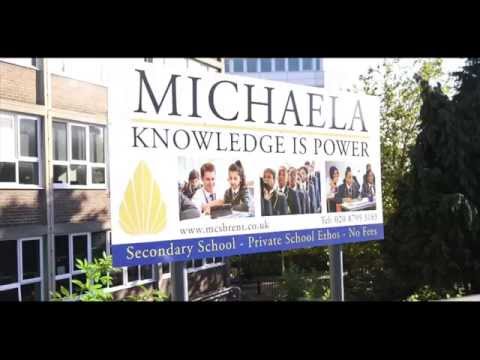
Michaela front of school