Coursework

Having spent the past 4 Saturdays in school working on coursework, you would think I’d want to spend my first Saturday “off” not thinking about it.

I’ll admit, I didn’t think I would get along with coursework. I began teaching as coursework ended; I’d been trained in Controlled Assessment and as far as I was concern, it was a great grade-getter. It also gave me several hours at the end of each term of catch-up marking during precious lesson time while the little chickens wrote for their lives, which in the early years of teaching was a vote-winner for me. Controlled Assessment was controlled; entirely in my power. They did it, handed it in at the end, I marked it; nothing went wrong, I didn’t have to chase anyone.

Indeed, my first year teaching coursework was last year with an AS group. I found myself threatening students that I would be submitting a draft version, or not marking a draft, because they had missed the various deadlines by so long. I found myself caving to my own threats as I recalled that their grades were my performance management; life lesson for them spared. As I spent so much time calling home and calling students and tracking them down, I was moved even more to appreciate the wonders of Controlled Assessment.

Moving to my next school, then, I was a little nervous to be told that we taught the iGCSE for English Language, which requires no Controlled Assessment, but instead three pieces of coursework, each totaling 500-800 words. Particularly picking up a year 11 class, I did not fancy my prospects for an easy life.

Yet I have grown, very quickly, to love coursework, and, in particular, to despair at its eradication from the English curriculum.

Coursework has at its heart re-drafting. Until this year, I had never taught that skill. It changed the way I taught almost immediately. The focus on dialogue marking had never seemed so relevant: we want students to learn how to improve and then be given the opportunity to do it! Unlike Controlled Assessment, where an errant C from an A-targeted student would lead to many hours of re-teaching, re-taking and re-testing, instead I could cover a page with questions (“how could you make this simile more interesting?” “can you think of a better word?” “CONNECTIVES?!?”) and supervise them as they made the small tweaks which would make all the difference.

In year 10, we were free to teach a rich and varied curriculum; assessment no longer punctuated the teaching or became the end; instead it was a short diversion – “Write the narrative of the Lady of Shalott” for Assignment 2, and then in a few more weeks we’ll start comparing that with Shakespeare and Jane Eyre, and so your knowledge of literature will blossom. (But of course, I will go on to kill your joy with an incredibly challenging piece of Literature Controlled Assessment which requires you to not only write well about one challenging text, but to also compare it with another challenging text in an interesting way, while situating both texts firmly in their (relevant) context. This is a task which half of you will grasp perfectly and the other half fail miserably, thus consigning your year 11 to long sojourns after school as I re-teach you a different question – but that’s another story.)

In year 11, we learned the texts for the Literature exam, and spent some time tweaking the three best pieces of coursework, marking and re-marking; never correcting, but always guiding. It felt holistic. It felt right. It felt like I could teach a child, rather than an assessment.

Then there were the tiny handful of children who had not achieved a C in their coursework. Their current marks often indicated several missing pieces. I decided I would give them four Saturday mornings as a small class to work on their coursework.

As soon as I met the children (though crucially, not all the children – getting some of these particular lovelies to turn up on a Saturday was no picnic) it became immediately apparent that all should have no cognitive trouble achieving at least a C. Many of them made the necessary changes in record time. It was what they did when they weren’t working which held them back.

These were students who had been held back by their own approach to learning; some became easily distracted and a few were prone to grumbling. Most were incredibly frustrated when I continued to demand more of them – more changes, more improvements. Their natural inclination was to give up when it felt hard.

We persevered, and encouraged, and praised, and rewarded these students. Looking through most of their folders last Saturday, I could not believe how far they had come, and with really very little guidance above what I gave my own students, most of whom were firmly in C territory and aiming higher. They were nudged in the right direction, kept on the straight and narrow, and produced some really great pieces of work. They also showed me that they were able to work in a focused and positive way for a sustained period of time.

Something I’ve always believed is that every student can at least achieve a C in English. I have yet to meet a student who disproves this for me. My caveat is as to how long it takes them. So, for a student who has only just come to the country and speaks limited English, maybe no C for you this time. But with unlimited time and unlimited resources, every student can at least make this benchmark.

What coursework gives us is less limited time. The harder to reach students, with poorer attendance and a history of poor behaviour in school, leading to missed lessons and exclusion, can be caught by coursework in a way they can’t by Controlled Assessment, or an exam. Success in coursework can also show these students what they are capable of, building their self-esteem and honing their writing skills. It is more like Austin’s butterfly than a high-stakes C-making factory.

My concern with a 100% exam system is that we lose students. There are students who are desperately at risk in our school system, and as children this risk is rarely of their own making. A system which allows students to bank nothing will undeniably lead to some bright spark missing out, and I fear that they will look all too familiar to me. Students need a win; they need to see where they are; they also need to see what they can achieve if they put in the time and the effort. I want to spend less time assessing students, not more. I want to spend more time helping them to make their work as perfect as they can, and I worry that a system which does not value or prioritise redrafting cannot do that. When schools’ reputations and funding are on the line, who doesn’t teach to the test? We have the possibility, though, of a test which is as non-intrusive as possible, allowing for creativity, for making mistakes and for lapses in judgement.

This does not just impact on our hardest to reach students, but also our high fliers, who may in the far-flung future turn up at university having never learned the skill of improvement, but only learned how to write the perfect essay in an hour, without a sense of how much more developed it can be with time, effort and research. My year 12 essays this year were a pleasure to mark; students had visited the library (or possibly Google Books) and found critical theory I’d never encountered; their pieces were scholarly and assured. That cannot happen under exam conditions; they must have room to discover and research for themselves by A-level.

The argument will be made that it is down to teachers to ensure these skills are still embedded, even while they are not tested. But there is always the looming thought that the best way I can serve my students is to get them the best possible marks. It shouldn’t be like this.

I loved my Saturdays with these students. I felt genuinely sad that our time together was coming to an end. Those days, watching students write pieces that they or I had never thought them capable of, and getting to know these wonderful young people in slightly more laid-back settings, made me remember why this truly can be the best job in the world.
Write me something I want to read

The title of this post is my rallying cry to my classes. I have a methodical, some might say overly prescriptive, outline 99% of my lessons follow: we look at some stuff, talk about it, sometimes act it out or walk around doing things with it, and then, every single time (except the time all the clocks stopped and I was vamping thinking I needed to fill lesson time) they write, in silence, for an extended period of time.

How long? If I’m honest, 10-15 minutes. I always, always plan for it to be longer. In fact, it needs to be my new week’s resolution to ensure it is for longer.

I had a year 9 class who found even 10 minutes incredibly challenging. In response, for one term, instead of reading for 10 minutes at the start of every lesson, they wrote. A diary. Which I never marked. Their writing style improved immeasurably (I admittedly use this word in its truest sense).

See, I’m not just about the reading. I am also interested in reading what they write.

Of course, we all teach children who do not have the gift of writing. But I’ve found the easiest and most often-used lines which come up with results are:

“Write me something I want to read.”

“Use a comparison I’ve never heard before.”

“Don’t tell me – show me. Make me guess.”

I do genuinely love marking. Not only because I’ve heard it is a sure-fire way of students improving, and I occasionally feel that everything else I do is subject to terms and conditions from which it is exempt. But because I love to read their work.

This was especially apparent with my last year 11 class. They were gifted writers (as well as gifted analysts and speakers). Marking their mock exam papers became a joy: looking at the dry writing task of a popular exam board, a significant number basically took the mick. The results were hilarious. I would suggest that a weekly diet of Charlie Brooker had something to do with it.

Then, when I started marking real exam papers for the real exam board, I realized how important this slogan is. I marked so many papers I sprained my hand. And the very vast majority were not filled with joy. I looked in anguish towards the pile of Year 11 books beside the papers, counting the pages until I could turn my attention to my little angels, who I knew would entertain and engage me.

English is the most subjective of beasts, but we all of us are humans. Give us something of interest, and we will look favourably on it. I’m not boasting, but I’ve read an awful lot. Yet most of my students can surprise me, for which I am daily grateful.

What I want from an education in English

I write to think. It has always been this way.

It’s coming to the end of what most teachers would say is the longest term; certainly any NQTs and Teach Firsters out there will find this term longer than any other. Students are tired. Staff are tired. Things that would leave you unruffled in September, and even November, now cause undue stress and anxiety. You can’t smooth over disagreements with cheeriness. There is no cheer left.

These are the dark days of teaching, both literally and metaphorically. We wake up in the dark, get into school in the dark, leave school when it is dark, walk down dark roads to dark homes. I have a tendency toward very painful headaches at this point in term, normally on Monday and Friday evenings, so there are several times when I sit in the dark. It’s a gloomy old time.

I’ve found myself this week feeling like I don’t have a vision. I don’t know where I’m going, or why. I am a product of Teach First and Teach for All’s sessions, which have shaped me, and I truly feel that without a vision I am purposeless; anchorless.

You can’t go into school every day just to pick up a paycheck. Teaching is too hard for that, too demanding, too exhausting. I’m finding I seem to know more and more people who are leaving the exhausting and frustrating world of state education for what seem to be Elysian fields of private schools: a curriculum they have control over, a trust concerning their professionalism, shorter school years and higher pay.

I’m writing to think today, and I’m trying to think out this “vision” business.

I can start with my students, because when all else fails they are my bright shiny beacon of hope. I’ll start with the students who miss a lesson and track me down to pick up the work. They brighten my day endlessly.

Because I want my students to be independent. I’ve loved Lucy Crehan’s post on Canadian schools here: our students should be encouraged and led towards this level of independence and motivation. At the moment, there are 35 students in Year 11 who are on a D or below in English. All of them could be on a C. What is missing is not intelligence, but motivation.

And then there are the students, and I usually find this out when I call home or meet parents at parents evening, who “are always talking about English.” They love it. They enjoy it.

I want my students to have joy in reading, and joy in exploring texts. Of course I want them to achieve high levels and high grades, but I definitely don’t want to drag them across the level 4 threshhold or D/C borderline kicking and screaming. I want them to drift there naturally, as the cumulative result of reading and enjoying their learning; wanting to do more and go further.

The students who bring a book to detention, and it is one I have recommended. The students I see reading while queuing outside their next lesson. Even the students who I catch reading when they should be doing their task.

If my students don’t love reading when they leave me, I will have failed. And I’ll admit that every year I fail many, many, all too many, students in this respect. It is something I need to work harder and smarter at, because too many students leave secondary school and never pick up a novel again.

What does that mean?

  • Students who are self-motivated and want to succeed.
  • A love of learning.
  • Education not as a means to an end, but a joyous end in itself.

There is another aspect of this vision business, which I alluded to earlier. It is contentious among my friends and colleagues. All children, they contend, deserve an amazing education. I have to agree.

But I also have to work with students who might not have the advantages that others grow up with. Because it is a cruel and unusual thing that students will go further the better off their parents are. It is undeniably wrong that the achievement gap between the haves and the have-nots is refusing to close. I adored Stuart Lock’s post about why he wants to be a head; I would echo all his sentiments, which are too eloquently put to summarise here.

Education needs to become the equalizer. For all the talk about what a teacher is not, and the reasonable expectations of a human doing a job and having some kind of life, I accept that there are times when teachers have to play the social worker, the state, the parent even. We have to pick up the responsibility, even if it is not our responsibility, because it is the right thing to do.

There are children who will leave school without qualifications, who have despised their education, who will never fulfill their potential. And I will work every day to make sure that that doesn’t happen for one less child.

It’s definitely not a vision yet, what I have written above. I write to think, and I am grateful you have read.

If you recommend one book

I am in the habit of giving vastly long reading lists, which I do believe are extremely helpful to students who already tend to read. Where this process falls sharply down is when students are not tending to read. I gave a reading list to a new group I was teaching in September, and their groans killed me. These aren’t low ability kids, although they were definitely under-achieving. I was delighted that despite the groans I saw a solitary child with one of the books from the list weeks later, but I’ve been thinking that my plan of attack for creating little readers needs to be more multi-pronged.

Then, my mentor and inspiration (Ms Moran), told me about an amazing thing she had been doing with her classes to foster a reading culture. She would stop the lesson five minutes before the end, and talk about the book she was reading. What genius. She’d put the front cover up on a slide, or read aloud to the students from the first page. The effect was unbelievable – students were clambering to read the books she was talking about.

I’m not saying I’ve never talked about what I’m reading with students. But it has usually tended to be spurred by them asking, or me carelessly leaving a reading book on my desk. I haven’t pre-planned these chats, and with sixth form, I have often had to castigate myself for “wasting their learning time” with the lengthy chats about books. The conversations are definitely worthwhile, but I do think a planned approach is safer.

With this in mind, I’m going to outline three great books I have read in the past year, which are my number one recommends for the three secondary key stages right now.


KS3 (year 7 or 8): A Monster Calls

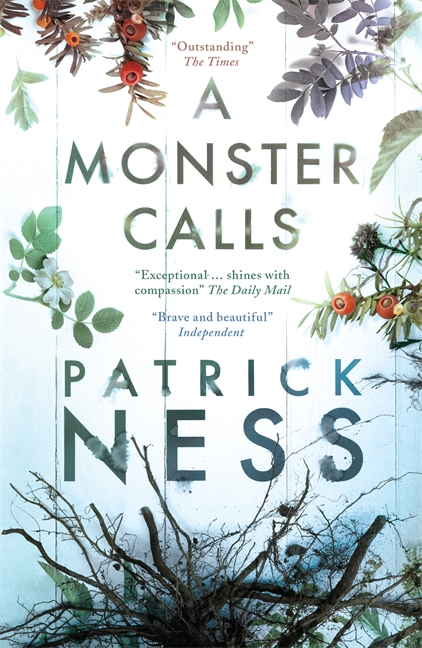
a monster callsI’m beginning with the book which began Ms Moran’s new policy. As she says, “no-one writes an opening like Ness.” I’ve recommended The Knife of Never Letting Go to high ability students in year 8, but even truly reluctant readers in year 9 are drawn in by the style and content of the opening.

A Monster Calls is a little over 200 pages, and looks manageable for, I would say, all but beginning readers. Ness’s characters in this book have the slightly other-worldly feel of David Almond’s; they speak to each other and it sounds plausible, but not familiar. That aside, the content and style are what sell this book.

The basic plot-line is that a tree-monster wakes a child up and scares him lots, but also teaches him lots, especially about the very difficult trials he is going through with an extremely ill mother. This isn’t a book about death though, or really even suffering. It’s a book about resilience and faith against the odds.

KS4: A Tree Grows in Brooklyn

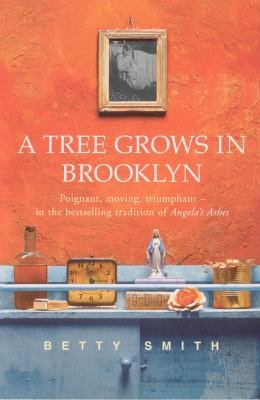
At open evening in my new school, I got chatting with a parent about books and she recommended that I read this one. (Parent, please send your child to my school!) This booka tree grows in brooklyn has already rocketed into my all-time top ten.

The story follows Francie, who grows up in the 1900s in a Brooklyn slum. But the nuances are miraculous – so much is withheld; we see through Francie’s eyes, and if the blurb hadn’t given the setting away, we might have little idea she is living in poverty until some time into the book.

The novel is full of anecdotes; rivers of stories which make up the sea of human experience. It feels timeless and massive. I’m not too sure about reading the opening of this to hook students, but I would recommend a paragraph 14 pages in, where the main character observes an old man. Smith writes:

“He is old. He must be past seventy. He was born about the time Abraham Lincoln was living and getting himself ready to be president. Williamsburg must have been a little country place then and maybe Indians were still living in Flatbush. That was so long ago.” She kept staring at his feet. “He was a baby once. He must have been sweet and clean and his mother kissed his little pink toes. Maybe when it thundered at night she came to his crib and fixed his blanket better and whispered that he mustn’t be afraid, that mother was there. Then she picked him up and put her cheek on his head and said that he was her own sweet baby. He might have been a boy like my brother, running in and out of the house and slamming the door. And while his mother scolded him she was thinking that maybe he’ll be president some day. Then he was a young man, strong and happy. When he walked down the street, the girls smiled and turned to watch him. He smiled back and maybe he winked at the prettiest one. I guess he must have married and had children and they thought he was the most wonderful papa in the world the way he worked hard and bought them toys for Christmas. Now his children are getting old too, like him, and they have children and nobody wants the old man any more and they are waiting for him to die. But he doesn’t want to die. He wants to keep on living even though he’s so old and there’s nothing to be happy about anymore.”


KS5: Bright Shiny Morning

bright-shiny-morning “Welcome to LA. City of contradictions” reads the blurb of James Frey’s masterpiece. This book is a gem for the sixth form: modern and realistic in its scope, but also creatively told with modernist sensibilities – dialogue without punctuation, and the stories interwoven with paragraph-long excerpts of the history of the city.

There are elements of comedy and tragedy in this epic tome, but there is also truth and hope. The characters are sketched but somehow they live more truly for that sketch-quality. Their stories are built up slowly, and this draws you in the more fully. They don’t all interlink, because that isn’t true to life. We have the homeless man, the child inter-state migrants, the rich and famous. We have all of human life at its extremes and in its non-extreme normality made beautiful.

Autumn 1: Literature Central

I’m writing a retrospective on Autumn 1, and I’ll open by saying it has been a surprisingly good term. I’ll resist the temptation to elaborate, lest the ones who have held me up for 7 weeks and listened to my many woes read such a reflection and have to have words with me. Starting a new school, especially in a new role, was always going to be a challenge. Luckily, I am in the enviable position of my predecessor not only supporting me as line manager, with all the inside knowledge that can be offered from such a vantage, but also having set up an incredible curriculum – which is the subject of this blog.

I will admit, the prospect of Dickens for an entire term was enough to make me run flailing the other way in June. However, I found my own personal joy in Dickens (explored here and here) over the summer, which helped a little.

The other thing that has helped is my year 7 class. One of the “make-or-break” aspects of accepting a Head of Department role, for me, was teaching every key stage – at least in my first year. I wanted to have first-hand experience of the curriculum offer, and also to see what mixed ability teaching looks like in the department (we, like the vast majority, set at KS4) and to be assured it was working well for the students.

Year 7 has always been a mixed experience for me. They are undeniably adorable little humans, so full of excitement and energy. They can also be exhausting, with all the unformed emotional intelligence and neediness that comes of the giant leap from primary to secondary. I have found much more of the former and much less of the latter (in fact, almost none) in my current year 7 class. I do believe a strong head of year has helped them to settle quickly into the school. But I also believe they are tiny geniuses in the making, at least in English.

The scheme for this term has taken students on a Dickens journey, exploring excerpts from his poetry as well as novels such as: Hard Times, A Tale of Two Cities, Bleak House, Oliver Twist and Great Expectations. I had my reservations about beginning the year by not teaching full texts, however I can’t deny the positive impact this scheme has had on my little ones. (And rest assured: we are doing full texts for the rest of the year.) What this scheme is, in effect, is a run through the key reading and writing skills students need, but using Dickens as a prompt. So, students explored writing a compelling opening using antithesis inspired by “it was the best of times; it was the worst of times” (and the rest).

There have been too many highlights of teaching this particular year 7 class to explore them all, but seeing students of a very wide range of ability access Dickens, empathise with his characters, and enjoy his writing has really changed my mind on the idea of a “depth” curriculum. I will also add that three students have professed to be reading Great Expectations; one even showed me the sweetest page of notes she had taken on the book. Absolutely no-one has said “we’re still doing Dickens?” at any point this term. When I told them we were studying “A Christmas Carol” after half term, the only emotion shown was elation. When students read the description of Miss Havisham and were instructed to highlight anything they found effective, one student piped up: “can’t I just highlight it all?”

The year 10 curriculum has been similarly literary. In fact, in ample time for the new KS3/4 curriculums, my line manager put in place some extremely inspiring schemes of work to prepare students for the rigours of a literature-heavy GCSE, and of couse A-level – our end-goal.

The iGCSE has its drawbacks, however for the scope of the coursework it is a winner for me. This term has been focused on iGCSE coursework tasks, which are in turn descriptive, argumentative and reading-based; however, in contrast to AQA’s “write about something which makes you angry” and other such generia, we have been teaching students about women in nineteenth century literature, and using this as a springboard for their creative and critical writing.

The scheme began with Tennyson’s “The Lady of Shalott”, which my students were undeniably fazed by. It is a tough text, worthy of longer study. Yet their understanding of the implicit ideas in the poem has rendered some powerful pieces of description, as they wrote about the journey she took.

We moved onto Jane Eyre, worthy of a term itself. Students have the book and are, I hope against hope, ploughing through it still as I write. We explored key chapters together and wrote a number of pieces inspired by Bronte’s characters and settings.

Then onto Gilman’s “The Yellow Wallpaper,” which was a true joy to teach. I will never forget the faces of the students when they reached the end of the story – not quite wanting to believe what they were reading, and knowing something had happened which challenged their ideas of what the nineteenth century female writer might be exploring. Another descriptive piece followed.

Finally, we explored the idea of women’s suffrage, linking up with their study of it in year 9 History, and wrote speeches arguing against articles and letters from the time.

What students have gained, I feel, is a healthy overview of some great writing and some central concerns of the nineteenth century. The coursework did not take over, and we did not teach to the task. The coursework was almost incidental. As you can redraft it as many times as needed, there wasn’t the pressure to drill it in and get it perfect. I just wanted my students to be creative and to understand the wider concepts of the time period.

All of which sets them up nicely for their Literature Controlled Assessment next term – although I’m not sure how they or I are going to cope with a more task-driven term.

I can’t by any stretch of the imagination take any modicum of credit for what these children are studying; I can only advocate this approach. Our visiting “mock-Ofsted” inspector described the curriculum throughout KS3 and KS4 as “inspiring.” I have certainly found it to be so as a teacher.

More than ever, I feel like I am certain of what I want my students to have when they leave me, and the only way I am sure they can attain this is through study of challenging and literary texts. I am delighted to be in an environment which has fostered this.

More Texts or More Depth?

I have been recently challenged to consider what the role of an English teacher is. This usually happens when I meet people whose views I disagree with, which is one of my favourite things to do. I love re-considering what I had initially assumed to be true. More often than not, I end up doing some serious mind-changing; partly because I have never had debating skills, or possibly I am deeply impressionable. I am hoping it is mostly because other people are right, and I am wrong, and I make the right choice.

So, I had always thought, inspired by the Teach for America chieftains and Rafe Esquith, the job of an English teacher was mostly to expose and lead students through as much literature as was humanly possible, preferably, inspired by Joe Kirby’s impressive curriculum here, also showing them the evolution of language, style and content through a beautifully arranged compendium of the whole of literature ever.

It began with library lessons, which I have always maintained are wonderful and valuable. An esteemed colleague put the argument that “students can read in their own time – and I am aware that some don’t” – but is that a problem that their English teacher in their English lesson should be solving? He argued that we have limited time to lead our students, and rather than that being a race through all the literature, we should be going for deep knowledge and embedded skills.

This alternative universe is a new one to me, but it’s one I am willing to explore. Though there are already some parallels: often, when taking out the Shakespeare play we will be studying in year 7, 8 or 9, a handful of children will exclaim: “but I already did that play! In primary school!” Yet those same children seem, at best, to have a shaky grasp on the plot of the play, let alone the nuances of theme and character I would like them to explore. Indeed, my year 11 revisited a play many of them had studied in year 8, and all had an undeniably different experience of reading the play anew and older.

Like all schools, we revisit Shakespeare every year, and I think most teachers would argue very strongly that the repetition of this particular author builds up our students’ understanding and enjoyment. But perhaps how long we spend on Shakespeare needs to be explored. Usually, I give over the entire two half terms after Easter for Shakespeare at KS3. With few exceptions, we study the whole play, minus the truly terrible scenes, and there is a lot of acting, creative re-interpretation and philosophy circles along the way – rest assured, it is not mere ploughing through the text.

Yet I wouldn’t spend a full term on, for example, poetry. I seem quite happy to teach poetry for five or six weeks a year and be done with it until the following year. Other than practicing their understanding, inference and analysis, how much do students really get out of such a short unit? If we are thinking about how we sequence and deliver content and skills, perhaps there needs to be more time spent on deep learning and multiple examples.

This race through the curriculum is especially exacerbated at KS4, when many English teachers feel they are “teaching to the test” with Controlled Assessment after Controlled Assessment, and little time for real, deep learning to occur. (There were times with my last year 11 when I thought in despair: “I haven’t actually taught them anything since year 9. They’ve just been practicing doing it.”)

That said, it may also be argued that familiarity breeds enthusiasm. In my last English department, we were hopeful that the students who end up in year 13 will not look with trepidation on the Wife of Bath’s Tale, but instead associate that text with familiarity and fun they had with Chaucer in year 7.

For a “depth not breadth” approach to truly work, I would argue that a school needs a robust policy of reading for pleasure, which is enforced. Students can read at home, but do they read at home? There is ample “down time” in many school timetables for reading for ten minutes or twenty, for example during form-time, but it needs to be enforced throughout the school.

At this point in time, I’m undecided: I genuinely don’t know what the best balance between quality and quantity is in the curriculum I would offer to students. But I’m going to explore a “depth” curriculum this year and find out.

Loving Shakespeare

I am going to confess to something which I am not proud of: at age 15, I proclaimed to my English teacher (the famed Dr Byrne, of whom more later) that Oscar Wilde was a better playwright than William Shakespeare. And I wasn’t being deliberately argumentative, like I usually was.

I just didn’t like Shakespeare at all.

I didn’t understand it, I didn’t relate to it, and I certainly didn’t know why I had to study it.

Then something changed my view of Shakespeare forever: the 1996 RSC version of Midsummer Night’s Dream. I was learning a Shakespeare speech for a LAMDA acting exam, something I am incredibly glad I was forced to do, and for the “discussion” part of the exam we had to be able to discuss the play in its entirety. I picked the DVD up from the library, only because there was no video, and settled down one afternoon in the kitchen. I distrustingly loaded the disc into the PC (a new experience) and shuffled onto a hard kitchen chair to watch it.

The set was incredible: from the man-made lake to the stand-alone doors leading to nowhere to the suspended light bulbs illuminating the forest. It was utterly beautiful. I watched this in 2001, with all my teenage disregard for the bard, at our enormous and unwieldy computer, and I was entirely gripped. The beauty of the staging drew me in, but the relevance of the words was delivered, it seemed, directly to me and directly to my own context. It spoke to me, in a way I hadn’t been spoken to by a play before. I laughed, I cried, and at last I understood.

I’m re-watching this version now to use to teach my year 7 and I am brought back again to the start of my love affair with the bard. Indeed, my single favourite thing about living in London is that I can see live Shakespeare for only £5 a show at the Globe Theatre.

Incidentally, another gem worth a watch is the Globe on screen version of Much Ado About Nothing. I remember watching this production in the theatre itself at the tail end of one of my most stressful teaching terms, and despite not even knowing the story (although my helpful teacher theatre companion did her best to enlighten me en route to the playhouse) found myself laughing uncontrollably.

But how to make my students feel this?

I really believe that the key is a great version; reading words on the page, even as an English teacher, is nowhere near the same as an accomplished actor conveying the lines. So much about plays, anyway, is in the staging, the direction and the delivery of the lines; a novel’s intended audience is only ever an individual, its intended reader’s setting irrelevant, its intended backdrop a blank page. A play clearly has very many more complex layers than this.

The brilliance of a Globe production filmed is not only in the superb acting, but in the nearness of the visible audience, all (in the Much Ado Globe on Screen, and in my own experience) cloaked in rain-macs and huddled to each other and the stage; all interacting with the performance. I am certain the responses of these very familiar-looking modern humans will help my students to appreciate that yes, real people right now laugh at this stuff.

I believe that Shakespeare must be seen first, and acted; not read and analysed to death (although that can come later). On showing my year 9 set 5 Baz Luhrmann’s Act 1 Scene 1 of Romeo and Juliet, my students were bewitched. They really loved it. As one commented: “I didn’t think it would be about people like me!” She might have found the language a turn-off when presented with the page, but seeing the live action challenged that initial distaste for Shakespeare.

I, and I am sure all English teachers, am begging directors and producers everywhere: please, please keep giving us game-changing, earth moving and relevant Shakespeare that we and our students can love.

After all this, I’m still not entirely sure I love reading the stuff. But watching – that’s an entirely different story.

globe

Short stories

I must confess, I once bought a book from Amazon by one of my favourite authors and was devastated when it turned out to be short stories (those descriptions can be misleading… or I’m an impulsive buyer). The book sat on my bedside locker for months, until I felt too guilty to buy a new book and had to read it.

I didn’t hate it. In fact, I really rather enjoyed it. And this prompted me to wonder why I was so prejudiced against short stories.

Partly this might be to do with my love of narrative-driven books. I think most people are partial to a book which paces along, keeping us entertained and engaged throughout. I have a particular love for very very long books, where I genuinely miss the characters after (although I dislike going into unintended mourning of a book – those weeks where I pick up and unfinish three or four books after a particularly wonderful tome and can’t find anything to match it fill me with despair). One of my best friends told me at during our A-level English course, after a particularly heady close-analysis lesson: “I just love the story. Isn’t that enough?”

So I think what it boils down to is that, for me, short stories are simply too much work. They are the step between reading a novel and a poem; the former you can absorb in a state of near passivity; the latter you are required to read again and again, pencil in hand, annotating all the way (who studied English Literature at university and manages to read poetry without a pencil? Please teach me how).

If poetry is “language condensed”, then short stories are very nearly there. The ideas, themes, character and language are all the more pertinent and powerful for the shortness of the tale. The structural issues you only glancingly pay attention to when reading a novel begin to jump out at you with force in a short story. It just all seems too deep.

And that is exactly why, as a teacher, I need to read many more short stories. These entities are clearly made for teaching: we all know the perils of a class reader, particularly with our less engaged students. (I’ll allow myself one more digression: in my first term of teaching, I pretty much read the whole of “To Kill a Mockingbird” to my year 10 set 5. They hated it so much that when I finished the last sentence they burst into spontaneous applause, not because I am a wonderful and amazing reader, but because, in their own words: “thank God IT’S OVER.”) (I will also say that I have since gained the experience, skills and pedagogical understanding to be able to effectively teach novels. So please don’t fire me.)

I began teaching short stories with year 9 set 2 three years ago. This was an incredibly able class; they are the year 11 I have so often raved about to my close friends this year, and I’m banking on a host of A*s on results day. I wanted them to experience more of literature than just one novel; I wanted to explore different authors, genres and times with them.

We began with Raymond Carver’s “Fat”, which is made for teaching to girls. The way Carver “shows not tells” us about the characters, the subject matter (if you haven’t read it, the clue is in the title) of the tale, the sparse but beautifully chosen language and the length (it is maybe 5 pages long) all allow an engaging and edifying approach to the unit.

My year 9s also read Poe’s “The Tell-Tale Heart”, James Joyce’s “The Dead” and “Eveline” and J. D. Salinger’s “Franny”. I have taught none of these since, despite utterly loving teaching them, mainly because I’ve found different short stories which seemed better suited to my various classes – not in terms of ability, but more in terms of interest. There is too much to choose from the great literature that is available to wheel out the same stories year on year. I especially loved reading “The Second Bakery Attack” by Murakami for a “fun” (read: non-directly related to the curriculum) lesson with year 12. Another favourite of mine is “Examination Day” by Henry Slesar: a great text for a KS3 class, introducing them to dystopian literature.

In short, short stories are an English teacher’s best friend. They are ready-made for any class; clearly shorter and so more digestible for less confident readers, but open to a challenging scheme of work containing multiple ones for the most confident students.

I’ll admit, though, I’m taking a fat novel or six to the beach. It can’t all be about the kids…

short stories

Teaching Chaucer to Year 7

There are many things I did not think possible when I began teaching. The above didn’t even cross my mind. I studied The General Prologue of The Canterbury Tales when I was in year 12, and the wonderful Mrs Grinham made us love it (it was hard to dislike anything she taught; she sat at her desk, book in hand, and seemed to simply chat to us in the lightest, richest voice I ever have heard, interspersing literary gems with nuggets about knitting, baking and her grandchildren. I think it was looking at Mrs Grinham in her perfectly tailored clothes and perfectly shaped bob that made me think “I’d like to be like that one day”).

But teaching Chaucer to year 7? How we had struggled with the language and spent the first three weeks entirely blank-faced, as Mrs Grinham patiently explained the intricate meanings of each Middle English word.

So when my colleague, Ms Moran, told us last year she was teaching Chaucer to year 7, I personally thought she was having a laugh.

A word about Ms Moran: you know how people say watching a great teacher is like watching an artist? Ms Moran is probably the Monet of teachers. I have literally never seen a better teacher in my life. Oh, and you know people say: “but no-one is outstanding in every lesson.” Well, she is. I’ve sat next to her in the English office for nearly three years and 100% of her lessons are pure pedagogical genius.

She’s rolled out her scheme of work to the rest of the department for this year and we’re all giving it a go. As I’ve said previously, our department rarely works in tandem with each other. We’re encouraged to teach what we love, so our classes are usually experiencing very different topics at different times in different ways. Yet every year the whole of year 7 have a trip to Canterbury Cathedral, from our school in Southwark. Sound familiar? Almost irresistible for us English teachers. The RS department was keen to enlist English in making year 7 feel like modern-day pilgrims, and give the trip that cross-curricular dimension.

Obviously, the language is hard for them. The first lesson begins with a fifteenth century text of “The Prodigal Son”, a text our Church of England girls (the very vast majority) are familiar with. This eases them into Middle English, of which they explored only odd lines. The first lesson was a run-through of the pilgrims, with some lines from the opening, which they were scared of. Yet the challenge of those words really excited the students; with enough group work, one child suddenly “getting it” rippled through the class.

By the third lesson (after, I will mention, some extremely thoughtful chunking by Ms Moran of the lesson content), my students were quoting from the original text of the Portrait of the Miller to support their points about him. They were even able to explain the ideas behind some of the words. It was a complete joy to hear one student saying “this one’s my favourite line!” and explaining why.

Our pilgrimage to Canterbury was sadly less Chaucerian than we might have hoped. There were three modern coaches, for example; no horses; and a number of electronic pacifiers to ensure we teachers weren’t unduly subjected to mass-singing (though some did break out on the way back).

Of course, many did talk to each other. I wonder if any told stories? When our all-girls school coach was passed by a coach containing members of a male cricket team, there was immense excitement of some would-be wives of Bath.

At the Cathedral, our tour guide (a volunteer, and allegedly nearing 80, though looking and sounding far younger) took a small group of us around the Cathedral, using stories to engage his group. The students were especially excited by the “ghost of Thomas Becket” seen from a certain angle. In the afternoon, they settled onto the grass around the Cathedral to begin to plan their own pilgrimage story, complete with moral aspect.

So far, so good. This experience has taught me that there isn’t really a limit on difficulty of text. Properly supported, students will enjoy and learn with any text. Why not make it a great one?

Although my aim of teaching Beowulf in its original Old English may be a step to far…

Why students should read Homer

Recently, David Didau’s post here on a new curriculum for KS3 has got me thinking. I’m lucky to work in a school which gives me pretty much free reign on what I choose to teach, yet I have always artificially constrained myself: what texts are readily available in the cupboard? What texts have I studied before, and therefore know really well?

The more pressing question, which I’ve woken up to deplorably late, is what should students read in the course of their study of English?

At a wonderful weekend watching two plays at the Globe theatre, it occurred to me that although I felt my students were getting a lot out of studying Shakespeare, there were references in there that they didn’t get. Not only did they not get them, I wasn’t even planning on providing the core literary knowledge for them to ever get them.

With that in mind, I got to work writing, with my exceptional colleague, very many schemes of work of texts we think students should be know something about, particularly at KS3. One of the ones I’m especially excited about is The Odyssey, which I’m planning to teach year 9 next year.

The thing about classical literature is that students in some schools in the country are exposed to it from a young age as a matter of course. I don’t want to sound like a throwback, but while I do acknowledge that there are certainly more relevant courses for students’ development into outstanding citizens for our modern society, there is certainly a merit to studying ancient literature.

I was privileged enough to study Latin in school, and loved almost all of it (not grammar. I could never get my head around grammar. To this day I can’t decline nouns – sorry Miss Coote). The broad knowledge of both Greek and Latin literature explored in my seven years of Latin have left me fairly capable of understanding many references, particularly in Renaissance literature. Why not let students access this?

The first big barrier for me was deciding what text to focus on. We are creating an “ancient stories” scheme for year 7, to give students a broad grounding of different myths, but I wanted a deep exploration of a single ancient text at KS3. My initial choice was The Aeneid, which I studied for A2 very many years ago. Yet there is something about Homer which feels more original, I suppose because he was. Although The Aeneid combines the best parts of both “arms and the man”, the character exploration of The Odyssey mixed with the battles of The Iliad, I wasn’t sure whether this was the most important text for my students to read.

I opted for The Odyssey, therefore, as there’s too much listing in The Iliad. (I realise this sounds quite flippant, but I’d had a free period, and there’s only so much thinking you can do before the teaching and reacting to everyday crises needs to be done).

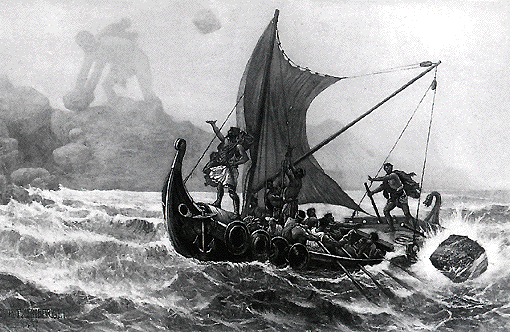
I’m pleased I did, actually, because The Odyssey touches on what are, for me, the key ideas in Greek literature that I wanted my students to explore: the Gods, the Trojan War, the myths. Pretty much every Greek myth is either found in or alluded to in The Odyssey. Scylla and Charibdis, the Sirens, Hades, the Cyclops; even Prometheus finds a fleeting mention.

Our students deserve an enriched and varied curriculum, and one which allows their depth of understanding to increase. Most books of substance, when critically explored, are inherently intertextual: The Odyssey is one small step to allowing students to access this.

odyssey