The power of poetry

I’ve mentioned it two or three thousand times before, but I’ll say it again: I love my year 7 class. I’ve had many year 7 classes before, and I’ve found them all to be cute, lovely and well-behaved, but this year my year 7s stand out in a completely different way.

Part of this, I think, is due to my time-table: in previous years, I’ve taught 3 KS3 classes and then one KS4, plus a KS5. This year, I teach all exam classes, except for my year 7: they are my one and only class I am not pushing through a GCSE. They are my one and only class who are truly mixed ability (as in: all classes are mixed to some degree; these guys aren’t set yet).

Never before have I so appreciated the freedom which comes with teaching a KS3 class. I feel relaxed around this class; I take them on wild tangents when the conversation turns. I am excited to teach them, because I’m never completely sure where a lesson will take us. I’m flexible with my planning, moving lessons and assessments around due to their emerging needs because I don’t have any hard deadlines for them, or firm content to cover.

Right now, I’m loving teaching them poetry. Some genius teacher in my department created a beautiful scheme of work on war poetry, and it has been utterly joyful to teach. We began with a lot of context, which with the topic in question is not only fun and meaningful, but also pretty easy to teach, as usually students have great prior knowledge from primary school or history classes.

We studied Wilfred Owen in so much depth, students were commenting on different poems long after we had “finished” them, in their spoken and written responses. We moved through to female poets and conscientious objectors, and finished with Japanese poets on the atomic bomb.

Throughout the year, I’ve tried to mention in every class that my aim is for them to come up with interpretations. I have shied away from doing this with previous year 7 classes, as I’d found that their interpretations were almost always insane and had nothing to do with the text. With this class I decided to take a risk.

I’m not sure what has happened, but these students are already genuinely capable of coming up with interpretations which are not only valid, but also imaginative. I do a lot more whole-class discussion with this group, partly because the room layout discourages group work and circulation (I physically cannot get to about 6 students crammed into tight rows in a tiny room) and I want to speak with every student; this might have helped them to finesse their arguments as I always want evidence from the text, something their co-students perhaps aren’t so pushed about.

The most joyous moment of the course is hard to pinpoint. I thought it was the student who was so low-achieving at primary school she came in without a level, putting up her hand and giving an interpretation that was actually amazing, which sparked an important class conversation which went on for many minutes. That same student wrote an essay a week later and neglected to use a single quote or write about a single word from a single solitary poem. I despaired.

Having just marked their final assessment on this unit, there are too many “moments” to list, but I’ll mention a few.

The student above actually put in a number of quotes in her essay and used enough technical language to wind up on the cusp of level 3, which put a massive smile on my face. One of my level 4/5 borderline students suddenly grasped how to analyse language, which pushed her over the border to the magic 5, which I know she’ll be thrilled about because she works so hard in every lesson. A number of students wrote about ideas in their final assessment which we had never covered in class; one example is at the bottom of this post, but there were many who tried something new out.

But what made me smile more than anything was the paragraph below, written by a student who also receives some intensive English catch-up.

H lovely paragWhat I loved about this was the joy in poetry that came from it. We’d not spoken specifically about the ideas she writes about, and given the parameters of the essay this came out of nowhere. But the genuine joy and love of poetry is so easy to see, and this is something which came through in so many students’ essays.

My year 7 love poetry, with the same fervour my year 11 hate poetry.

It’s easy to see why though: my year 11 study the AQA “Relationships Cluster” of poems which has some lovely poems in it, but some really, truly dull ones. I’m constantly banging on about AOs and how they need to evidence their thinking in their essays in order to hit those AOs consistently throughout. I’m also forcing them to compare poems, which is nowhere near as effective as them doing it themselves (“miss, isn’t this like…”) and feeling really smart for thinking to do it.

My new aim is to build on this love and enthusiasm; to cling to it. Is it the normal year 7 excitement which will fade by the summer term, when new priorities come into play for them? Or is there a way to continue to invest them in what we are doing?

And how do I make this happen with all my exam classes?

Interpretation parag

Why students must talk

I’ve often wondered to what extent a Headteacher sets the feeling of a school. In my first school, the Headteacher, aside from being the most inspiring woman I have ever met, driven by titanic strength, vision and conviction, was also a drama teacher.

Although our twice-weekly whole-school assembly was conducted in impressive silence, our children were, for want of a more nuanced word, loud. It was a loud school. Not in a threatening way though: these were children who bubbled over with the joy of being. They raced through corridors, laughing and “talking” with one another; yet their version of “talking” sounded very, very similar to shouting.

I think in three years I was there, there was one fight. I’m not even sure that was a fight, if I’m honest; I remember someone in the staff room saying there had been one. No-one seemed too worried, so the likelihood of its existence is to be questioned.

Now, I could write an encyclopedia about the other impacts of the ethos and leadership which made my first school a bastion of educational opportunity, but I’ll save those ramblings for another time. I only want to focus, today, on why students must talk.

Now, I never had a problem getting students at my first school to talk. In my first year, they would speak unprompted; as I grew in teaching capability, I knew they would talk about whatever I asked them to, whenever I asked. When I practiced “hands down” questioning, it was extremely rare that a student would not talk to me. At the time, I prided myself on having created a safe environment for students to speak. Now I know it’s not that simple.

Becoming articulate should be a central aim of a schooling system. Our world is built on communication; written, certainly, but the majority of our communication is spoken. I’ve never had a written job interview, for example. I can think of a paltry few professions which do not require some level of discourse with colleagues or the public. In English, writing down your ideas about a text is never as powerful as balancing these ideas with alternatives; alternatives locked in someone else’s head, accessible by talking.

On arriving at my new school on my interview day, the first thing I noticed was the lack of noise. These students were quiet. They were quiet in lessons, in corridors; even in the lunch hall. Again, I wondered if the demeanour of this school’s (again, exceptional, visionary, committed) Headteacher was partly the cause: where the first Headteacher had reveled in her exchanges with students, the second spent much of her time visibly calming students down; not threatening or shouting, but ensuring they were calm and collected around the building.

I was sold: this was a wonderful environment to work in; peaceful and calm and quiet. What a different life I would lead in this school, I thought. Except, again, it’s not quite as simple as that.

Getting students to talk has proved more problematic than I could have imagined. Although most will gamely go ahead, group discussion is often more like one individual speaking. Feedback can be especially painful, and I’ve had to tweak my “talking groups” to divert disasters of shyness leading to a stifled session.

Don’t get me wrong; these students can be loud – I’ve seen (or rather, heard) them at bus stops, on buses and around the area outside the school grounds. And of course, it is laudable that they are so calm and quiet in school.

Yet students must speak in lessons, and I have made it my duty to ensure, as far as possible, that every student I teach speaks in every lesson. Last week, two students refused to give feedback on the excellent work they had done. After some coaxing, and another student supporting them, one finally managed to come to the front and explain her work. My heart burst with pride. The other student?

I don’t want to force her. She’s in year 11, she finds public speaking incredibly tough, and she’s very far from guaranteed her targeted A grade at the end of the year. There’s a lot going on, and in the race to get her a GCSE she can do something with, I’ve made the choice to leave this battle, and keep her on side.

But I can’t help but think: we shouldn’t have students in year 11 who are afraid to speak their mind. We have to make our students speak, and speak loudly and with pride and confidence. Sure, it’s scary. Sure, it’s difficult. But not being able to articulate thoughts in public or even small groups will prevent these students from accessing the opportunities their grades should rightly open up to them.

Assessed or not, talk forms a vital part of the education we offer children. They all must talk.

Coursework

Having spent the past 4 Saturdays in school working on coursework, you would think I’d want to spend my first Saturday “off” not thinking about it.

I’ll admit, I didn’t think I would get along with coursework. I began teaching as coursework ended; I’d been trained in Controlled Assessment and as far as I was concern, it was a great grade-getter. It also gave me several hours at the end of each term of catch-up marking during precious lesson time while the little chickens wrote for their lives, which in the early years of teaching was a vote-winner for me. Controlled Assessment was controlled; entirely in my power. They did it, handed it in at the end, I marked it; nothing went wrong, I didn’t have to chase anyone.

Indeed, my first year teaching coursework was last year with an AS group. I found myself threatening students that I would be submitting a draft version, or not marking a draft, because they had missed the various deadlines by so long. I found myself caving to my own threats as I recalled that their grades were my performance management; life lesson for them spared. As I spent so much time calling home and calling students and tracking them down, I was moved even more to appreciate the wonders of Controlled Assessment.

Moving to my next school, then, I was a little nervous to be told that we taught the iGCSE for English Language, which requires no Controlled Assessment, but instead three pieces of coursework, each totaling 500-800 words. Particularly picking up a year 11 class, I did not fancy my prospects for an easy life.

Yet I have grown, very quickly, to love coursework, and, in particular, to despair at its eradication from the English curriculum.

Coursework has at its heart re-drafting. Until this year, I had never taught that skill. It changed the way I taught almost immediately. The focus on dialogue marking had never seemed so relevant: we want students to learn how to improve and then be given the opportunity to do it! Unlike Controlled Assessment, where an errant C from an A-targeted student would lead to many hours of re-teaching, re-taking and re-testing, instead I could cover a page with questions (“how could you make this simile more interesting?” “can you think of a better word?” “CONNECTIVES?!?”) and supervise them as they made the small tweaks which would make all the difference.

In year 10, we were free to teach a rich and varied curriculum; assessment no longer punctuated the teaching or became the end; instead it was a short diversion – “Write the narrative of the Lady of Shalott” for Assignment 2, and then in a few more weeks we’ll start comparing that with Shakespeare and Jane Eyre, and so your knowledge of literature will blossom. (But of course, I will go on to kill your joy with an incredibly challenging piece of Literature Controlled Assessment which requires you to not only write well about one challenging text, but to also compare it with another challenging text in an interesting way, while situating both texts firmly in their (relevant) context. This is a task which half of you will grasp perfectly and the other half fail miserably, thus consigning your year 11 to long sojourns after school as I re-teach you a different question – but that’s another story.)

In year 11, we learned the texts for the Literature exam, and spent some time tweaking the three best pieces of coursework, marking and re-marking; never correcting, but always guiding. It felt holistic. It felt right. It felt like I could teach a child, rather than an assessment.

Then there were the tiny handful of children who had not achieved a C in their coursework. Their current marks often indicated several missing pieces. I decided I would give them four Saturday mornings as a small class to work on their coursework.

As soon as I met the children (though crucially, not all the children – getting some of these particular lovelies to turn up on a Saturday was no picnic) it became immediately apparent that all should have no cognitive trouble achieving at least a C. Many of them made the necessary changes in record time. It was what they did when they weren’t working which held them back.

These were students who had been held back by their own approach to learning; some became easily distracted and a few were prone to grumbling. Most were incredibly frustrated when I continued to demand more of them – more changes, more improvements. Their natural inclination was to give up when it felt hard.

We persevered, and encouraged, and praised, and rewarded these students. Looking through most of their folders last Saturday, I could not believe how far they had come, and with really very little guidance above what I gave my own students, most of whom were firmly in C territory and aiming higher. They were nudged in the right direction, kept on the straight and narrow, and produced some really great pieces of work. They also showed me that they were able to work in a focused and positive way for a sustained period of time.

Something I’ve always believed is that every student can at least achieve a C in English. I have yet to meet a student who disproves this for me. My caveat is as to how long it takes them. So, for a student who has only just come to the country and speaks limited English, maybe no C for you this time. But with unlimited time and unlimited resources, every student can at least make this benchmark.

What coursework gives us is less limited time. The harder to reach students, with poorer attendance and a history of poor behaviour in school, leading to missed lessons and exclusion, can be caught by coursework in a way they can’t by Controlled Assessment, or an exam. Success in coursework can also show these students what they are capable of, building their self-esteem and honing their writing skills. It is more like Austin’s butterfly than a high-stakes C-making factory.

My concern with a 100% exam system is that we lose students. There are students who are desperately at risk in our school system, and as children this risk is rarely of their own making. A system which allows students to bank nothing will undeniably lead to some bright spark missing out, and I fear that they will look all too familiar to me. Students need a win; they need to see where they are; they also need to see what they can achieve if they put in the time and the effort. I want to spend less time assessing students, not more. I want to spend more time helping them to make their work as perfect as they can, and I worry that a system which does not value or prioritise redrafting cannot do that. When schools’ reputations and funding are on the line, who doesn’t teach to the test? We have the possibility, though, of a test which is as non-intrusive as possible, allowing for creativity, for making mistakes and for lapses in judgement.

This does not just impact on our hardest to reach students, but also our high fliers, who may in the far-flung future turn up at university having never learned the skill of improvement, but only learned how to write the perfect essay in an hour, without a sense of how much more developed it can be with time, effort and research. My year 12 essays this year were a pleasure to mark; students had visited the library (or possibly Google Books) and found critical theory I’d never encountered; their pieces were scholarly and assured. That cannot happen under exam conditions; they must have room to discover and research for themselves by A-level.

The argument will be made that it is down to teachers to ensure these skills are still embedded, even while they are not tested. But there is always the looming thought that the best way I can serve my students is to get them the best possible marks. It shouldn’t be like this.

I loved my Saturdays with these students. I felt genuinely sad that our time together was coming to an end. Those days, watching students write pieces that they or I had never thought them capable of, and getting to know these wonderful young people in slightly more laid-back settings, made me remember why this truly can be the best job in the world.

Professional distance and politics

In this week’s “Tough Young Teachers”, one of the trainees talks about professional distance, mentioning he’s not a father/brother/uncle, but a teacher. Sure, the lesson of his week seemed to be that letting his guard down a bit led to big gains with a hard-to-reach student; but most teachers will agree with the dictum of professional distance.

It’s not that I’ve ever fiercely guarded my private life, but if it doesn’t come up at a time when learning is not happening (and without a tutor group, it doesn’t tend to) I won’t mention it. This week, one student asked me during break if I was a nun, which interested me, but was possibly more to do with my below-the-knee skirt than anything else.

Also, there is the legalese on political balance to be aware of – you can’t fly a particular political flag in your classroom; you must introduce balance. These are impressionable young minds, after all. 

Over the years, I’ve shied away from politics and political statements more and more. I think this is mostly down to my personal preference to be inoffensive to others, as well as my general ennui with the political game.

Increasingly, I’m starting to wonder if this is an acceptable approach.

A couple of years ago, one of my oldest and dearest friends asked me to go to see a film with wadjdaher that she had free tickets for called “Wadjda.” I agreed, mostly because time with her is golddust (she spins many plates) and I wanted to catch up. It came as a genuine surprise to me that this film was scheduled on Internetional Women’s Day, mostly because I didn’t have an awareness of when that day was. Before the film, we chatted, among other things, about “feminism” and both agreed that 1. We weren’t feminists and 2. We thought feminism was a bit outdated.

After the film, we were both put firmly in our privileged places by the media before us. Luckily for us, we live in the UK, where a woman’s freedom is equal to a man’s; a woman’s legal rights are equal, access to education is equal, and the right to work and generally live unfettered lives of choice are equal. My ignorance of the experience of the rest of the world was poorly showcased as I watched open-mouthed at a little girl who was not allowed to ride a bike in public, in a film set not in the dim and distant past, but today, right now, in a different part of the world.

And then I sort of got on with my life.

Somewhere along the way, I found myself reading Caitlin Moran’s “How to Be a Woman”, which is hilarious and brilliantly written. I nodded along to everything she said, while simultaneously recognising that, actually, I conform to many of the expectations society unfairly has of women (example: I do things men do not, such as wear make-up: Moran tells us we need to ask one central question to see if something is fair or not, and that is “are the men doing it?”).

And then, again, I got on with my life.

But misrepresentations of women are all around us, and accepting this and buying into this is undeniably damaging for the future generation – this future generation, part of whom I happen to teach, working, as I do, in a girls’ school.

Working in my second girls’ school was definitely unplanned. Although I loved my first, I sought to broaden my experience by joining a mixed school. And although I was offered a great job in just such a school, I happened to fall in love with my current one on interview day, and here I am.

I have always maintained, however, that segregation of schooling for any reason (money, faith, gender) is wrong. I’ve maintained this very, very quietly, because I really hate disagreeing with people. I’m also a terrible debater, so I’d rather write my views here and run away. I can’t hold my own in an argument. I start smiling and nodding too soon.

My belief that gender segregation of schooling is unfair stemmed from research I encountered early on in my career that, while girls do just as well in single sex schools as in mixed schools, boys don’t. By this, of course, I mean exam results. So there are a whole lot of boys out there who aren’t getting as good of a deal as the girls I am lucky enough to teach.

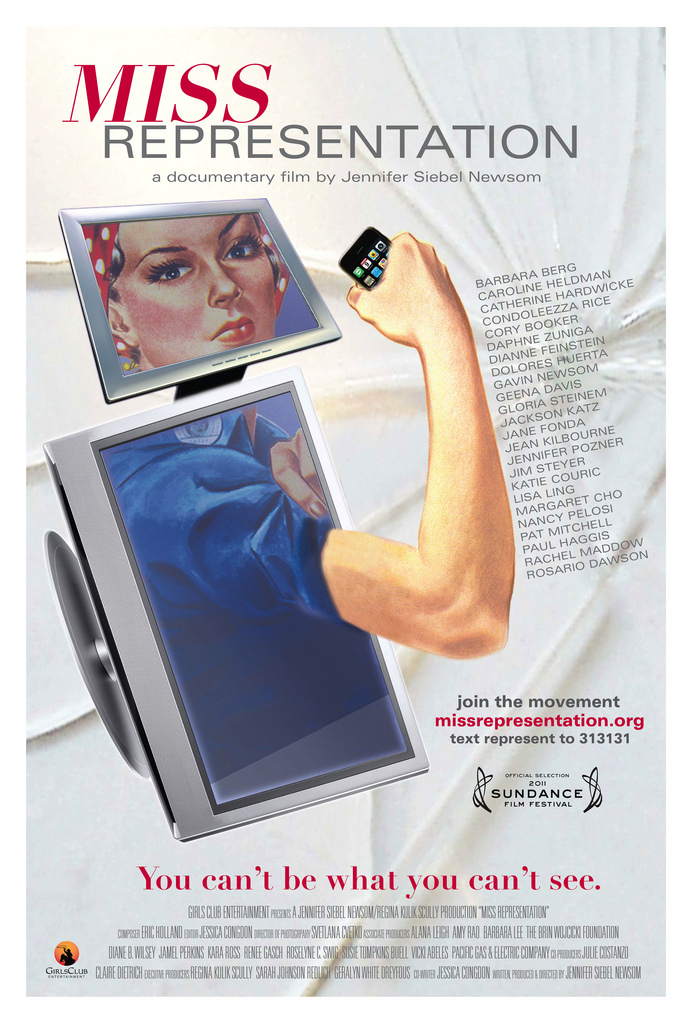
Miss_Representation_(2011)The film “Miss Representation” has put me firmly in my place on that. Because actually education is not just about exam results. So the boys don’t do as well in their GCSEs? They go on to dominate the media and society as a whole in every conceivable way.

I visited a school in my first year of teaching with a heavy boy bias, due to being flanked by several girls’ schools in the surrounding area. While there, a colleague informed me that the girls had a big problem with “self respect”: they would let boys talk to them inappropriately, and even touch them inappropriately, many of them falling in line with the expectations of women the media had of them. I sat in on a wonderful assembly, where the girls were gathered and shown this Dove ad. They were spoken to about their potential, and the role they should be looking to play in society.

In “Miss Representation”, the media’s bias is laid bare, with advertising, tabloid journalism, music videos, news broadcasting and politics all explored to mine the cultural implications for women. Watching this, I found myself thinking about the students I teach, and the amount who can become very passionate and articulate about why they should be allowed to wear make-up to school, but don’t seem to have an awareness of why they, as females, are expected to wear this make-up while men are not.

I’m wary that banging a feminist drum will alienate people, but perhaps I need to be a better role model for the students I teach. It’s really hard to get some students to buy into education, but what if they knew the world they would enter into would be one where their voices would be always judged in accordance with their looks? Might they better see the link to be made between an education and redressing the balance?

These are impressionable young minds. I’m in a privileged position to be leading them. I think it needs to get political.

Write me something I want to read

The title of this post is my rallying cry to my classes. I have a methodical, some might say overly prescriptive, outline 99% of my lessons follow: we look at some stuff, talk about it, sometimes act it out or walk around doing things with it, and then, every single time (except the time all the clocks stopped and I was vamping thinking I needed to fill lesson time) they write, in silence, for an extended period of time.

How long? If I’m honest, 10-15 minutes. I always, always plan for it to be longer. In fact, it needs to be my new week’s resolution to ensure it is for longer.

I had a year 9 class who found even 10 minutes incredibly challenging. In response, for one term, instead of reading for 10 minutes at the start of every lesson, they wrote. A diary. Which I never marked. Their writing style improved immeasurably (I admittedly use this word in its truest sense).

See, I’m not just about the reading. I am also interested in reading what they write.

Of course, we all teach children who do not have the gift of writing. But I’ve found the easiest and most often-used lines which come up with results are:

“Write me something I want to read.”

“Use a comparison I’ve never heard before.”

“Don’t tell me – show me. Make me guess.”

I do genuinely love marking. Not only because I’ve heard it is a sure-fire way of students improving, and I occasionally feel that everything else I do is subject to terms and conditions from which it is exempt. But because I love to read their work.

This was especially apparent with my last year 11 class. They were gifted writers (as well as gifted analysts and speakers). Marking their mock exam papers became a joy: looking at the dry writing task of a popular exam board, a significant number basically took the mick. The results were hilarious. I would suggest that a weekly diet of Charlie Brooker had something to do with it.

Then, when I started marking real exam papers for the real exam board, I realized how important this slogan is. I marked so many papers I sprained my hand. And the very vast majority were not filled with joy. I looked in anguish towards the pile of Year 11 books beside the papers, counting the pages until I could turn my attention to my little angels, who I knew would entertain and engage me.

English is the most subjective of beasts, but we all of us are humans. Give us something of interest, and we will look favourably on it. I’m not boasting, but I’ve read an awful lot. Yet most of my students can surprise me, for which I am daily grateful.

Beyond the curriculum: my lovely week

I’m not going to lie; I’ve had a lovely week.

It’s cathartic to moan, and I do a lot of that, and I’m also aware that the mega-enthusiasm I bring to many a table can be unbearable, particularly when my conversees have not had such a happy time.

Still, it has been a lovely week.

Aside from meeting up with my favourite teacher friends, teaching my regularly amazing and gorgeous classes and having a super invigorating department meeting with some of the other amazing teachers I am privileged to work with, a couple of lovely things happened in the English department.

First was that we began the peer mentoring programme with a trial group of 22 year 11 students. I’m going to write about this later in the process, but suffice it to say we had some lower achieving students paired with some higher achieving students, and the enthusiasm, earnestness and synergy happening in the room gave me goose-bumps. It was probably the most rewarding moment of my teaching career to date, but I’d rather not jinx its success by writing too soon.

My second treat was to teach an A-level “taster” lesson. We’ve got an incredible year 11 cohort, and would very much like them to take up English next year, preferably with ourselves. I won’t claim credit for the lesson content – that was down to my (oft-mentioned and amazing) line manager. I did stand up and deliver the thing, which is perhaps less important but means I got a lot of the credit.

The concept was a journey through literature. We began with some knowledge-mining – how much do students know about when things were written? The spectrum is astonishing; some students knew the exact year of publication of their favourite books, others thought Shakespeare wrote in the nineteenth century. We cleared up some misconceptions and started to introduce students to various periods, beginning with Old English, skipping through Chaucer, onto Spenser, Dryden, Wordsworth, Browning, T.S. Eliot and finishing with Bukowski. All short poems, or short excerpts of poems.

The students had to assign each text to a period, having first explored the key features of texts in those periods. They then did some grid work, analyzing the poems and beginning to interpret them.

I was frankly amazed at how enthusiastically the students powered through, and how focused they remained. There was a lot to take in; my trusted mentor warned me beforehand: “be careful – you want to excite them about English, not drown them.” It truly could have gone either way, and was perhaps a risky tactic to recruit students. Particularly as during their A-level course, they won’t be traversing every time period in literature, or reading every play or every seminal poem ever written, however much we would like them to.

Still, it was such fun. Without a set of Assessment Objectives, or mark schemes; without writing quotas or behaviour management (I took a “softly softly” approach, because they’d chosen to do an extra two lessons at the end of a long week, and let’s face it: they’d chosen to be there, so didn’t particularly need that much “managing”) I felt uplifted, in the way that sometimes happens when I go off on a tangent but they happen to learn something from that tangent.

It was empowering for the students, who have more of an outline of context than they had before. It was empowering for me, to look at difficult texts and posit interpretations; stretching and shrinking activities as their interest and mine dictated.

All in all, it was truly lovely, and I very much wish that all teaching of all lessons of all days of all children could be like this.

Endnote: I over-use the word lovely. My first year 8 class never let me forget it. I stand by my word choice.

Books for the more little ones

I remember during teacher training I was told that one of the greatest challenges most English teachers face is knowing which books to recommend to years 7 and 8. As grown-ups, the vast majority of us don’t read kids’ books (I have a few friends who consciously do, despite not being teachers, but I’d put down mostly to personal peculiarities).

I pursued this angle fairly half-heartedly at first, surveying the oft-taught Skellig and Holes, and finding neither riveting enough to teach. I read mainly to look for teaching books that summer.

And then I met my year 7 and 8 students. I was struck by how eager they were to read, and by how clueless I was to guide them. We would stand for ages in the library, a student asking plaintively for a “good book” and I would find myself flailing – the only books I could recommend were trapped on the forbidden “senior fiction” shelves.

Fairly quickly, I tried to remedy this, and I still make a “children’s” book part of my trio of reading: I read in turn a book on education (or for my teaching practice – I cheat lots here), a piece of fiction for grown-ups (I never cheat here), a piece of fiction for children.

Here are a few books I have recommended that students read with fair levels of success.

Patrick Ness: The Knife of Never Letting Go

knife of never letting goAn esteemed colleague of mine believes that this man’s openings are among the best in fiction: she read the opening of another of his books to her class and reluctant readers physically fought over the library’s copies.

One major drawback with this novel is its length: I have had very many students begin it, and very few finish it. Those that did seemed to greatly enjoy it, and many read the next in the series.

Ness has a phenomenal imagination and a great sense of the absurd: this book begins with the killer line: “the first thing you find out when yer dog learns to talk is that dogs don’t go nothing much to say. About anything.” Any language purists will find the informal style grating, but this is a super read for any advanced year 7 or 8 readers.

Jamila Gavin: Coram Boycoram boy

I am a huge fan of Jamila Gavin, whose books are engaging and entertaining, as well as beautifully written in a style stretching for most year 7 and 8 readers. The historical aspects of the story are dealt with clearly, meaning students can grasp the full nature of the story without needing any elucidation. Making use of the trope of intertwining stories of characters from dissimilar walks of life allows for a satisfying ending.

Helen Grant: The Vanishing of Katharina Linden

vanishing of k lThis is one of the many books I have bought on Kindle and regretted – my students are always looking for copies of it. As the title implies, this story has an other-worldly element, yet its tone is entirely realistic. There are plenty of suspenseful moments as you journey with the central character to find answers as the book goes on. 

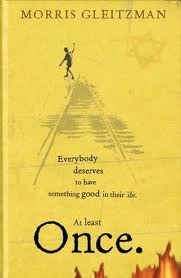
Morris Gleitzman: Once

A year 7 student recommended this book to me early on in my teaching career, and I made oncethe mistake of reading it on a Friday evening after a long week. I cried lots, and went on to make several other children cry through this novel’s recommendation. It is a much simpler and shorter account of the horrors of the holocaust that several I have encountered, but this makes this text all the more perfect for reluctant young readers.

I’m still improving my knowledge of books suitable for little ones, so I’d be very grateful for any recommendations from lovely readers!

Reading Ofsted reports

The big ‘O’ has proven to be a popular blog-post topic since probably the beginning of the organisation’s inception, so I’m not sure what my two pence will add to the conversation. Nevertheless, I found myself in a Buzzfeed-esque Ofsted loop recently, going through more and more reports (guidance as well as school reports) and a number of things struck me:

1. What does it mean to be an “outstanding” school?

My plunge into the Ofsted website began when my interest was piqued by a number of education bloggers I follow. Knowing them by reputation alone, I assumed the schools they led were outstanding. After all, they lead the community in thought, they consistently push themselves to do better, they inspire their staff, who also blog, to work hard, and they set challenging goals for all their staff and students.

I was wrong. I found many of these schools led by visionaries were “good,” in particular among those schools recently Ofsted-ed.

I then decided to look up schools local to me, as well as those local to the last borough I taught in.

I knew what I was looking for – schools which were Ofsted “Outstanding”. What made the difference? I’m not entirely sure. The wording of the “Outstanding” reports seemed strangely similar to that of the “Good” reports, even down to the recommendations for improvement.

Finally, I looked up the “Outstanding” reports of schools I personally believe not to be outstanding, from conversations with colleagues and visits. This was a waste of time, as with every high praise I remembered another teacher anecdote and scoffed a little.

2. What does it mean to be a “good” school?

I decided to look at a school I feel is as close to outstanding a school can be under the new criteria. I read the “Good” report, which was similar to many “Outstanding” reports I had recently digested. I read the report from the previous inspection. And the one before that. And the one before that. All good. Each time, the recommendations for improvement were seemingly minor, and each time subtly different. Wow, I think I’d feel a bit cheated if I was the headteacher of that school.

I also looked up schools in that school’s borough, and they were almost all “good” as well, despite being reputed to be significantly worse than this school.

Is “Good” the new 2.1 degree? As in, it can be achieved with both limited and excessive effort?

3. What’s the actual difference between good and outstanding?

I’m looking at the subject specific guidance and feeling like I’m marking controlled assessment again. What really, really is the difference between good and outstanding? It feels very elusive if I’m honest. What I would love are some concrete examples.

For example, in the subject specific guidance for English I’m not sure what the difference between the below statements is. Actually, I’m not even sure I don’t prefer the “Good” to the “Outstanding” explanation. Am I missing something?

Pupils, and particular groups of pupils are well-equipped for the next stage in their education, training or employment as a result of excellent educational experiences. (Outstanding)

Pupils and particular groups of pupils have highly positive educational experiences in English that ensure that they are well prepared for the next stage in their education, training or employment. (Good)

Then there is the giant caveat that Ofsted don’t provide a checklist – it needs to be “best fit” in the opinion of the inspector. I’d like more information on the training of Ofsted inspectors, to be reassured about their training and expectations, as I’ve definitely met some dubious ones moonlighting as consultants (as have many teachers, if Twitter is anything to go by!).

4. Does it even matter?

Reading this blog, which I found extremely shocking, I wonder more and more whether an inspection team doesn’t begin with the end in mind. Do they arrive knowing the result, having explored the data already?

I was told once that it was all about the “feel” of the school: if the kids seem happy and the staff seem motivated, that is the most sure way to the Outstanding lane. But I would say that staff are motivated and children are happy in a huge percentage of “good” schools I know of.

Increasingly I wonder: is there any need for a four point system? It’s basically a two point or fail system at the moment. Why not: good/not good? Why not, instead of awarding a seemingly random “Outstanding” accolade to a select bunch of schools who may or may not have “gamed” the system, make those schools work for it – if they genuinely are a cut above the rest, they can demonstrate this in a myriad of other ways more sensible than painting “Outstanding” on their signage, such as by supporting other schools or opening their doors to teachers from “Good” schools seeking to improve to stratospheric heights.

Because that’s the thing – I have worked in an “Outstanding” school, and definitely believe that there are many schools which are genuinely incredible schools which have much to teach. But there are enough which seem to have achieved this without the support and belief of the local, teaching or pupil community to make me question it.

Furthermore, although my last school was undoubtedly an incredible place to train and work (I adored it), we also lived under the fear of “demotion” as a result of the next impending Ofsted, and that is no way to motivate staff to do a great job day in, day out.

For extended reading, I point you to the Master of Ofsted blogs, Andrew Old, who has done more report analysis than you can shake a stick at.

ofsted outstanding

Shakespeare Biographies

I didn’t fully appreciate a good biography until after my History masters. During my undergraduate degree studying English Literature, I had leaned towards a “Practical Criticism” approach. All that other stuff was frankly a distraction for 18-22 year old me.

Indeed, the issue of “did-Shakespeare-write-those-plays-or-was-it-some-richer-bloke?” still galls me. I wrote an essay in my second year essentially screaming “DOES IT MATTER?”

And to a certain extent, I stand by that exclamation. After all, we have no uncorrupted copies of any of Shakespeare’s plays, and the extent to which they were even penned by one person is arguable.

The real benefit of biographies is really about context: a biography showing us Shakespeare’s life and the theatre scenes in the London of the 1600s is invaluable for adding that something extra, something contextual, to our reading of the plays. Also, if you’re a teacher, you probably have to teach something about who Shakespeare was. Here are some biographies of Shakespeare I have read and found useful.

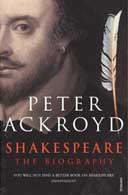
Shakespeare: the biography by Peter Ackroyd

ackroydAckroyd’s is my favourite biography, so I’d like to start here. His style is clear and his ideas concise. This biography is especially strong at linking the plays to the life; bringing us to see the precise links between an Elizabethan man and the drama he was likely to produce.

Early on, for example, Ackroyd brings to us the somewhat surprising truth of the decline of the “old values” and the feudal system of patronage, and the rise of a new, specifically secular, economy: this is by no means a world devoid of the Church, but we need to recognise how in flux the institution was; Ackroyd remarks: “what happens when old concepts of faith and authority are usurped, when old ties of patronage and obligation are sundered? It is the transition from Lear to Goneril and Regan, from Duncan to Macbeth.”

While acknowledging prior theatrical history, Ackroyd argues that Shakespeare also “transcended” it: he speaks of “the Vice” character, a stock medieval “anybody” being newly realised in Richard III; and indeed we can see this figure evolve to the Edgar and Iago of later brilliance. Though Ackroyd also contends that: “in the most sublime reaches of Shakespeare’s art there is no morality at all. There is only the soaring human will in consort with the imagination.”

The chapters in this tome are pleasingly brief, which, like all uses of short chapters, aids understanding and can allow this book to be read over a longer period of time.

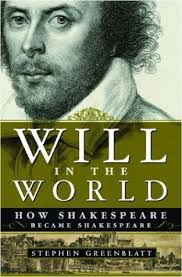
Will in the World by Stephen Greenblatt

Greenblatt is famous among critics as being foundational in the idea of New Historicism: the greenblattnotion that the text is not only affected by its historical context, but that the text also creates and has an impact on that historical context. It has been noted that the theatre was seen as secondary, unimportant, when Shakespeare began writing; only with his career was it seen as something worthy of being printed and esteemed: a clear example of a writer’s impact on his time.

Greenblatt writes in a warm and welcoming style; he is far from the idea many of us have of an esteemed critic. His book takes a thematic, rather than strictly chronological, look at the life and work of his subject. Greenblatt is also rather more willing to include hearsay and unsubstantiated truths, all with massive caveats, which makes for fun reading. In these nuggets there is always a coral of truth: these legends tell us something about what people wanted to believe of their bard. In addition, this biography is the stronger for its assumptions: we know so very little we can be sure of about Shakespeare, there is some necessity to look at the evidence and make a very good guess: for example, taking a truth from an absence, Greenblatt muses: “from this supremely eloquent man, there have been found no love letters to Anne [Hathaway, his wife], no signs of shared joy or grief, no words of advice, not even any financial transactions.”

This freedom allows Greenblatt to imagine many tenuous considerations: how much did Shakespeare revise his work? Did he in fact hate his wife? Did he have a physical affair with the man to whom the sonnets are addressed? Greenblatt’s long affiliation with the Renaissance allows this freedom; he almost inhabits the world himself, and the result is convincing.

The Genius of Shakespeare by Jonathan Bate

bateI believe that this is the most widely read biography of Shakespeare, so perhaps it goes without exploration. Bate opens his text with an assurance that we can know nothing certainly, as well as reassuring us that, even if we did, “an Elizabethan play was a collaborative work that belonged to the theatrical company which performed it every bit as much as to the dramatist who wrote it.”

This text is especially strong in referencing other Shakespearean critics, from his contemporaries up to today, giving a marvelous overview of what “the book people” have thought about him through the ages. This is particularly strong in the chapter regarding the authorship of “Shakespeare”, where we receive a concise survey of that which scholars have posited.

Bate’s major approach is as a pragmatist: he refuses to romaticise Shakespeare, and instead explores the economic and situational prerogatives which drove him to create.

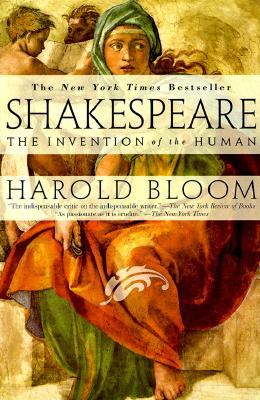
Shakespeare: the invention of the human by Harold Bloom

Is this, or is this not, the best title of a book ever? Ok – I’m cheating, it’s not a biography. I’m bloomsitting here with three remaining Shakespeare biographies thinking… Hm. I’m not sure how great these are. This, on the other hand, I am willing to recommend.

Harold Bloom, if you aren’t in the know, is a monumentally prolific literary critic. He write books on vast swathes of literature, seemingly refusing to specialise, if you go by his printed output. He writes about almost everything. You’ve probably heard of “the anxiety of influence” – that was Bloom’s baby.

This text is superlative among Shakespeare criticism for its ease of reading and its enormous scope. Bloom takes every single play and writes about it, linking each to Shakespeare’s presumed life and known context. Teachers: this is one book which will serve you all your days.

This is very much, though, Bloom’s book; he doesn’t like to reference other critics. Part of its charm comes from the bombast with which he writes, although I can see how readers might love or hate it.

And so I round up my little trip around some Shakespeare biographies, having enjoyed feeling like a student again, if only for a brief moment.

What I want from an education in English

I write to think. It has always been this way.

It’s coming to the end of what most teachers would say is the longest term; certainly any NQTs and Teach Firsters out there will find this term longer than any other. Students are tired. Staff are tired. Things that would leave you unruffled in September, and even November, now cause undue stress and anxiety. You can’t smooth over disagreements with cheeriness. There is no cheer left.

These are the dark days of teaching, both literally and metaphorically. We wake up in the dark, get into school in the dark, leave school when it is dark, walk down dark roads to dark homes. I have a tendency toward very painful headaches at this point in term, normally on Monday and Friday evenings, so there are several times when I sit in the dark. It’s a gloomy old time.

I’ve found myself this week feeling like I don’t have a vision. I don’t know where I’m going, or why. I am a product of Teach First and Teach for All’s sessions, which have shaped me, and I truly feel that without a vision I am purposeless; anchorless.

You can’t go into school every day just to pick up a paycheck. Teaching is too hard for that, too demanding, too exhausting. I’m finding I seem to know more and more people who are leaving the exhausting and frustrating world of state education for what seem to be Elysian fields of private schools: a curriculum they have control over, a trust concerning their professionalism, shorter school years and higher pay.

I’m writing to think today, and I’m trying to think out this “vision” business.

I can start with my students, because when all else fails they are my bright shiny beacon of hope. I’ll start with the students who miss a lesson and track me down to pick up the work. They brighten my day endlessly.

Because I want my students to be independent. I’ve loved Lucy Crehan’s post on Canadian schools here: our students should be encouraged and led towards this level of independence and motivation. At the moment, there are 35 students in Year 11 who are on a D or below in English. All of them could be on a C. What is missing is not intelligence, but motivation.

And then there are the students, and I usually find this out when I call home or meet parents at parents evening, who “are always talking about English.” They love it. They enjoy it.

I want my students to have joy in reading, and joy in exploring texts. Of course I want them to achieve high levels and high grades, but I definitely don’t want to drag them across the level 4 threshhold or D/C borderline kicking and screaming. I want them to drift there naturally, as the cumulative result of reading and enjoying their learning; wanting to do more and go further.

The students who bring a book to detention, and it is one I have recommended. The students I see reading while queuing outside their next lesson. Even the students who I catch reading when they should be doing their task.

If my students don’t love reading when they leave me, I will have failed. And I’ll admit that every year I fail many, many, all too many, students in this respect. It is something I need to work harder and smarter at, because too many students leave secondary school and never pick up a novel again.

What does that mean?

  • Students who are self-motivated and want to succeed.
  • A love of learning.
  • Education not as a means to an end, but a joyous end in itself.

There is another aspect of this vision business, which I alluded to earlier. It is contentious among my friends and colleagues. All children, they contend, deserve an amazing education. I have to agree.

But I also have to work with students who might not have the advantages that others grow up with. Because it is a cruel and unusual thing that students will go further the better off their parents are. It is undeniably wrong that the achievement gap between the haves and the have-nots is refusing to close. I adored Stuart Lock’s post about why he wants to be a head; I would echo all his sentiments, which are too eloquently put to summarise here.

Education needs to become the equalizer. For all the talk about what a teacher is not, and the reasonable expectations of a human doing a job and having some kind of life, I accept that there are times when teachers have to play the social worker, the state, the parent even. We have to pick up the responsibility, even if it is not our responsibility, because it is the right thing to do.

There are children who will leave school without qualifications, who have despised their education, who will never fulfill their potential. And I will work every day to make sure that that doesn’t happen for one less child.

It’s definitely not a vision yet, what I have written above. I write to think, and I am grateful you have read.