The “Summer Dip”: an assembly

The “Summer Dip”, or “Summer Slide”, is the term we use to refer to learning lost over the long summer break. It is a phenomenon almost every teacher, and many a parent, will be well aware of; however I wondered if students knew? Furthermore, I wondered if they knew that they could “beat the dip” by reading a few books? I decided to do some research, and from that research grew last week’s assemblies.

I began the assembly by re-capping my previous assembly on reading, boiling those ideas down to three points:

  1. Every book will teach you something – whether it is something about the world you live in, about you as a person, or just about the kind of books you do or don’t enjoy;
  2. Books give you access to emotions and experiences you’ve never had – so, you can go places you’ve never gone, and be people you’ll never be;
  3. Reading makes you smarter.

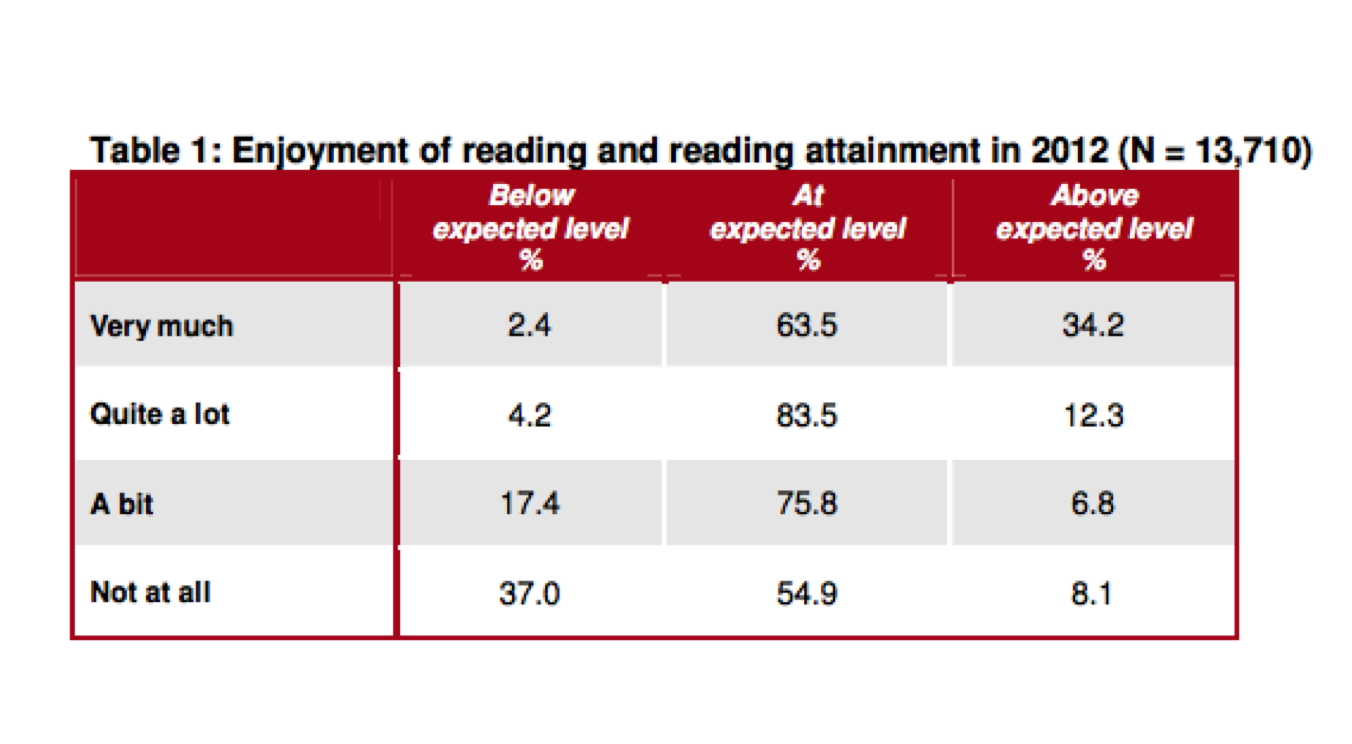
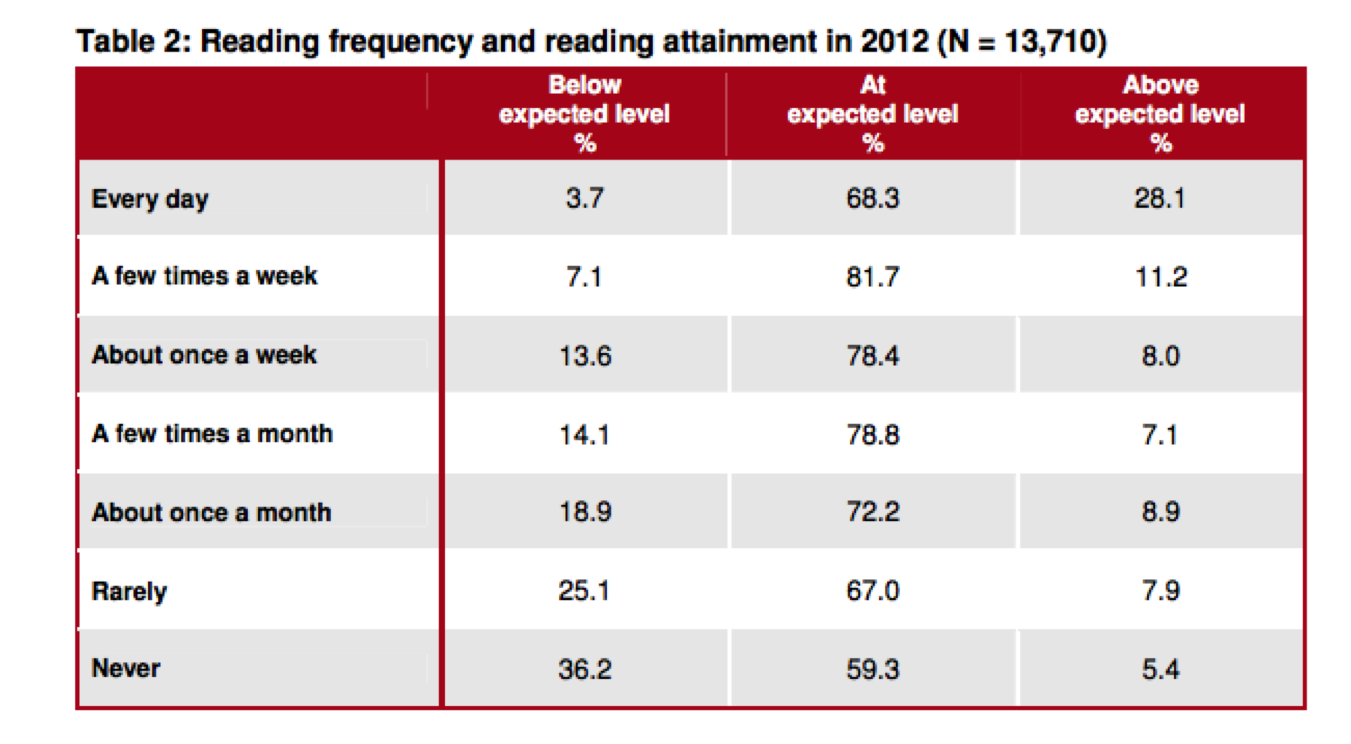
I recapped the National Literacy Trust’s table with the cold hard figures: of students who read every day, nearly a third were achieving above their expected little. Of students who never read, over a third were achieving below their expected level.

I then introduced the idea of the “Summer Dip”. Admittedly, most of my research is American-based, and so imagines a summer holiday which is, inconceivably I know, even longer than British schools’ ludicrously long holiday (6 weeks for any international readers out there). That said, I think obfuscating this worked well, as clearly students do lose learning over the summer, and my message wouldn’t have been as useful if I’d caveat-ed every statement to year 7 with “however, we should allow for the data being slightly unreliable because…” I find assemblies deal better in certainties.

That said, this document does uphold the evidence that children make the most progress during the Summer term, and the least in the Autumn term. Terrifyingly, it also tells us that “In reading, nearly 40% of children go backwards between the end of year 6 and the beginning of year 7,” though this of course may well be a by-product of the expectations of teachers and modes of assessment changing between primary and secondary school. Nonetheless, anecdotal evidence tell us that, for most teachers, the student who is comfortably on a 5c at the end of the year does not usually begin the following year on a level 5. The scary American research puts the learning lost for students at between 2.5 and 3 months. Obviously, I opted for the latter, asking students to imagine that everything learned between April and July would just… Disappear. Terrified faces looked back at me.

Now came the kicker: research, albeit research conducted in the states, has shown that reading as few as four books over the course of the summer can help to prevent the dreaded slide. Four books! Some students looked genuinely relieved, and I iterated my understanding that many of the students before me would read far more than four books over the course of the summer.

But how? I showed them a map of the libraries, and shared the link to their opening hours. I explained that for building your own library (I think I put it: “for books you can take home with you forever, and hug them and love them”), the Oxfam bookshop nearest us sold second hand books for only £2.50 each; and the (admittedly slightly evil) online seller Amazon sold books for one penny, meaning that including postage you could have a book of your own from their for £2.81.

I diverged for a couple of minutes from reading to share some ideas for staving off “achy hand syndrome” – you know, the first week back when you can’t even finish the date without it hurting (or for teachers, when the first set of books to mark takes an unreasonably long time).

But then back to reading.

I shared with students 5 of the books I’m hoping to read over the summer, which allowed me to refer to many of the reasons we choose books to read. I began with Plainsong, which a sixth former recommended to me. I moved onto The Edible Woman, which a parent governor had told me to read. I referred to Murakami’s After Dark, explaining that as someone who had never visited Japan, I loved the opportunity to walk Tokyo’s streets through Murakami’s prose. I mentioned Will Grayson, Will Grayson, as the book-du-jour my year 9s are all reading. And then poems by e.e. cummings, explaining that I need to read more poetry (and giving me the opportunity, in alluding to cummings’ peculiar views on punctuation, to share my favourite cummings quote: “since feeling is first/who pays any attention/to the syntax of things/will never wholly kiss you.”

To finish the assembly, I shared tailored recommendations for each year group for reading, which were also on a hand-out given to tutors. And for the final piece, I read the first page of one of those books to the students (some thing I have written about before and do weekly with my own classes). I will never grow used to the reverent silence of children when being read to. The power of the story is a beautiful thing.

And the results? So far, so promising. My own children bounced up to me, proudly saying they liked the assembly and would definitely be reading four books at least over the summer. I hoped as much, given they have also had me banging on about reading to them four to five times a week. What I love, though, is the students I don’t know coming to talk to me about reading. It allows me to know a much larger proportion of the student body. I even had a student say she was going to see if she could volunteer in her local library over the summer, which was especially wonderful, and another student who raced straight to the library to take out Wonder, the book I had read to year 7 from.
Summer Dip

Why study A-level English? An(other) assembly

When the Head of Sixth Form asked me to deliver an assembly to year 11 on why they should study A-level English, my first thought was one giant, panicked, bold and underlined “why?”

Why indeed? I went away and spent a couple of weeks pondering, thought of a few lame lines, and came back to admit defeat. Somewhat unadvisedly, I explained that I “had never really thought about why myself”, having myself “not thought things through and just chosen what felt right – that’s how I work.” Given that this person line manages me, admitting to my haphazard decision-making skills was probably an error.

I’m nothing if not honest. I did English Literature A-level because I had to; I was compelled to read and question; it was the only thing I loved and was any good at. No thinking needed.

Fortunately, I have a great line manager, who expertly guided me towards the light. I shared my clumsy “course outline” and “what looks good on your UCAS form” and he shook his head, saying: “what they really need is inspiration.” He referred me to this ad, suggesting that literature is about life: not the biology or the mechanics, but the human, and the emotional.

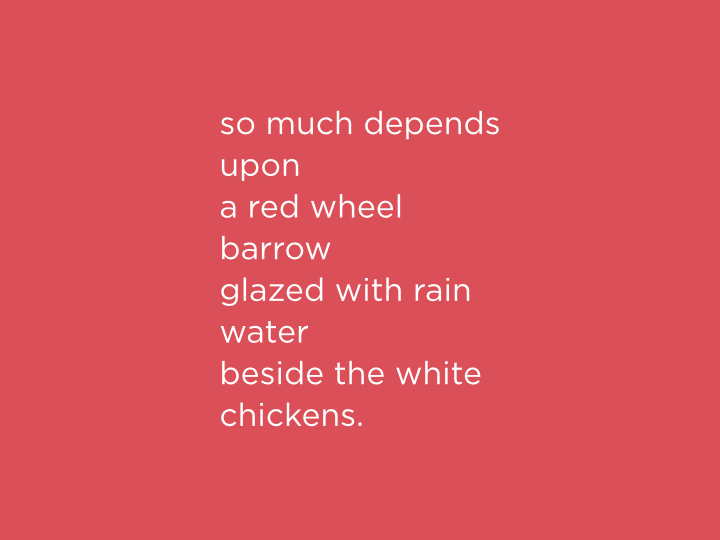
The assembly begins with the following on the screen, for students to ponder (or ignore) as they await the start of the session:

so much depends

I then showed my initial (lame) reasons for studying English Literature: universities rate it, it is more rigorous than English language, and many future careers await you. I then proceeded to explain that none of these are good reasons to choose to study Literature, drawing on the wisdom of Laura McInerney’s research showing that the idea of “facilitating subjects” is often not backed up by evidence. Despite few firm conclusions, I’d rather persuade my students to do three subjects they love and can achieve decent grades in, over any particular combination of subjects.

So, my opener for “why really study English Literature” was a fabulous quote from F. Scott Fitzgerald:

“That is part of the beauty of all literature. You discover that your longings are universal longings, that you’re not lonely and isolated from anyone. You belong.”

 We’ve all had that moment when reading when we suddenly acknowledge that our feelings, emotions and thoughts are not isolated and freak-like; we are connected to others in a tissue of shared feelings.

I then used Roald Dahl’s Matilda as a conduit for my next point (which was fairly similar to the entire assembly I blogged about last week here):

“The books transported her into new worlds and introduced her to amazing people who lived exciting lives… She travelled all over the world while sitting in her little room in an English village.”

I then returned to the initial poem, one of my favourites. I asked students whether they thought it was a poem; opinion seemed fairly split. This worked well for me. If this writing were on a toilet door, or in a fortune cookie, would they think it was a poem? Heads shook. Then I asked: what if it was in a poetry book? Confused faces.

William Carlos Williams calls this a poem. Some of you don’t call this a poem. Who matters more; the poet, or the reader? Or do neither of you matter? What about when the poem was written, or the cultural context? Was Williams trying to make a point about poetry? Or is the only aspect of importance the words themselves?

If you want answers, don’t study English Literature; there are no ticks and no crosses. But if you want to question and debate and argue and never be sure, you’re picking the right subject.

I closed the assembly by saying that if none of those arguments convinced them, I had one more: literature is beautiful. It makes you think things, and it makes you feel things. And I read Robert Frost’s “Fire and Ice.” This is actually one of my year 11’s favourite poems (I expressed to year 11 that I was delighted that someone other than me has a favourite poem, only to have another come up to me afterwards and exclaim somewhat angrily: “Miss, I have a favourite poem too!”), which is partly why I chose it. It is also a wonderfully complex piece of word mastery that even the science teacher I practiced saying it to minutes before the assembly began could appreciate its clever intricacies (I’m not saying scientists aren’t capably of being poets. But it’s good to chase cross-curricular opinions and attitudes).

I then showed my initial (lame) reasons for studying English Literature: universities rate it, it is more rigorous than English language, and many future careers await you. I then proceeded to explain that none of these are good reasons to choose to study Literature, drawing on the wisdom of Laura McInerney’s research showing that the idea of “facilitating subjects” is often not backed up by evidence. Despite few firm conclusions, I’d rather persuade my students to do three subjects they love and can achieve decent grades in, over any particular combination of subjects.

So, my opener for “why really study English Literature” was a fabulous quote from F. Scott Fitzgerald:

“That is part of the beauty of all literature. You discover that your longings are universal longings, that you’re not lonely and isolated from anyone. You belong.”

 We’ve all had that moment when reading when we suddenly acknowledge that our feelings, emotions and thoughts are not isolated and freak-like; we are connected to others in a tissue of shared feelings.

I then used Roald Dahl’s Matilda as a conduit for my next point (which was fairly similar to the entire assembly I blogged about last week here):

“The books transported her into new worlds and introduced her to amazing people who lived exciting lives… She travelled all over the world while sitting in her little room in an English village.”

I then returned to the initial poem, one of my favourites. I asked students whether they thought it was a poem; opinion seemed fairly split. This worked well for me. If this writing were on a toilet door, or in a fortune cookie, would they think it was a poem? Heads shook. Then I asked: what if it was in a poetry book? Confused faces.

William Carlos Williams calls this a poem. Some of you don’t call this a poem. Who matters more; the poet, or the reader? Or do neither of you matter? What about when the poem was written, or the cultural context? Was Williams trying to make a point about poetry? Or is the only aspect of importance the words themselves?

If you want answers, don’t study English Literature; there are no ticks and no crosses. But if you want to question and debate and argue and never be sure, you’re picking the right subject.

I closed the assembly by saying that if none of those arguments convinced them, I had one more: literature is beautiful. It makes you think things, and it makes you feel things. And I read Robert Frost’s “Fire and Ice.” This is actually one of my year 11’s favourite poems (I expressed to year 11 that I was delighted that someone other than me has a favourite poem, only to have another come up to me afterwards and exclaim somewhat angrily: “Miss, I have a favourite poem too!”), which is partly why I chose it. It is also a wonderfully complex piece of word mastery that even the science teacher I practiced saying it to minutes before the assembly began could appreciate its clever intricacies (I’m not saying scientists aren’t capably of being poets. But it’s good to chase cross-curricular opinions and attitudes).

Some say the world will end in fire,
Some say in ice.
From what I’ve tasted of desire
I hold with those who favor fire.
But if it had to perish twice,
I think I know enough of hate
To say that for destruction ice
Is also great
And would suffice.

PP Arial Why Study English Literartue

Why students should read more: an assembly

Last Thursday was “World Book Day.” As Head of English and self-proclaimed “reader”, it was my responsibility to be all over it.

I really wasn’t.

I’ve been shamed by looking at the amazing things schools did on Twitter, and I have no excuses other than: 1. There’s absolutely no way I am dressing up as a book character and therefore I can’t really mandate other people to, and 2. It took me by surprise.

I feel like September was about fifteen minutes ago, when I started the year thinking about all the wonderful and exciting things I was going to implement in my department to do with reading. In our Middle Leaders CPD, I chose encouraging reading in the school as my project, and in November when I touched base with the CPD leader she gave me some inspiring ideas for this World Book Day thing and I became really excited about it.

And then, all of a sudden, it was next week and I had to give out some tokens; oh, and could you do an assembly?

Realising I had entirely missed the World Book Day boat, I tried to pull together the best assembly of my life (not hard – I have delivered precisely one assembly, albeit delivered four times).

The assembly begins with this image, which I stole shamelessly from Tessa Matthews, for students to glance at during the time they file into their seats.

tessa reading

I began by introducing myself, and this has proved to be a valuable aspect – I really ought to have done an assembly sooner, as the number of students who asked me what happened to the previous Head of English and why did I steal his job (he has been promoted to Deputy Head) has been incredible. Even some of my own students came up to me later that week asking: “are you really the Head of English?” which I felt was a bit of a title-fail on my part.

I then said that my opening gambit was that every book will teach you something, and I reeled off a variety of lessons I had learned from books. These were: amazing vocabulary from Woolf’s Orlando, about the Napoleonic Wars in War and Peace, how it feels to lose someone you love from Looking for Alaska and form Lord of the Rings that I don’t like that kind of book – but that’s ok, because you won’t like every book, you just have to read them all to find that out!

The initial image was then shown again, and I explained that it makes me think of all the things I don’t know, and all the things I haven’t done. I then listed some of the things I haven’t done:

  • Been to California
  • Lived in the Victorian era
  • Married a prince
  • Been elected to office

and explained that, through reading (The Grapes of Wrath, Middlemarch, Grimm’s Fairy Tales, The Audacity of Hope) I could experience all of these aspects, even if I will never experience some of them in reality.

For what I don’t know, I showed a slide with just an ellipsis, and waxed lyrical on how we don’t know what we don’t know, complete with Socrates’ famous quote.

I segued from this to say that it wasn’t only “really cool English teachers who love to read”, but that people slightly more famous than us also do. I used three examples, all of whom were white and male (and two dead), thus undercutting my own preference for an inclusive representation in all aspects of life – in my defence, I made the assembly at high speed. I spoke about Steve Jobs, who loved William Blake; Phil Knight (founder of Nike) who has a library in his house and makes his guests take their shoes off before entering (books before shoes!) and Winston Churchill, who accomplished many great political things but has a Nobel Prize for Literature.

Perhaps the most powerful part of the assembly came when I used Maths to back up my arguments – our kids seemed to love the facts and figures. I showed the following charts from the National Literacy Trust and talked the students through what they were showing – the more you read, and the more you love reading, the more you will achieve:

table 1

table 2

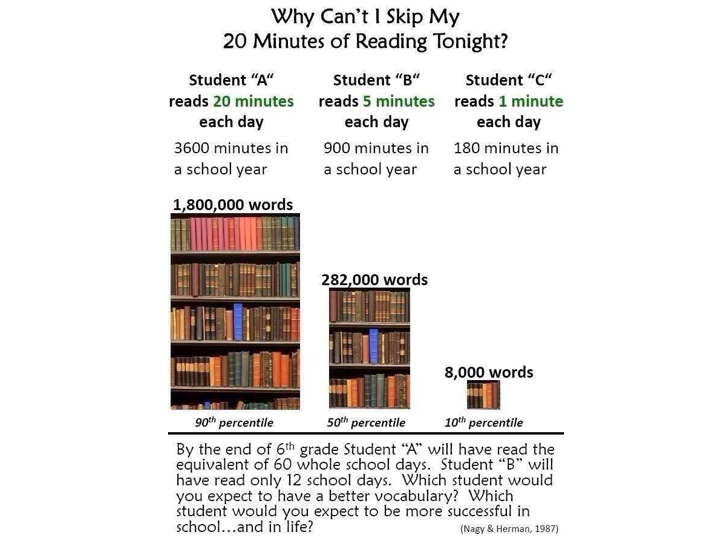
I also stole this image from someone on Twitter, but now don’t know who to thank:

why can't i skip

This image had a massive impact, and I enjoyed saying “one million eight hundred thousand words” about seven times in the course of the assembly.

All of which led to my final argument: the more you read, and if you enjoy reading, and the more you read great books, you will be smarter, happier and more successful.

I’ve had a lovely response to this assembly, including some warming comments from staff members. The best outcome is undeniably the number of students who I’ve not had any dealings with, coming up to me in corridors or in the lunch hall and telling me what they have read, what they would recommend to me, or asking for a book recommendation.

All in all, World Book Day came and went and I hang my head in shame; but I hope that my message of reading will live on regardless. Now: to plan next year’s reading assemblies!

Reading assembly

The Book Whisperer

Before I took on the post of Head of English at my school, I knew that the main thing I needed to do was get children reading for pleasure. Six weeks in, when mock Ofsted came into our department, that was one of very few recommendations made for our improvement: get children reading for pleasure.

So, why haven’t I?

Partly it is because starting at a new school, in particular in a new role, is so exhaustingly difficult it’s hard to move beyond fire-fighting. And partly because every mistake I have made so far (and believe me, there have been many) has been linked to my tendency to make decisions too quickly. This is something I want to get right. I am taking my time.

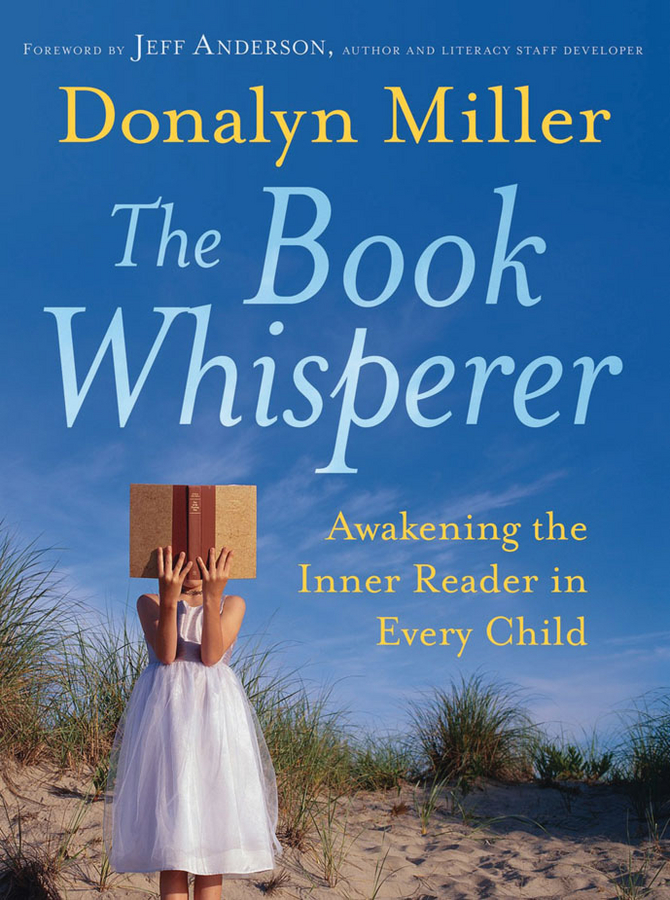
Actually, I felt as if I’d almost cracked it when I read Donalyn Miller’s The Book Whisperer about a week ago, and then I had to do some more thinking. The subtitle is “Awakening the inner reader in every child”, so I knew before I opened it that I would love it.

It is, without a doubt, inspiring, in the vein of Rafe Esquith and KIPP stories from the US. Teachers going above and beyond, but also around and in a peculiar swirly motion we’re not sure will work – but, yes, it does.

Miller’s initial prompting to decide her students should read forty books in an academic year is not grounded in evidence based research, but rather a moral certitude that this stuff if good for them. She glosses over some radically improved test results, but doesn’t make a song and dance about the improvement in the data – that’s not what this is about. Miller wants her children to be readers. And I would guess around 100% of English teachers want the same for their students; not to mention parents.

The problem is: how do we get there? It’s fair to say that the curriculum in the UK, while far from perfect, is a very far cry from the mish-mash of methods going on in American classrooms, where many teachers (if you go by the popular education literature) seem to be able to not only set what they are teaching but also decide how it is assessed. There are few schools I have visited that would allow teachers to go ahead and do what they like in the sanctuary of their classrooms.

Miller lets her students start from where they are, reading what they like. Through careful use of feedback, including surveys, she nudges them towards ever harder and more challenging tomes which will suit their interests. She doesn’t seem to ask them to write analytical essays on these texts, however, it is all about the mighty book review.

This is fine, perhaps, at KS2; I am finding it hard to see how such an approach would work, or is in fact right, at KS3 and beyond. Yes, I want my children to be readers, but more than that they need to be literary critics. Engaging with literature critically is a great joy, and no amount of reading can shake my belief in that.

That said, Miller has given me so much food for thought I cannot but recommend this book for English teachers.

Among ideas she has prompted are:

  • How much class time should I set aside for personal reading?
  • How should this change between years?
  • How far should I try to influence or control student choice of reading material?
  • Should I see reading a class text as something different from private reading?

I’ve written before about teaching Dickens to Year 7 (here). That first term was blissful, but we didn’t study full texts. This term, “A Christmas Carol” is markedly harder. The students are enjoying it, but if I’m honest mine aren’t really getting it. I mean, they understand the words, but there isn’t the time for that understanding and that critical evaluation, unless I want us to use the entire academic year to read the thing properly. Year 7 read slowly. Therein lies the rub.

A fabulous colleague of mine has come up with a lovely compromise, and I’d appreciate any thoughts English teachers have: give them the text, give them two or three weeks. During those lessons they read. During their homework for those weeks, they read. They read the entire text. We perhaps do some kind of writing or literacy activity one in every four lessons, to catch those who really do need to spend time on writing skills. But then, after they have read, we go back and select passages, and teach the critical and analytical skills then.

I feel like in not allowing students to just read, I’m pretty much wasting their time in a novel-teaching unit. But I’d be delighted to hear what other schools do.

To conclude, The Book Whisperer is inspiring and thought provoking, and not completely right. Well worth a read.

book whisperer

What do I do with the scary smart ones?

A member of SLT I greatly admire told me recently “I don’t like labels.” I think I had forgotten you were allowed to say that in a school. We have so very many labels for our sausages (another member of SLT described the kiddies thus – another thing I had forgotten we were allowed to say): SEN, EAL, FSM… At what level are there just “kids in my classroom who are all a bit different”?

In our age of advanced data awareness, we are encouraged to not only differentiate, but to do so for the target groups du jour, and in many schools G&T, AG&T, or GTP (gifted and talented, able gifted and talented, gifted and talented pupils – love a good acronym, do teachers) are a box to tick. I know of one school where these students are given gold badges to wear, undeniably a source of pride for them (and a key visual clue for their teachers).

Yet I’m not convinced this helps us. I worked in one school where G&T students were a massive deal; there were countless G&T coordinators, and the provision for these chosen ones was immense. Other students, not knowing the label, would frequently complain that this cohort got to go on all the trips, for example, and that they felt excluded. I’ve used the term “chosen ones” as that is exactly what they were: teachers would identify about 10% of their class, the official guideline for the proportion of a school’s G&T population, and put them on the list, as early as year 7.

Ever after, that student was on the list. You could be added to the list, but you couldn’t be taken off the list. This kind of assumes that G&T is purely an achievement thing: if a kid is achieving at a higher level, we need to sustain that progress.

Though there are arguments that being gifted is much more than being a high achiever. I put students forward for the list who were gifted creative writers; who wrote stories in their own time which were, frankly, works of brilliance. Clearly a gift. But often their achievement in term of APP box-ticking was not of the highest order.

That brings up another problem, of course; kids change. As a child, I was obsessed with dogs. Imagine, if you will, a school which taught “animals” as a subject. I’d be identified in year 5 as gifted. But by year 9, I actively hated animals. If teachers had been intervening, trying to get me to take up once more my love of furry creatures, I would not have been happy.

Of course, we don’t teach animals; we do identify kids as gifted in academic subjects that we hope they will flourish with throughout their school days. But it is worth considering that a child’s interest may well move, just as some children “struggle” in their primary school and go on to flourish in another school, and can in time be taken off the SEN register.

Once upon a time, I like to imagine (though it is probably untrue), teachers were lone rangers, seeing a smart and motivated student, and giving them a little bit extra to do or think about. In English, that meant extra books to read. I wonder if we don’t already do this without the label.

Word of mouth reaches me faster than the data is made available. Last year, I knew who I had to “look out for”: students who were very, very able indeed. I taught one of them in year 12, but she basically taught me. In the most incredibly polite way, I would make a statement, she would frown a tiny bit, put her hand up and say “but miss…” and destroy my argument. It was an incredible blessing to have such a child in my classroom, but how do you teach such a child?

Luckily, I remembered that I had an English degree. I went back to the days of the Friday 9am “Critical and Cultural Theory” lecture of first year, and found the anthology of critical theory I had done battle with for my four year English degree. I lent it to the student, and she devoured it, quoting essays from it in her coursework. I felt cruel asking for it back when I left.

I have written before on making book lists for students, and in a mixed ability classroom I do think it is worth spending time, perhaps on a cohort-level, talking to high-achieving, highly motivated students about reading particular books. I have made separate reading lists for these students, because I want to make sure they are being challenged when they read, and engaged and interested. (I’ve pasted these below, and before anyone tells me I have duplicated books across year groups, I will say I have duplicated books – I’ve included the whole list for each year group lest anyone be about to reinvent the wheel and find the below useful.) I also think you can never underestimate the importance of “having a chat” in schools, whatever the group of students you choose to focus on.

Sure, some of these students will go on to choose Maths, or become doctors. But while they are interested, we can give them something to chew on. And that is something you can do with the scary smart ones.

Year 7 Extension Reading List

  • John Green: The Fault in Our Stars
  • A girl suffering from cancer meets a boy… Very romantic.
  • Helen Grant: The Vanishing of Katharina Linden
  • An adventure story and one of friendship – it will intrigue you.
  • Anne Cassidy: Looking for JJ
  • An interesting look at psychology and forgiveness.
  • Marcus Sedgewick: Revolver
  • Step into a different world and time for a book about a revolver.
  • Jostein Gaarder: Sophie’s World
  • Kids are smarter than adults – this is the way this book opens! Like to think deeply? This is the book for you!
  • Charles Dickens: Oliver Twist
  • Dickens’ orphan story is epic and full of twists and turns.
  • George Eliot: Silas Marner
  • Explore a small village and a man who loves his pot of gold.
  • Dodie Smith: I Capture the Castle
  • Romantic; a book which is also about sisters.
  • Mark Haddon: The Curious Incident of the Dog in the Nighttime
  • Told by an autistic boy, extremely funny too!
  • Marcus Zusak: The Book Thief
  • An imaginative and moving account exploring life in World War 2.
  • Dave Eggers: What is the What
  • One man’s struggle to escape the civil war in Sudan.
  • Harper Lee: To Kill a Mockingbird
  • Racism, civil rights and a very likeable narrator.
  • Philip Pullman: Northern Lights
  • Fantasy; Pullman creates a completely new world.
  • Frederik Douglass: Narrative of the life of Frederick Douglass, an American Slave
  • Douglass escaped slavery, taught himself to read and write and told the world about what happened.
  • Lewis Carroll: Alice’s Adventures in Wonderland
  • A girl falls down a rabbit hole and discovers a whole new world.
  • Louisa May Alcott: Little Women
  • One family and many sisters.
  • John Steinbeck: The Pearl
  • Boy dives for pearl… But this book is about so much more.

Year 8 Extension Reading List

  • Jostein Gaarder: Sophie’s World
  • Kids are smarter than adults – this is the way this book opens! Like to think deeply? This is the book for you!
  • Charles Dickens: Oliver Twist
  • Dickens’ orphan story is epic and full of twists and turns.
  • George Eliot: Silas Marner
  • Explore a small village and a man who loves his pot of gold.
  • Dodie Smith: I Capture the Castle
  • Romantic; a book which is also about sisters.
  • Mark Haddon: The Curious Incident of the Dog in the Nighttime
  • Told by an autistic boy, extremely funny too!
  • Marcus Zusak: The Book Thief
  • An imaginative and moving account exploring life in World War 2.
  • Dave Eggers: What is the What
  • One man’s struggle to escape the civil war in Sudan.
  • Harper Lee: To Kill a Mockingbird
  • Racism, civil rights and a very likeable narrator.
  • Philip Pullman: Northern Lights
  • Fantasy; Pullman creates a completely new world.
  • Frederik Douglass: Narrative of the life of Frederick Douglass, an American Slave
  • Douglass escaped slavery, taught himself to read and write and told the world about what happened.
  • Lewis Carroll: Alice’s Adventures in Wonderland
  • A girl falls down a rabbit hole and discovers a whole new world.
  • Louisa May Alcott: Little Women
  • One family and many sisters.
  • John Steinbeck: The Pearl
  • Boy dives for pearl… But this book is about so much more.
  • Angela Carter: The Magic Toyshop
  • First love, and a toyshop that is magical.
  • Kathryn Stockett: The Help
  • Detailed exploration of American “help” in a time of intense racism and segregation.
  • Bram Stoker: Dracula
  • The original vampire book.

Year 9 Extension Reading List

  • Aldous Huxley: Brave New World
  • There are no families and your life is governed by state-given drugs.
  • Jane Austen: Emma
  • Emma has the best of intentions, but her plans often go horribly awry…
  • Carson McCullers: The Heart is a Lonely Hunter
  • The inner struggles of four central characters.
  • Henri Alain-Fournier: Le Grand Meulnes
  • The seeking of a lost world and the gap between childhood and being an adult.
  • Henry James: Daisy Miller
  • Love or hate her, Daisy is a complex character who knows her own mind.
  • D.H. Lawrence: Sons and Lovers
  • Northern mining town; strange family relationships.
  • Thomas Hardy: Jude the Obscure
  • Heartbreaking story of a man trying against the odds to rise in the world.
  • Thomas Hardy: Tess of the D’Urbervilles
  • A tragedy of a beautiful woman defied by fate.
  • Jostein Gaarder: Sophie’s World
  • Kids are smarter than adults – this is the way this book opens! Like to think deeply? This is the book for you!
  • Charles Dickens: Oliver Twist
  • Dickens’ orphan story is epic and full of twists and turns.
  • George Eliot: Silas Marner
  • Explore a small village and a man who loves his pot of gold.
  • Dodie Smith: I Capture the Castle
  • Romantic; a book which is also about sisters.
  • Mark Haddon: The Curious Incident of the Dog in the Nighttime
  • Told by an autistic boy, extremely funny too!
  • Marcus Zusak: The Book Thief
  • An imaginative and moving account exploring life in World War 2.
  • Harper Lee: To Kill a Mockingbird
  • Racism, civil rights and a very likeable narrator.
  • Frederik Douglass: Narrative of the life of Frederick Douglass, an American Slave
  • Douglass escaped slavery, taught himself to read and write and told the world about what happened.
  • Lewis Carroll: Alice’s Adventures in Wonderland
  • A girl falls down a rabbit hole and discovers a whole new world.
  • Louisa May Alcott: Little Women
  • One family and many sisters.
  • John Steinbeck: The Pearl
  • Boy dives for pearl… But this book is about so much more.
  • Angela Carter: The Magic Toyshop
  • First love, and a toyshop that is magical.
  • Kathryn Stockett: The Help
  • Detailed exploration of American “help” in a time of intense racism and segregation.
  • Bram Stoker: Dracula
  • The original vampire book.

Year 10 and 11 Extension Reading List

  • Aldous Huxley: Brave New World
  • There are no families and your life is governed by state-given drugs.
  • Jane Austen: Emma
  • Emma has the best of intentions, but her plans often go horribly awry…
  • Carson McCullers: The Heart is a Lonely Hunter
  • The inner struggles of four central characters.
  • Henri Alain-Fournier: Le Grand Meulnes
  • The seeking of a lost world and the gap between childhood and being an adult.
  • Henry James: Daisy Miller
  • Love or hate her, Daisy is a complex character who knows her own mind.
  • D.H. Lawrence: Sons and Lovers
  • Northern mining town; strange family relationships.
  • Thomas Hardy: Jude the Obscure
  • Heartbreaking story of a man trying against the odds to rise in the world.
  • Thomas Hardy: Tess of the D’Urbervilles
  • A tragedy of a beautiful woman defied by fate.
  • Jostein Gaarder: Sophie’s World
  • Kids are smarter than adults – this is the way this book opens! Like to think deeply? This is the book for you!
  • Charles Dickens: Oliver Twist
  • Dickens’ orphan story is epic and full of twists and turns.
  • George Eliot: Silas Marner
  • Explore a small village and a man who loves his pot of gold.
  • Harper Lee: To Kill a Mockingbird
  • Racism, civil rights and a very likeable narrator.
  • Frederik Douglass: Narrative of the life of Frederick Douglass, an American Slave
  • Douglass escaped slavery, taught himself to read and write and told the world about what happened.
  • John Steinbeck: Grapes of Wrath
  • Like Of Mice and Men, but epic and enormous. Very helpful to read for your Literature GCSE.
  • Angela Carter: The Magic Toyshop
  • First love, and a toyshop that is magical.
  • Bram Stoker: Dracula
  • The original vampire book.
  • Ken Kesey: One Flew Over the Cuckoo’s Nest
  • A man trying to escape a jail sentence pleads insanity and winds up in an insane asylum   
  • E.M. Forster: A Room With a View
  • A young girl’s heart is awakened on a holiday in Florence
  • Sylvia Plath:  The Bell Jar
  •  Plath explores depression using the story of a young, intelligent girl
  • Fyodor Dostoyevsky: Crime and Punishment
  • A man brutally commits murder and comes to terms with it       
  • Nathaniel Hawthorne: The Scarlet Letter
  • A young woman is ostracised for having a child out of wedlock
  • F. Scott Fitzgerald: The Great Gatsby
  • A man pines after his lost love and accrues great riches in an attempt to attract her back
  • George Eliot: Middlemarch
  • An in-depth exploration of a small society which focuses on different characters, their flaws and redeeming qualities
  • Jack Kerouac: On the Road
  • Tells the story of life on the road, where the only aim is to enjoy life
  • William Faulkner: As I Lay Dying
  • A ground-breaking novel which takes place around a mother’s coffin
  • Virginia Woolf: Orlando
  • A man becomes a woman and grows older through the centuries   
  • Mary Shelley: Frankenstein
  • A scientist creates a monster – or is it less simple?
  • Charlotte Bronte: Jane Eyre
  • Life story of a young Victorian lady. Some romance, some tragedy
  • Leo Tolstoy: War and Peace
  • A novel containing everything that is in life and more
  • Truman Capote: Breakfast At Tiffany’s
  • A woman searches for an emotional home   
  • J.D.    Salinger: The Catcher in the Rye
  • A young man battles for realism in a “phoney” world
  • Oscar Wilde: The Picture of Dorian Gray
  • A vain young man has a sinister portrait painted which has surprising consequences
  • Emily Bronte: Wuthering Heights
  • An examination of the pain that comes with great love
  • Chinua Achebe: Things Fall Apart
  • A gripping study of European colonialism in Africa
  • Samuel Beckett: Waiting for Godot
  • The most philosophical comedy you will ever read
  • Arthur Miller: Death of a Salesman
  • A tragic examination of a man
  • William Shakespeare:  Othello
  • A tragedy concerning a marriage and a deceitful friend   
  • John Milton: Paradise Lost
  • Satan betrays God and is cast out of heaven
  • Walt Whitman: Song of Myself
  • What does it mean to be American? Human? Walt Whitman?

Vampire Novels and Wizards

I’ve never been an “early adopter”, as I am reminded with depressing regularity. I am often last on the bandwagon for all of life’s ingredients: when you spot me doing anything remotely trendy, you can be assured that trend is in its death throes.

I don’t recall the advent of Harry Potter. I think I first read it in 2001, 5 years after its publication, and incidentally around the time it was made into a film. I had indeed caught on very, very late.

One positive aspect of being a late adopter, though, was the presence of the other Harry Potter books. I’m not sure whether The Philosopher’s Stone and The Chamber of Secrets would never have kept me hooked; it was only the knowledge of the following books which made me persevere. I really did love the fourth book in particular, The Goblet of Fire. Everything about these books appealed to me, even in my late teens. I had always been a complete nerd, and the stories of people who were cool because they excelled at school provided some welcome escapism.

Perhaps more embarrassing is my tragically late awareness of Twilight. I have probably told people that I read the Twilight series when I knew I would be teaching in an all-girls’ school. That would be a lie.

I began reading Twilight when my boss (happily the same age as me) bought me a copy for my birthday. My boss of that time was painfully cool, and extremely intelligent – she will soon be a doctor of philosophy. She handed me the book with joyful glee, and I went home to kill an hour reading. I don’t think I even paused for a tea-break: I was entirely hooked.

At that time, I didn’t know the immense baggage that went with this book. I was also not discerning enough to spot how annoying the central character was, or how utterly unrealistic even the most “realist” parts of the narrative. Like I have said before, I’m a sucker for a story, and I ate up Twilight.

In my excitement, I purchased the other three books in the series shortly after. I was about halfway through that second book when the Twilight craze truly hit; I’m going to guess again that this was when the films began to be released. Who can say whether this affected my response, but I just didn’t enjoy any of the following books. I remember stolidly picking my way through the final installment, telling my bemused husband through gritted teeth “I just need to know what happens at the end.”

When I began teaching, I was extremely grateful to have persevered. (I was also grateful to know the words to all the High School Musicals, as well as Camp Rock. Again, something that, embarrassingly, happened in advance of teaching in a girls’ school.) In my experience, students love that you take an interest in what they love. If you show that you are willing to try reading what they like, they are that much more likely to take on your recommendations.

I will defend, perhaps in the face of popular opinion, the rights of children and adults to read books like Harry Potter and Twilight. For so many children, these cult hits function as “gateway texts”, whetting the appetite for a good story. Their sheer length, in particular of the former, gives many children the feeling of having accomplished something massive; it makes them more confident of tackling the comparatively short class texts. Students move themselves into good habits, taking time to read when they might previously have been more engaged in other activities.

Moving students onto more challenging texts is obviously something I immediately seek to do, but hell will freeze over before I ban these hated tomes from my classroom.

In praise of re-reading

I know someone who re-reads books as a habit. When I first heard this, I could barely hide my incredulity: “but why?” In my land, there are just too many books to do this. As I have stated, my aim is to read all the books. When time is short, who has time to re-read?

My immediate second thought was a jealous one. The books he read were full of clever-looking annotations, scribbles, highlights and a dialogue with himself over the re-reading cycles. My books are fairly marked themselves, but usually only with those initial notes – an underlined quote here, an asterisk or exclamation mark there, and only if I happen to have a pen and the inclination about me. Clearly, this was someone who engaged deeply with his reading. Clearly, I skate on the surface of books.

Indeed, I have read so many books that I very frequently forget the names of central characters. My conversations with people reading a book I have read invariably go like this:

“Oh I read that!”

“Really? What do you think?”

“I loved it!”

“What do you make of the [plot twist/character detail/theme/use of delicious language?”

“….”

In contrast, the books I studied at university and A-level (I am forever grateful to my 17 and 18 year old selves for buying my own “revision copies” of texts to scribble and highlight on) are a godsend when I come to teach a text. That hard “thinking work”, which I seem to find increasingly hard to do as term progresses, is already done. I can choose the quotes I want my students to analyse with ease – they are already highlighted. I can even do Ms Moran’s amazing trick: “I’ve made C-grade annotations – now, you add your A* insights”, a task a blank page on a busy lesson-planning Wednesday makes me despair at.

I’m preparing to teach some texts next year which I have read already, and I am determined to alter my wayward ways. I have re-read “An Inspector Calls”, “Waiting for Godot” and “The Yellow Wallpaper”, among others, and I have been strict with myself about making at least two annotations on every page (though, with “Inspector”, it was more like ten – either the text is thechoice for AQA Modern Texts, or I was having a brainy/non-lazy day – I’m not altogether sure). It has been so long, around ten years, since I last picked any of these texts up, that I could really enjoy this re-reading, and I definitely feel I can have a more intelligent conversation with anyone, in particular my future students, about them.

And perhaps, after all, this is the other great part of being an English teacher. Paid to read widely to recommend books to read for enjoyment; paid for reading closely to elucidate or encourage deeper readings for students. And right now, paid to read in the sun. What a life! Don’t tell the taxpayer…

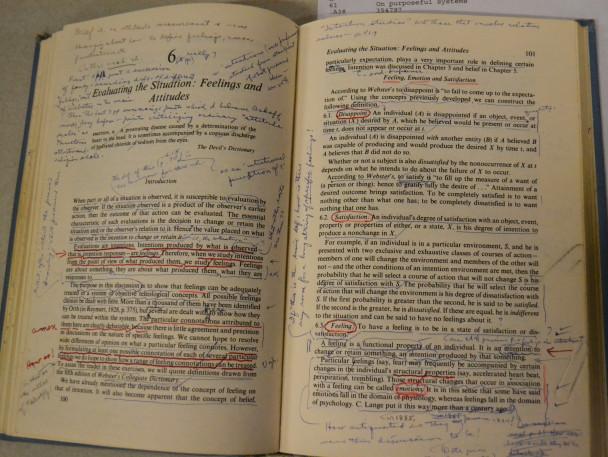
annotated text

Creating a community of readers

I have written before here about the importance of loving reading, and this post builds on what I’m trying to do with young readers.

When I was in school, I remember the sad day I told my friends: “there are no more books. I have read them all.” Child genius, you may think. In fact, what had happened was that I had no idea what to read. I had read the books which looked like I should read them, and then had no inkling where to go from there.

All that changed in year 10, with Dr Byrne. I will write about Dr Byrne at length another time, because he truly deserves all credit for anything I have thought or written about anything ever.

One day, for no reason that was clear to me at the time, he put a copy of Samuel Beckett’s Waiting for Godot on my desk. This play changed everything for me: it broke all the conventions of what I thought about drama at the time, in terms of character, unity and realism. It challenged my thinking in a way no other book had.

And the great books kept coming. When I was stuck, I only had to go to Dr Byrne and I would have a giant list of books I could be getting on with.

Due to this personal experience, from the start of my teaching career I endeavoured to make book lists for my students, usually of twenty to thirty titles, and often with a brief explanation as to why I thought that book was great.

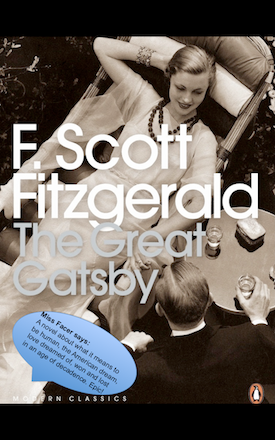
To make this more visible for my students, I picked my favourite four books every term and made a poster of the front cover and something I had said about it, like this:

Gatsby poster

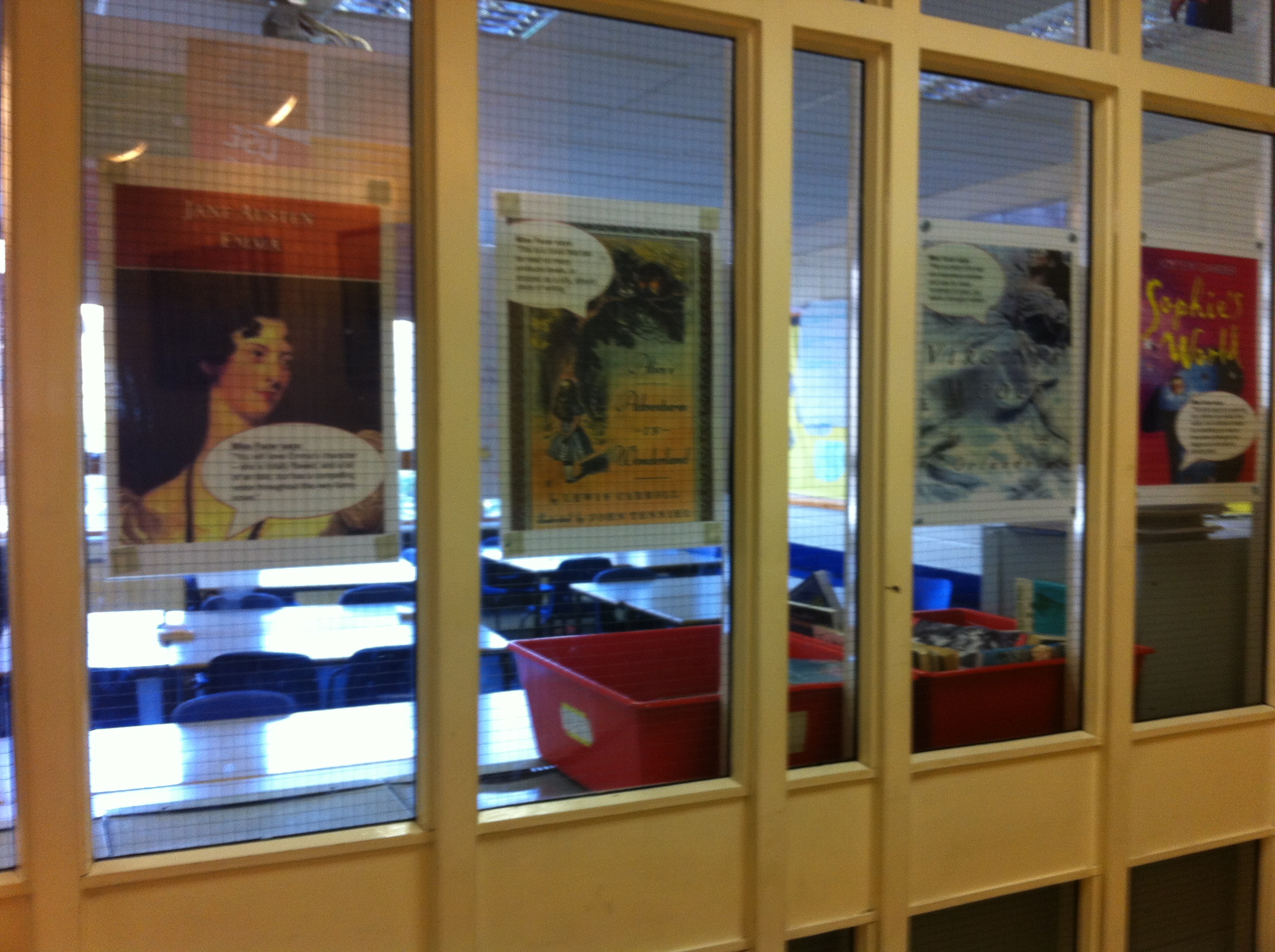
Pretty soon, I ran out of space. Here’s the corridor outside my classroom:

recommended wall

These posters prompted conversations, and, I hope, these conversations prompted reading.

On a visit to a school for a Debate Mate round, I noticed a teacher seemed to have lots of Philip Roth posters in his classroom. Loving Philip Roth, I had to investigate more. On closer inspection, it seemed these were hand-made posters, with a simple black background, which had the words “Mr… is currently reading.” I loved this idea and immediately stole it as my own. My apologies, sir.

Other teachers at my school loved it too. We put these up outside our doors, and changing them took all of two minutes. If a student or another teacher had recommended the book to read, we stuck their name on it too. This had the great side-effect of even more students recommending books for me to read.

ms is currently reading

One of the best interview tasks I have ever been given was a room of 5 delightful students who I had to consult in creating a whole-school “Reading for Enjoyment” policy. I could barely contain my excitement on being given such a task – my keenness was frankly embarrassing. These young people had some fantastic ideas, pointing out that reading sitting up wasn’t how they liked to do it – they suggested we give them an area which is comfortable, and filled with great books. They were also fond of the idea of eating and reading – they brought up the idea of giving dedicated readers free muffins when they came to read together, or even a standard school breakfast or lunch depending on the time of day. Open to abuse they might be, but both of these suggestions seem like small concessions to the reading community they could open up.

Yet the aspect these eloquent youngsters talked most about was recommendations: they wanted their teachers to recommend books to them. And I would guess that nearly all teachers, no matter what they teach, read. Making students aware of the fact that we are a community of readers can only encourage them. And if their students then want to read some Darwin or Dawkins? I’m sure that will be fine too.

i heart english

Reading Lists

I thought I would share some of my favourite reading lists with any teacher readers before the onset of the summer holidays.

I wish I could say I had a firm system for these lists. I always try to do one before a long holiday, or even a short one, and definitely one at the start of the year. My students are amazing, though; a small number will start asking me for recommendations and that is how I know it is time to wheel out another one.

I liked the “20 books you should read” format because I thought it seemed manageable. The first was originally made for a very high-achieving year 10/11 class who needed to be stretched and prepared for the rigours of A-level. I also included any books I loved at their age, or that I remember my friends loving. The sixth form list goes further, and has non-fiction texts which are critical but I think accessible.

KS4: 20 books you should definitely read:

  1. Erin Morgenstern: The Night Circus
  2. Truman Capote: Breakfast at Tiffany’s
  3. Tracy Chevalier: The Girl with a Pearl Earring
  4. Stephen Kelman: Pigeon English
  5. George Grossmith: Diary of a Nobody
  6. Vladimir Nabakov: Laughter in the Dark
  7. Emma Donaghue, Room
  8. David Nicholls, One Day
  9. Malcolm X, The Autobiography of Malcolm X
  10. Khaled Hosseini, A Thousand Splendid Suns
  11. John Irving, The World According to Garp
  12. Harper Lee, To Kill a Mockingbird
  13. Bill Bryson, Shakespeare
  14. Daphne du Maurier, My Cousin Rachel
  15. Margaret Mitchell, Gone with the Wind
  16. Charles Dickens, Great Expectations
  17. Vikram Seth, An Equal Music
  18. Richard Llewellyn, How Green was my Valley
  19. Steve Tolz, A Fraction of the Whole
  20. Richard Russo, Empire Falls

Sixth form:

20 books you should definitely read:

  1. Sebastian Faulks: Faulks on Fiction: The History of the Novel in 28 Characters
  2. Ernest Hemingway, The Sun Also Rises
  3. F. Scott Fitzgerald, Tender is the Night
  4. Colum McCann, Let the Great World Spin
  5. Oscar Wilde, The Picture of Dorian Gray
  6. Truman Capote, In Cold Blood
  7. Victor Hugo, Les Miserables
  8. Bill Bryson, Shakespeare
  9. Charles Dickens, Great Expectations
  10. Jay McInernay, Bright Lights, Big City
  11. Andrew Marr, A History of Modern Britain
  12. Haruki Murakami, Norwegian Wood
  13. Strunk and White, The Elements of Style
  14. Jane Austen, Emma
  15. Barbara Kingsolver, The Poisonwood Bible
  16. Sebastian Faulks, Human Traces
  17. Sophocles, Antigone
  18. Theodore Dreiser, Sister Carrie
  19. Virginia Woolf, Orlando
  20. George Eliot, Middlemarch

Recommended by students

It has been a long time since I delved into my favourite type of book: books that kids love. It has been a complete treat to be able to read some extremely entertaining books, on the premise that as a teacher I should probably 1) be aware of what my students enjoy reading, and 2) be able to share this knowledge with my more reluctant readers.

Second only to results day (some of us are in it for the glory, to our eternal discredit) my favourite thing about teaching is when a student comes up to me, thrusts a book into my hands and says “Miss, you need to read this!” and then I go home and absolutely love every minute of reading it.

Seriously, it doesn’t get any better than this.

I’m going to write about texts I believe students must read later; the below aren’t must-reads; rather they are vital gateways to enjoying reading in students’ spare time.

I’m going to put a caveat on this that I work in an all-girls’ school, so these books might seem a little more appropriate for your ladies than gentlemen.

So, below are some of my favourite books, in no particular order, which students have recommended, along with some ideas about who I would go on to recommend these for.

Looking for JJ

I noticed an extremely gifted year 8 student reading this in a library session, and worried it wasn’t challenging enough for her. In fact, it probably wasn’t; but the fact that it was her eighth time reading it, and that I have led a lot of more reluctant readers to it since, allows me to forgive her just this once.

Cassidy’s novel has a variety of rubber stamps from the book industry: it was shortlisted for the Carnegie Medal and the Whitbread Book Award and won the Booktrust Teenage Prize.

It’s a great story involving murder, creatively told. Your year 7 and 8 students will love it; your reluctant year 9s will definitely get something out of it.

The Time Traveler’s Wife

Possibly one of my favourite books ever, and one of my most successful re-recommends. This is one of those books I staggered into school on four hours sleep for because I just did not know when to stop.

This was first recommended to me by one of my most widely read year 10 students, and now serendipity has made someone lose their library copy of it in my room. I could give it back, but I have some repeat-offenders who have taken to it in detention. I’m a greater-good kind of person.

The structure of this novel is its main selling point: incredibly creative narrative jumping all through time, as the title would suggest. At its heart, though, this is a romantic tale full of slush, not to mention some great vocabulary. I’d probably recommend for year 9 and above.

Major warning: there is a film version. I tend to find this makes some of my students immediately discount reading the book as they can just see the film. I’d hold off telling students it even exists.

Life on the Refrigerator Door

This book was recommended to me last year by an amazing year 7 student, who brought me dozens of books to read on an almost weekly basis. This was definitely my favourite. An undeniably easy read, it is certainly one for our non-readers to whet their appetite for reading. Extremely short and told in the form of notes on a fridge between a mother and daughter, this explores relationships and family tragedies convincingly. Students love the note aspect, especially how they are presented (often pictorially).

I’d recommend to Key Stage 3 reluctant readers; or any Key Stage 3 student before the holidays – they can read something easier if they also take out a Dickens. Them’s the rules.

The Sky is Everywhere

My year 9 tutees are my best book recommenders. I’ve taught them since year 7 so it has been a long time in the making, but when I’m stuck for something to read I sneak a bit of tutor time to pick their brains. One of the Beliebers (who has so far recommended about 7 excellent books for me) told me to read this, and I really did love it. Another one of those mushy romantic stories – they do love them so – this one also explores ideas of bereavement. Gorgeously written, and again some nice presentation for students needing the safety of images. Not to down-grade it – there’s a lot of words here too. I think year 7 and 8 could read it safely, although some of its themes might be a little boundary-pushing; this one comes into its own for year 9 reluctants.

I’ll definitely be revisiting this topic, not least because I’m always reading something a child has thrust onto my desk in the English office. Sometimes I truly don’t know what I’d read without my students.