Too much fun

Perhaps it is the people whose work I encounter, but I feel recently as if, in general, the advice out there for teachers right now is: don’t have too much fun. It’s all about rigorous learning. And to a certain extent, I agree: children are in school to learn; we are educators, not entertainers, and if you plan a lesson to be “fun”, chances are students will leave having not learned much. I also know that each teacher is different, and has a different style, and that variety is part of the patternless pattern of all aspects of life.

But I also know I am guilty, deeply guilty, for having far too much fun. Clearing out my phone, I found a note written on 11th August 2013 called “new school year resolutions”. Many of these were regarding having an actual life beyond school, but the last reads: “improve rigour of learning – set the tone.”

Anyone who has met me will be aware that 1. I have zero capability of poker face and 2. I smile too much. Neither of these aspects bode well for a teacher. Somewhere along the line, I have learned to do an impression of an angry face, which is moderately effective. (Though quite a few of my students find this face hilarious, so I’m not sure it ever quite has the desired effect.)

You see, selfishly and stupidly, I still can’t quite get over my luck. Every single day I get to turn up to a place filled with wonderful colleagues, a desired level of challenge, a sense of academics, books, and children who really, really want to learn almost all the time. When I see students lining up for a lesson, even if I’ve had a terrible morning or a horrible meeting, I can’t help but grin. They’re so full of energy and hope, they give me energy and hope.

This might sound lovely to any non-teachers reading this, but too often this happiness bubbles over into fun. I’m not saying I plan lessons to entertain, I just get a little over-excited when teaching. I make only a few silly jokes and do a great impression of a teacher most of the time, but the tone of most of my lessons is a bit like a very controlled reading party.

Don’t get me wrong, I teach from the front for some time every lesson, and I make them write on their own for a quarter of the lesson. But in between that, my students can be trusted to discuss and try out and push limits and (crucially) stay on task. I still believe discussion is a necessary precursor to writing analytically. This discussion can be framed and guided; the activities around the texts can be varied and can occasionally involve a creative twist. These activities must be linked to the learning objective and the final desired outcome, but equally they must be engaging, or no-one will do them, and no-one will learn anything, and no good will come.

I have bad days and sad days, and days when it’s just not working, when I find myself giving too many warnings and even sending students out. I know I am the difference in the room, and with my usual approach that student would be sitting down doing the work. I know that extra effort on my part can make the difference, but it’s not easy to consistently manage behaviour in a completely positive way in 10 out of 10 lessons (though very many teachers do it), especially at the end of a term when you are tired and they are tired. After all, the stuff of learning is hard, and teachers and students alike both have bad, sad days.

So, where is this going? I’m not sure how much I agree with my August self. I have found that when I “set the tone” in this rigorous way, it tends to translate into overly didactic, overly controlled and overly sombre experience. I’m being someone else, and I’m not a good enough actor for my students to trust that person. I’ve always found that students respond to reality: they need to know the person you present to them is who you really are (not the same thing as knowing anything about your private, non-teacher life). And what I hesitate to add for fear of hubris is that my students do really well; often far beyond what is expected of them. If what I did wasn’t working, I would change it, immediately, despite my personal reservations and predilection for having a fun time.

Perhaps in the past too much emphasis has been placed on fun. But a lesson devoid of joy doesn’t work for me; it doesn’t make teaching a career I want to be in and it doesn’t make my students learn.
Give me that patience, patience I need (or: exams, exams, exams)

Having been the beneficiary of kind timetabling heretofore, the exam season has never affected me in any way greater than my singular class and my worries about those 25-or-so children. Being at the helm of a department with exams across two key stages and three subjects has opened my eyes to the reality of exams – never before in my life have so many forms had to be filled in, in so little time, to so little purpose. My life is coursework administration and exam preparation.

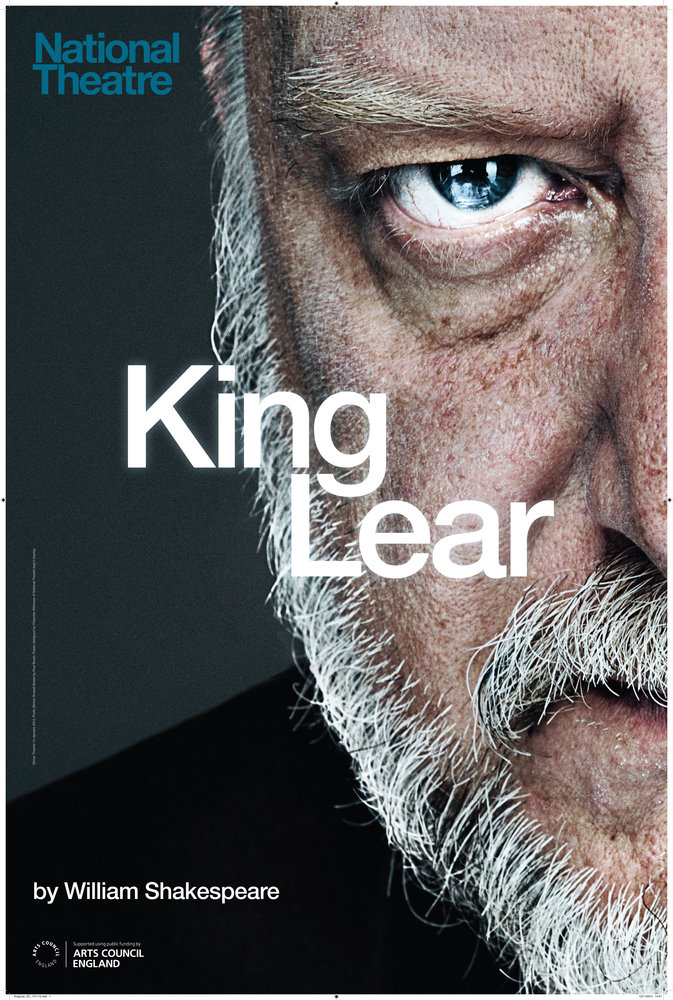
I think I’m one of the last people I know to have seen the much-acclaimed production of King Lear at the National Theatre. Certainly, in the early days of the production, numerous friends were lauding it. I nodded noncommittally, and half-heartedly tried to acquire tickets. It was only when a friend actually had tickets that I decided to go.

Why the lack of Shakespeare excitement? It’s just that I don’t particularly like King Lear. Of all the tragedies, it is my least favourite. It is very far down the list of all of Shakespeare’s plays. I’d never say I hated it, as it is Shakespeare and the language is beautiful; but I studied King Lear for my own A-level English, and was fairly unmoved by it; buying fully into A.C. Bradley’s criticisms that “the number of essential characters is so large, their actions and movements are so complicated, and events towards the close crowd on one another so thickly, that the reader’s attention, rapidly transferred from one centre of interest to another, is overstrained.” Indeed, my first experience of Lear was before attempting even a cursory first reading, finding myself with my A-level classmates in a theatre wondering why in some scenes the white-haired man was blind, and in other scenes he wasn’t.

The production at the National Theatre has altered my perceptions of the play, as the best productions invariably do. Seeing this play invigorated me; half-asleep on entering the theatre on Friday, by the interval I was bouncing around in excitement at the genius of it all. The casting: perfection; the staging: ingenious. Those small details, such as the crew of half-lit beggars roaming around the edges of the stage as Edgar proclaims his intention to become one of their fold, before slipping seamlessly into them. The raised platform on which Lear makes both his most wise pronouncements, and his true descent into madness.

At 17, I knew too little and argued too much, and believed the ending of Lear to be incurably flawed by Edgar’s (partial) assumption of the crown. Here was a character we knew too little of; his meek and unassuming nature was whipped past our eyes at the very beginning, and we are given but few snatches of it in asides through the play. For the majority of the play, he is “Poor Tom,” a mad beggar, and behaves as such. To lend part of the rule of the land to him and to a character we also know little of (apart from poor choice in brides), Albany, seemed to suggest a hopelessness, and complete lack of redemption.

Indeed, in the National’s production, Edgar is foppish and careless in the early scenes, before enormously naïve; he has seemingly few redeeming qualities. Yet it is his very descent into poverty and madness which transforms his nature; like Lear, through misfortune he becomes thoughtful of others; caring; a worthy human of society. The message of this play finally rang out clearly: riches and power will corrupt us, and they may only lead who have understood, and indeed lived, a life of suffering; who may empathise with that suffering.

Moreover, this seemed to me a play about duty: Lear wishes to “shake all cares” of his age and “unburdened crawl toward death”; such abrogation of his duty is duly punished, and mere power without duty is seen to lead to utter chaos and cruelty.

Of all the tragedies, this was revealed to me anew as the one most to do with life and death, good and evil, serving and leading, suffering and healing. The play echoes with calls to nature and the gods, who are both embraced and chastised at differing points. It is monumentally huge.

Why am I writing about this play? It reminded me of why I do what I do. One production of A Midsummer Night’s Dream converted me to a fan of Shakespeare; without it, I might not have been an English teacher. And my life is not exam preparation and coursework administration. I am in it to inspire, and to change minds, and to open up texts to the personal interpretation and joy therein. I want my students to come to the door of my room excited that they will think something new about a text. I need to remember what it is all about.

kingl001

Time spent on the “other” side

The Department for Education, tucked away on Great Smith Street in the aptly named “Sanctuary Buildings,” is remarkable, if for no other reason than its foliage. My abiding thought of that building is the giant plants, scaling the central atrium area and winding their way through all floors.

Spending time in this hallowed building has been my privilege, having trained with Teach First, who provide the advantage of the DfE’s ear, and who ship we self-selecting few in from time to time to discuss “issues.”

My first adventures in this building came in the Summer of 2011, when I was, again, privileged, to complete a “Summer Project” (Teach First’s kitsch name for an internship) there. My memories of those frantic two weeks are few, but stark. I remember working with some of the most incredibly dedicated and talented humans, fired by a burning desire to do good for our children. I remember they seemed to work endless hours that summer, and rarely took lunch away from their desks. I remember feeling as if their mission was my mission. I remember they seemed eager to reach out to teachers, although not entirely sure how to orchestrate this.

I remember having the same discussion with a number of civil servants, explaining I didn’t think I would ever be able to swallow my opinions and deliver a policy I disagreed with. I believe that, of those who I spoke to for career advice, 100% of them advised me to not join the civil service for this sole reason.

At that time in my early teaching career, I was such a mediocre teacher and such a (comparatively) decent administrator, such a career seemed welcoming – it felt like something I could be successful in, unlike teaching. But I’m delighted with their advice, and delighted I stuck it out in teaching.

Nonetheless, I still relish the opportunities I have been offered to enter that building and have a bit of a rant. The department’s consultations are inconceivably far-reaching, but I am lucky that through Teach First we have a say. I’m also honoured to have spoken on education with Ministers of State, although I believe firmly in the adage: “if you’ve nothing kind to say, say nothing.” And so I will move on swiftly from this particular topic.

This week, as one minute part of a consultation on the child poverty strategy, I was confronted with a government which appears to be trying desperately to make this blight on our social consciousness history. With a Minister who honestly acknowledged that, in times of austerity, we couldn’t simply throw money at the problem. And with colleagues who ranged from passionate and articulate teachers, to well-meaning and well-versed people on the peripheries of the school system, to frighteningly intelligent intellectuals whose job it is to make decisions which affect each and every one of our students.

I’m reluctant to bring politics into this blog, because I like to think the best of people, and I believe that all politicians (like all people) have good intentions. And despite the problems I have with some education policies past and present, I also temper my tendency to dismiss with the knowledge that what our country lacks is consistency; do we ever really have the chance to assess a policy, when one child’s education is steered by more than one political party across their time in school?

And of course, when tinkering with the whole system, we cannot afford to forget that there are individual lives in play. For every policy and draft and body of research and set of opinions, we have a collection of children – all hopeful, all full of potential; some succeeding against the odds, some succeeding because of the odds, and some being failed by us every single day, because the mechanism does not exist to eliminate our world’s ills with mere will. Would that we could.

That summer in 2011, I weighed making an impact on the hundred-or-so students I came into direct contact with every day with the potential to affect the educational quality of all children in the country. But in a way these are two sides of the same coin; when we work hand in hand, the micro and the macro, a picture begins to form of the certainties in each area of the country or city for students from all pockets of belonging; and what needs to be developed and what eliminated, both for these immediate students, and their children long after they have left us.

I remain ever optimistic that we, as teachers, can make a difference. I remain hopeful that we will begin to work together as a unit towards one united goal of equality in education for all. I rest assured that far more intelligent people than I are doing their best to piece together the parts which will bring the eventual day to pass, when all children will go to their local school, which will provide fantastic educational outcomes for them regardless of background.

What we say to our students

I’ve been thinking a lot this week about what we say to our students, and what that says about us.

I’ve spent a good deal of this year encouraging Year 11, as a cohort, in assemblies, classrooms and corridors. But it occurred to me recently that they might not see my words as “encouragement.”

John Tomsett’s excellent blog here made me wonder how year 11 heard me. Did they hear my words as encouraging – “we’re putting on extra revision sessions for you”, “we’re looking at your coursework and we want to help you improve it”, “your speaking and listening exams are over the next couple of months” – or was I actually berating them?

All year, teachers and SLT have reported that the year 11s are feeling “stressed.” For most of the year, I was fairly dismissive of this – after all, it’s year 11. It’s not going to be a cakewalk. They just needed to work harder.

This week, like all weeks, I looked at the data. Instead of being terrified about the 35 or so students who aren’t on track, I decided to look in a “glass half full” manner this term. John Tomsett in the post above wisely says:

“It’s pointless berating Year 11 at this stage, just love them instead. The die is largely cast by now and what they attain in their GCSEs this summer will not be improved by relentlessly getting on their case. Make them feel special and trusted and they might just find a little more enthusiasm for their revision over the next couple of weeks.”

I’ve tried to take this to heart.  Each time I’ve spoken to the year group this term, I have emphasized how positive their position is. On Friday, after a long few weeks of moderation, I told the year group something along these lines: “I’ve looked at all your coursework. It’s brilliant. I’ve looked at your speaking and listening exam results. They’re brilliant. You don’t need to do anything different to achieve amazing grades – just keep doing what you’re doing.” Before, I wanted them to be afraid. I now wonder if this is counter-productive, and has actually made them reject work.

And it’s not just year 11. Students come to school with all kinds of preconceptions; the number this year who have referred me to the received wisdom that “some people are just naturally smart” has made me feel incredibly depressed. I’ve worked hard with my own classes to emphasise effort; one of my happiest moments this year came at an Easter revision session (where targeted students across the year group were invited) when one of my students replied to a student who said the above aphorism by finishing my sentence: “It’s not how smart you are-” “It’s how hard you work!” I’ve had a year 7 say she doesn’t try because she “always gets it wrong”; trying to explain that failing is learning is taking time, but it is valuable to have that conversation every time, I think.

Of course, the caveats placed on “teacher talk” can seem endlessly numerous: never say: “brilliant!” without qualifying your praise; never talk about “work” (it is “learning”); never say a child is a level (they are “working at level…”); say thank you instead of please to encourage compliance with instructions…

I automatically bristle at such rules. They seem to discount the fact that students and teachers are people, who use language to communicate. The over-analysis of tiny words seems like mindless minutiae.

But then there are the students who pick up on our un-thought-out words. In my first year as a teacher, it was not long before I was met with the phrase familiar to all teachers: “you hate me, don’t you?”

Now, I’m one of these method-actor teachers. I’m an open book, and find it impossible to lie or fake an emotion or response. I have to love all students, because if I didn’t, I just couldn’t teach them. I’m also of the firm belief that all children have something lovable in them; something great – if only great potential. So I could face the student in question and quite honestly tell her: “of course I don’t hate you.”

We’re an emotionally oppressed profession, because we can’t tell students we love them, even though we do, and even though we freely tell our friends (every teacher I know has used the L-word about their students).

I know a teacher who bends over backwards for her class; who is in school before 7am and out of school after 6pm; who comes in on Saturdays to work with almost many of her targeted students. And yet one of her students, who I also teach and about whom we have frequent chats of our concerns, believes this teacher hates her. Nothing could be further from the truth. I won’t pretend every teacher loves every single student, but I don’t believe any teacher truly hates any student.

So, above all, I think we have to communicate that love to our students. In short, my resolution for this term, the most difficult term, is to strive to communicate the love I have for my students to my students. Let none say: “Ms Facer hates me.” I don’t. I really, really don’t.

Easter reading

About one year ago, I attempted to go on holiday. After a day of biking around Central Park feeling smug, I contracted some hideous vomiting bug which had me laid up in bed for the full duration of the “holiday”, thus making that week the longest and most expensive lie-in ever. On the upside, I used my bed rest to write my first two blog posts (here and here), so beginning my foray into writing about books. Although I have strayed far from the tangent, I return today, partly for the sake of nostalgia, to some book thoughts.

I’ve gone about holidaying in a different way this time round. After six solid days of planning, marking, strategising and the obligatory running of many intervention sessions, I went on a holiday. One of those you might normally expect to occur in the midst of July or August, of the beach variety. On a beach holiday, I have two aims: one, spend as long as possible in the sun; two, read as many books as possible.

The Cuckoo’s Calling

I began in the airport, where all good holiday reading begins, with J.K. Rowling’s latest, written under a pseudonym (explained in more detail here). A colleague, who is also our department’s lead Harry Potter champion, recommended this and I’m delighted she did. I’m not normally a fan of crime fiction, but this is crime fiction sexed-up; with a massive dash of celebrity intrigue. It’s like crime meets the Daily Mail Showbiz website. Like The Casual Vacancy and Harry Potter I enjoyed this tremendously, perhaps in an intellectually uncommitted and vacuous way. That said, I do wonder if in a century’s time we might look back on this writer and concede her genius in the way of an Austen or Eliot, in holding up a mirror to our society and making it a rollicking good read.

I am Malala

This is a book for all of my year 11 to read (perhaps not yet – revise first ladies). Malala, also in year 11, has accomplished more than most of us will accomplish in a lifetime, and she is driven by a burning desire to promote education for all. Through this biography, I also learned lots about Pakistan and the Swat Valley, through nuggets of personal anecdote and news-worthy fact which made me hanker back to my pre-teaching days of reading The Economist and generally knowing what is going on in the world. A life-affirming, mission-confirming book.

Primary Colours

Believe it or not, before finding my “calling” in education, I previously worked in politics and sought to make that my life’s work. This novel reminded me of all the dirt and glory that comes with political intrigue. A thinly-veiled portrait of a couple closely resembling the Clintons (I wonder why it is anonymous?), this novel also prompted me to question the “real right” – not political, but moral. The central candidate has catastrophic personal flaws and human failings bordering on the obscene; yet his is absolutely driven by a central aim to make America a better place for its human inhabitants, and an absolute genius in his understanding of policy, strategy and governance. Do we need to care what our leaders get up to behind closed doors? I’m definitely undecided on this one.

The Wasp Factory

 I’m not sure why I read this, other than a feeling that the zeitgeist is normally right about “great” modern writers. For me, this novel felt like Faulks’ Engleby without the humanity. I wasn’t invested in the characters, and the whole climax of the novel fell flat for me. Undeniably, however, this book is beautifully written, and I do believe I have missed something in my underwhelmed response.

Divergent

This novel is known as the poor cousin to The Hunger Games, and with good reason. It rattles on, pure plot, for nearly 500 pages, including almost no characterization. Despite this, I enjoyed it hugely, partly because I’m a sucker for a kids’ trilogy and partly because I enjoy books which are pure plot, especially on holiday. The book is bizarrely almost all scene-setting, with the last 50 pages clamoring to an unexpected conclusion. Will I bother with the second book? It depends how “lite” I want my holiday reading to be.

Next term is short and vital. All term I have found it nearly impossible to read anything that is not about education, be that a piece of non-fiction, blog or child’s exercise book. It has been truly lovely to vegetate my brain with some froth.

 I felt painfully guilty about leaving during the “crucial holiday” for an entire week, but was greatly comforted (as happens so often) by my line manager’s wisdom: “next term is short. But we can do a lot in a very short time. Rest.”

The hardest term

I remember keenly the late March, early April of my first year of teaching. My colleagues, buffeted and disheartened, seemed to be clawing their way through Spring 2 as I blithely looked on, just getting into my teacher stride, wondering why everyone else was having such a hard time of it.

That was the only year of my teaching career I haven’t had an exam class. Now I know. I firmly believe that the Spring term, although it begins calmly enough, is the hardest term, crescendoing into Spring 2 with a the strength of many tornadoes.

Here are some reasons why:

1. Deadlines

All of a sudden, these become very real. I started a countdown in my diary (40 days until language coursework call-up, 30 days until Speaking and Listening exams need to be completed, 20 days to sort out the Literature Controlled Assessment) to try to keep all of these straight. Throw in a bit of self-evaluation and it’s suddenly deadline city. I quickly cancelled as many learning walks/book looks/student surveys as I could get away with. In fact, what was I thinking? In the future, Spring 2 should contain no superfluous deadlines.

2. Coursework/controlled assessment

The above deserves double, if not triple, mention here. It’s all about your students having the strongest portfolio to show the exam board what they can do. A folder which was looking fine to me in November suddenly appears to be full of gaping errors and misplaced apostrophes. Re-drafting (or re-writing) happens in all the snatched time you can find. Other subjects begin to grumble. Year 11 students become gold-dust.

3. Revision becomes crucial

Those gold-dust year 11s who are borderline in your subject also seem to be borderline in everyone else’s, and the bidding war begins. What was previously “only English on a Tuesday” turns into fierce bartering, as actually we’d like the students Tuesday, Wednesday and Thursday this week for Controlled Assessment; so I need to give up some year 11s to you next week. Who’s keeping the revision attendance to inform parents of who was there, not there, and excused on this occasion? Oh that’s me. My spreadsheet begins to look labyrinthine. I have to translate this into something digestible for SLT. They look at me with quizzical faces in the relevant meeting. Even I can’t make it out anymore. I also feel like I spend my life on the phone to parents, chasing children and barring the door at 3.20pm so they can’t leave until I have imparted precious wisdom.

4. Crunch time

The pressure piles onto the poor, crucial year group and you see some children absolutely fly. In our final assembly, I was hard pressed to make a list of 33 amazing students turn into a feasible number to meaningfully reward with lovely stationary treats for being so fantastic. And then there are the others, who crushingly give up. I was reminded by someone far wiser than I on Friday that it is “always our job to believe in them, especially when they don’t believe in themselves.”

5. They’re tired, you’re tired; behaviour happens

Which means exclusions, reports, internal referral and more phone calls home, leaving teachers doubly tired for the next lesson and primed for more behaviour to happen.

6. The fun stuff is over

Well, maybe not over, but definitely paused. No switching rooms with the person in the drama studio to have a real go at some practical work with year 7 – the tiny classroom will have to do as I don’t have the time to organize anything beyond turning up with my wares and ideas. Trips also feel like a far-off memory – I’ve taken only two this term, and each (while marvelous and enriching) nearly killed me.

Do I sound pessimistic? I don’t mean to; I’m just tired, like every other teacher in the country, particularly those with exam classes.

I share this in the knowledge that we are not alone; we are all part of a shared effort to get young people to the best possible position, so we leave as little up to the chance of the exam day as possible. Our students lead hectic lives, and by this point in the year, with some, it becomes apparent that so little of what really matters is within our control as teachers.

Yet I feel a renewed sense of purpose: after all this work, from students and teachers, parents and leadership, how can all the lovely children not reach their target grades? I’m hoping it is enough, and I’m hoping they can keep going for just two more months.

Cambridge, Kings and Changing my Teaching

“I enjoyed the trip very much and it made me sure of wanting to study English at university and that Cambridge would be an amazing place to do this.”

Year 12 student

My year 12 are undeniably a fantastic class. High achieving on entry, they have exceeded expectations this year in terms of the quality of their coursework. I’m certainly not discounting the mountain of work they still need to do to ace their exam in May, but each and every one of them has astonishing potential. And it is becoming more and more apparent that some would like to take English further, for which I am forever grateful. Much of this is down to two incredible universities who have opened their doors to us.

Back in September, in the early heady days of my new post , I contacted what seemed like every London university, explaining I wanted to build links between our sixth formers and a “local” university. Our year 12 are the first in our school to take English Literature A-level, so the time seemed ripe for new beginnings. Many did not respond. Those who did often offered specific days, often entirely unrelated to the course my year 12s are studying, and often at inconvenient times – as a consortium sixth form, it’s almost impossible to take students out of their other lessons (as perhaps it should be, always).

Conversely, two universities have offered numerous opportunities, but have also been open to helping us out in our particular circumstance. They have listened to what our students need and engaged with us on our terms. I am hopeful of a lasting relationship with each.

cambridge river

And the lecturers. Their astonishing knowledge, charisma and humility, as well as humour, was thoughtfully matched to sixth form students’ interests and levels. I was reminded of the very best of what I experienced at University, and found myself in the lovely position of learning alongside my lovely children.

On our trip to Cambridge University on 20th March, we learned how to make a successful application, and what subjects would be useful to do at A-level when applying to do an English degree. Also, we were taught what it would be like to do English at Cambridge. Finally, we were given an English lecture at University level focused on the philosophical question of: “How soon is now?” We looked at several different examples in poems, in the novel “To The Lighthouse” by Virginia Woolf and in the play “That Time” by Samuel Beckett.

Year 12 student

The following Monday, an incredible and generous lecturer from King’s College London relieved me of my duties and came in to teach my year 12 double lesson. I had previously explained to her that the students had been doing coursework, and they were now moving onto the exam. Could she perhaps do a session on Gatsby and narrative?

No powerpoint, no card sorts, no drama; a lengthy handout and some bullet points on a piece of paper had the students entranced. The angle the lecturer took, her questioning and her planning made me feel these short hours had given my 21 students a massive advantage over anyone else taking the exam who was not in that session. Oh, to be such a teacher!

In the frantic movement of everyday life in school, it is hard to find the kind of peace and tranquility necessary to reflect and create. I know that if I slowed down my lessons would be more thoughtful; too often, these days, I cling to success criteria and exam specifications in order to ensure my students know what they “need” to know. This is not enough.

I am going to aim to bring in some University when I plan. To think beyond the rubric. Not just: what do my students need to know? But: what is the most intellectually interesting way we can explore this?

I’ve often maintained that we should all be always learning, but perhaps it is time for me to go back to school with English. It feels like it has been a long time since I have learned anything new about English, and I was reminded last week that the world of the academic moves, at times at least, in a surprisingly sprightly fashion. There are a raft of post-graduate and short course prospectuses piled up by the door, hastily ordered following my recent experiences, and perhaps one of these holds the key to a wiser teacher.

We can always improve, and it is foolish to imagine there could be such a thing as a zenith of teaching practice. These two weeks in particular I have come face to face with greatness, and I’m falling short. I need to know more, so I will read more; I need to do more and plan more and question more and become better at what I do so the children that learn with me can know more, and go further.

But in the meantime, if I can expose my students to these kinds of opportunities, and inspire them to aim for the best they can achieve, I can take some comfort at least.

cambridge logo

Why study A-level English? An(other) assembly

When the Head of Sixth Form asked me to deliver an assembly to year 11 on why they should study A-level English, my first thought was one giant, panicked, bold and underlined “why?”

Why indeed? I went away and spent a couple of weeks pondering, thought of a few lame lines, and came back to admit defeat. Somewhat unadvisedly, I explained that I “had never really thought about why myself”, having myself “not thought things through and just chosen what felt right – that’s how I work.” Given that this person line manages me, admitting to my haphazard decision-making skills was probably an error.

I’m nothing if not honest. I did English Literature A-level because I had to; I was compelled to read and question; it was the only thing I loved and was any good at. No thinking needed.

Fortunately, I have a great line manager, who expertly guided me towards the light. I shared my clumsy “course outline” and “what looks good on your UCAS form” and he shook his head, saying: “what they really need is inspiration.” He referred me to this ad, suggesting that literature is about life: not the biology or the mechanics, but the human, and the emotional.

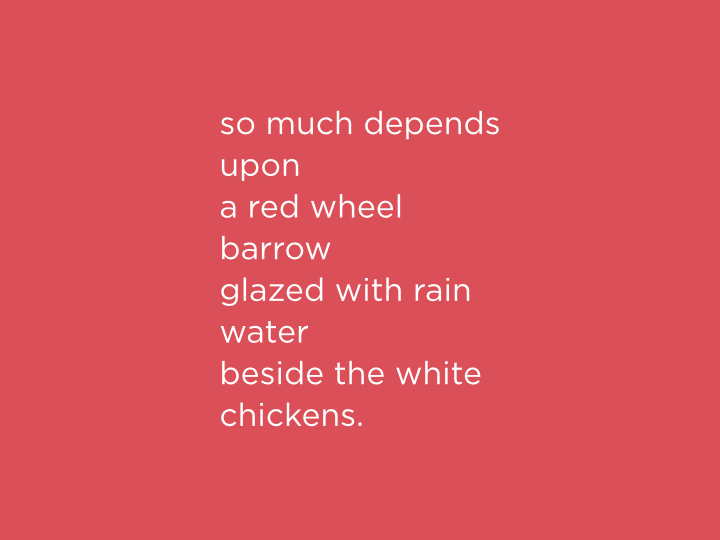
The assembly begins with the following on the screen, for students to ponder (or ignore) as they await the start of the session:

so much depends

I then showed my initial (lame) reasons for studying English Literature: universities rate it, it is more rigorous than English language, and many future careers await you. I then proceeded to explain that none of these are good reasons to choose to study Literature, drawing on the wisdom of Laura McInerney’s research showing that the idea of “facilitating subjects” is often not backed up by evidence. Despite few firm conclusions, I’d rather persuade my students to do three subjects they love and can achieve decent grades in, over any particular combination of subjects.

So, my opener for “why really study English Literature” was a fabulous quote from F. Scott Fitzgerald:

“That is part of the beauty of all literature. You discover that your longings are universal longings, that you’re not lonely and isolated from anyone. You belong.”

 We’ve all had that moment when reading when we suddenly acknowledge that our feelings, emotions and thoughts are not isolated and freak-like; we are connected to others in a tissue of shared feelings.

I then used Roald Dahl’s Matilda as a conduit for my next point (which was fairly similar to the entire assembly I blogged about last week here):

“The books transported her into new worlds and introduced her to amazing people who lived exciting lives… She travelled all over the world while sitting in her little room in an English village.”

I then returned to the initial poem, one of my favourites. I asked students whether they thought it was a poem; opinion seemed fairly split. This worked well for me. If this writing were on a toilet door, or in a fortune cookie, would they think it was a poem? Heads shook. Then I asked: what if it was in a poetry book? Confused faces.

William Carlos Williams calls this a poem. Some of you don’t call this a poem. Who matters more; the poet, or the reader? Or do neither of you matter? What about when the poem was written, or the cultural context? Was Williams trying to make a point about poetry? Or is the only aspect of importance the words themselves?

If you want answers, don’t study English Literature; there are no ticks and no crosses. But if you want to question and debate and argue and never be sure, you’re picking the right subject.

I closed the assembly by saying that if none of those arguments convinced them, I had one more: literature is beautiful. It makes you think things, and it makes you feel things. And I read Robert Frost’s “Fire and Ice.” This is actually one of my year 11’s favourite poems (I expressed to year 11 that I was delighted that someone other than me has a favourite poem, only to have another come up to me afterwards and exclaim somewhat angrily: “Miss, I have a favourite poem too!”), which is partly why I chose it. It is also a wonderfully complex piece of word mastery that even the science teacher I practiced saying it to minutes before the assembly began could appreciate its clever intricacies (I’m not saying scientists aren’t capably of being poets. But it’s good to chase cross-curricular opinions and attitudes).

I then showed my initial (lame) reasons for studying English Literature: universities rate it, it is more rigorous than English language, and many future careers await you. I then proceeded to explain that none of these are good reasons to choose to study Literature, drawing on the wisdom of Laura McInerney’s research showing that the idea of “facilitating subjects” is often not backed up by evidence. Despite few firm conclusions, I’d rather persuade my students to do three subjects they love and can achieve decent grades in, over any particular combination of subjects.

So, my opener for “why really study English Literature” was a fabulous quote from F. Scott Fitzgerald:

“That is part of the beauty of all literature. You discover that your longings are universal longings, that you’re not lonely and isolated from anyone. You belong.”

 We’ve all had that moment when reading when we suddenly acknowledge that our feelings, emotions and thoughts are not isolated and freak-like; we are connected to others in a tissue of shared feelings.

I then used Roald Dahl’s Matilda as a conduit for my next point (which was fairly similar to the entire assembly I blogged about last week here):

“The books transported her into new worlds and introduced her to amazing people who lived exciting lives… She travelled all over the world while sitting in her little room in an English village.”

I then returned to the initial poem, one of my favourites. I asked students whether they thought it was a poem; opinion seemed fairly split. This worked well for me. If this writing were on a toilet door, or in a fortune cookie, would they think it was a poem? Heads shook. Then I asked: what if it was in a poetry book? Confused faces.

William Carlos Williams calls this a poem. Some of you don’t call this a poem. Who matters more; the poet, or the reader? Or do neither of you matter? What about when the poem was written, or the cultural context? Was Williams trying to make a point about poetry? Or is the only aspect of importance the words themselves?

If you want answers, don’t study English Literature; there are no ticks and no crosses. But if you want to question and debate and argue and never be sure, you’re picking the right subject.

I closed the assembly by saying that if none of those arguments convinced them, I had one more: literature is beautiful. It makes you think things, and it makes you feel things. And I read Robert Frost’s “Fire and Ice.” This is actually one of my year 11’s favourite poems (I expressed to year 11 that I was delighted that someone other than me has a favourite poem, only to have another come up to me afterwards and exclaim somewhat angrily: “Miss, I have a favourite poem too!”), which is partly why I chose it. It is also a wonderfully complex piece of word mastery that even the science teacher I practiced saying it to minutes before the assembly began could appreciate its clever intricacies (I’m not saying scientists aren’t capably of being poets. But it’s good to chase cross-curricular opinions and attitudes).

Some say the world will end in fire,
Some say in ice.
From what I’ve tasted of desire
I hold with those who favor fire.
But if it had to perish twice,
I think I know enough of hate
To say that for destruction ice
Is also great
And would suffice.

PP Arial Why Study English Literartue

Why students should read more: an assembly

Last Thursday was “World Book Day.” As Head of English and self-proclaimed “reader”, it was my responsibility to be all over it.

I really wasn’t.

I’ve been shamed by looking at the amazing things schools did on Twitter, and I have no excuses other than: 1. There’s absolutely no way I am dressing up as a book character and therefore I can’t really mandate other people to, and 2. It took me by surprise.

I feel like September was about fifteen minutes ago, when I started the year thinking about all the wonderful and exciting things I was going to implement in my department to do with reading. In our Middle Leaders CPD, I chose encouraging reading in the school as my project, and in November when I touched base with the CPD leader she gave me some inspiring ideas for this World Book Day thing and I became really excited about it.

And then, all of a sudden, it was next week and I had to give out some tokens; oh, and could you do an assembly?

Realising I had entirely missed the World Book Day boat, I tried to pull together the best assembly of my life (not hard – I have delivered precisely one assembly, albeit delivered four times).

The assembly begins with this image, which I stole shamelessly from Tessa Matthews, for students to glance at during the time they file into their seats.

tessa reading

I began by introducing myself, and this has proved to be a valuable aspect – I really ought to have done an assembly sooner, as the number of students who asked me what happened to the previous Head of English and why did I steal his job (he has been promoted to Deputy Head) has been incredible. Even some of my own students came up to me later that week asking: “are you really the Head of English?” which I felt was a bit of a title-fail on my part.

I then said that my opening gambit was that every book will teach you something, and I reeled off a variety of lessons I had learned from books. These were: amazing vocabulary from Woolf’s Orlando, about the Napoleonic Wars in War and Peace, how it feels to lose someone you love from Looking for Alaska and form Lord of the Rings that I don’t like that kind of book – but that’s ok, because you won’t like every book, you just have to read them all to find that out!

The initial image was then shown again, and I explained that it makes me think of all the things I don’t know, and all the things I haven’t done. I then listed some of the things I haven’t done:

  • Been to California
  • Lived in the Victorian era
  • Married a prince
  • Been elected to office

and explained that, through reading (The Grapes of Wrath, Middlemarch, Grimm’s Fairy Tales, The Audacity of Hope) I could experience all of these aspects, even if I will never experience some of them in reality.

For what I don’t know, I showed a slide with just an ellipsis, and waxed lyrical on how we don’t know what we don’t know, complete with Socrates’ famous quote.

I segued from this to say that it wasn’t only “really cool English teachers who love to read”, but that people slightly more famous than us also do. I used three examples, all of whom were white and male (and two dead), thus undercutting my own preference for an inclusive representation in all aspects of life – in my defence, I made the assembly at high speed. I spoke about Steve Jobs, who loved William Blake; Phil Knight (founder of Nike) who has a library in his house and makes his guests take their shoes off before entering (books before shoes!) and Winston Churchill, who accomplished many great political things but has a Nobel Prize for Literature.

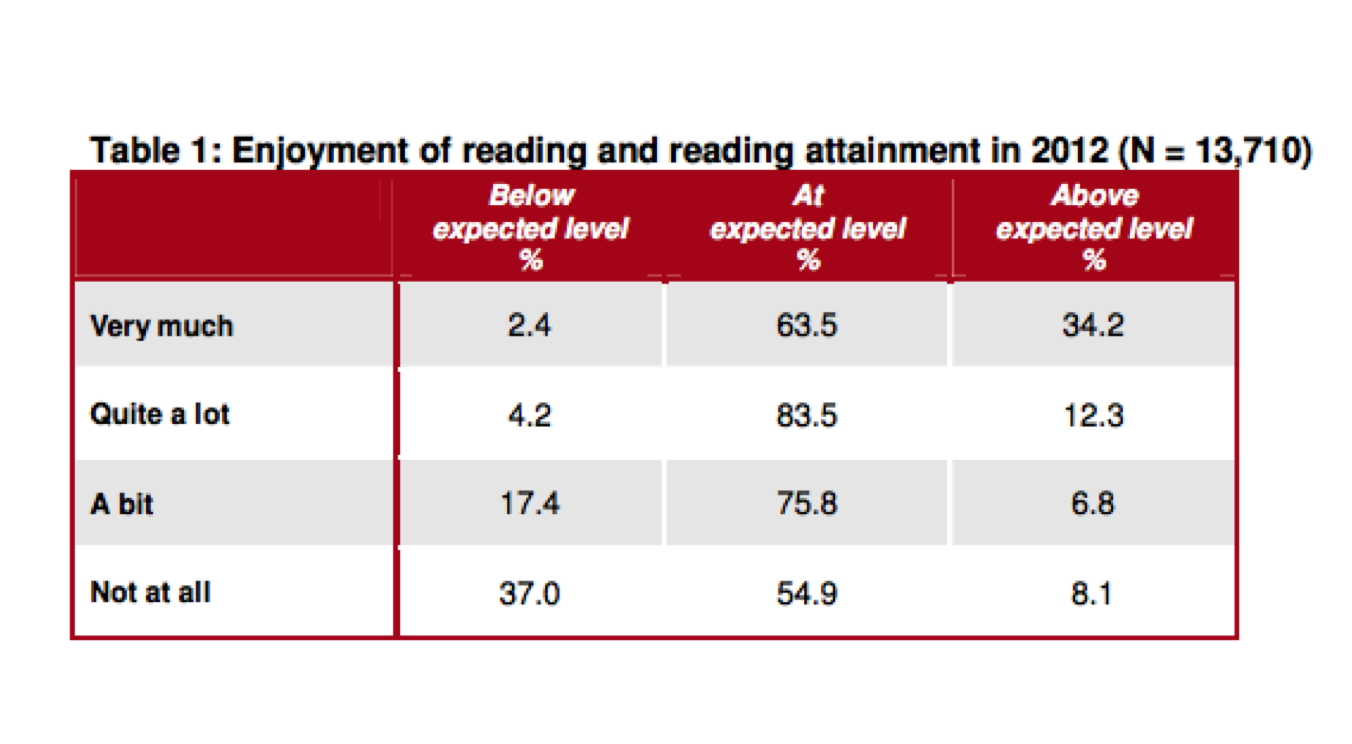
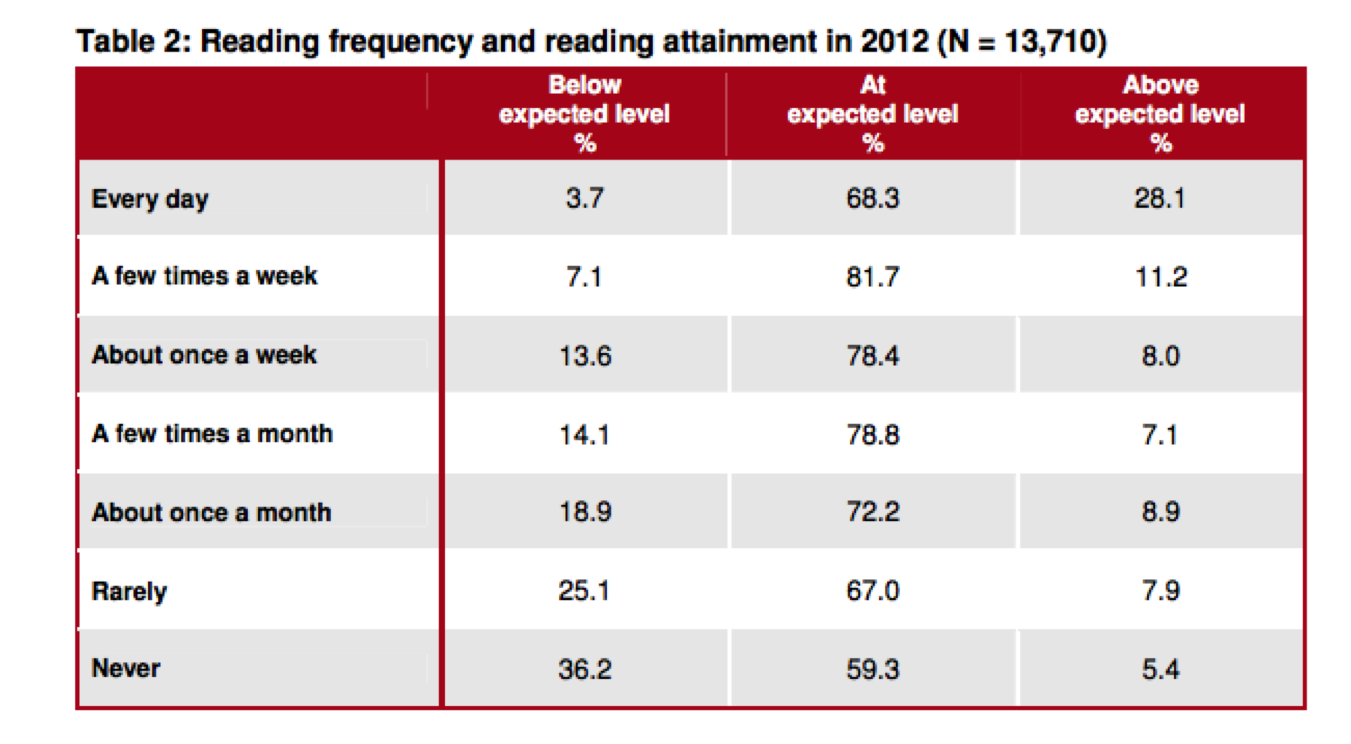
Perhaps the most powerful part of the assembly came when I used Maths to back up my arguments – our kids seemed to love the facts and figures. I showed the following charts from the National Literacy Trust and talked the students through what they were showing – the more you read, and the more you love reading, the more you will achieve:

table 1

table 2

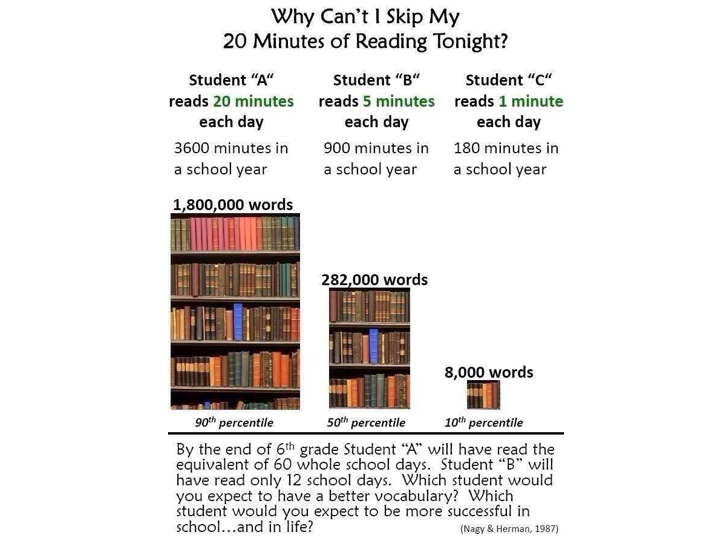
I also stole this image from someone on Twitter, but now don’t know who to thank:

why can't i skip

This image had a massive impact, and I enjoyed saying “one million eight hundred thousand words” about seven times in the course of the assembly.

All of which led to my final argument: the more you read, and if you enjoy reading, and the more you read great books, you will be smarter, happier and more successful.

I’ve had a lovely response to this assembly, including some warming comments from staff members. The best outcome is undeniably the number of students who I’ve not had any dealings with, coming up to me in corridors or in the lunch hall and telling me what they have read, what they would recommend to me, or asking for a book recommendation.

All in all, World Book Day came and went and I hang my head in shame; but I hope that my message of reading will live on regardless. Now: to plan next year’s reading assemblies!

Reading assembly

Five things that scared me

This week has been perhaps the busiest of the year so far, and I’m mostly just delighted to have survived it. My lesson of the week has been to always do what scares you: only when out of our comfort zone will we truly learn and become our best selves.

That being said, I’m a stickler for routine, so leaving my comfort zone is no small feat. This week I have done a personal record of five scary things. Here they are:

1. Reading assembly

In honour of World Book Day on Thursday, I delivered a reading assembly to three different year groups this week. I’ll blog about this separately at a later date; suffice it to say it was scary and wonderful in equal measure.

2. Speaking and listening exams

For the iGCSE English language, speaking and listening still counts as 20%. The exam is recorded and sent off for moderation. Ok, these were definitely more scary for the students than me; but there was definitely the worry that I’d ask the wrong questions and a student would end up with a less than wonderful mark because of me. These went well, and broadly speaking the students were happy as clams.

3. Miss Representation trip

Taking a trip is always scary, as you’re responsible for students out in the big bad world of cars, buses, other humans and slippery floors. On being offered tickets by Boster Group to see the documentary Miss Representation, exploring how women are presented in the media (I blogged about it here), as well as attendance at the panel discussion afterwards with a load of female luminaries, I could hardly pass it up. The students got a lot out of it, and all returned alive, which is the main aim of any trip.

4. Sixth form assembly

I spoke to Year 11 about why they should take English A-level. To close, I used one of my student’s favourite poems, and quipped: “I was just so delighted someone other than me has a favourite poem.” The main awesome outcome of this was the student who angrily informed me afterwards: “Miss, have a favourite poem too you know.” When you think kids can’t get more wonderful, they just do. I’ll blog in more detail on this soon, I promise.

5. Pedagoo

The scariest of all the scary things was being asked to give a workshop at Pedagoo by the marvelous Helene Galdin-O’Shea. I hadn’t presented before so I’m very grateful to have been given the opportunity. Some wonderful people also came to my session, which was fabulous, and they discussed and debated and engaged and were lovely. Some smiled and nodded, which I’ve never realised was so important before, until being up there myself.

I was seriously impressed by the quality of sessions at Pedagoo, a testament to Helene’s gift for getting educators together.

I later visited Rachel Stevens who shared ideas on lesson study, as well as some nuggets for making teaching and learning the hub of any school. Rachel was also funny, friendly and very willing to share her experience and resources. Our talking questions on the advice we would give to teachers made me realise I need to seriously refresh myself: I’ve spent most of this year wrapped up in curriculum and data, but what really matters is pedagogy: teaching and learning forever!

I then attended a session run by Jude Enright and Jo Leaver-Cole on coaching. This was a brilliantly planned session, with the speakers complementing each other wonderfully. They explained how they’d moved to a model of coaching in their school, and some of the challenges they had faced. I loved that they were willing to share both what had worked and what hadn’t. Their teacher improvement plan was supportive, thoughtful and challenging, and left me wishing I worked at their school!

I know I have a very long way to go to be such an accomplished and inspiring speaker as the many who I witnessed yesterday, but I also feel inspired to work harder and do more.

Here’s my presentation from yesterday, and thanks again all who came!

Pedagoo